One patient with pain when biting hard foods saw several dentists and received three different opinions. In that person’s experience at Charlotte Emergency Dental, the choice that mattered was not which dentist to trust. It was which office would diagnose the problem instead of guessing. When you need tooth pain care in Charlotte right now, you face a similar choice. One kind of office aims to identify the cause before treating the tooth. The other treats the most likely suspect and waits to see whether symptoms change. This guide describes how to tell them apart. It also covers what to do tonight, when the ER may be the better call, what a visit may cost, and the red flags that might lead you to look elsewhere.
Why does tooth pain relief in Charlotte need a diagnosis before a treatment plan?
A toothache calls for a diagnosis first because several different problems can cause the same pain, and treating the wrong one may leave a person still hurting. So one thing to look at in any toothache dentist is how they find the source. One option is 3D imaging of the roots and the bone around them.
Pain when biting down is a good example. It can come from a cracked tooth, a filling that sits a little too high, an infection at the tip of a root, or a crack running down the root itself. From the inside, these problems can feel almost the same. A standard 2D dental X-ray flattens a three-dimensional tooth into a single picture, so a crack running along the length of a root may be hidden behind the rest of the tooth. When that happens, a dentist may have to make a reasonable guess, and each new guess can mean another visit, another bill, and more nights of pain.
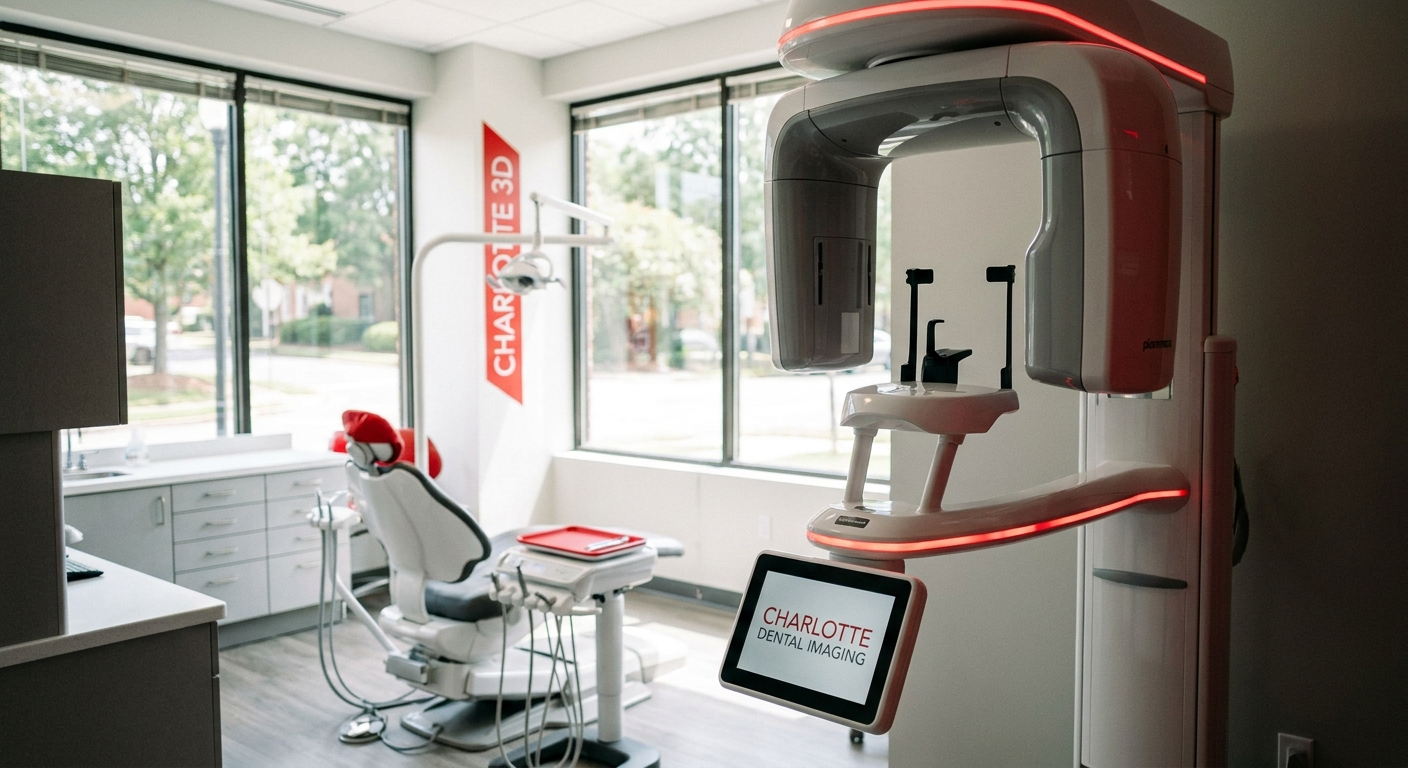
That is what happened to the patient in the opening. After three different opinions, the team at Charlotte Emergency Dental captured a CBCT, a cone beam CT scan that works like a 3D X-ray. In this patient’s case, the scan showed a pattern called tunneling vertical bone loss along the mesial surface (the side facing the front of the mouth) of the lower right first molar’s root, running about one third of the way down. That pattern pointed to a vertical root fracture, which standard 2D X-rays had not shown. Because a vertical root fracture cannot be repaired, removing the tooth was the only treatment option for this patient. It was hard news, but it was a definite answer.
Charlotte Emergency Dental takes a CBCT for every first-visit patient, so you do not have to ask for it or prove you need it. Two questions you can ask any office before you drive over: “Will you take a 3D scan before you recommend treatment?” and “Will you show me what you see on the image?” At Charlotte Emergency Dental, the doctor reviews the scan with you and points out the possible causes of your pain before anyone talks about treatment.
What can you do for tooth pain in Charlotte tonight before you reach a dentist?
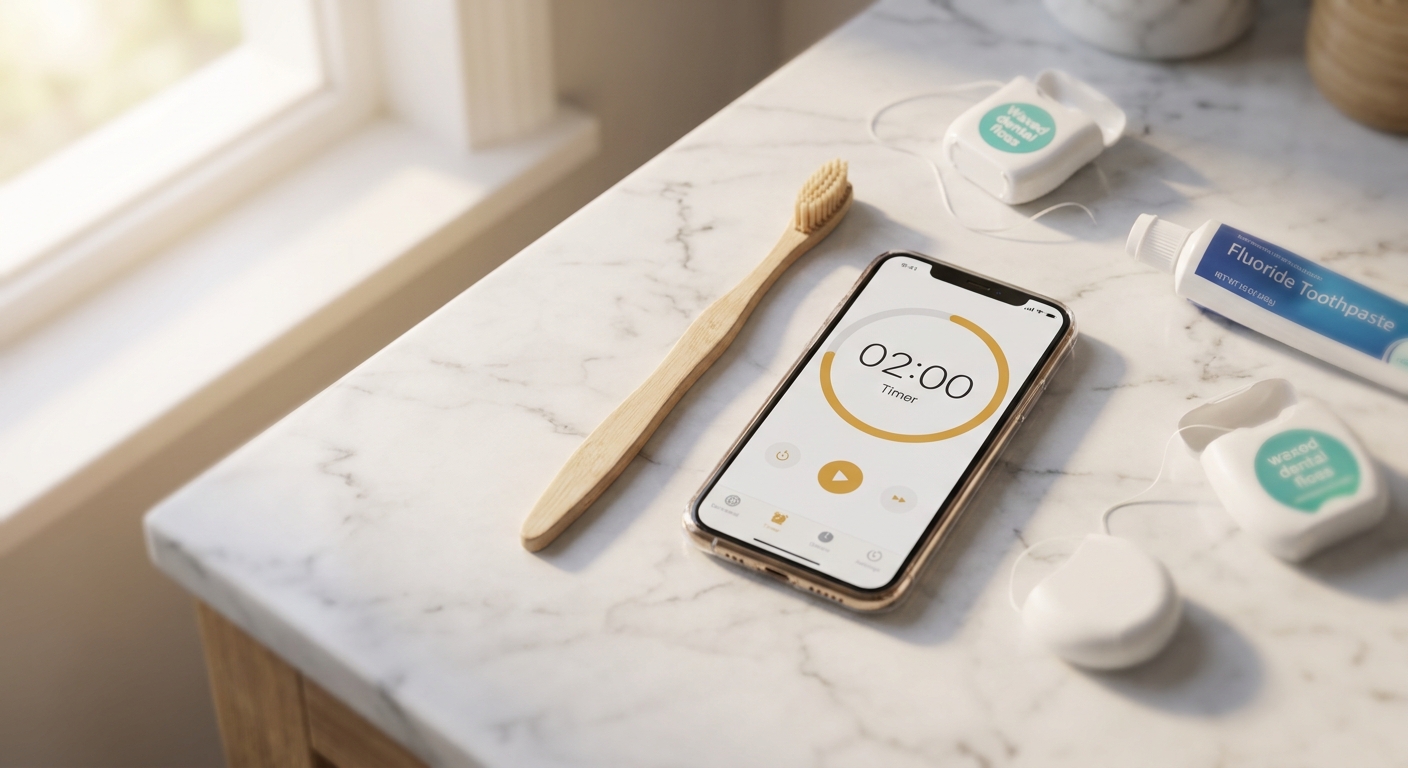
Some people find a warm salt water rinse, a cold compress on the outside of the cheek, chewing on the other side, and over-the-counter pain medicine taken exactly as the label says help them get through the night. These steps may buy time, but they do not treat an infection or a fracture.
Here is a commonly suggested routine while you wait to be seen:
- Rinse with warm salt water. Swish gently and spit, which can loosen trapped food and may soothe sore gums.
- Use a cold compress on the outside of your cheek. Wrap it in a cloth and hold it on for short stretches, and never put ice directly on the tooth.
- Chew on the other side. Skip very hot, very cold, sugary, or hard foods, since these often set off a sore tooth.
- Never put aspirin on your gum or tooth. It does not help the tooth, and it can burn the soft tissue in your mouth.
For medicine, the American Dental Association recommends nonsteroidal anti-inflammatory drugs (NSAIDs) such as ibuprofen as a first choice for short-term dental pain in adults, either alone or combined with acetaminophen. The same guidance steers away from opioids as a starting point, and ADA coverage described the guideline as a push toward safer pain management. This page gives no doses on purpose, so follow the label on the package and never go over the daily limit. Talk to a doctor or pharmacist before taking either medicine if you have stomach ulcers or a bleeding history, kidney or liver problems, take a blood thinner, or are pregnant. A pharmacist can usually check your other medications in a couple of minutes.
Follow-through matters. If the pain keeps you awake, returns after the pills wear off, or lasts more than a day or two, the cause may still be there. Home care may quiet a symptom, but a cracked root or an infected nerve generally does not resolve on its own. It is worth planning to be seen while the pain is still manageable rather than after it has spread.
Should you go to the ER or an emergency dentist?
Go to the ER, or call 911, if swelling is making it hard to breathe or swallow, if you have major facial trauma, or if you think your jaw is broken. For many other situations, including severe toothaches, abscesses, dry sockets, lost or loose crowns, and knocked-out teeth, an emergency dentist may be a more direct path to addressing the cause.
The difference comes down to what each place is set up to do. A hospital emergency room can handle a dangerous infection, trouble breathing, or a broken jaw. Most ERs, however, are not set up to do a root canal or take out a tooth, so a person may leave with medicine and a referral while the problem remains in the mouth. A dental office can evaluate and treat the tooth itself, sometimes in the same visit.
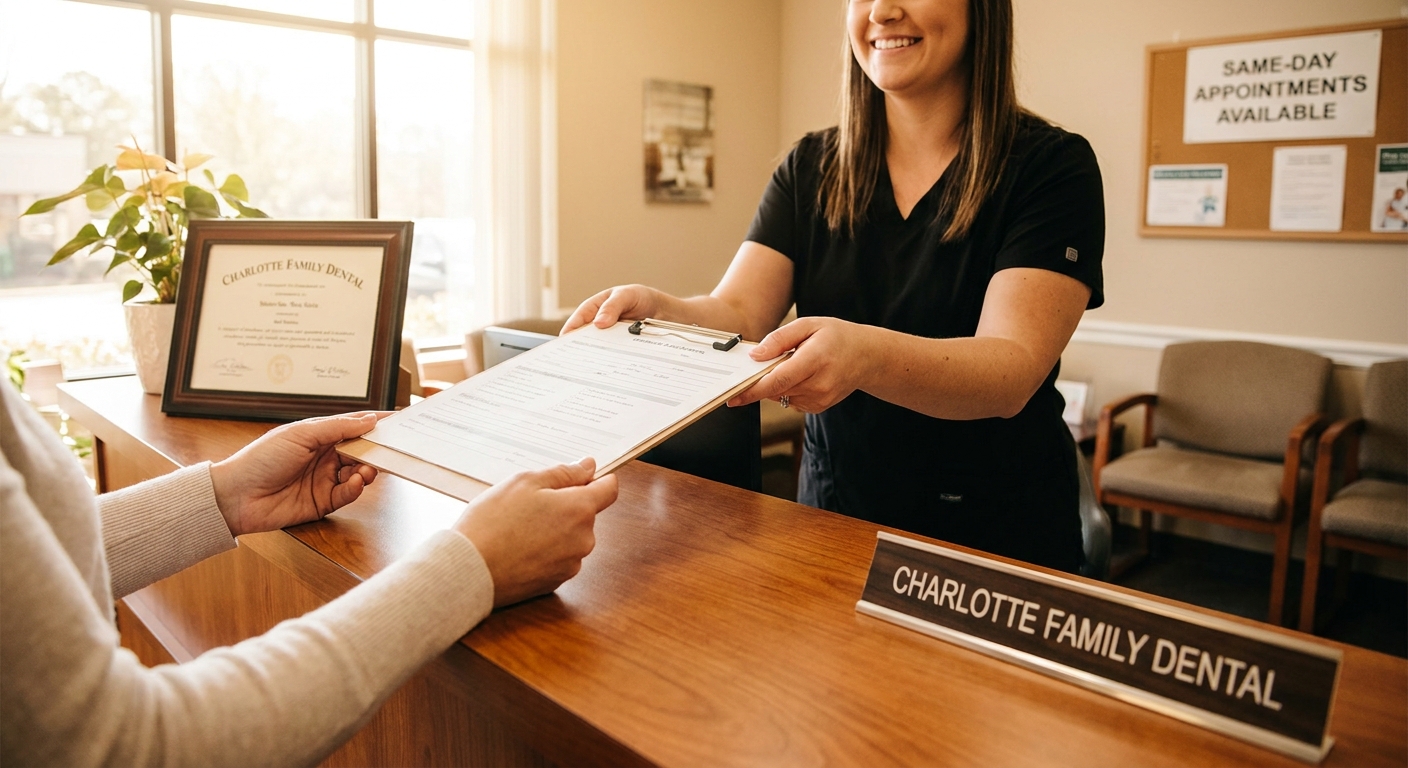
When you call or walk into Charlotte Emergency Dental, the front desk helps sort out which side of that line you are on. They ask what the problem is, how long the pain has lasted, what it feels like, and what makes it better or worse. They also ask about swelling and about signs of a serious infection, such as trouble breathing or swallowing. Those answers help determine how quickly you are brought back, and they also tell the team when a hospital may be the safer place for you.
Use this checklist to decide before you leave the house:
| Go to the ER or call 911 | Consider an emergency dentist today |
|---|---|
| Swelling that affects breathing or swallowing | Severe or throbbing toothache |
| Swelling that is spreading fast and feels life-threatening | Abscess or a pimple-like bump on the gum |
| Major facial trauma | Dry socket or pain after an extraction |
| A jaw you think is fractured | Lost or loose crown, broken tooth |
| Knocked-out tooth |
Charlotte Emergency Dental sees about 10 to 15 same-day emergencies a day. The cases it sends to a hospital or ER are major facial trauma, fractured jaws, and swelling serious enough to be life-threatening.
A knocked-out tooth shows why the first steps matter. Your instinct may be to scrub or rinse the tooth hard, but aggressive rinsing can damage living cells on the root surface that the tooth needs to reattach. Over the phone, Charlotte Emergency Dental tells patients to put the tooth in a container covered in milk and come in right away. The office aims to have you in a chair within 10 minutes of walking in. After numbing the area, the doctor gently removes debris from the root with an instrument and puts the tooth back in place, ideally within 60 minutes of the injury. The tooth is then splinted to its neighbors for about four weeks while it heals, and you’ll come back so the office can check how it is healing and remove the splint.
How fast might a toothache dentist see you?
A toothache dentist should be able to give you a timeline, not a vague “we’ll fit you in.” At Charlotte Emergency Dental, the typical weekday wait from walking in to starting treatment is around 30 minutes, and weekend waits are usually under an hour. The office sees around 50 emergency patients a week, so the process is built around speed.
When you compare offices, ask two questions: How long until I am numbed? And what happens while I wait? A clear answer suggests the office has a system.
Two visits at Charlotte Emergency Dental show what the timing can look like. One Tuesday, a patient arrived at 10:15am in excruciating pain on his lower left side. By 10:30am the Charlotte Emergency Dental team had taken his CBCT and found an unrestorable vertical root fracture. By 10:35am he was fully numb. His extraction and bone graft were finished by 11:20am, and he left the parking lot at 11:30am. Before he left, the team explained the next steps: the bone graft needs 3 to 4 months to mature before an implant can go in, and the implant then heals another 3 to 4 months before a tooth goes on top. On a Monday, another patient arrived at 1:56pm. After triage and a CBCT, the doctor was in the room diagnosing by 2:09pm, and the extraction was done by 2:35pm. These were individual visits, and your own timing depends on what the scan shows and how busy the office is that day.
Here is the order a first emergency visit at Charlotte Emergency Dental follows:
- Triage at the front desk. Questions about your pain, swelling, and signs of serious infection.
- CBCT scan. A 3D X-ray of your roots and the bone around them, taken as soon as possible.
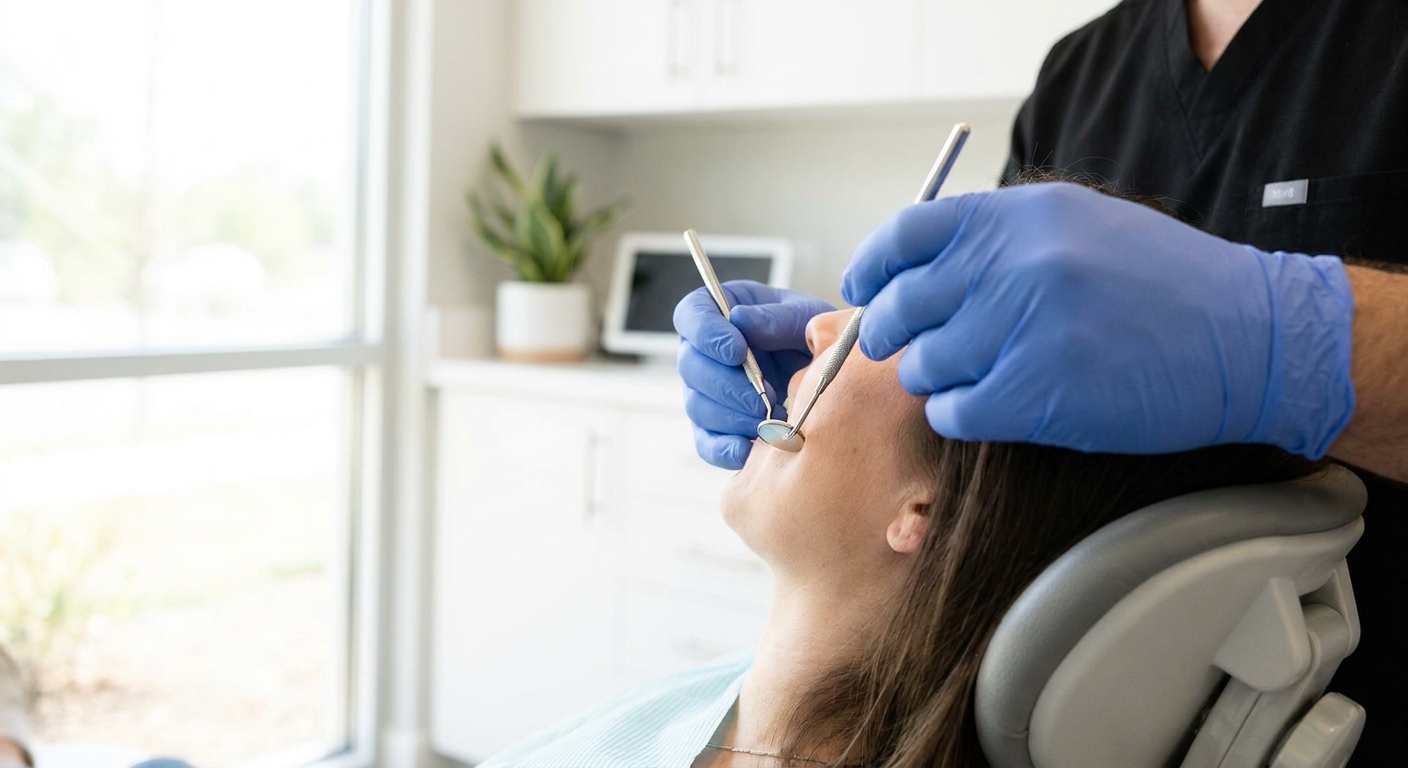
- Dental assistant interview. The assistant hears your story and does an initial check in the treatment room.
- Doctor’s exam. A thorough look inside your mouth.
- Vitality testing. Gentle tapping and cold testing to check the health of the nerve and the tissue around the root.
- Infection screening. A check for signs of a major infection.
- Scan review. The doctor walks you through the CBCT and shows you the possible cause.
- Options and payment. You hear the treatment choices and the financing options before anything starts. Then you are numbed and treated, the same day when possible.
The goal of that first visit is not to address every issue in your mouth. It is to look for the source of your pain and work on addressing it.
Will the treatment hurt more than the toothache?
Many people find the toothache itself harder than the visit. At Charlotte Emergency Dental, you are numbed before treatment begins, and in the Tuesday case above, the patient went from excruciating pain to fully numb within 20 minutes of walking in.
If dental visits make you anxious, say so at the front desk. The doctors at Charlotte Emergency Dental have experience helping anxious patients through a procedure, and they can talk with you about options to help you feel more at ease before an appointment. Some patients find they do not need it, but it is an option worth knowing about if fear has kept you from getting care.
What does emergency tooth pain treatment cost, and what should you ask before sitting down?
At Charlotte Emergency Dental, the emergency exam and X-ray cost $99. Your treatment price depends on what the scan shows, and you hear the options before any treatment begins. It is reasonable to expect an emergency dentist to answer the cost question before you sit down, not after.
Insurance works differently here than at many offices, because Charlotte Emergency Dental is out of network with insurance companies. Patients with dental insurance may still come in, and the office gives them claim forms to send to their insurer for possible reimbursement. How much comes back depends on your plan’s out-of-network benefits, so if you are counting on insurance, call your plan before you go and ask how it handles an out-of-network emergency visit. Charlotte Emergency Dental does not accept Medicaid.
If you do not have insurance, self-pay is accepted, and Charlotte Emergency Dental works with third-party financing companies that let you split treatment into monthly payments, sometimes at 0% interest depending on approval. One more cost detail matters if you plan to come back: X-rays after your first visit are free for 6 months.
Before you sit down at any office, ask these questions:
- What is the exam and X-ray fee, and does it include a 3D scan?
- Are you in network or out of network with my plan, and do you help me file a claim?
- Will I hear the treatment price before you start?
- What payment plans do you offer if I cannot pay in full today?
If an office will not answer these on the phone, you may want to consider what that suggests about how billing is handled.
Which toothache problems get treated in-house, and which get referred?
It helps to ask an emergency dentist what they finish in-house and what they send to a specialist, and to ask before treatment starts. Charlotte Emergency Dental handles about 90% of cases without a referral, with root canals, crowns, extractions, implants, bridges, and dentures done the same day when possible, depending on the case.
The cases Charlotte Emergency Dental refers out are specific. Severely impacted wisdom teeth are stabilized and sent to a specialist. Some molar root canals, roughly 20 to 25% of root canal cases, also go to a specialist, and the reason is worth understanding. As a tooth ages, it keeps laying down a layer called tertiary dentin inside the canal, which slowly shrinks the canal’s width over the years. A very narrow, calcified canal is hard to clean all the way to the tip, and forcing it raises the risk of punching through the side of the root, which can lead to loss of the tooth. Canals that split or merge in unusual ways can also be hard to clean and fill. Specialists have tools such as microscopes for these cases.
Because every first visit includes a CBCT, the doctors at Charlotte Emergency Dental can often spot these warning signs on the scan before starting the procedure. Charlotte Emergency Dental refers these patients to specialists it works with. Patients with certain soft tissue concerns may be sent to an oral surgeon or periodontist for a biopsy.
It may be a red flag if an office cannot answer this question. If you ask “What would make you refer me out?” and get no clear reply, it can be hard to know how the office decides which cases to take on.
What red flags and tradeoffs should you weigh when choosing a toothache dentist?
You may want to look elsewhere if an office recommends treatment without imaging, won’t give you a price until afterward, or has no plan for your pain while you wait. It is also worth weighing the tradeoffs of any office you pick, because every model has them.
Here are three red flags in plain terms:
- No imaging explanation. If someone recommends a root canal or extraction and cannot show you why on an image, you are being asked to trust a guess.
- No price until after treatment. You deserve to hear the cost while you can still say no.
- No plan for your pain while you wait. “We can see you Thursday” is not much help when you cannot sleep tonight.
Charlotte Emergency Dental is open about its own tradeoffs. Because the office is built around walk-ins and same-day emergencies, it does not keep hygienists on staff, since the steady flow of cleaning patients a hygienist needs does not fit the model. The office also runs separate weekday and weekend teams. To keep care consistent between the two, it relies on detailed chart notes and an office manager who works across both schedules. An automated text system follows up after appointments, and when weekend patients are flagged for extra follow-up, a doctor or the front desk may call if pain continues.
Once your emergency is handled, Charlotte Emergency Dental encourages a follow-up visit when you are not in pain. That visit includes a full exam inside your mouth, an oral cancer screening, and extra X-rays that are free for 6 months after your first visit. Your treatment plan is then broken into pieces that fit your time and budget.
Walk-ins are welcome at Charlotte Emergency Dental seven days a week, and weekday hours run 9am to 7pm. Call 704-525-3939 to confirm weekend hours or to let the team know you are on your way.
The toothache questions that decide where you go tonight
Most toothache questions come down to how serious the problem is and how fast you need help. Here are short answers to the ones people searching for tooth pain care in Charlotte ask most.
Can a toothache go away on its own?
The pain may fade for a while, but decay, infection, or a crack usually remains. When a nerve is dying, pain can even stop for a time while the infection continues. See a dentist if the pain is severe, keeps coming back, or lasts more than a day or two.
Is ibuprofen or acetaminophen better for a toothache?
The ADA’s guidance on oral pain relievers favors NSAIDs such as ibuprofen as a first choice for adults, alone or combined with acetaminophen. Follow the label directions, and check with a doctor or pharmacist first if you have stomach, kidney, liver, or blood thinner concerns.
Why does my tooth hurt only when I bite down?
Common causes are a cracked tooth, a vertical root fracture, an infection at the root tip, or a filling that sits too high. Because these can feel alike, 3D imaging may help identify the source.
How much is an emergency dentist visit in Charlotte without insurance?
Charlotte Emergency Dental charges $99 for the emergency exam and X-ray. Self-pay and third-party financing are available at Charlotte Emergency Dental, and the cost of treatment depends on what the scan shows.
Does a black tooth or jaw pain mean I need the ER?
A tooth that turns dark or gray often means the nerve inside is damaged, sometimes from an old injury. It calls for a prompt dental visit, not the ER. Jaw pain with swelling, fever, or trouble breathing or swallowing does need the ER right away.
Do I need an appointment for a toothache at Charlotte Emergency Dental?
No. Walk-ins are welcome seven days a week, though calling 704-525-3939 first helps the team get ready for you.
If the tooth is hurting right now, here is a path to getting seen
If you are in pain now, call Charlotte Emergency Dental at 704-525-3939 or walk in for a $99 emergency exam and 3D scan, seven days a week. Before you leave home, jot down when the pain started, what makes it worse, and any swelling you have noticed. Those are the first questions the front desk will ask, and having the answers ready can help the team move you from the door to the scan more efficiently. Understanding what is causing the pain is the first step toward addressing it.
Don’t Wait Out the Pain Alone
If you’ve been telling yourself a toothache might settle down on its own, you’re not the only one, but pain that keeps coming back is usually your mouth asking for attention. Charlotte Emergency Dental is here for people in Charlotte, NC who want a clear answer and a plan for relief. Reach out to the office today, describe what you’re feeling, and let the team help you decide what to do next.
Call Charlotte Emergency Dental
Individual experiences and results vary.