Urgent Dental Care in Charlotte, NC: What Happens When You Walk In for Same-Day Treatment
You walk into a dental office without an appointment because the pain finally forced you to stop working, and the first question the front desk asks is whether you called the office ahead. Most practices treat walk-ins as interruptions to the schedule, but Charlotte Emergency Dental built their entire workflow around patients who need treatment today, which changes what happens from the moment you push open the door.
Most pages that show up when you search cannot tell you what happens after you walk through the door. This one can, because the walk-in workflow below is exactly how a busy Charlotte practice moves 10 to 15 emergencies a day from initial pain to attempted relief.
What Does Urgent Dental Care in Charlotte Actually Mean?
Urgent dental care in Charlotte can mean same-day treatment that attempts to address the cause of your pain, not a prescription for antibiotics and a card telling you to come back in a week. At Charlotte Emergency Dental, that distinction is the whole point of the practice.
Here is the difference in plain terms. Temporary stabilization is what many offices offer when they are not set up for emergencies. They look at your swollen face, hand you a bottle of amoxicillin, tell you to take ibuprofen, and schedule the real work for a future date when a chair opens up. You leave still in pain, still carrying the broken tooth, still waiting. Definitive treatment is the opposite. It may involve removing the abscessed tooth, completing the root canal, seating the crown, or reimplanting the knocked-out tooth during the same visit that brought you in, with many patients experiencing significant relief when the source of infection or trauma is addressed.
Charlotte Emergency Dental treats between 10 and 15 same-day emergencies every day and attempts to complete most of them in-house, without shipping you to another office. Severe toothaches, knocked-out teeth, broken and fractured teeth, infections, abscesses, lost and loose crowns, sudden sensitivity, dry sockets, and post-extraction pain all can be addressed the same day. That is what separates urgent care from a stall. When you understand this difference, you stop settling for a faster waiting list and start looking for a practice that attempts to finish the job in one sitting.
What Happens From the Moment You Walk In?
From the second you walk in, a front-desk team member starts triaging your problem, and within roughly 30 minutes on a weekday you may be moving toward treatment. There is no drawn-out paperwork gauntlet standing between you and care.
The first conversation is a focused triage. The front desk asks about the nature of the issue: how long the pain has lasted, what it feels like, what makes it better or worse, whether you have swelling or bleeding, whether the area feels warm, and whether you have any red-flag infection symptoms like trouble breathing or swallowing. Those questions are not busywork. They tell the team how fast to move you and whether your case needs to jump the line. Someone with a spreading, airway-threatening infection is handled differently than someone with a lingering sensitive filling, and triage sorts that out immediately.
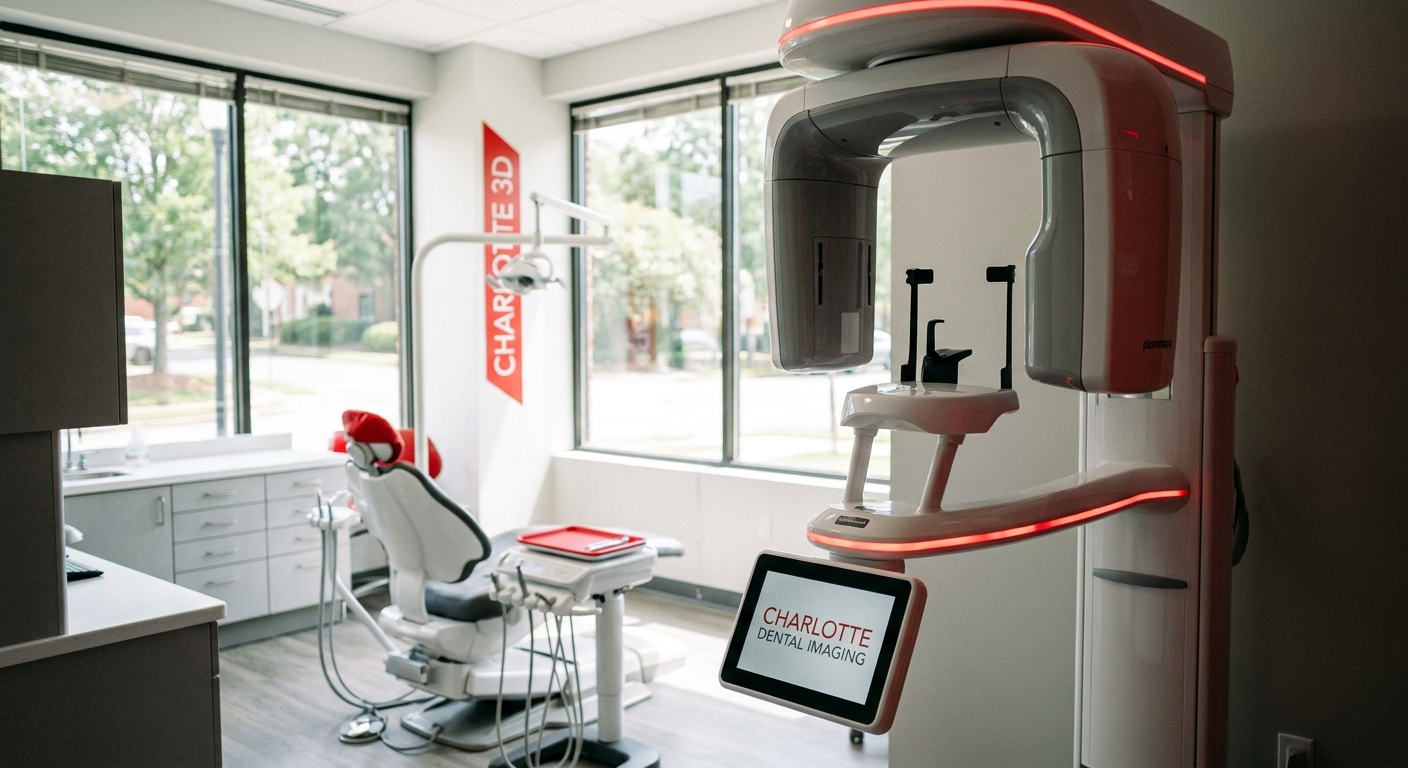
Next, as soon as possible, you are brought back for a CBCT scan. A CBCT is a three-dimensional X-ray, and it is far more revealing than a flat film. It shows infection pooling at the tip of a root, the true size of a cavity, cracks, and the condition of the surrounding bone. That last detail matters if the tooth cannot be saved and you want to talk about replacing it with an implant later. From there you move into an operatory, where a dental assistant interviews and evaluates you before the dentist arrives.
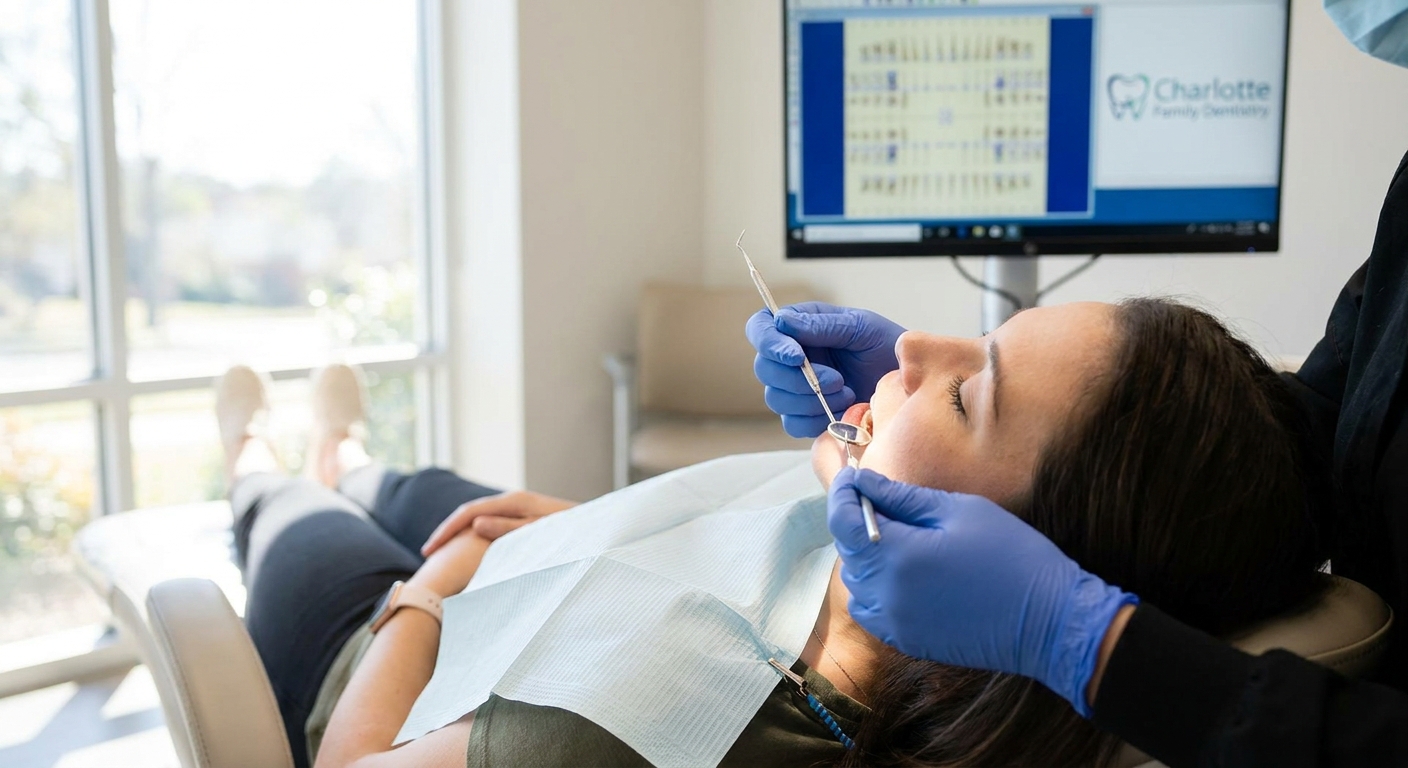
Then the dentist performs a thorough intraoral exam of your mouth plus tooth vitality testing. Vitality testing uses percussion (a gentle tap on the tooth) and a cold stimulus to read the health of the nerve and the tissue around the root. Those two simple tests help confirm whether the nerve is dying, whether infection has set in, and which tooth is likely the source of your pain. The dentist reviews your CBCT with you on the screen, points to the likely cause, lays out your treatment options, and talks through financing if you want to split the cost. Only then does treatment begin, and in many cases it begins that same visit.
Which Treatments Can Be Done the Same Day Without a Referral?
Most of them. Charlotte Emergency Dental attempts to complete roughly 90 percent of the cases that walk through the door in-house on the first visit, with no referral and no second trip across town.
The same-day menu is broad. It can include tooth extractions, root canals, crown placement, dental implants, bridges, traditional and partial dentures, fillings for small and large cavities, abscess drainage, and full reimplantation of a knocked-out tooth with splinting. If you crack a molar at lunch, there is a real chance the extraction and the bone graft that prepares the site for a future implant can be completed before you head home. On a recent Tuesday, a patient arrived at 10:15 AM with excruciating lower-left pain, had his CBCT captured and his diagnosis (an unrestorable vertical root fracture of tooth number 30) confirmed by 10:30, was numb by 10:35, and left the parking lot at 11:30 with the extraction and a bone graft already done.
The exceptions are narrow, and it helps to know them so you are not surprised. Root canals with highly calcified or unusually complex canal anatomy may be stabilized and sent to a specialist who focuses on those difficult cases. Severely impacted wisdom teeth can also warrant a referral. Major facial trauma and fractured jaws usually belong in a hospital setting, and swelling large enough to be considered life threatening belongs in an emergency room. Those are the reasons the real figure is 90 percent and not an inflated 100 percent. Everything short of those rare situations is designed to be addressed where you sit.
What Should You Do When a Tooth Gets Knocked Out?
Put the tooth in a container of milk, avoid touching or scrubbing the root, and get to the office immediately. A knocked-out permanent tooth has a better chance of successful reimplantation when it is treated within about 60 minutes, though individual outcomes vary widely based on many factors including the extent of damage and the health of the surrounding tissue.
The reason milk matters, and the reason you should not aggressively rinse the tooth, comes down to biology. The root surface carries fragile periodontal ligament cells, the living tissue that can allow a tooth to reattach to bone. Scrubbing or blasting the root with water can kill those cells and reduce the chance of reattachment, while milk helps keep them alive on the drive over. When you arrive with an avulsed tooth, you are prioritized ahead of everyone else, with a target of under 10 minutes from the door to the chair. The work starts right away.
Once you are seated and numb, the dentist gently removes debris from the root surface with an instrument rather than scrubbing it, then repositions the tooth into its socket as close to its original spot as possible. To hold it there, the tooth and the healthy teeth beside it are etched and bonded, and a resin-and-fiber splint is light-cured across all of them. That splint stabilizes the tooth for the roughly four weeks it takes the area to begin healing. Most patients then go on a 10-day course of antibiotics, usually amoxicillin, or clindamycin if you are allergic to penicillin. If the tooth touched soil or an outdoor surface, a tetanus booster may be recommended. You return in three to four weeks so the team can confirm the bone is healing and remove the splint. Knowing these steps before an injury happens can help you respond quickly.
What Will It Cost, and Can You Split It Into Payments?
The upfront emergency exam and X-ray fee is $99, and treatment beyond that is priced by the specific procedure, with financing available so cost does not force you to wait. You find out the number before treatment begins, during the CBCT review, not after.
Charlotte Emergency Dental is a self-pay practice, and it works with a variety of third-party financing companies that let you break treatment into monthly payments, often at 0 percent interest on approved credit. That structure matters when an emergency lands without warning. A payment that fits a paycheck is a very different question than writing one large check on the spot, and financing keeps the treatment option on the table today instead of postponing it. If you carry dental insurance even though the office is out of network, you can be given a claim form to submit for possible reimbursement afterward.
If your situation is a true budget emergency and you need to weigh every low-cost option, Mecklenburg County maintains a directory of free and low-cost health and dental clinics, and North Carolina publishes a statewide list of safety-net dental clinic locations. Those community programs serve a different need than same-day emergency treatment, but it is worth knowing they exist. What sets Charlotte Emergency Dental apart is access on your schedule. The office is open seven days a week, with extended weekday hours from 10 AM to 7 PM, and walk-ins are welcome without an appointment. That is why the typical weekday wait from walking in to being treated runs around 30 minutes, and weekend waits usually stay under an hour even when the office is busy.
Frequently Asked Questions About Urgent Dental Care in Charlotte
How long does it take to get treated for a dental emergency in Charlotte?
On a weekday, the typical time from walking in to the start of treatment averages around 30 minutes. Weekends can run longer during busy stretches, but the wait usually stays under an hour. Capacity is set aside specifically for unscheduled emergencies, which is why the line moves.
Will I get actual treatment the same day or just pain medication?
You can receive treatment. Charlotte Emergency Dental attempts to complete extractions, root canals, crowns, and tooth reimplantation the same day in nearly all cases, rather than sending you home with a prescription and a future appointment. The source of the pain can be addressed during the visit that brought you in, though individual treatment plans vary based on clinical findings.
What should I do if my tooth gets knocked out in Charlotte?
Place the tooth in milk right away, avoid touching or scrubbing the root, and get to the office immediately. The goal is reimplantation within 60 minutes when possible. On arrival you may be seated within about 10 minutes, numbed, and the tooth is gently cleaned, reimplanted, splinted, and followed with antibiotics, though reimplantation success varies based on many individual factors.
Does urgent dental care in Charlotte require an appointment?
No. Charlotte Emergency Dental accepts walk-ins seven days a week without an appointment. Triage begins at the front desk the moment you arrive, and treatment time is reserved specifically for people who could not plan ahead for an emergency.
How much does an emergency dental visit cost in Charlotte?
The upfront emergency exam and X-ray fee is $99. Treatment costs vary by procedure, and third-party financing can spread the total into monthly payments, often at 0 percent interest on approved credit. You see the number before treatment starts.
What dental emergencies get referred out to a specialist?
Very few. Referrals are limited to root canals with highly calcified or unusually complex canal anatomy, severely impacted wisdom teeth, fractured jaws and major facial trauma that need a hospital, and life-threatening swelling that needs an emergency room. About 90 percent of cases can be completed in-house.
If you are dealing with severe tooth pain, a knocked-out tooth, an abscess, or a cracked or broken tooth in Charlotte right now, do not wait for a callback or a next-week opening. Walk into Charlotte Emergency Dental between 10 AM and 7 PM on weekdays or during weekend hours for same-day treatment, no appointment needed. When you need urgent dental care in Charlotte, put a knocked-out tooth in milk on your way, and let the team attempt to address the cause of your pain today, in the same visit that brought you through the door.
We’re Ready to See You Right Away
If you’re dealing with dental pain or an urgent issue right now, you don’t have to wait days for relief or wonder what the process will be like. Charlotte Emergency Dental is set up to walk you through every step from the moment you arrive, and our team treats same-day emergencies as the priority they are.
Call Charlotte Emergency Dental
Individual treatment outcomes vary based on the nature and severity of each dental condition, overall health, and other factors. No dental treatment can be guaranteed to produce a specific result for every patient.