You cracked a tooth, it throbs every time you take a breath, and your bank account is close to empty. At Charlotte Emergency Dental, the conversation starts with what needs to happen today to stop the pain, not with your credit score. If you have been asking yourself, “How can I fix my teeth if I don’t have money?”, the honest answer has a few parts. First, you split the problem into what has to happen today and what can safely wait. Then you pay for each piece in the way that fits it best. This guide walks through each path, what it may cost, and where it makes sense for someone in Charlotte, NC, who is hurting right now.
How Can I Fix My Teeth If I Don’t Have Money Today? Start With What Has to Stop Hurting
You may be able to address your teeth on a tight budget by handling the urgent problem first, then paying for each later step with the tool that fits it. Charlotte Emergency Dental is a self-pay, walk-in practice in Charlotte’s 28209 zip code. Walk-ins are welcome seven days a week, so your first step is simply showing up and getting a clear answer on what is wrong.
Some people with a broken or aching tooth and an empty bank account have more options than they think. Here are four main ones:
- Self-pay for the urgent visit. Pay for the exam and the one procedure that stops the pain or removes the problem tooth, and leave the bigger repair for later.
- Healthcare financing. Spread the cost of larger work, like an implant or dentures, over monthly payments.
- Your own insurance claim. If you have dental coverage, pay at the visit and ask your insurer to pay you back under your out-of-network benefits.
- Community and low-cost clinics. Use them for cleanings, routine fillings, and ongoing care where a wait is acceptable.
Your real worry may be hearing a number you can’t pay and being sent home with nothing. That fear keeps a lot of people at home with a swollen jaw for days. The way around it is to ask a different question at the front desk. Instead of “What will it cost to fix everything?”, ask “What has to happen today, and what can wait?” That one question may help shrink the number in front of you from the full repair to the first step.
One honest note before you drive over: Charlotte Emergency Dental does not accept Medicaid. If Medicaid is your only coverage, the community clinics covered later in this guide are often the better first call. And if you have facial swelling that is spreading, a fever, or any trouble breathing or swallowing, go to the nearest hospital emergency room right away. That is a medical emergency, and it should not wait for a dental office.
What Can You Get Done the Same Day at Charlotte Emergency Dental?
You can walk in any day of the week, without an appointment, and get an exam, a clear diagnosis, and treatment for dental pain, toothaches, and other dental emergencies. If a tooth is too damaged to save, ask whether the extraction can be handled during that same visit, since tooth extractions are among the services the office provides.
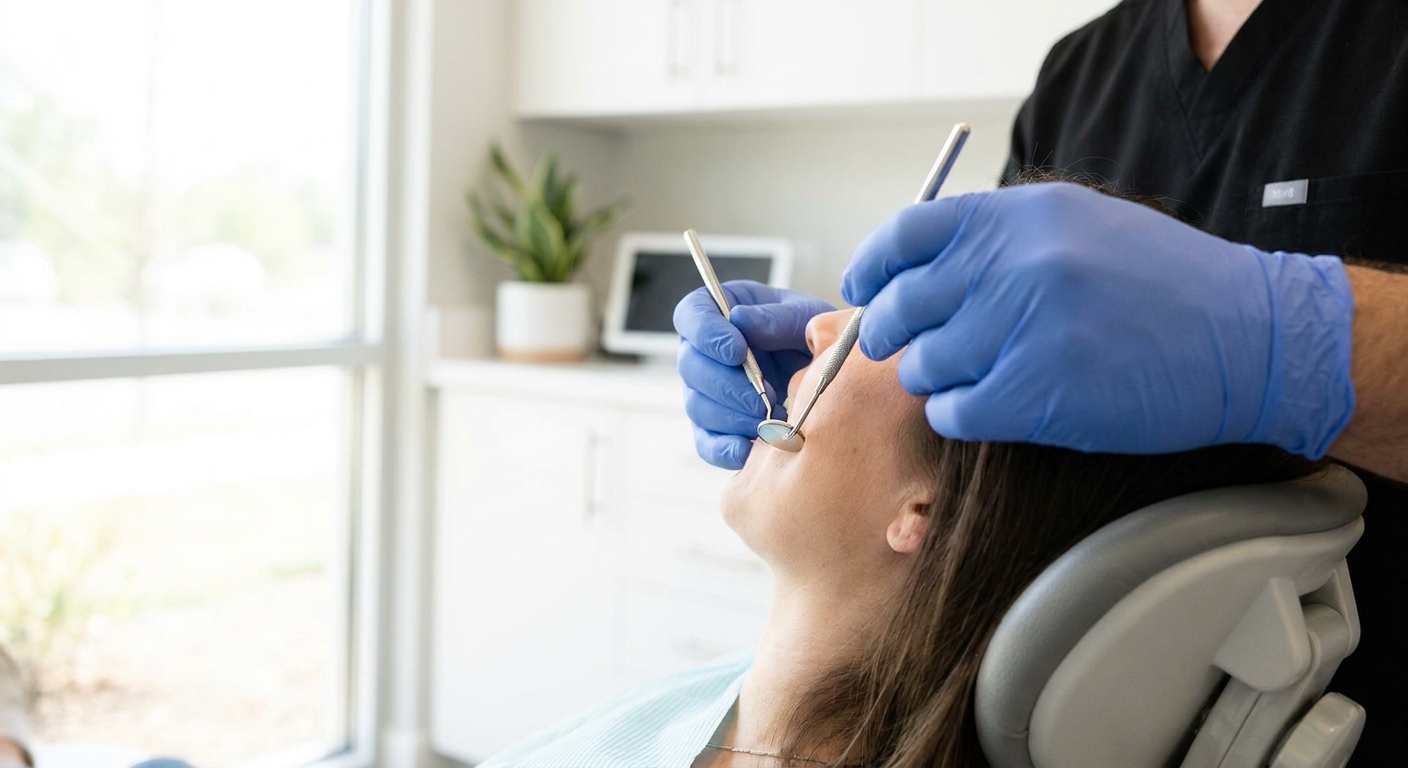
Here is what a same-day visit may look like. You check in, tell the team where it hurts and when it started, and a dentist examines the tooth. You then hear what may be causing the problem, what needs attention today, and what can be scheduled later. Before any treatment begins, ask for the price in writing. You decide what happens next, and nothing is done until you agree.
Some people also worry that the treatment will hurt more than the toothache. That is a fair concern, so say it out loud in the chair. Ask your dentist how the area will be numbed and what you should expect to feel afterward. In one documented case, a patient reported that the relief of getting the problem handled outweighed the discomfort of the visit itself, though every patient’s experience is different and your dentist can tell you what to expect for your situation.
Because walk-ins are welcome seven days a week with extended hours, you don’t have to take a full day off work or wait for a weekday opening. If you would like to talk first, call the office at 704-525-3939.
What Type of Broken Tooth Fracture Do You Have, and How Does It Affect Cost?
Once you know what can happen today, the next question is usually price. The type of break you have plays a big role, because deeper breaks need more involved repairs. Your dentist will confirm the type at your exam, but these are the common categories:
- Craze lines. These are tiny surface cracks in the enamel. They are common and often need no treatment at all, so the cost may be limited to the exam.
- Chipped tooth. A small piece of enamel breaks off, often on a front tooth. This is sometimes addressed with bonding or a filling, which sits at the lower end of the cost range.
- Fractured cusp. A pointed chewing surface on a back tooth breaks away. This often needs a larger filling or a crown, which moves the cost into the middle range.
- Cracked tooth. A crack runs from the chewing surface toward the root. If it reaches the nerve, you may need a root canal plus a crown, which costs considerably more.
- Split tooth. The crack divides the tooth into separate pieces. Part of the tooth may be saved in some cases, but extraction is common, and replacement adds cost later.
- Break below the gum line or vertical root fracture. These breaks sometimes mean the tooth can’t be saved. The path is often an extraction now, followed by an implant, bridge, or denture later.
As a rule, the closer a break gets to the nerve or the root, the more the repair may cost. That is one more reason to get seen early, while the break is still small.
What Factors Affect the Cost of Repairing a Broken Tooth?
The type of break is only part of the picture. Several other factors shape your final number:
- How deep the break goes. Surface chips cost far less to repair than breaks that reach the nerve or root.
- Where the tooth is. Back teeth take more chewing force and often need stronger repairs, like crowns. Front teeth may involve cosmetic choices.
- Whether there is infection. An infected tooth may need extra treatment before it can be repaired or removed.
- How many teeth are involved. A fall or accident can damage more than one tooth at once.
- Materials used. Crowns, implants, and dentures come in different materials at different price points.
- Imaging and exam needs. X-rays help your dentist see below the surface, and they add to the first-visit cost.
- Phased or all-at-once care. Splitting treatment into steps doesn’t always lower the total, but it spreads the cost out so you can plan for it.
- Insurance reimbursement. If your plan pays out-of-network benefits, part of the bill may come back to you after you file a claim.
Will a Lender Say Yes Fast Enough to Help You Today?
Sometimes, yes. Healthcare credit lines and medical lending programs often return a decision soon after you apply, sometimes while you are still in the office. That means you may know your monthly payment before any treatment starts.
This matters because treatment and payment should be settled together. You should never sit in the chair wondering how you will cover a bill you have not seen yet. When you get your treatment plan, ask the front desk whether the office accepts healthcare credit cards or works with any financing companies. Then ask whether you can apply before the procedure begins. If you are approved, you leave knowing what was done, what comes next, and what you owe each month.
The terms matter as much as the approval. Some healthcare financing comes in two basic shapes. A promotional plan charges no interest if you pay the full balance before the promotion ends, often within 6 to 24 months. The catch is that many of these plans use deferred interest, so if even a small balance is left on the last day, interest can be charged back to the original purchase date. An extended plan charges interest from the start, but it stretches payments over a longer period, so each monthly amount is smaller.
Here is how that plays out. Say your quote is $1,200. On a 12-month promotional plan, you would need to pay $100 a month to clear it in time. If $100 a month is too tight, an extended plan with interest might bring the payment down, but you will pay more in total. Pick the plan you can actually finish, not the one with the most attractive headline. Before you sign, read the promotion end date and the interest rate that applies after it, because those two lines matter most.
Does Dental Insurance Cover Broken Tooth Repair at a Self-Pay Office?
Financing helps you pay now, and insurance can help you get some of that money back. Some dental plans do cover broken tooth repair when the work is needed for health rather than looks. Plans sometimes treat fillings and extractions as basic services, often reimbursed at a higher percentage. Crowns, root canals, implants, and dentures may count as major services, which pay at a lower percentage and sometimes come with waiting periods. Purely cosmetic repairs, like veneers on a slightly chipped front tooth, are often not covered at all.
Charlotte Emergency Dental is a self-pay office, but if your dental plan includes out-of-network benefits, you may be able to get part of your bill back. You pay at the visit, then send your insurer an itemized statement and file the claim yourself.
Start by knowing which kind of plan you have. PPO dental plans sometimes include out-of-network coverage, though at a lower rate than in-network care. DHMO plans, sometimes called dental HMOs, often cover nothing outside their network except in narrow cases. Your plan documents or member portal will tell you which kind you have. If you are not sure, call the number on the back of your card.
When you call your insurer, ask five specific questions:
- What percentage do you pay out-of-network for basic services, like fillings and extractions?
- What percentage do you pay for major services, like crowns, root canals, and implants?
- How much of my deductible and annual maximum is left?
- Are there waiting periods on major services?
- Do I need to submit X-rays with the claim?
Write the answers down, along with the name of the person you spoke with.
At your visit, ask for an itemized statement. It should list each procedure code, the tooth number, the date, and the fee. The procedure codes come from the standard dental code set maintained by the American Dental Association, which insurers use to process claims. Attach that statement to your insurer’s claim form and keep copies of everything.
Your insurer pays based on its own “allowed amount” for each code, not on your bill, so the check may cover less than you expect. Plan to cover the full cost up front, through savings or financing, and treat the reimbursement as money coming back to you later. Some people use the insurance check to pay down a financing balance early, which can be a way to avoid interest on a promotional plan.
Fix the Emergency Now, Pay for the Bigger Repair Later
If insurance and financing still leave a gap, phasing your care may help close it. Phased treatment means your dentist handles what is urgent in the first visit, like pain, infection, or a tooth that can’t be saved. The full restoration is scheduled for later, when you have the money or financing in place. It turns one large bill into smaller pieces you can plan for.
Phase one is about stopping the problem. Depending on what your exam shows, that might mean removing a tooth that is too damaged to save, relieving nerve pain, or sealing a broken edge so it doesn’t get worse. Charlotte Emergency Dental offers dental pain relief, urgent dental treatment, and tooth extractions, so some urgent dental issues can be addressed by the same office that diagnoses them.
Phase two is about rebuilding. That could mean a crown, a bridge, dentures, or an implant to replace a tooth that came out. Charlotte Emergency Dental lists implants and dentures among its services, and your dentist can tell you which other repairs are handled in the office. Phase two can wait, but not forever. A back tooth that has had a root canal and no crown is more likely to crack, and a temporary filling is not built to last. Ask your dentist how long it is safe to wait in your case, and put the follow-up on your calendar before you leave.
These are U.S. self-pay ranges that one patient might encounter for repairing a broken tooth. Your exact cost comes from your exam and your treatment plan.
| Treatment | Self-pay range (one example) | Sometimes used for | When it may happen |
|---|---|---|---|
| Dental bonding | $100 to $600 per tooth | Small to moderate chips, mostly on front teeth | Often a single visit |
| Dental filling | $150 to $500 per tooth | Minor breaks on chewing surfaces, breaks caused by decay | Phase one |
| Porcelain veneer | $500 to $2,500 per tooth | Cosmetic repair of visible front teeth | Elective, can wait |
| Dental crown | $800 to $3,000 per tooth | Large breaks, fractured cusps, weakened teeth | Phase two |
| Root canal plus crown | $1,500 to $4,500 | Breaks that reach the nerve inside the tooth | Root canal first, crown later |
| Extraction plus implant | $3,500 to $7,000 or more | Teeth broken below the gum line that can’t be saved | Extraction now, implant later |
Several of these treatments are listed for comparison because you will see them quoted online. At your exam, ask which ones are done in the office and which would need a referral.
Notice how phasing changes the math. The bottom row could look impossible as one bill. Split up, the extraction comes first and stops the pain, and the implant waits until you have saved or arranged financing. Think of it as a before and after in two steps: before, a broken tooth that keeps you up at night; after phase one, no more pain; after phase two, a full smile you can chew with again. If you want a closer look at how break depth drives price, read our guide to what a broken tooth repair costs in Charlotte.
Are Free and Low-Cost Clinics in Charlotte Fast Enough for a Dental Emergency?
Often not for a tooth that hurts today, but they are a strong option for routine and preventive care. Community clinics and dental schools can lower costs a lot. They often involve screening visits and waiting lists, though, which makes them a better fit for care you can plan ahead.
The National Institute of Dental and Craniofacial Research’s guide to finding low-cost dental care lists the main options. Dental schools offer care from supervised students at reduced cost, while community health centers set fees on a sliding scale based on income. State and local programs and clinical trials are other routes. If money is your main barrier, you are far from alone: Georgetown University’s Health Policy Institute points to cost as a leading reason adults go without dental care.
These resources fit some situations better than others. Cleanings, checkups, routine fillings, and dentures you can plan ahead for are good matches, but a cracked molar throbbing at 10 at night is not. Dental school appointments can take longer because students work step by step under an instructor, and community health centers often book routine visits weeks out. Many community health centers also accept Medicaid, which makes them an important option if Medicaid is your coverage.
One approach uses both. Get the urgent problem handled at a walk-in emergency office, then move your routine and preventive care to a sliding-scale clinic. You stop the pain now and keep long-term costs low. If you go this route, ask Charlotte Emergency Dental for copies of your X-rays and treatment notes, so your next provider doesn’t have to start over.
Waiting for Monday May Be More Expensive
Getting seen the day a problem starts is sometimes cheaper than waiting. Small breaks and cavities tend to grow into nerve damage and infection, and those cost far more to treat. Charlotte Emergency Dental welcomes walk-ins seven days a week, with extended hours, so you can get care in Charlotte without waiting for a weekday opening.
Here is what waiting can cost, using the ranges above. A small break that a filling could address runs about $150 to $500. If that break worsens over the following weeks and bacteria reach the pulp chamber through exposed dentin, you may need a root canal to clean out the infected tissue, followed by a crown to protect the weakened structure. That combination of procedures can move the total into the $1,500 to $4,500 range. If bacteria spread further and the crack extends below the gum line, the tooth may become non-restorable, requiring extraction and eventual replacement with an implant. The same tooth, left alone, can move from the cheapest row to the most expensive one. The CDC describes the health and economic benefits of treating oral disease early, and that principle may hold for your own budget too.
Delay costs more than money. Researchers at the University of Illinois Chicago College of Dentistry have written about the financial and well-being costs of poor oral health, from missed work to ongoing pain. A hospital emergency room is the right place for a spreading infection or trouble breathing. Most ERs are not set up to repair teeth, though, so you may leave with pain relief and still need a dentist to address the actual problem.
That is why seven-day walk-in access matters when money is tight. The cheapest dental visit may be the one that happens while the problem is still small. When you need us on a Saturday morning or after work on a weekday, walk-ins are welcome.
What Else Do People Ask When They Need Dental Care With No Money?
The questions below cover what people most often want to know before they walk in. Each answer is meant to help you plan the visit before you leave the house.
Can I get dental work done today if I have no money and no credit card?
You can walk in and be examined. Charlotte Emergency Dental is a self-pay practice, so payment is expected at the visit. If you can’t cover the full cost, ask about financing options before treatment begins, and ask which urgent step costs least while still handling the problem. Some people cover only phase one on the first day.
How long does it take to get approved for dental financing?
Some healthcare credit applications return a decision quickly, sometimes during the same visit. Ask the front desk which payment options the office accepts, and apply before treatment starts so your treatment plan and payment plan are settled together.
Will my dental insurance reimburse me if I go to an out-of-network dentist?
It depends on your plan. PPO plans sometimes include out-of-network benefits, while DHMO plans often don’t. Ask Charlotte Emergency Dental for an itemized statement with procedure codes, submit it with your insurer’s claim form, and expect payment based on your plan’s allowed amount.
What is phased treatment, and how does it help me afford dental care?
Phased treatment handles the urgent problem first, such as removing a tooth or relieving pain. The crown, bridge, implant, or denture comes later. You pay for a smaller first step now and plan for the larger one, as long as you return within the window your dentist recommends.
How can I fix my teeth if I don’t have money and I’m on Medicaid?
Charlotte Emergency Dental does not accept Medicaid. Many community health centers do, so start there for planned care. If you are in severe pain and want to be seen right away, you can still walk in as a self-pay patient and ask for a written quote first.
Are there free or low-cost dental clinics in Charlotte?
Yes. Community health centers with sliding-scale fees and dental school clinics offer reduced-cost care, and the NIDCR guide explains how to find them. They work best for planned, routine care, because appointments often aren’t available the same day.
What does the first visit cost if I walk in with no insurance?
Your first-visit cost depends on the exam, any X-rays, and whether you need treatment that day. Ask for the exam fee when you check in, and get a written quote for any procedure before it begins. You have every right to know the number and decide before anything is done.
Walk in to Charlotte Emergency Dental any day of the week, no appointment needed, or call 704-525-3939 if you’d like to talk first. You’ll get an exam, a clear answer on what has to happen today, and a straight conversation about how to pay for it. Before you leave home, take one minute to log in to your insurance portal or financing account and screenshot your coverage or available credit. Walking in with your real numbers in hand may be the fastest way to leave with a plan you can afford.
Affordable Emergency Dental Care Is Within Reach
You shouldn’t have to choose between your dental health and your budget. If you’re dealing with tooth pain or damage and worried about the cost, Charlotte Emergency Dental works with patients to find solutions that fit your financial situation. Call now to discuss your options and get the care you need today.
Call Charlotte Emergency Dental
Price ranges shown are examples from U.S. self-pay settings for comparison only. Your individual treatment plan and cost depend on your exam, and outcomes vary from person to person.