If you are reading this with a sore tooth, a chipped edge, or a nagging feeling that it has been too long since your last checkup, you are not alone. At Charlotte Emergency Dental, walk-ins are welcome seven days a week, and many people who come through our door with dental pain are dealing with a problem that a four-minute daily routine may have helped reduce. One patient’s molar split after years of untreated decay and required extraction, and replacing it with an implant is one of the most expensive procedures in dentistry. The pattern behind some breaks is often familiar: a long gap without a dental visit, toothpaste without fluoride, brushing once a day or skipping nights, and cavities that grow until the tooth gives way under normal chewing. If you have been asking, “What is the 2 2 2 rule for teeth?”, this guide explains it. It also covers what a broken tooth can cost in Charlotte and what you can do today if a tooth is already damaged.
What Is The 2-2-2 Rule For Teeth, And Why Does Each 2 Matter?
The 2-2-2 rule for teeth means brushing two times a day, for two full minutes each time, with fluoride toothpaste, and seeing a dentist on a regular schedule. Most people learn the third “2” as twice a year, and many dentists say it should never stretch past two years. Each part targets a different way teeth can weaken before they break.
The first two parts come straight from mainstream guidance. The American Dental Association’s home oral care recommendations tell adults to brush twice a day for two minutes with a fluoride toothpaste. The National Institute of Dental and Craniofacial Research gives the same core advice on its oral hygiene page, along with cleaning between teeth and seeing a dentist regularly. None of this advice is new. What surprises most people is how directly these habits can connect to the size of a repair bill.
The third “2” causes the most confusion, because you will see it written both as “twice a year” and as “every two years.” Treat two years as the outer limit, not the goal. Your dentist sets your interval based on your mouth. If you have had cavities before, have a lot of old fillings, deal with dry mouth, or grind your teeth, you likely need visits more often than someone with a clean history. The whole point of the visit is timing, since it lets you catch a problem while it may still fit in one appointment.
The rule also has a blind spot worth naming. It says nothing about cleaning between your teeth, even though the ADA recommends doing that every day with floss or another between-teeth cleaner. Picture someone who brushes faithfully morning and night but never flosses. Their front surfaces look great, while a cavity can grow quietly between two back molars where bristles cannot reach. That person is following the 2-2-2 rule and may still be heading toward a repair. Think of daily flossing as the unofficial fourth step.
Why Does A 30-Second Brush Leave The Weak Spots Where Teeth Can Break?
A quick brush may miss the same places every time: the gumline, the inside surfaces, and the back molars. When plaque sits in those spots day after day, it can pull minerals out of the enamel and leave soft, weak patches, and a tooth with a weak patch may be more likely to chip or crack when you bite into something firm.
That is why a sudden chip or crack is often less sudden than it feels. A tooth that breaks while you are eating dinner has sometimes been weakened for months in a spot your brush kept missing. In other words, the tooth did not break at random. It broke where it had been quietly weakened.
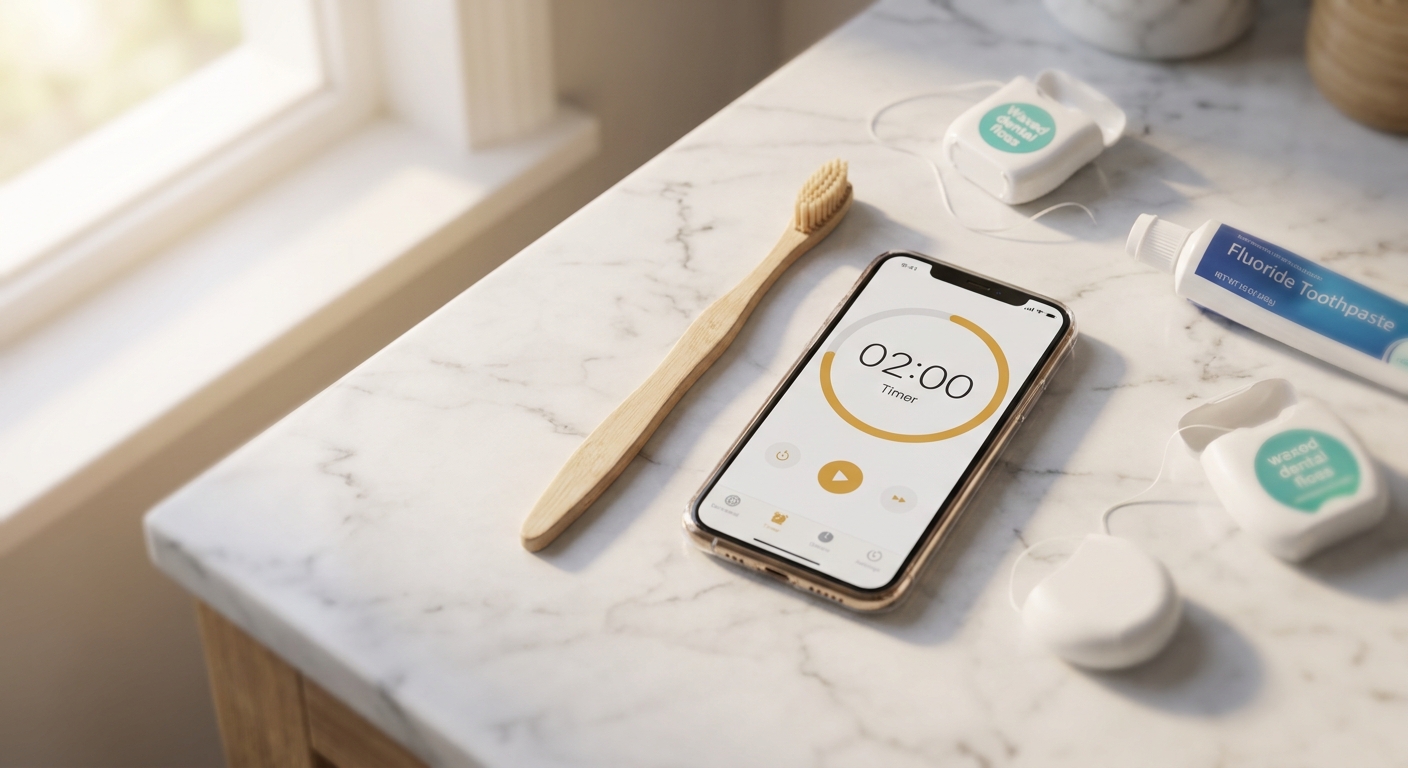
Two minutes is enough time to cover every surface on purpose rather than by accident. An easy way to hit the mark is to split your mouth into four sections (upper right, upper left, lower right, lower left) and spend about 30 seconds on each. In every section, brush the outside, the inside, and the chewing surfaces, angling the bristles toward the gumline. Use a soft brush and gentle pressure, because scrubbing hard does not clean better and can wear down enamel and irritate your gums over time. A phone timer works fine, and many electric brushes have a built-in two-minute timer that buzzes at each quarter.
The night brush deserves extra attention. During the day, saliva helps rinse your mouth and neutralize acid, but it slows down a lot while you sleep, so any plaque left behind at bedtime gets several undisturbed hours to work on your enamel. Unfortunately, that is exactly the brush most people rush or skip. One more small habit helps: after brushing, spit out the extra toothpaste instead of rinsing hard with water. That leaves a thin layer of fluoride on your teeth to keep working overnight.
How Skipping Dental Visits For Years Can Turn A Small Problem Into A Large Repair
A cavity does not stay the same size while you wait. It can move inward through the tooth in stages, and each stage may need a bigger, more expensive repair than the one before. Regular dental visits exist to help stop that progression at the first and often least costly step.
Here is how it can unfold in some cases. Decay starts in the outer enamel, where you often feel nothing at all, and at this point a dentist may be able to remove the damage and place a small filling in one short visit. Next, decay can reach the softer dentin layer underneath, and you may notice sensitivity to cold or sweets. By then the cavity is bigger, so the filling may be bigger too, or the tooth may now need a crown. If decay keeps going, it can reach the pulp, where the nerve lives. That is when a throbbing toothache and infection may show up, and the tooth may need treatment inside it plus a crown to protect what is left. At the far end, the tooth may be so hollowed out that it can split under normal chewing. If it cannot be saved, it has to come out, and replacing it may mean an implant, a bridge, or a denture.
A toothache with a visible hole is often the first sign people notice, which is exactly the problem: by the time decay hurts, it has often moved past the least costly stage. Nobody in that situation did anything unusual. They simply went long enough without an exam that a small problem had time to become a large one.
This is where the third “2” earns its place. An exam every six months to two years means a cavity may have less time to grow. Charlotte Emergency Dental provides emergency and general dental care, including tooth extractions, implants, and dentures, so one office can see you whether a problem is brand new or well along. Still, the visit you will be happiest about is the one where the news is small. If you already have dental pain, a visible hole, or a tooth that hurts when you bite, do not wait to “get back on track” first. Walk in now, and start the routine once the urgent dental issue is handled.
Does The 2-2-2 Rule Still Work Without Fluoride Toothpaste?
No. Fluoride is the ingredient that can make brushing protective rather than just cosmetic. Brushing removes plaque, but fluoride is what can help weakened enamel rebuild and resist the acid attacks that may create soft spots, so two minutes with a fluoride-free paste leaves most of the benefit on the table.
Here is what happens on your teeth every day. When you eat or drink, bacteria in plaque turn sugars into acid, and that acid pulls minerals out of your enamel. Between meals, your saliva works to put some of those minerals back. Fluoride can tip that daily tug-of-war in your favor by helping enamel take minerals back in and making the surface harder for acid to dissolve. The CDC’s overview of oral health lists brushing with fluoride toothpaste among ways to help reduce cavity risk.
Checking your toothpaste takes about ten seconds. Look at the “active ingredient” line on the tube, where you want to see sodium fluoride, stannous fluoride, or sodium monofluorophosphate. The ADA Seal of Acceptance on the box is another quick sign that the paste meets the ADA’s standards. Be careful with some charcoal, “natural,” or specialty whitening pastes, because some leave fluoride out entirely. If a paste lists no active ingredient, it may not be giving your enamel the help the 2-2-2 rule counts on.
Your eating habits matter too, because they decide how many acid attacks your enamel faces each day. Harvard’s Nutrition Source explains how sugary foods and drinks feed the bacteria that produce tooth-damaging acid. Constant sipping is the hidden problem. A soda or sweet coffee nursed over three hours keeps your teeth bathed in acid the whole time, while the same drink finished with lunch gives your saliva a chance to recover. Fluoride toothpaste offers protection, but it works best when your teeth get long breaks between sugar hits.
How Much Does It Cost To Fix A Broken Tooth In Charlotte, NC?
You are probably worried about two things right now: how much this will cost, and whether you will find out before the work starts. That is a fair worry, so here is the straight answer. Charlotte Emergency Dental is a self-pay practice, and you can ask for the cost of each option before you agree to any treatment. A routine exam and cleaning in Charlotte may cost $100 to $200, while repairing a tooth that broke after years of untreated decay can cost many times that.
The table below shows how the same tooth can follow very different price paths. These are typical Charlotte-area ranges, not quotes, and your actual cost depends on what the exam and x-rays show.
| Where you catch the problem | What the tooth may need | Typical cost range |
|---|---|---|
| Routine visit, no decay found | Exam and cleaning | $100 to $200 |
| Early cavity found at a checkup | Small filling | Starting around $150 |
| Decay has weakened a large part of the tooth | Dental crown | $800 to $3,000 |
| Decay has reached the nerve | Treatment inside the tooth plus a crown | More than a crown alone |
| Tooth split or cannot be saved | Extraction plus an implant | $3,500 to $7,000 or more |
Costs climb quickly for practical reasons. A filling is often done in one appointment. A crown involves reshaping the tooth and making a custom cap. Treating the nerve adds careful work inside the tooth before the crown even begins. An implant means removing the tooth, placing a post in the jawbone, waiting months for it to heal, and then attaching the new tooth. Each step down the table also takes more of your time away from work. For a full breakdown of each repair option, see our guide to what [broken tooth repair cost](https://charlotteemergencydental.com/blog/broken-tooth-repair-cost-charlotte/)s in Charlotte.
What Factors Affect The Cost Of Repairing A Broken Tooth?
Two people with “a broken tooth” can get very different estimates. These are the main things that may move the number:
- How deep the break goes. A chip in the enamel may cost far less to fix than a crack that reaches the nerve or the root.
- Whether the nerve is involved or infected. Pain, swelling, or a pimple on the gum often means the inside of the tooth may need treatment too.
- Which tooth it is. Back molars have more roots and take heavier chewing force, so repairs there may cost more than on front teeth.
- How much healthy tooth is left. The more structure that remains, the smaller and less expensive the repair may be.
- The material used. Restorations come in different materials, and the choice can affect both price and lifespan.
- Whether the tooth can be saved at all. Removing and replacing a tooth adds steps, visits, and cost.
- How long you wait. A crack or cavity left alone may grow, which can push you further down the cost table.
What Type Of Broken Tooth Fracture Do I Have, And How Does It Affect Cost?
Only an exam and x-rays can confirm the type of break, but knowing the common kinds helps you understand what the dentist tells you. From often least to most costly, they may look like this:
- Craze lines. These are tiny surface lines in the enamel that cause no pain. They often need no treatment at all, so cost is usually limited to the exam.
- Chipped tooth. A small piece of enamel breaks off, often on a front tooth. Small chips are often among the less expensive repairs.
- Fractured cusp. A pointed chewing corner of a back tooth breaks, often around an old filling. This may need a larger repair or a crown, so cost moves into the middle range.
- Cracked tooth. A crack runs from the chewing surface down toward the root, and you may feel sharp pain when you bite or release. If the crack reaches the nerve, the cost may rise because the inside of the tooth may need treatment plus a crown.
- Split tooth. The tooth has separated into pieces, often after a crack went untreated. Part of the tooth may be saved, but often it has to come out, which brings replacement costs into play.
- Vertical root fracture. The crack starts in the root and works upward. It often shows few signs until the area becomes infected, and many of these teeth need to be removed, which may put the cost at the high end.
Does Dental Insurance Cover Broken Tooth Repair?
It depends on your plan, and it is worth asking before you assume anything. Many dental plans pay part of the cost of exams, x-rays, and basic repairs, then pay a smaller share of major work like crowns and implants, often up to a yearly maximum. Some plans also have waiting periods for major treatment. Charlotte Emergency Dental is a self-pay practice, so you pay the office directly at the time of care. If you have a dental plan, call your insurer and ask how it handles care you pay for yourself and whether you can submit a claim on your own. That way you know your real out-of-pocket cost before you walk in. Because you pay the office directly, you get a clear price for each option up front, without waiting for an insurance approval to tell you what you owe.
How Can I Afford A Broken Tooth Repair Without Insurance Or Much Money?
A broken tooth rarely gets cheaper with time, so it helps to have a plan even if money is tight. These steps can make care more manageable:
- Ask for the cost of each option. Seeing the price of saving the tooth next to the price of removing it helps you choose with clear eyes.
- Treat the urgent part first. Getting out of pain today can come first, with the remaining work planned for later.
- Ask about phasing treatment. Spreading work across a few visits may let you spread out the cost.
- Use pre-tax health savings. If you have a health savings account or flexible spending account, dental care often qualifies.
- Look into dental savings plans. These membership plans offer discounted rates at participating offices for a yearly fee. Check whether a plan applies before you buy it.
- Consider third-party healthcare financing. Some patients use medical credit cards or personal loans to pay over time. Read the interest terms carefully.
- Check local low-cost options. Community health centers and dental school clinics in the region may offer reduced fees, though wait times can be longer.
What Can I Get Done The Same Day At Charlotte Emergency Dental?
You can walk in, be seen by a dentist, get an exam and x-rays, and get dental pain relief the same day. Charlotte Emergency Dental provides fast emergency and urgent dental treatment, so you do not have to wait weeks for an opening while a tooth throbs.
During a walk-in visit, the dentist examines the broken or painful tooth, takes x-rays to see how deep the damage goes, and explains your options and their costs before any work begins. From there, the focus is on getting you out of pain and stopping the problem from getting worse. That can include urgent dental treatment for the damaged tooth and, when a tooth cannot be saved, a tooth extraction. If you need more involved work, such as an implant or dentures, the dentist will walk you through the plan and timeline so you know what comes next.
Many people worry that the treatment will hurt more than the toothache. It is a reasonable fear, especially if you have had a rough dental visit before. The dentist numbs the area before treatment, so you can focus on getting relief. Others wonder whether walk-in care is real or just a marketing line. At Charlotte Emergency Dental, walk-ins are welcome seven days a week with convenient extended hours. If you prefer to check before you come, call 704-525-3939.
Questions Charlotte Patients Ask About The 2-2-2 Rule
What is the 2 2 2 rule for teeth?
It means brushing twice a day, for two minutes each time, with fluoride toothpaste, and seeing a dentist regularly. The visits are often described as twice a year, and many dentists suggest never letting them stretch beyond two years. Add daily cleaning between your teeth to cover the spots a brush cannot reach.
Does the 2-2-2 rule really prevent broken teeth?
It may lower your risk, though no habit can guarantee you will never chip a tooth. Many fractures start in enamel that decay or plaque had already weakened, and strong, clean enamel can hold up better under everyday biting. Accidents, sports injuries, and grinding can still break teeth, which is why the regular exam matters too.
How much does it cost to fix a broken tooth in Charlotte if I skip preventive care?
It depends on how deep the damage goes. The cost table above shows typical ranges, from a small filling to a crown to an extraction and implant. An exam is the only way to know which stage your tooth is in.
Can I start the 2-2-2 rule at Charlotte Emergency Dental without an appointment?
Yes. Walk-ins are welcome seven days a week for general dental care as well as dental emergencies, so you can come in for an exam on your own schedule.
Why does brushing need to be two full minutes instead of 30 seconds?
Two minutes gives you enough time to reach every surface, including the gumline and back molars, where plaque builds up. It also keeps fluoride in contact with your enamel longer. A 30-second brush may clean only the front surfaces you can see.
What happens if I haven’t seen a dentist in five years?
You may be fine, or a small cavity may have grown into something that now needs a crown, treatment inside the tooth, or an extraction. You cannot tell from the outside, especially since early decay often causes no pain. Get an exam soon rather than waiting for symptoms, and if something already hurts, walk in right away.
What if I grind my teeth at night?
Grinding puts heavy force on teeth and can crack even healthy enamel. Signs include a sore jaw in the morning or teeth that look worn and flat. Mention it at your exam so the dentist can check for early cracks and talk with you about ways to protect your teeth.
Can You Start The 2-2-2 Rule This Week Without Waiting For An Appointment?
Yes. Charlotte Emergency Dental offers walk-in general dental care seven days a week with extended hours, so you can start the 2-2-2 rule on your own schedule instead of waiting weeks for an opening and hoping nothing breaks in the meantime.
Many people fall off routine dental care for a simple reason: getting an appointment is hard. You call, the next opening is a month out, life gets busy, and suddenly it has been three years. Walk-ins remove that barrier. You come in when your day allows, and the visit starts with an exam to see where each tooth stands. If everything looks healthy, you leave with a clean slate and a plan for your next visit. If the exam finds an early problem, you have caught it at a stage that may be less costly to address.
Charlotte Emergency Dental serves patients across Charlotte, NC 28209. Because the practice handles both general and emergency dental care, one office can take care of you from your first exam to urgent treatment if you ever need it, so you may not be bounced between offices while a problem gets worse.
Walk in this week for an exam to start the 2-2-2 rule. If you already have a toothache, a crack, or a visible hole, call 704-525-3939 or walk in for fast care. Walk-ins are welcome seven days a week, when you need us. Until then, start tonight: set a two-minute timer before bed, check that your toothpaste lists fluoride as the active ingredient, and spit instead of rinsing. That one nighttime brush protects your teeth during the hours when saliva slows down and your enamel is most exposed, which is exactly when small weak spots may begin turning into breaks.
Keep Your Routine Strong, We’re Here When You Need Us
The 2-2-2 rule is your first line of defense against painful dental emergencies, but life doesn’t always go according to plan. If you’re dealing with a sudden toothache, a broken tooth, or any urgent dental concern that can’t wait for a regular appointment, Charlotte Emergency Dental is ready to help. We understand that true emergencies need immediate attention, and we’re here to get you out of pain and back to your daily routine.
Call Charlotte Emergency Dental
- Cost ranges shown are typical estimates for the Charlotte area and are not quotes.
- Your treatment needs and final cost depend on your exam and x-rays.
- Charlotte Emergency Dental is a self-pay practice and does not accept Medicaid.
- Insurance coverage varies by plan, so check with your insurer about your benefits.
- This article is for general information and is not a substitute for an exam by a licensed dentist.
- Outcomes vary by individual, and no dental routine can guarantee specific results.