Urgent Dental Care in Charlotte: When You Can’t Wait for an Appointment
If you are reading this with your jaw throbbing or a piece of tooth in your hand, you do not need a lecture on oral hygiene. You need to know where to go, how fast you will be seen, what it will cost, and whether the problem may be addressed today. That is exactly what this article walks you through, step by step, using the real workflow this practice runs every single day.
Here is what that workflow looks like in practice. Last Monday at 1:56 p.m., a patient walked into Charlotte Emergency Dental in pain. Thirteen minutes later, a doctor was in the room with a diagnosis on screen. By 2:35 p.m., thirty-nine minutes after arrival, the patient’s extraction was finished and they were experiencing relief. That timeline reflects the practice’s business model: walk-in patients treated the same day, most within an hour, because urgent dental problems do not wait politely for next week’s calendar opening.
What Actually Counts as Urgent Dental Care
Urgent dental care means treatment for a dental problem that cannot safely wait for a scheduled appointment. That happens when you are in significant pain, when you are at risk of losing a tooth or bleeding, or when an infection may spread if it is ignored. The rule of thumb is simple: if it hurts enough to interrupt your sleep, your work, or your ability to eat, it may qualify.
Charlotte Emergency Dental treats between 10 and 15 same-day emergencies every day, which works out to roughly 50 patients a week. The list of what may be addressed in a single visit is long, and it includes severe toothaches, knocked-out teeth, cracked and fractured teeth, abscesses and infections, lost or loose crowns, sudden sensitivity, dry sockets, and lingering pain after an extraction. Root canals, [extractions](https://charlotteemergencydental.com/blog/emergency-tooth-extraction-charlotte-nc/), [implants](https://charlotteemergencydental.com/dental-implants-in-charlotte-nc/), and dentures may be completed on-site when the situation allows.
Here is what makes this practice different from an office that stabilizes you and sends you elsewhere. Many cases that walk through the door may be addressed in-house the same day, with no referral and no second trip across town. Only a small handful of problems are sent out. A root canal with severely calcified or unusually complex canal anatomy may go to a specialist, and true medical emergencies (major facial trauma, a fractured jaw, or swelling severe enough to threaten your airway) belong in a hospital or emergency room. If your problem is a tooth, this practice may be able to help. If it is a medical crisis, the team will tell you honestly and point you to the right care.
What Happens the Minute You Walk In Without an Appointment
You do not need to know the diagnosis, the treatment, or the code on the insurance form. Your only job is to show up. Everything after that is designed to move you from the waiting room toward evaluation and care as quickly as clinically possible, and it follows the same path every time.
First, the team figures out how urgent you really are
The front desk triages you the moment you arrive. That means a few quick, focused questions: what is going on, how long has it hurt, what does the pain feel like, what makes it better or worse, and is there any swelling. They also screen for the warning signs of a serious infection, such as trouble breathing or swallowing. This is not paperwork for the sake of paperwork. It sorts a nagging sensitivity from a spreading abscess, and it decides who gets seen first. A patient with a knocked-out tooth jumps the line ahead of everyone, because for that person the clock matters. Most weekday walk-ins move from the front desk to the back within a short window, and the whole point of triage is to make sure the person in the most urgent situation is not sitting quietly in a chair while time passes.
Then, a 3D scan shows the doctor exactly what is wrong
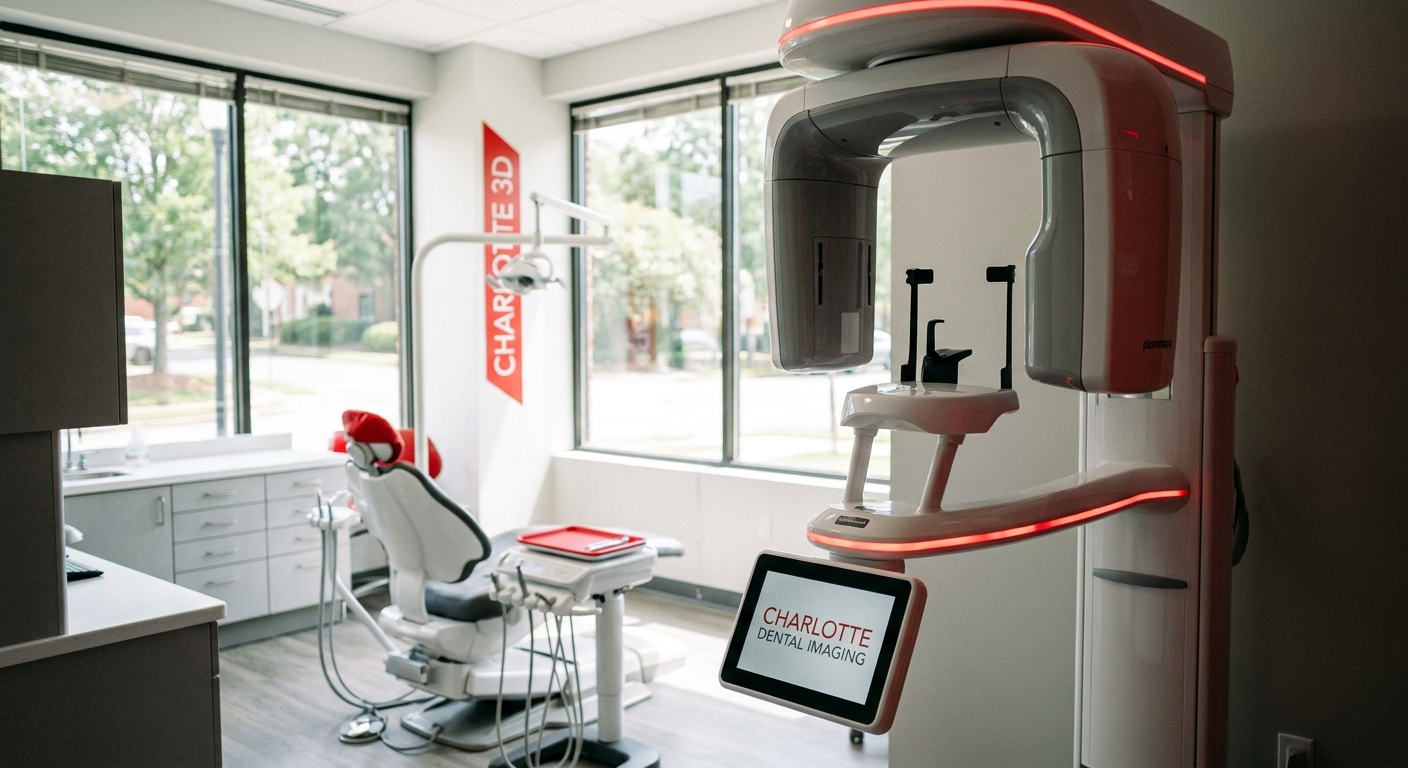
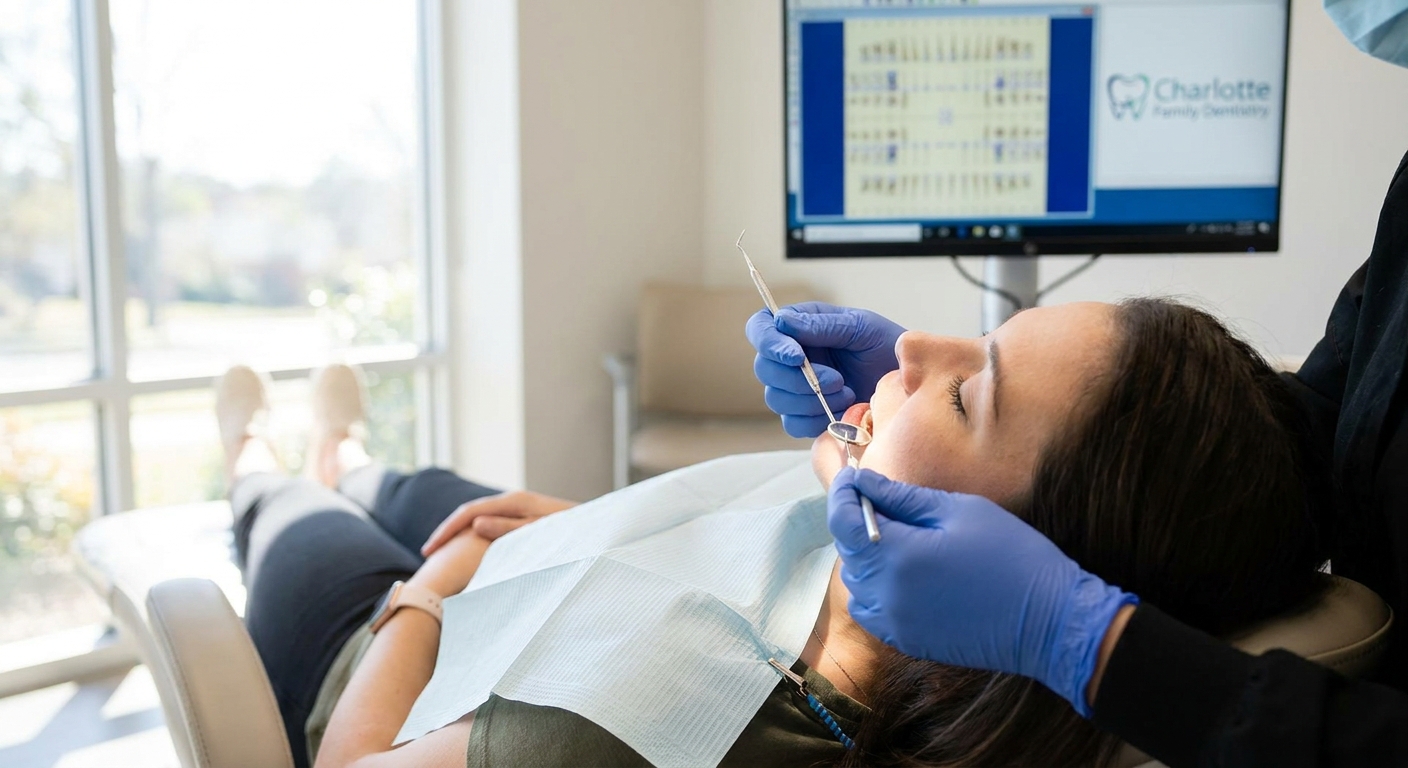
Next you are brought back for a CBCT, which stands for cone-beam computed tomography. Think of a standard dental X-ray as a flat photograph and a CBCT as a full three-dimensional map of your mouth. It may reveal infections hiding at the tips of tooth roots, hairline fractures a flat image would miss, the true size of a cavity, and the quality of the bone underneath, which matters if a tooth may need to be replaced with an implant. From there a dental assistant reviews your history, and then the doctor performs a hands-on exam: an intraoral inspection, vitality testing with percussion and cold to check whether the nerve is alive, and a screen for infection. The doctor walks you through the scan on the screen, points to the likely cause of your pain, and lays out your options along with financing before anything is done.
On a recent Tuesday, this workflow ran start to finish in a little over an hour. A patient arrived at 10:15 a.m. with excruciating pain on the lower left. By 10:30 the CBCT was captured and the problem was named: an unrestorable vertical root fracture of tooth number 30. At 10:35 the patient was numb and experiencing relief. The extraction and a bone graft were done by 11:20, and the patient pulled out of the parking lot at 11:30. That is what “same day” means here. Not an appointment for later today. Treatment completed today when clinically appropriate.
When Every Minute Counts: The Knocked-Out Tooth Protocol
A permanent tooth that has been completely knocked out is one of the few true race-against-the-clock situations in dentistry. The American Association of Endodontists advises acting fast, because the living fibers that anchor a tooth to the bone (the periodontal ligament) begin to die once the tooth is out of the socket, and their chance of reattaching may decrease as time passes. The working target is reimplantation inside about an hour when possible.
That is why this practice treats an avulsed tooth as the highest priority in the building. When you call, staff will tell you to put the tooth in a container of milk, not water, and to come immediately. Milk helps preserve those root-surface cells better than tap water does. The goal from the moment you walk in the door to the moment you are in the chair is under 10 minutes when possible. You are seated in the first open operatory and the work starts right away.
The technique matters as much as the speed. The team gently lifts debris off the root without scrubbing it, because aggressive rinsing can strip away the cells the tooth may need to reattach. The tooth is placed back into its socket, repositioned as close to its original spot as possible, then bonded to the neighboring teeth with a resin and fiber splint that is light-cured into place. That splint holds the tooth steady for about four weeks while healing may begin. Many patients go home on a 10-day course of antibiotics, usually amoxicillin, or clindamycin for those with a penicillin allergy. If the tooth touched soil or an outdoor surface, a tetanus booster may be recommended. You return in three to four weeks so the team can confirm how the bone is healing and remove the splint. Save the tooth, keep it in milk, and get there fast. The rest is handled.
Seven-Day Access and What Your Wait Will Really Be
The reason many people in Charlotte end up stranded with a toothache is scheduling, not a shortage of dentists. Many offices run a Monday-through-Thursday week and book patients days or weeks out. That works fine for a routine cleaning, but it fails when a molar cracks on a Saturday night or an abscess flares up at 6 p.m. on a Wednesday.
Charlotte Emergency Dental is open seven days a week, with weekday hours running from 9 a.m. to 7 p.m. Those extended evening hours exist for a specific reason: they let you come in after work instead of burning a vacation day, and they mean the weekend is not a dead zone where your only option is a hospital that cannot treat a tooth. An office open every day of the week is available far more often than one that closes for three or four days out of every seven, and when you are in pain, availability matters.
Typical wait times reflect this. On weekdays, walk-in patients are often seen within about 30 minutes of arrival. Weekends may be busier, so the wait can stretch, but it is typically under an hour. Compare that to the standard alternative, where “we can see you next Tuesday” is what many offices offer. The practice sees around 50 emergency patients a week precisely because urgent dental care in Charlotte has a gap this schedule was built to address. You do not have to plan around it. You just come in.
What It Costs and How Payment Actually Works
Cost is the reason many people sit at home with a throbbing tooth instead of getting help, so here is the number without the runaround. The emergency exam, which includes the CBCT scan, is $99. That covers the visit where the doctor diagnoses your problem and lays out your options. You will know what is wrong and what treatment costs before anyone touches your tooth, which means no surprise bill after the fact.
Charlotte Emergency Dental is an out-of-network provider, and there is a reason for that choice. Insurance networks often push a practice toward whatever the plan is willing to pay rather than what may serve the patient’s needs. Staying out of network allows the doctors to recommend treatment based on clinical judgment. If you have dental insurance, you are not left on your own. The office provides itemized claim forms you can submit to your insurer for reimbursement, so you may recover a portion of your costs, often 50 to 80 percent of restorative work depending on your plan.
For treatment that runs beyond the exam, the practice partners with several outside financing companies that split the cost into monthly payments, frequently at 0 percent interest. That is the piece that may help make treatment more accessible. If you are concerned about cost, ask about a payment plan during the visit, because in many cases the treatment can start the same day and the cost can be spread out over time. The goal is to provide relief, not to make you choose between your wallet and your tooth.
What If You Are Nervous About Dental Treatment
Dental anxiety is common, and for many people it is the exact reason a small problem grew into an emergency. Nobody here is going to shame you for putting off care. The team works with anxious patients every day, and the approach starts with something simple: they explain what is happening before they do it, so nothing comes as a surprise.
For patients who need extra help, the doctors may prescribe an anxiolytic medication to take before the appointment, which may help with anxiety. What is worth knowing is that many patients, even those who describe themselves as very nervous, go through treatment without any sedation. The pain you walked in with may be more intense than what the treatment involves. Once you are numb and the pressure is relieved, the fear tends to ease for many people. If anxiety is the thing standing between you and relief, say so when you arrive, and the team will meet you where you are.
Common Questions About Urgent Dental Care in Charlotte
Do I need to call ahead, or can I just walk in?
You can walk in without calling. Walk-ins are welcome seven days a week. Calling ahead helps in one specific situation: a time-sensitive case like a knocked-out tooth, where letting staff know you are on the way lets them prepare to seat you as quickly as possible.
How long will I wait if I walk in?
On weekdays, patients are often seen within about 30 minutes of arrival. Weekend waits are typically under an hour. A knocked-out tooth is prioritized immediately, with a target of under 10 minutes from door to chair when possible.
What does the emergency exam cost, and does insurance cover it?
The emergency exam and CBCT scan cost $99. The practice is out-of-network but provides claim forms so you can seek reimbursement from your insurer, and it offers financing plans, frequently at 0 percent interest, for treatment beyond the exam.
Can my root canal or extraction be done the same day, or will I be referred out?
Many extractions, root canals, and tooth reimplantations may be completed in-house the same day. Only some cases are referred: a root canal with highly challenging canal anatomy may go to a specialist, and major facial trauma requiring a hospital is sent to the appropriate emergency setting.
Are you open on weekends and evenings?
Yes. The practice is open seven days a week, with weekday hours from 9 a.m. to 7 p.m. and weekend availability for walk-in emergencies.
If my tooth gets knocked out, how fast do I need to get there?
As fast as you can. The American Association of Endodontists recommends reimplanting a knocked-out permanent tooth within about 60 minutes when possible to improve the chances of successful reattachment. Store the tooth in milk and come straight in, because avulsed teeth are seen immediately.
If you are experiencing dental pain, a knocked-out tooth, or another problem that needs urgent dental care in Charlotte, walk into Charlotte Emergency Dental today, or call to let the team know you are on your way. Put a knocked-out tooth in milk first, then head straight in. Walk-ins are welcome seven days a week, the emergency exam is a flat $99, and many patients experience relief the same day they arrive.
Don’t Wait When a Dental Emergency Strikes
If you’re experiencing severe tooth pain, a knocked-out tooth, or another urgent dental issue that can’t wait until regular office hours, Charlotte Emergency Dental is here to help. We understand that dental emergencies happen at the worst possible times, and putting off treatment can lead to complications. Reach out now to speak with our team about getting the immediate care you need.
Call Charlotte Emergency Dental
- Individual experiences vary.
- Individual treatment timelines and outcomes vary.
- Individual healing responses vary.
- Individual wait times vary based on case volume and urgency.
- Reimplantation outcomes vary based on time elapsed and individual factors.
- Reimbursement rates vary by insurance plan and coverage details.
- Treatment feasibility and timing vary by case complexity.