Dental Trauma Treatment in Charlotte: Fast Care After an Injury
You just watched a tooth hit the pavement, or felt a crack run through a molar during a fall, and the clock is already ticking. Your mouth is bleeding, your heart is racing, and the one question that matters right now is simple: where can you go, and what options exist for this tooth?
That is the exact moment Charlotte Emergency Dental is built for. Walk-ins are welcome seven days a week, and on a typical weekday you move from the front door to the treatment chair in about 30 minutes. In those first minutes you get 3D imaging, a diagnosis, and a treatment plan from a team that handles roughly 10 to 15 same-day emergencies every single day. This guide walks you through what dental trauma actually is, what dental trauma treatment looks like step by step, and why speed and the right equipment matter after an injury.
What Dental Trauma Is and Why the First Hour Matters
Dental trauma is any physical injury to your teeth, gums, or the bone that holds them in place. It usually falls into three groups. An avulsion is a tooth knocked completely out of its socket. A fracture is a chipped, cracked, or broken tooth, which can range from a tiny surface chip to a break that runs down into the root. A luxation is a tooth that has been pushed, loosened, or shoved out of its normal position without fully leaving the mouth. Each one is a genuine emergency, but a knocked-out permanent tooth is the most time-sensitive of all.
Here is why the clock matters so much. The root of your tooth is covered in a thin layer of living cells called the periodontal ligament. Think of these cells like the tiny anchors that help a tooth reattach to bone. The moment a tooth leaves your mouth, those cells begin to dry out and die. Once they are gone, the tooth faces significant challenges in healing back into place. This is the biology behind every “get to a dentist fast” warning you have ever heard.
The International Association of Dental Traumatology publishes the treatment guidelines dentists worldwide follow for these injuries, and their guidance is clear: the potential for a replanted tooth is tied directly to how quickly it goes back in and how well those root cells were protected. Research published in the Journal of Endodontics has repeatedly linked shorter time out of the socket with different long-term outcomes. Individual results vary considerably, but time is one factor you can influence the moment an injury happens. That is the reason a same-day, walk-in option in Charlotte can provide important treatment access.
The Kinds of Dental Trauma We Treat Same-Day in Charlotte
Charlotte Emergency Dental handles nearly 100 percent of emergencies the same day you arrive, treating roughly 10 to 15 same-day cases each day and around 50 emergency patients each week. That daily volume matters, because it means the injury you’re experiencing right now is something the team sees and manages routinely. Alongside acute injuries, the practice regularly handles severe toothaches, infections and abscesses, dry sockets, post-extraction pain, and sensitivity.
An avulsed tooth, one that has been fully knocked out, is the most urgent case. When you arrive, the area is numbed, debris is gently cleaned from the root, and the tooth is placed back into its socket and splinted to the adjacent teeth. Fractures are the most common injury after a fall or a blow to the face. A minor chip to the enamel is uncomfortable but rarely dangerous, while a deeper break that exposes the soft inner nerve, or a crack that travels into the root, needs prompt attention to control pain and reduce infection risk. The dentist checks how deep the fracture goes before discussing whether the tooth may be repaired or needs to come out.
Luxation injuries are teeth knocked loose or shifted out of line. A lateral luxation pushes a tooth sideways, while an extrusive luxation partly lifts it out of the socket. Both need to be repositioned and held steady while the ligament and bone heal. The practice also treats the injuries that come after the initial impact or that people ignore for too long: lost or loose crowns, dislodged fillings, and post-injury infections and abscesses that flare up days later when a cracked tooth was left untreated. When it can be done in a single visit, root canals, crowns, extractions, implants, bridges, and dentures are all offered same day. Whatever walked in with you, the goal is the same: relieve the pain first, address what can be addressed, and give you clear information about what comes next.
From Walk-In to Treatment Chair: What Actually Happens
The reason speed is possible here is a fixed protocol, run the same careful way every time, that averages about 30 minutes from your walk-in to the treatment chair on a weekday. The front desk triages you the moment you arrive, noting the nature of the injury, how long the pain has lasted, how you describe it, whether there is swelling, and any signs of infection. That first read decides who needs to be seen fastest. You are then brought back as soon as possible for a cone-beam CT scan, moved into an operatory, and evaluated by a dental assistant before the dentist begins the exam and reviews the scan with you.
A documented case shows how tight that timeline can be. One patient walked in at 10:15am with excruciating lower-left pain. By 10:30am the cone-beam CT was captured and the diagnosis confirmed, an unrestorable vertical root fracture of tooth #30. The patient was fully numb and out of pain by 10:35am. The extraction and a bone graft were finished by 11:20am, and the patient was leaving the parking lot by 11:30am. That is a complete diagnosis and treatment inside 75 minutes.
Cone-Beam CT Imaging Finds the Fractures Others Miss
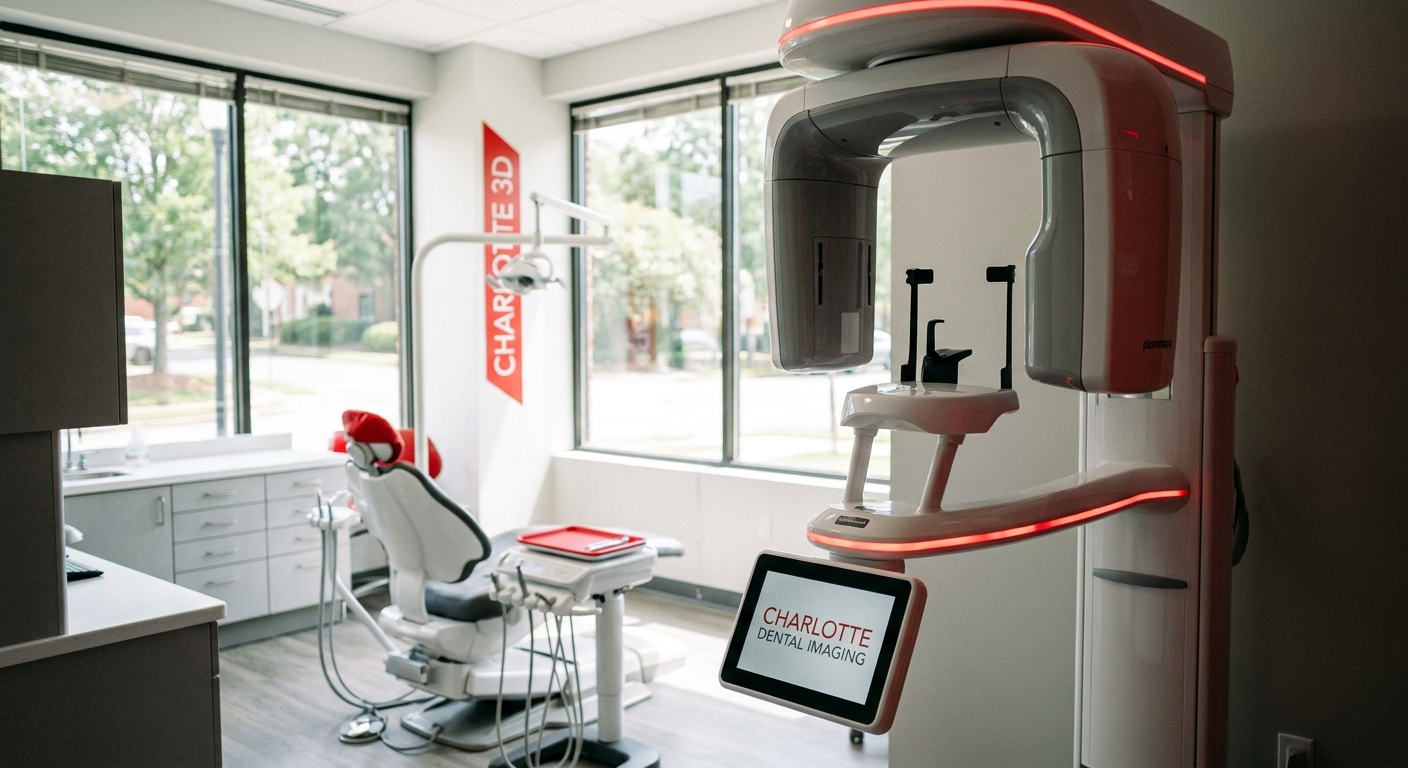
Every trauma patient gets a cone-beam CT scan, or CBCT, on arrival. This is a three-dimensional X-ray that shows the tooth root, the surrounding bone, and the exact position of the tooth from every angle. Standard flat X-rays give a single two-dimensional view, and a hairline root fracture or a subtle bone injury can hide completely in that image. A CBCT reveals it, which is exactly how tooth #30’s vertical root fracture was confirmed as unrestorable within fifteen minutes of that patient walking in. That is what lets the dentist inform you, honestly and early, about the condition of a tooth and the treatment options available. You see the scan and the reasoning behind your dental trauma treatment before any work begins.
Vitality Testing and Infection Screening
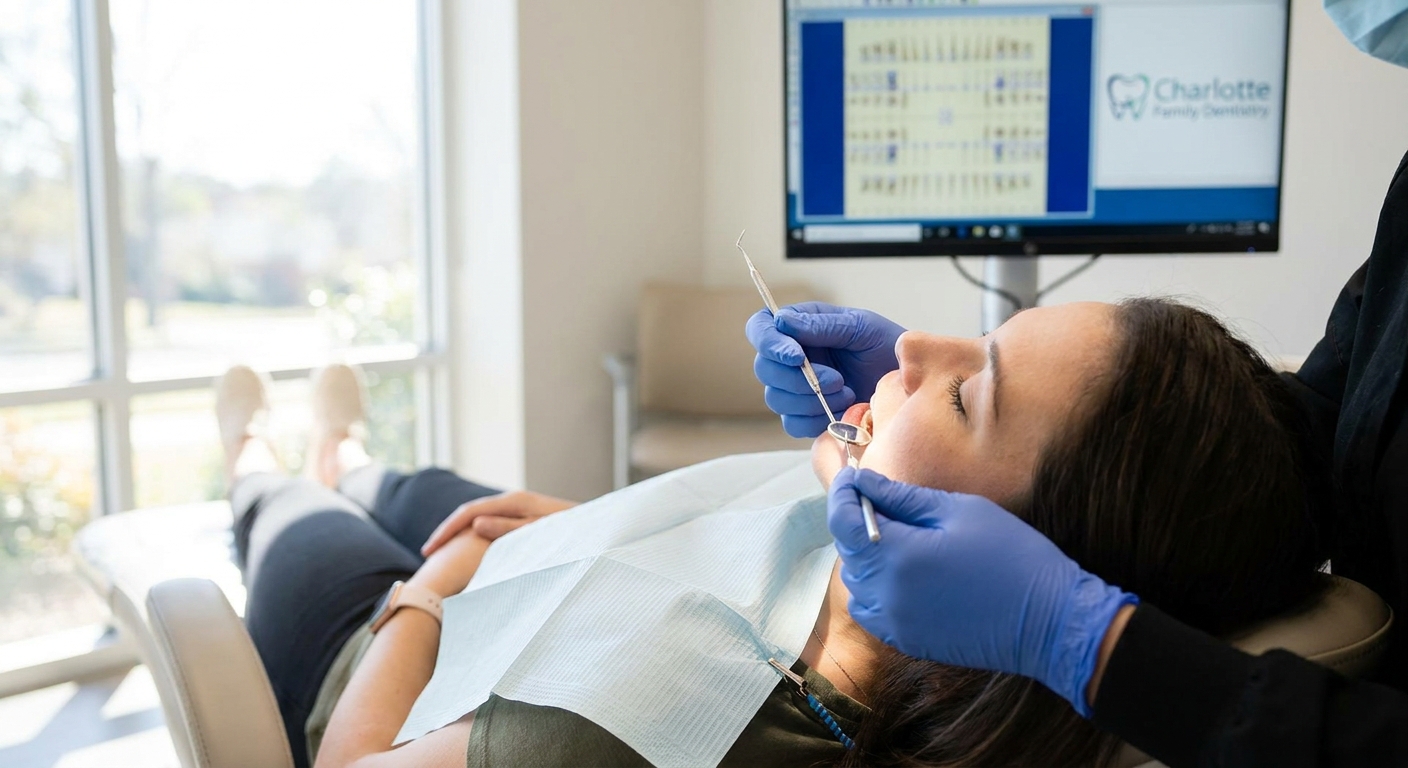
Once the scan is reviewed, the dentist performs an intraoral exam plus tooth vitality testing to check whether the nerve inside the tooth is still alive. Percussion testing, a gentle tap, checks how the tooth and its ligament are responding, and a cold test gauges the nerve’s reaction. Alongside this, the team screens for signs of infection. These checks help guide the treatment options: a tooth with a healthy nerve may only need stabilizing, while one with a dying nerve or spreading infection may need root canal therapy or removal. Anxious patients can be prescribed anxiolytic medication before the appointment, so fear does not keep you from care.
Reimplantation and Splinting: How a Knocked-Out Tooth Is Addressed
When a permanent tooth is knocked out, the goal is reimplantation as soon as possible, ideally within about 60 minutes when feasible. After the area is numbed so you feel no pain, the root is gently cleaned of debris without scrubbing, because scrubbing destroys the delicate ligament cells. The tooth is then eased back into its socket in the correct position. This part sounds dramatic, but with the area fully numb it is far more comfortable than the injury that brought you in.
Stabilizing the tooth is the next step. A bonded resin-and-fiber splint attaches the replanted tooth to the healthy teeth on either side, holding it still while the ligament and bone begin to heal. Think of the splint as a cast for your tooth: it keeps everything from shifting during the fragile early healing period. The International Association of Dental Traumatology recommends a flexible splint for a set healing window for avulsion injuries, which is exactly the approach used here. Most patients are also placed on a 10-day antibiotic course to lower the risk of infection while the tooth settles back in.
Healing is not instant, and outcomes vary considerably based on how long the tooth was out, how it was stored, and the condition of the socket. The American Association of Endodontists offers detailed patient guidance on avulsed teeth and follow-up care, and your dentist will schedule the checkups needed to monitor the tooth over the following weeks. What you can count on the day of the injury is a team that handles this kind of case routinely and understands the time-sensitive nature of the injury.
Seven-Day Availability and Why It Changes Your Options in Charlotte
Here is the quiet problem most people only discover during an emergency: a lot of dental offices run a Monday-through-Thursday schedule. A tooth does not check the calendar. Injuries happen on Friday nights, Saturday mornings at the soccer field, and Sunday afternoons in the driveway, which are exactly the times a traditional office is closed. That gap is why so many people end up sitting in a hospital emergency room for a dental problem the ER is not equipped to fully treat.
Charlotte Emergency Dental fills that gap directly. The practice is open seven days a week with extended weekday hours from 10am to 7pm, which works out to roughly 75 percent more walk-in availability than the traditional Monday-through-Thursday model. Weekends are not an afterthought here. They are staffed for trauma, with average weekend wait times usually under an hour before you are in the chair. For a knocked-out tooth on a Saturday, that difference is not a convenience. It is access to timely treatment.
This accessibility is uncommon across the Charlotte area, and it is deliberate. When you can be seen the same day you are hurt, without waiting for a Monday slot and without navigating hospital triage for a non-life-threatening injury, you get access to prompt dental trauma treatment. Walk-ins are welcome, and calling ahead lets the team prepare for your arrival so the clock starts working in your favor the moment you step inside.
When the Hospital Is the Right Call Instead
Part of trusting a dental team is knowing they will tell you when your injury belongs somewhere else. Not every facial injury is a dental one, and clarity about this protects you. Very few cases are referred out, but the boundaries are firm and clear.
If you have a fractured mandible, that is a bone injury that needs a hospital or an oral surgery specialist, not an outpatient dental chair. Life-threatening swelling, especially any swelling that affects your breathing or swallowing, is a medical emergency that requires the emergency room right away. Major facial trauma, meaning serious injuries across the facial bones often seen after accidents, also belongs at a hospital equipped for that level of care. In some cases, unusually challenging root canal anatomy is referred to a specialist.
Triage at arrival is what catches these situations early. If your injury exceeds the scope of outpatient dental care, you are directed immediately to the appropriate level of care rather than being kept in a chair where you cannot be properly helped. That honesty is not a limitation. It is exactly what you want from a team you are trusting with an emergency, and it means the cases handled here are addressed fully within their scope of practice.
Frequently Asked Questions About Dental Trauma Treatment
Can a knocked-out tooth be addressed if I wait more than an hour?
Treatment within about 60 minutes is preferred when possible, but treatment within two hours may still be an option. The dentist assesses the root condition and the bone socket with cone-beam CT imaging before discussing options. Individual outcomes vary, so the most important thing is to get in fast and keep the tooth moist.
What should I do with a knocked-out tooth before I get to the dentist?
Hold the tooth by the crown, which is the chewing part, and never touch the root. If it is dirty, rinse it gently with milk or saline. Store it in cold milk or your own saliva. Do not scrub it, do not let it dry out, and do not wrap it in a tissue, because those steps kill the cells needed for potential reattachment.
How long does dental trauma treatment take here?
Average weekday time from walk-in to the treatment chair is about 30 minutes. Complete treatment for a fracture or a reimplantation, including imaging and splinting, often finishes within about 75 to 90 minutes. One documented case ran from a 10:15am arrival to leaving the parking lot at 11:30am, extraction and bone graft included.
What will dental trauma treatment cost, and how do I pay?
Charlotte Emergency Dental is a self-pay practice, and you get clear pricing for your care before treatment begins, so you are not guessing about cost during an already stressful moment. The team walks you through your options up front so there are no surprises.
Do you see dental trauma patients on weekends in Charlotte?
Yes. Charlotte Emergency Dental is open seven days a week, including Saturday and Sunday, with average weekend wait times usually under an hour for walk-in trauma cases. Walk-ins are welcome, and calling ahead helps the team prepare for you.
What is cone-beam CT and why is it used for dental trauma?
Cone-beam CT is a three-dimensional X-ray that reveals hidden root fractures, bone damage, and exact tooth position that standard flat X-rays cannot detect. It lets the dentist assess the tooth condition thoroughly before any treatment starts, so your plan is based on detailed imaging rather than guesswork.
If you or a family member has just experienced dental trauma in Charlotte, prompt care matters. Walk into Charlotte Emergency Dental seven days a week, or call ahead to let the team know you are on the way so they are ready the moment you arrive. During weekday hours of 10am to 7pm and on weekends, same-day reimplantation, bonded resin-and-fiber splinting, and cone-beam imaging are available to address an injured tooth. The single most useful thing you can do right now: if a tooth is out, place it in cold milk and head straight in, because the minutes between now and the chair matter.
Get Relief When Every Moment Counts
A knocked-out tooth or jaw injury can feel overwhelming, especially when you’re unsure whether it can be saved. Charlotte Emergency Dental understands that timing makes all the difference in dental trauma cases, which is why our team is ready to evaluate your injury and discuss your treatment options right away. If you or a loved one has experienced dental trauma in Charlotte, we’re here to help you take the next step toward recovery.
Call Charlotte Emergency Dental
Individual results vary.