Walk-In Dentist in Charlotte, NC: Same-Day Emergency Care Without the Wait
Most dental practices in Charlotte schedule their operatories weeks in advance around routine cleanings and planned procedures, which means when you walk in with acute pain, you are asking them to interrupt a system built for predictability. The front desk may say they accept walk-ins, but what they mean is they will try to squeeze you into a canceled slot or ask you to wait until the hygienist finishes her last patient, and even then the dentist may only have time to look, prescribe antibiotics, and refer you somewhere else for actual treatment. A true walk-in dentist Charlotte patients can count on, like Charlotte Emergency Dental, reserves chair time specifically for unscheduled dental emergencies, keeps diagnostic equipment available for immediate use, and stocks the materials to complete extractions, root canals, and restorations the same day you arrive.
Individual experiences vary based on the nature of your emergency, wait times, and clinical findings.
What a True Walk-In Dentist in Charlotte Offers, and Why Most Practices Cannot Do It
A true walk-in model means you can arrive without an appointment, get diagnosed, and potentially get treated in the same visit, because the office is built for acute problems from the front desk back. That is very different from a traditional practice that “tries to fit you in” between scheduled work.
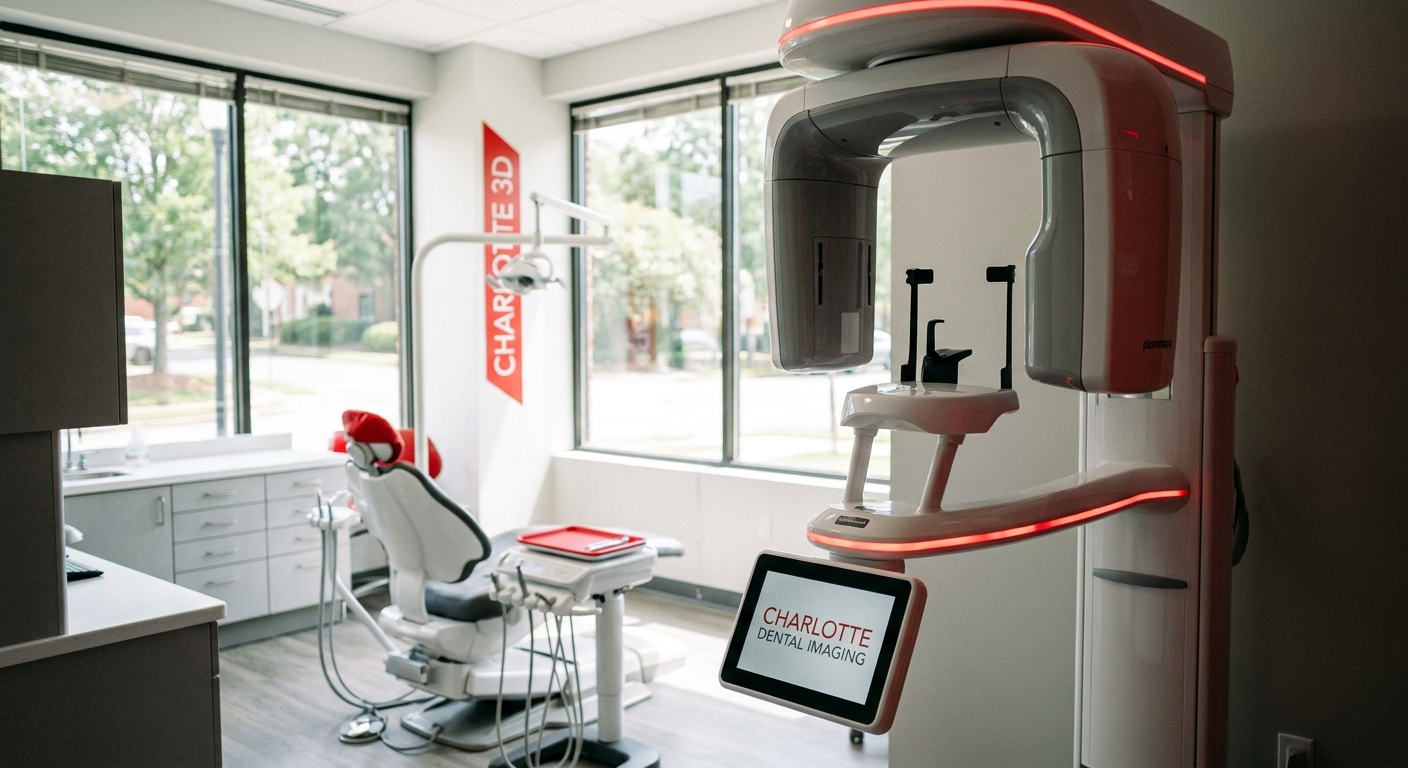
The difference is structural, not a matter of attitude. A restorative dentistry office fills its day with hygiene visits, crown preps, and follow-ups booked weeks ahead. When you walk in with a swollen face, there is often no open chair, no open block of doctor time, and no 3D imaging staged for a fast read. Staff do their best, but you become the interruption squeezed between two commitments, which is why the honest answer is often “expect to wait” or “we can look, but treatment may be another day.” At Charlotte Emergency Dental, the workflow starts the other way around. The front desk performs clinical triage the moment you arrive, chairs are held open for urgent cases instead of routine cleanings, and a cone-beam CT (CBCT) scanner sits ready so the dentist has diagnostic imaging available before the exam begins.
Timing makes the gap worse. Many Charlotte offices keep a Monday-through-Thursday schedule, which leaves evenings and weekends uncovered, exactly when a tooth cracks at dinner or discomfort flares on a Sunday. So the person who most needs care is often the one with the fewest open doors. A walk-in dentist in Charlotte keeps those doors open on purpose, because emergencies do not follow a calendar.
How Charlotte Emergency Dental Moves Walk-In Patients From Arrival to Treatment
On a typical weekday, many walk-in patients move from the front door to completed treatment in about thirty minutes, and the Charlotte Emergency Dental office treats roughly ten to fifteen same-day emergencies a day, close to fifty a week. Weekend waits can stretch toward an hour when volume peaks, still shorter than the multi-hour lobby times common at some urgent-care-style dental clinics.
Your wait time and treatment timeline will vary based on severity, complexity, and patient volume at the time of your visit.
The process follows a fixed sequence. When you arrive or call ahead, the Charlotte Emergency Dental front desk triages first, asking a few questions: what happened, how long it has been present, what makes it better or worse, and whether there is swelling or any sign of infection. From there you may move to a CBCT 3D X-ray as soon as a scanner is available. A CBCT shows infection at the tips of tooth roots, fractures, the size of a cavity, and the bone underneath, all in three dimensions. That single scan often provides information a flat two-dimensional X-ray leaves open, which may reduce the need for additional imaging visits.
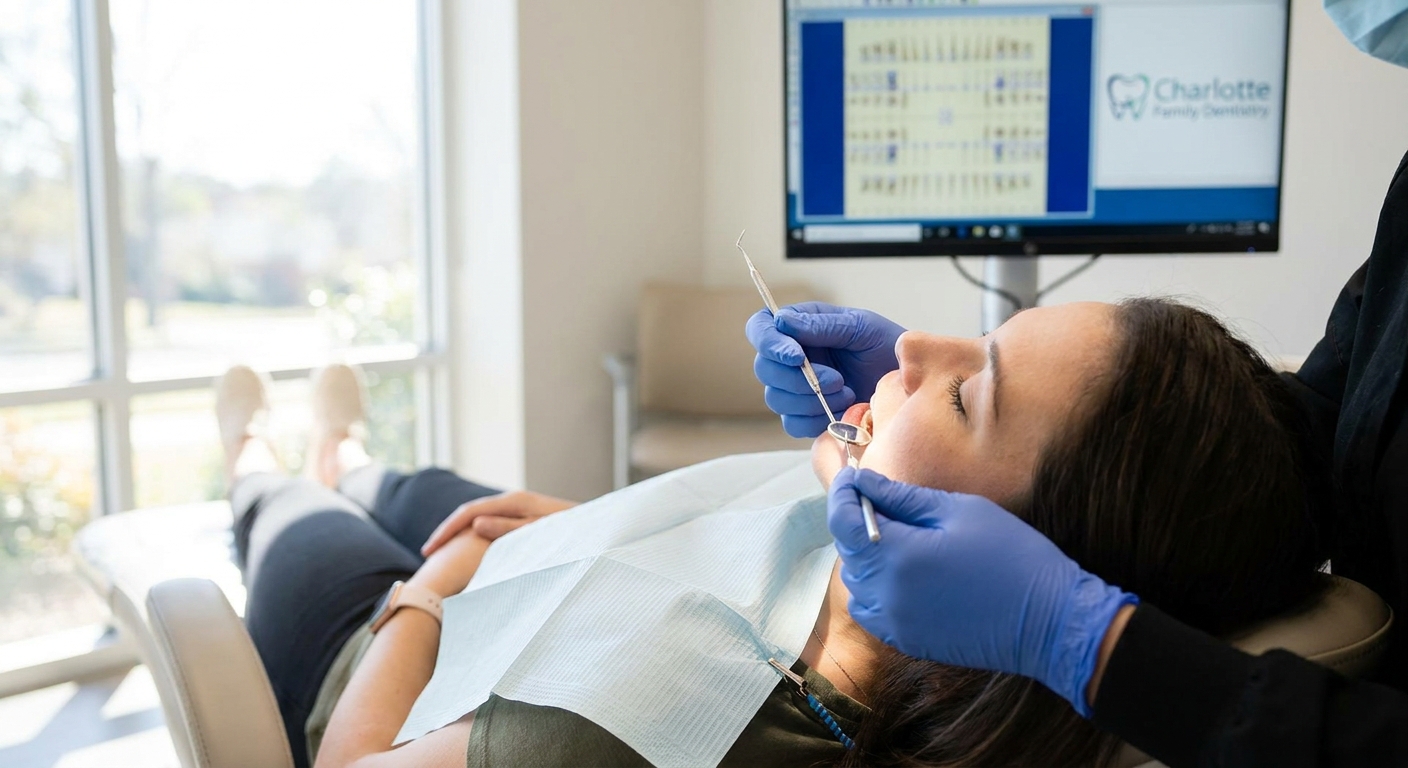
Then a dental assistant seats and interviews you, and the emergency dentist performs the intraoral exam, tests the tooth’s nerve with cold and percussion, screens for spreading infection, and reviews your scan with you on screen to guide the discussion so you can see what is present. In one case from the Charlotte Emergency Dental practice: a patient arrived at 1:56 p.m., was triaged, scanned, and had the doctor in the room diagnosing by 2:09, and walked out with the extraction finished by 2:35. That is an example of the design intent: diagnosis and treatment in one sitting when clinically appropriate.
Your experience may differ based on your specific diagnosis and treatment needs.
What May Be Treated Same-Day In-House, and Which Cases May Need a Referral
Many walk-in cases can be treated to completion in-house at Charlotte Emergency Dental the same day, with no referral and no second trip across town. That includes many common dental emergencies people arrive with: severe toothaches, abscesses and infections, broken teeth, loose or lost crowns, dry sockets, post-extraction discomfort, and knocked-out teeth.
Whether same-day treatment is possible depends on your individual condition, complexity, and clinical judgment.
The range of same-day procedures that may be performed includes emergency root canals, extractions, fillings, same-day crowns, bridges, dentures (including partials and implant dentures), and dental implants, plus reimplantation of avulsed teeth. Many root canals can be completed on-site, and many wisdom teeth may be removed the same visit. For many patients, when the dentist identifies the source of discomfort, the plan may end with treatment completed that day rather than stabilized and postponed.
There is a set of exceptions, and naming them honestly matters. Severely impacted wisdom teeth that need surgical exposure may be stabilized and referred to a specialist, as may root canals with highly calcified canals or unusually complex canal anatomy that call for microscope-guided endodontics. Life-threatening swelling and major facial trauma, such as a fractured jaw, belong in a hospital setting rather than a dental chair, and those situations are directed there for safety. For many people who walk in, the visit may end with treatment rather than a referral slip.
Your treatment plan will be based on your individual clinical findings.
The Clinical Protocol for Knocked-Out Teeth, and Why the First Hour Matters
A knocked-out permanent tooth has the potential for reattachment when it is put back in the socket quickly, and the Charlotte Emergency Dental practice’s clinical goal is reimplantation within about sixty minutes of the injury when possible. That window matters because the living cells on the root surface, the periodontal ligament cells, begin to die once the tooth is out of the mouth and exposed to air.
Success with tooth reimplantation varies significantly based on time elapsed, how the tooth was stored, and individual healing factors.
Speed at the door is built into the protocol. When a caller says a tooth was knocked out, the Charlotte Emergency Dental team tells them to place the tooth in a container of milk and come in immediately, because milk helps keep those root cells alive during the trip. On arrival, an avulsed-tooth patient is prioritized ahead of others when possible, with a target of under ten minutes from walking in to sitting in the chair when circumstances allow. There is minimal waiting room delay for this injury, because time is critical.
The technique itself is deliberate and gentle. The dentist numbs the area, then removes debris from the root with an instrument rather than scrubbing or blasting it with water, because aggressive rinsing may strip away cells the ligament needs to reform. The tooth is eased back into the socket and repositioned as close to its original spot as possible. Then a resin-fiber splint is bonded across the reimplanted tooth and the healthy teeth on either side and light-cured in place, holding everything steady for roughly four weeks while healing may occur. Patients are typically placed on a ten-day course of antibiotics, and a tetanus booster may be recommended if the tooth touched soil or an outdoor surface. You return in three to four weeks so the dentist can assess healing and remove the splint.
Outcomes depend heavily on how quickly the tooth is reimplanted and how it was stored during transport.
Seven-Day Access and Extended Weekday Hours Built Around Emergencies
Charlotte Emergency Dental is open seven days a week with extended weekday hours from 10 a.m. to 7 p.m., so you are not stuck choosing between missing a full day of work and living with discomfort until an office reopens. That schedule covers the evenings and weekends most practices leave dark.
Think about how a standard Monday-through-Thursday calendar collides with real life. A tooth cracks Friday night, or discomfort develops on Saturday, and the offices that could help are closed until Monday, sometimes later. So people wait, and some end up in a hospital emergency room that can prescribe antibiotics and painkillers but cannot actually address the tooth. Being open every day of the week, several more days than the four-day norm many offices keep, closes that gap. The evening hours matter for working adults and families, because a 5:30 or 6 p.m. appointment means you may come in after work instead of using a vacation day.
Access is not a marketing line here, it is the reason the numbers hold up. Treating around fifty emergencies a week is possible for Charlotte Emergency Dental because the doors are open when emergencies happen. For you, that means the answer to “can I actually be seen today” is more likely to be yes, on the day symptoms start, whether that day is a Tuesday afternoon or a Sunday morning.
What a Walk-In Visit Costs, and How Insurance Works If the Office Is Out of Network
The emergency exam and X-ray at Charlotte Emergency Dental are a flat ninety-nine dollars, disclosed before any treatment begins, so you know the starting cost up front. The practice is out of network with PPO dental plans, but it hands you completed claim forms to submit to your insurer for out-of-network reimbursement, and being out of network allows the team to recommend what they believe is appropriate for the tooth rather than what a plan happens to cover.
Cost uncertainty is one of the biggest reasons people delay care, so it is worth being clear about how this works. After you pay for treatment, you file the claim form with your PPO carrier and may recover a portion of the cost based on your plan’s out-of-network benefit schedule. “Out of network” does not mean “no help at all,” and the flat exam fee applies whether or not you carry insurance. For care beyond the exam, the office works with several third-party financing companies that split treatment into monthly payments, often at zero percent interest on approved credit. That may ease the path to an extraction, a root canal, or an implant the same day instead of waiting for authorization or saving for months.
Reimbursement amounts vary by insurance plan, and financing approval depends on individual credit qualifications.
If cost is a barrier and you are weighing your options, know that public resources exist too. Mecklenburg County publishes a list of free and low-cost health clinics and community resources, and the state maintains a dental referral list by county for patients who qualify for Medicaid or need reduced-fee care. Those paths can take longer to access, so if you are experiencing significant discomfort or dealing with spreading swelling, consider getting evaluated, and sort the financial details with the clear exam price and financing options in front of you.
Quick Answers to Common Questions Before You Walk In
Do I need to call ahead, or can I truly walk in? You can walk in without calling. Calling ahead simply lets the front desk begin triage and alert the clinical team, which may shave a few minutes off your wait.
How long will I wait on a weekend versus a weekday? Weekday walk-ins average about thirty minutes from arrival to treatment in many cases. Weekend waits can reach roughly an hour during busy stretches but rarely go beyond that. Your wait time will vary based on patient volume and case complexity.
Can I get a root canal or extraction the same day I walk in? In many cases, yes. Emergency root canals and extractions are performed on-site the day you arrive when clinically appropriate. Whether same-day treatment is possible depends on your individual situation.
Will my insurance still help if the office is out of network? The practice gives you completed claim forms to submit to your PPO insurer for out-of-network reimbursement, and the ninety-nine-dollar exam and X-ray fee applies regardless of insurance status. Reimbursement amounts vary by plan.
How fast do I need to get there if my tooth is knocked out? Put the tooth in milk and come in right away. The clinical goal is reimplantation within about sixty minutes when possible, and avulsed-tooth patients are prioritized when circumstances allow. Outcomes vary significantly based on time and handling.
What technology is used for diagnosis? Walk-ins at Charlotte Emergency Dental receive a CBCT 3D X-ray that reveals infections, fractures, cavities, and bone in three dimensions, giving the dentist detailed imaging before the hands-on exam.
If your jaw is throbbing, a tooth is cracked, or something in your hand used to be in your mouth, consider seeking prompt evaluation. As a walk-in dentist in Charlotte open seven days a week, Charlotte Emergency Dental works to move many weekday patients from arrival to completed care in about thirty minutes when clinically appropriate. Call now or walk in for same-day evaluation and potential treatment.
Individual results, wait times, and treatment outcomes vary.
Get the Relief You Need Today
When a dental emergency strikes, waiting days for an appointment isn’t an option. Charlotte Emergency Dental understands that tooth pain, broken crowns, and sudden infections need immediate attention for you and your family, which is why we’ve built our practice around same-day access to treat urgent problems as they happen. If you’re dealing with a dental problem that can’t wait, our walk-in appointments are designed to get you the care you need when you need it most.
Call Charlotte Emergency Dental