Dental Abscess Treatment in Charlotte NC: What to Expect, How Fast You’ll Be Seen, and Whether Your Tooth Can Be Saved
You taste metal, your cheek is tight and hot to the touch, and the throbbing in your jaw has crossed the line from “bad toothache” to something that feels dangerously wrong. An abscess announces itself with pressure, swelling, and a gnawing certainty that infection is spreading, and by the time you are searching for help, you already know this will not resolve on its own. This guide lays out exactly what happens when you walk into Charlotte Emergency Dental with an abscess: how fast you will be seen, what treatment looks like, and whether your tooth can still be saved.
What a Dental Abscess Is and Why It Hurts So Much
A dental abscess is a pocket of pus caused by a bacterial infection, and it hurts so much because that pus is trapped against a nerve inside rigid tissue with nowhere to expand. It forms in one of two places. A periapical abscess starts inside the tooth, at the tip of the root, after bacteria reach the soft pulp through a deep cavity, a crack, or a failed filling. A periodontal abscess, by contrast, sits in the gum tissue and bone alongside the tooth, usually forming inside a deep pocket where bacteria have collected. Both are infections, both build pressure, and both hurt in a way that is hard to ignore.
The reason an abscess throbs so relentlessly comes down to simple physics. Your tooth and the bone around it are rigid. When bacteria multiply and your body sends white blood cells to fight them, pus forms, and that pus has nowhere to expand. The pressure presses directly on the nerve. That is why the pain feels like a heartbeat inside your tooth, and why it so often gets worse when you lie down at night. Lying flat increases blood flow to your head, which raises the pressure inside the already crowded space.
Left alone, that pressure does not stay put. The infection looks for the path of least resistance and works its way outward into the surrounding bone and soft tissue. That is when you see the swelling on your gum or the puffiness in your cheek, and it is a signal that the infection is spreading, not fading. A dental abscess is a live bacterial infection, and it needs professional drainage and source control. No amount of salt-water rinsing or over-the-counter pain relief will eliminate the infection, though those measures may provide temporary comfort while you get to a dentist.
How Charlotte Emergency Dental Diagnoses an Abscess: 3D Imaging, Vitality Testing, and the Decision to Save or Remove
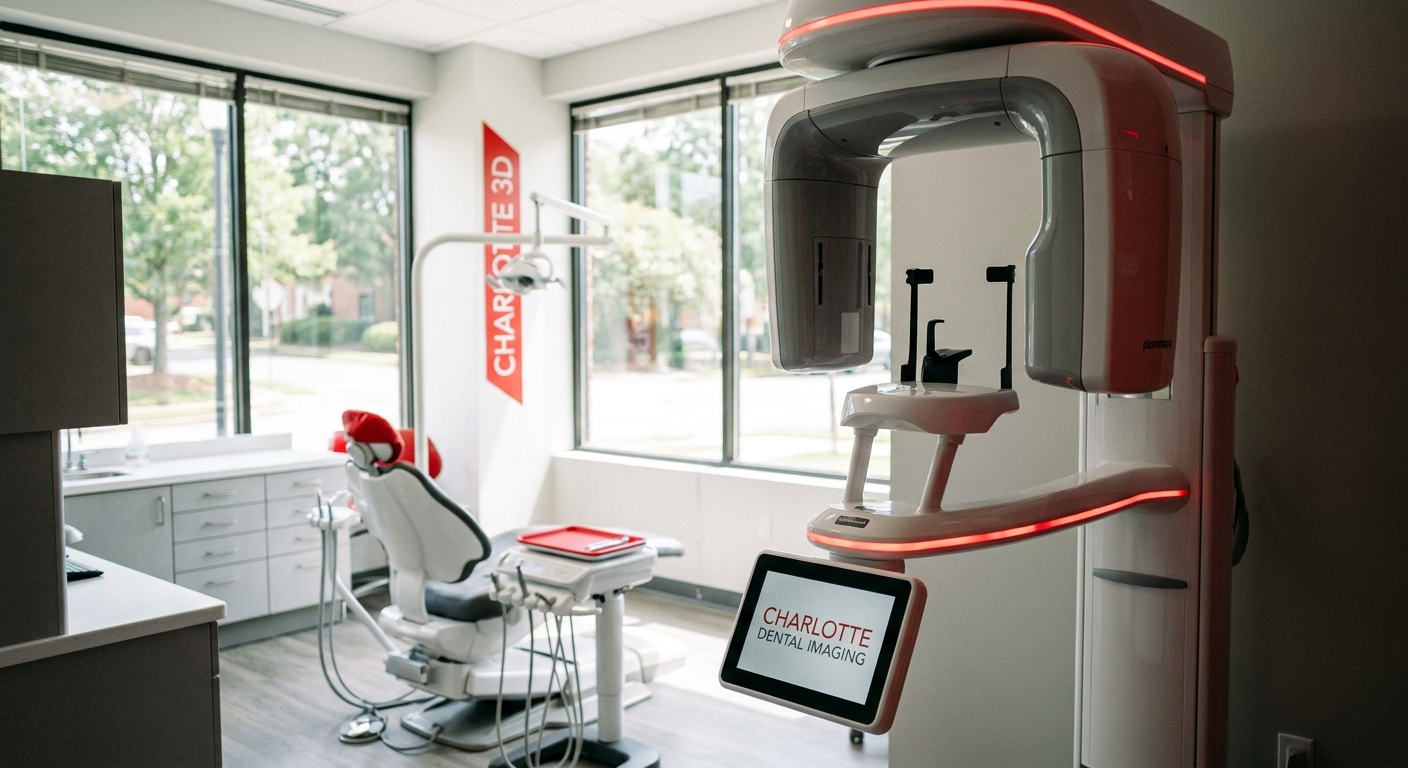
Charlotte Emergency Dental diagnoses an abscess with a 3D cone-beam scan and tooth vitality testing, then weighs how much healthy tooth and bone remain to decide whether the tooth can be saved or should be removed. Getting the diagnosis right is what separates guessing from a real plan, and at Charlotte Emergency Dental the process starts the moment you walk through the door. The front desk team triages you first, asking about the nature and length of your pain, any swelling, and warning signs like trouble breathing or swallowing. That quick screen helps prioritize the most urgent cases. From there you are brought back for a cone-beam CT scan, a 3D X-ray the practice uses on abscess patients because a flat, two-dimensional image simply does not tell the whole story.
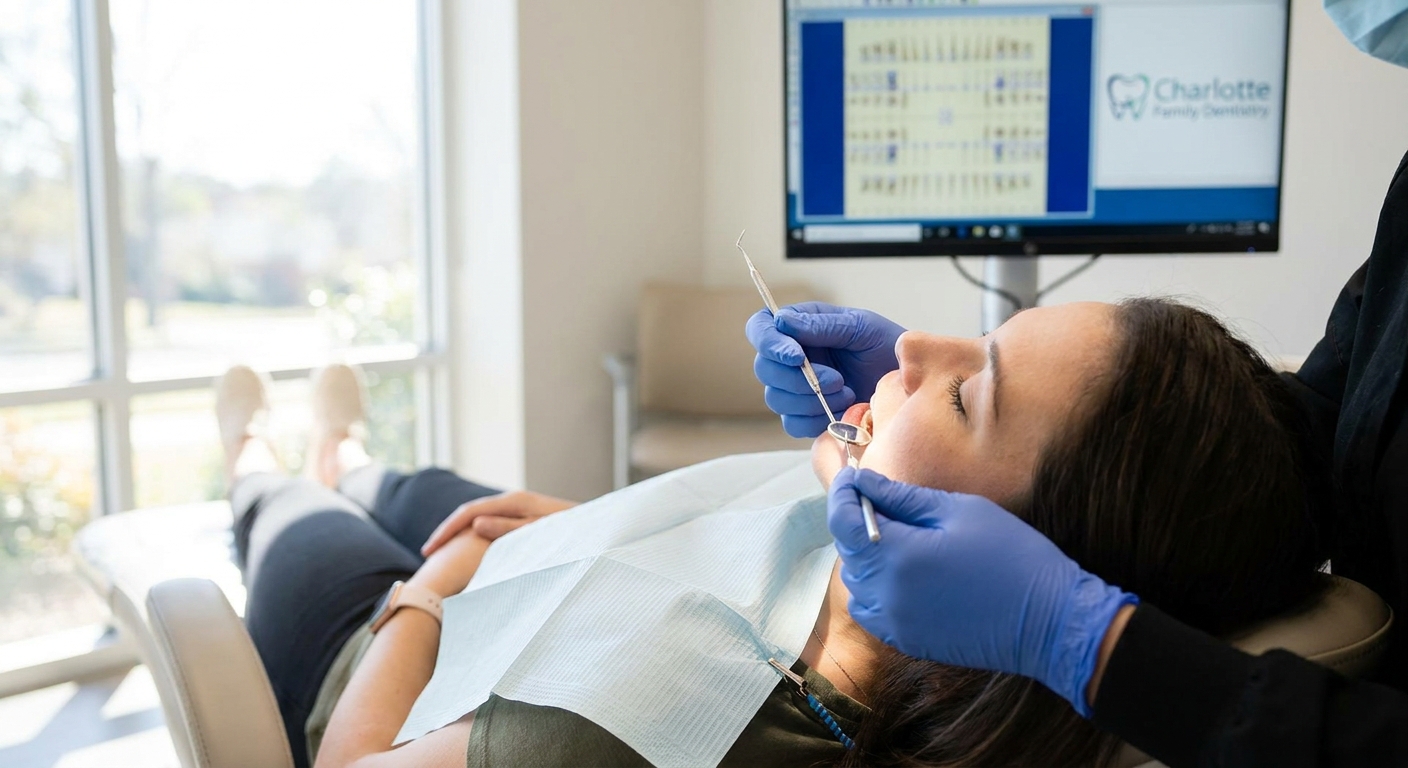
The cone-beam scan is the workhorse of the diagnosis. It reveals infection sitting at the very tip of a root, shows how large a cavity has grown, and measures how much supporting bone the infection has already affected. A dental assistant interviews and evaluates you, and then the dentist performs an intraoral exam along with tooth vitality testing. That testing includes percussion, a gentle tap to see how the tooth responds, and a cold test to check whether the nerve inside is alive, dying, or already dead. Together these tell the dentist exactly what is happening inside a tooth you cannot see through.
Then comes the part that some rushed offices skip: the conversation. The dentist reviews the 3D scan with you, points to the infection and the bone loss on the screen, and explains your real options in plain language before any instrument touches your tooth. The choice between saving the tooth with a root canal and removing it comes down to three things: how much healthy tooth structure remains, how much bone the infection has destroyed, and whether a crown can restore the tooth to full function afterward. You hear the reasoning, the timeline, and the cost for each path, and you make the call. That is what an informed decision actually looks like, and it is the kind of careful dentistry that anchors dental abscess treatment Charlotte patients can access.
Same-Day Abscess Treatment: Drainage, Antibiotics, and the Final Fix in One Visit
Yes. In most clinically appropriate cases, the abscess is drained, antibiotics are started, and the definitive fix—a root canal, crown, or extraction—is completed in a single same-day visit. Here is where Charlotte Emergency Dental works differently from a typical office. The practice treats nearly all of its dental emergencies the same day, which means an abscess does not get a prescription and a “come back in three weeks” note. Instead, the infection gets controlled and the source gets addressed in a single visit whenever it is clinically appropriate. That matters, because antibiotics alone do not eliminate a dental abscess. They may help control the infection while the dentist drains the pus and removes the true cause, either by cleaning out the inside of the tooth with a root canal or by extracting the tooth entirely.
The sequence is straightforward. First the abscess is drained to release the pressure, which often provides significant pain relief. You are typically prescribed a 10-day course of amoxicillin unless you have an allergy, in which case an alternative antibiotic is used. Then the dentist performs the definitive treatment, whether that is root canal therapy, a crown, or an extraction—all services handled in-house. Draining the source directly addresses the bacterial infection at its origin, which allows natural healing processes to begin once the contaminated tissue is removed.
Consider a typical timeline from the practice. A patient arrived at 10:15 a.m. with severe lower-left pain. The cone-beam scan and diagnosis were done by 10:30. The area was numbed and treatment started by 10:35, just twenty minutes after walking in. The extraction, along with a bone graft to preserve the site for a possible future implant, was finished by 11:20 a.m. That is arrival to treatment completed in about an hour, on a walk-in basis. If dental fear has kept you away, the practice can also prescribe an anxiety-reducing medication before your visit, so worry does not become one more reason to keep living with a spreading infection. This is what dental abscess treatment Charlotte residents may receive in a single visit.
When the Infection Is Too Dangerous for the Dental Chair
Most abscesses can be handled safely in the dental office, but some cross a line where a hospital is the appropriate place to be, and knowing that line can help protect your health. An abscess that has spread into the soft tissues can become facial cellulitis, a diffuse infection that causes hard, hot swelling across the face and jaw. A more severe form, Ludwig’s angina, involves the floor of the mouth and can push the tongue up and back until it threatens the airway. These are not conditions to manage at home or in a dental chair.
The warning signs are worth memorizing. Difficulty swallowing, difficulty breathing, swelling that spreads toward the eye or down the neck, a fever that will not break, or a rapidly enlarging, firm swelling all point to an infection that may require more intensive intervention than oral antibiotics can provide. In those situations you may need intravenous antibiotics and often surgical drainage in a hospital setting. Infections that compromise the airway or show signs of spreading to vital structures require immediate emergency room evaluation.
In these cases Charlotte Emergency Dental’s role is to recognize the danger early, stabilize you, and get you to the emergency room quickly rather than attempting office treatment that is no longer safe. Major facial trauma and fractured jaws also belong in a hospital. This is not a limitation, it is judgment. A dental infection that reaches the bloodstream can become sepsis, a body-wide emergency that demands immediate medical intervention. A practice that knows when to treat and when to refer is one that takes your safety, not just your teeth, seriously.
Cost of Dental Abscess Treatment Charlotte Patients Can Expect and How to Pay for It
In Charlotte, expect a quoted emergency exam, a low-cost antibiotic, and then $800 to $1,500 for a root canal, $1,200 to $2,500 for a crown, or $200 to $600 for an extraction, with financing available to spread the total out. Cost is the concern that keeps some people in pain longer than they should be, so here are real numbers instead of a shrug. At Charlotte Emergency Dental, you walk in knowing what the emergency visit will run before any treatment starts. The antibiotic to control the infection usually costs less than a fast-food meal when you use a pharmacy discount card. From there, the price depends on which path may preserve or replace your tooth.
| Treatment | Typical Charlotte cost |
|---|---|
| Emergency exam and X-ray | Quoted at first contact |
| Antibiotics (with discount card) | Similar to a takeout order |
| Root canal therapy | $800 to $1,500 |
| Crown (after root canal) | $1,200 to $2,500 |
| Extraction | $200 to $600 |
Saving a tooth with a root canal and crown costs more up front than removing it, but it keeps your natural tooth and smile in place, which may be worth considering. Extraction is the more affordable immediate option, though replacing a missing tooth later with an implant carries its own cost. The dentist walks you through this trade-off during your consultation, so the money conversation happens before treatment, not after.
The practice is a self-pay office, and it works with third-party financing companies that let you split the total into monthly payments, frequently with no interest. It also provides itemized claim forms you can submit to your own insurer for possible reimbursement. The point is simple: a manageable monthly payment should not be the reason you leave an infection untreated. Accessible dental abscess treatment Charlotte patients can plan for is part of what may make getting seen today realistic.
Why Charlotte Emergency Dental Can See You Today When Most Offices Cannot
Charlotte Emergency Dental can see you today because it is built around treating a dental emergency, with walk-ins welcome seven days a week and every step of care handled in-house. The hardest part of a dental abscess is often just finding a dentist who can actually see you now. Charlotte Emergency Dental is open seven days a week with extended weekday hours from 9 a.m. to 7 p.m., and walk-ins are welcome, with no need to schedule days in advance. That means a swollen jaw on a Sunday morning or throbbing pain on a Thursday evening does not have to wait for a Monday appointment or cost you a day of work. When you need emergency services for your teeth, the doors are open.
Individual response to treatment varies. Treatment outcomes vary from person to person.