Same-day emergency treatment at Charlotte Emergency Dental starts with finding out what is actually wrong, so the office takes a 3D scan and gives you a diagnosis before any treatment begins. Once you know the cause, the team numbs the area and treats it in that same visit, whether that means an extraction with a bone graft or another fix. If you searched “emergency dentist near me” with a throbbing tooth, walk-ins are welcome in Charlotte, and the focus of the visit is to address your pain.
This page walks you through a same-day emergency visit at Charlotte Emergency Dental, step by step. It covers what you will pay, when the ER may be the better choice, what is often addressed in one visit, and what to do before you arrive. Walk-ins are welcome seven days a week, so you do not need an appointment to be seen.
What is an emergency dentist near me in Charlotte, and can you be seen the same day?
An emergency dentist is a dental office set up to see people in pain or with a sudden dental problem on the same day, with no scheduled appointment. Charlotte Emergency Dental in Charlotte, NC (ZIP 28209) welcomes walk-ins seven days a week and aims to see emergency patients on the day they come in.
It helps to think of it like urgent care for your teeth. A traditional dental office fills its calendar weeks ahead, so when you call with a cracked molar, the earliest opening might be next week, and you spend the days in between on pain relievers. An emergency dental office works the other way around. Its day is planned for people who show up hurting, so a walk-in is the normal patient, not an interruption.
Here is what you need to know before you get in the car:
- Walk-ins: Welcome every day the office is open. No appointment is needed.
- Days: Open seven days a week, including weekends.
- Weekday hours: 9am to 7pm, so you can come in after work if you need to.
- Weekend hours: Call 704-525-3939 to confirm the day’s hours before you head over.
- Location: Charlotte, NC 28209.
- Phone: 704-525-3939.
Keep in mind that the team sees patients during open hours, so the best way to reach them is to call or walk in while the office is open. If something serious happens overnight, the section on what to do before you arrive explains your options.
A search for an emergency dentist can also turn up national directories or offices far from where you live, and that list won’t help you at 2pm on a Wednesday with a swollen jaw. What you need is an office in Charlotte that can scan the tooth, look for the cause, and discuss treatment in the same visit. That is the model this practice is built on.
What happens from the moment you walk in or call?
You are triaged at the front desk, scanned with a 3D X-ray, checked by a dental assistant, examined by the doctor, shown your scan, and walked through your options and costs. Then you are numbed and treated. On weekdays, the typical time from arrival to treatment at Charlotte Emergency Dental is about 30 minutes, though this varies by day and by how busy the office is.
Here is the sequence in order:
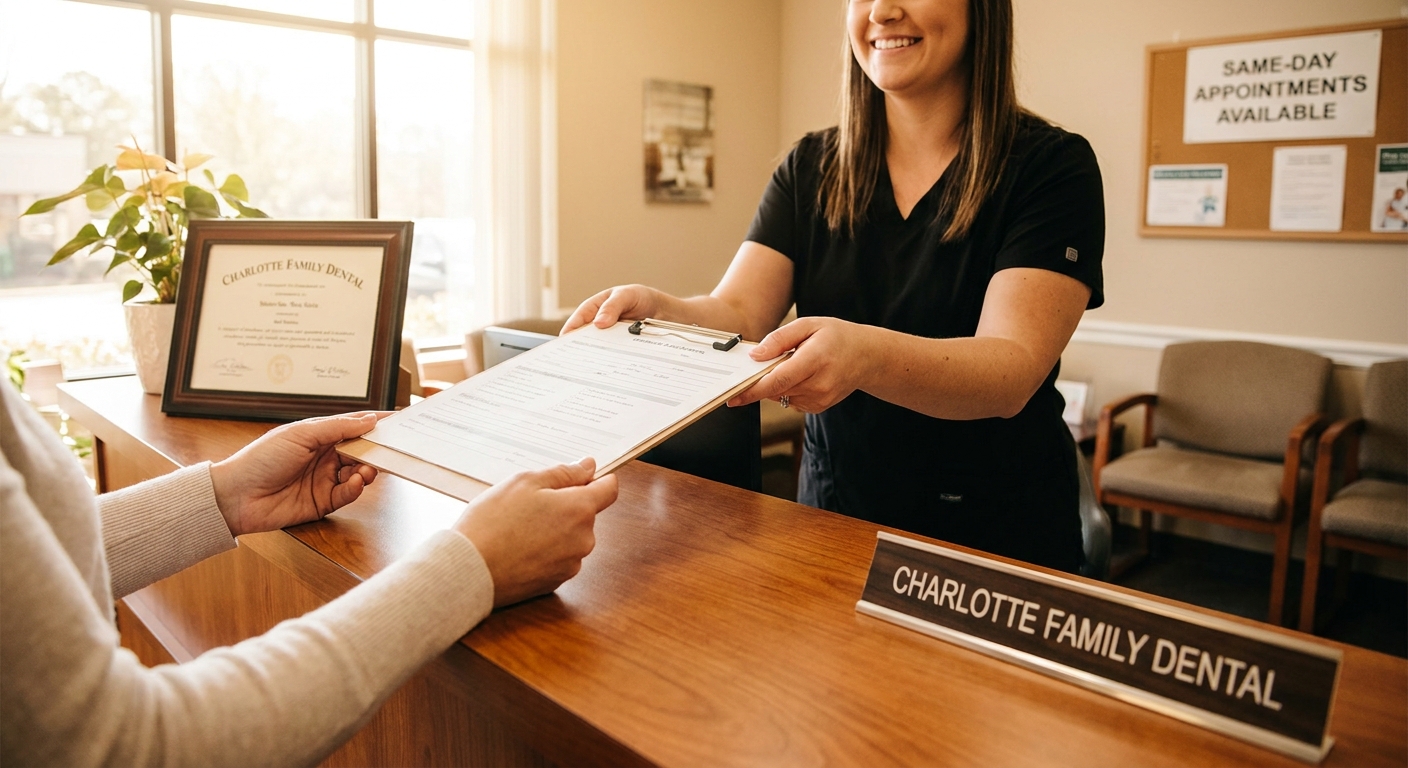
- Front desk triage. Staff ask what is going on, how long it has hurt, what the pain feels like, and what makes it better or worse. They also ask about swelling and about signs of a serious infection, such as trouble breathing or swallowing.
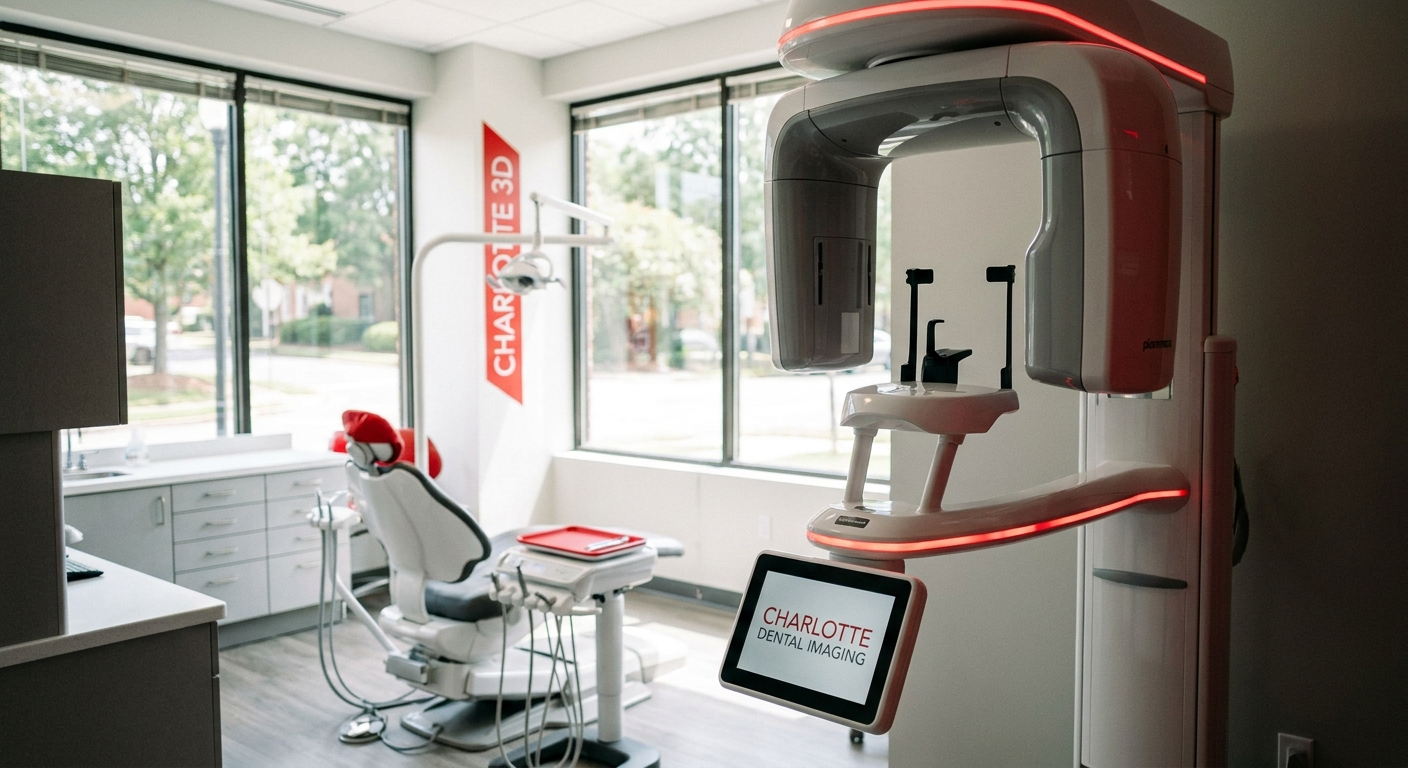
- CBCT 3D scan. As soon as possible, you are brought back for a cone beam CT (CBCT), a three-dimensional X-ray of your teeth, roots, and the bone around them.
- Dental assistant evaluation. In the treatment room, a dental assistant interviews you and checks the area before the doctor comes in.
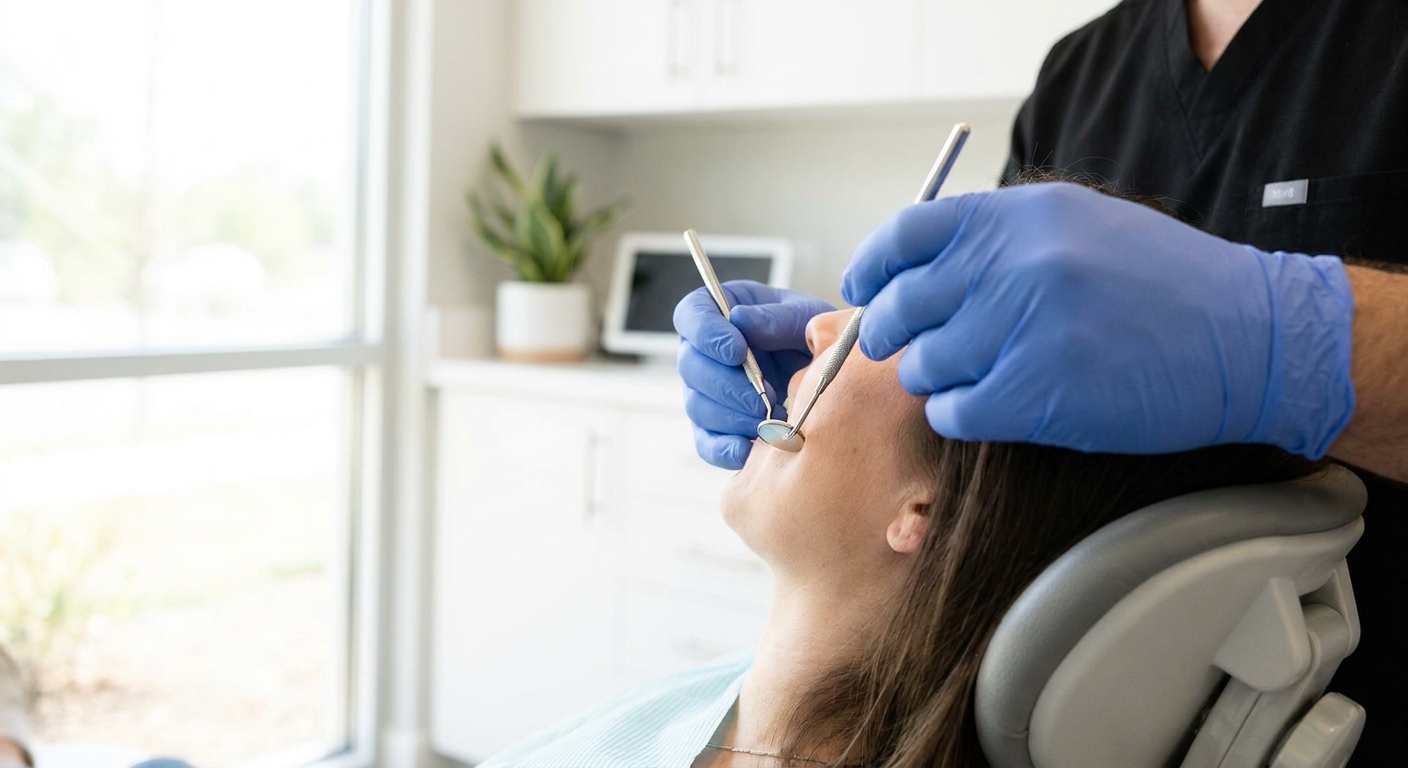
- Doctor’s exam. The doctor examines your mouth and tests the tooth by tapping on it (percussion) and applying cold to see how healthy the nerve and surrounding tissue are. The doctor also screens for a major infection.
- Scan review. The doctor goes over your CBCT with you and points out the likely cause of the pain.
- Options and cost. You hear the treatment choices and the financing options before anything starts.
- Numbing and treatment. You are numbed first, and treatment begins the same day when possible.
The order is not strictly first come, first served. A knocked-out tooth is prioritized the moment the patient walks in, with a target of under 10 minutes from the door to the first open chair, because time matters so much for that injury. Weekend waits can run longer because those days get busy.
To see how this can move, consider one afternoon at the office. On a Monday, one patient arrived at 1:56pm. By 2:09pm that patient had been triaged and scanned, and the doctor was in the room discussing a diagnosis. By 2:35pm the extraction was done.
The CBCT is the step most people don’t expect. A standard dental X-ray is a flat picture, a bit like a photo of a house taken from the street, while a CBCT is more like walking all the way around the house. It can show infection at the tips of the roots, large cavities, and the bone around each tooth, and it may reveal cracks that a flat image can hide.
One patient came to Charlotte Emergency Dental after getting three different opinions about pain when biting hard foods. In that patient’s case, the CBCT showed a vertical root fracture on a lower molar, with bone loss running about a third of the way down the root. A fracture like that generally cannot be repaired, so removing the tooth was the option discussed, and the patient had a clearer explanation for the pain.
Because the office is open seven days a week, it runs a separate weekday team and weekend team. Detailed chart notes, an office manager who works across both schedules, and automated text follow-ups after your visit are meant to help keep your care on track. If you come in on a weekend, your chart can be flagged for extra follow-up so the team checks in on how you are healing.
Should you go to the ER or an emergency dentist for tooth pain or an infected tooth?
Go to a hospital emergency room or call 911 if swelling makes it hard to breathe or swallow, or if you have major facial trauma or a possibly broken jaw. For the tooth itself, an emergency dentist is usually the appropriate first stop. That includes pain, an abscess, an infection, or a broken or knocked-out tooth, because an infected tooth is addressed with an extraction or root canal in a dental office.
The American Dental Association’s guidance on what counts as a dental emergency draws a similar line. It separates potentially life-threatening problems from urgent dental care. The life-threatening group includes uncontrolled bleeding, swelling that could block your airway, and trauma to the facial bones that could affect breathing. Urgent dental care includes severe tooth pain, abscesses, dry socket, broken teeth, and knocked-out teeth, and the ADA treats that second group as problems for a dentist to handle.
A lot of people ask whether the ER will pull an infected tooth. In general, a hospital emergency department is set up to stabilize you, which can mean managing pain and treating an infection that is spreading. The infected tooth is still the source of the problem, though, and addressing that source takes dental work: an extraction or a root canal, done with dental equipment and imaging. Policies differ from hospital to hospital, so don’t count on the ER to treat the tooth itself. Even after an ER visit, you will likely still need a dentist.
| Your situation | Where to go first |
|---|---|
| Swelling that makes breathing or swallowing hard | ER or 911 |
| Major facial injury or a possibly broken jaw | ER or 911 |
| Severe toothache, throbbing, or pain when biting | Emergency dentist |
| Abscess, gum boil, or swelling that is not affecting breathing | Emergency dentist |
| Broken, cracked, or knocked-out tooth | Emergency dentist |
| Lost or loose crown, dry socket, or pain after an extraction | Emergency dentist |
Charlotte Emergency Dental follows this split in its own work. The office sends major facial trauma, fractured jaws, and swelling that looks life-threatening to a hospital. Other problems, including infections and abscesses, are generally evaluated in the office the same day. The practice reports seeing roughly 50 emergency patients each week. If you can’t tell which group you fall into and your breathing or swallowing feels affected in any way, go to the ER.
How much does an emergency dental visit cost, and how can you pay?
An emergency exam and X-rays at Charlotte Emergency Dental cost $99. Once the scan shows what is going on, the doctor reviews your treatment cost with you before any work begins. Payment is self-pay: the office is out of network with insurance companies, it does not accept Medicaid, and third-party financing is available.
You might worry that you will be numbed and in the chair before anyone tells you a number. That concern is fair, and it is why the cost discussion happens before treatment, not after. The $99 covers the exam and X-rays, and the CBCT is the first X-ray taken for every new patient. Then you sit down with the doctor, look at the scan together, and hear your options and what each one costs. You decide from there.
This page doesn’t list prices for extractions, root canals, or implants, and the reason is simple. The cost depends on what the scan shows. A tooth with a simple fracture and a tooth with infection spreading into the bone are very different cases, so any number printed here without seeing your scan would just be a guess.
Here is how payment works:
- Insurance: Charlotte Emergency Dental is out of network, but many patients with insurance still come in. You pay the office, and the team gives you insurance claim forms so you can ask your insurer about reimbursement. Whether and how much is reimbursed depends on your own policy, not on the office.
- Financing: The practice works with several third-party financing companies that let you split treatment into monthly payments, sometimes at 0% interest. Terms depend on the lender.
- Medicaid: Not accepted.
- Follow-up X-rays: Free for 6 months after your first visit.
That last point affects what you pay over time. When you come back for a full checkup after the emergency is handled, the extra X-rays are already covered. The team can then discuss splitting any remaining treatment into stages that fit your schedule and your budget.
What can be addressed in one visit, and what happens after?
Many dental emergencies can be treated in a single visit at Charlotte Emergency Dental, and the first visit focuses on addressing the source of your pain. Some complex cases are stabilized and referred to a specialist. Some treatments, like implants after a bone graft, take months to finish because bone heals slowly.
Problems the office commonly treats the same day include severe toothaches, knocked-out teeth, broken or fractured teeth, infections, abscesses, lost or loose crowns, sensitivity, dry sockets, and pain after an extraction. When appropriate, the office also does root canals, crowns, extractions, implants, bridges, and dentures on the same day. The practice reports that most cases do not need a referral.
Some cases do get referred, and it is better to know that up front. The practice reports referring roughly 20-25% of root canals to a specialist. Over a person’s life, the inside of a tooth slowly builds up new layers of dentin, which can shrink the canal until it is hard to clean all the way to the tip. Some canals also curve or split in unusual ways. The CBCT can show these problems before treatment starts. In those cases, and with severely impacted wisdom teeth, the team stabilizes the problem first and then refers you to a specialist the practice prefers to work with.
Replacing a missing tooth takes patience. After an extraction with a bone graft, the graft typically needs 3-4 months to mature before an implant goes in. The implant then typically needs another 3-4 months before the final tooth is attached. The practice explains it simply: think about how long a broken bone takes to heal compared with a paper cut. Depending on the tooth and whether there is a large infection, an implant can sometimes be placed the same day.
There is one more thing worth knowing. The practice has no hygienists on staff, because a practice built around walk-ins doesn’t have the steady flow of routine cleaning patients that a full-time hygienist needs. Instead, the office focuses on emergencies and treatment. After your pain is addressed, you are encouraged to come back for a full visit when you feel better. That visit includes a complete exam, an oral cancer screening, the free follow-up X-rays, and a treatment plan broken into manageable steps. The practice’s aim is to help you avoid another emergency visit, though no dentist can predict what will happen with any individual tooth.
What should you do before you get to the office?
Call 704-525-3939 during open hours so the team knows you’re coming. For a knocked-out tooth, put the tooth in a container of milk and come in right away, without scrubbing or heavily rinsing it. If you have trouble breathing or swallowing, go to an ER instead.
A knocked-out tooth is the case where many people’s first instinct is wrong, because the natural urge is to rinse the tooth clean under the tap. Cells on the root surface help the ligament reattach, and scrubbing can remove them, which may reduce the chance the tooth reattaches. That is why staff tell callers to keep the tooth in milk and head straight to the office. The ADA’s emergency guidance lists knocked-out and loosened teeth as urgent dental care, and the American Academy of Pediatric Dentistry also treats dental trauma as something that needs prompt professional care.
Once you arrive, here is how the practice handles it. You go to the first open chair, with a target of under 10 minutes. You are numbed, and the doctor gently removes debris from the root with an instrument, taking care not to damage the root surface. The tooth goes back into its socket as close to its original position as possible, with the goal of doing so within 60 minutes of the injury. A bonded resin and fiber splint then holds it to the teeth next to it for about 4 weeks.
The process usually includes a 10-day antibiotic course, typically amoxicillin, or clindamycin if you are allergic. If the tooth touched soil or an outdoor surface, you may be advised to get a tetanus booster. You come back in 3-4 weeks so the team can check the bone and remove the splint. This describes the practice’s process, not a set of instructions to follow at home, and your own care is decided in the chair.
For other problems, it helps to have answers to the triage questions ready before you arrive: when the pain started, what it feels like, what makes it better or worse, and whether you have swelling. If you have insurance, bring your card so the claim forms are easy to fill out, and mention any drug allergy you have.
If a problem starts at night, use the ER for anything that threatens your breathing or swallowing, or for a serious facial injury. For other problems, call 704-525-3939 as soon as the office opens, and walk in.
Straight answers to what Charlotte patients ask before walking in
These are the questions people ask most often before coming in to Charlotte Emergency Dental, answered as briefly as possible.
Do I need an appointment to see an emergency dentist in Charlotte?
No. Charlotte Emergency Dental welcomes walk-ins seven days a week. For a knocked-out tooth, call ahead at 704-525-3939 so the team can tell you how to protect the tooth and expect you right away.
How long will I wait at an emergency dentist?
On weekdays, the time from arrival to treatment is typically about 30 minutes, though this varies. Weekend waits can be longer. Knocked-out teeth are prioritized, with a target of under 10 minutes to the first open chair.
How much is an emergency dental exam and X-ray?
The emergency exam and X-rays are $99, and follow-up X-rays are free for 6 months. Treatment costs are reviewed with you after the scan, before any work begins.
Will the ER pull an infected tooth?
Hospital emergency rooms generally focus on stabilizing you, such as managing pain and a spreading infection. The infected tooth itself is addressed with an extraction or root canal at a dental office. Go to the ER for swelling that affects your breathing or swallowing, or for facial trauma. For the tooth, see a dentist.
Do you accept insurance or Medicaid?
Charlotte Emergency Dental is out of network and gives you claim forms so you can seek reimbursement from your insurer. Third-party financing is available, sometimes at 0% interest depending on the lender. Medicaid is not accepted.
What should I do if my tooth is knocked out?
Put the tooth in a container of milk, don’t scrub or heavily rinse it, and come in right away. The practice aims to put the tooth back within 60 minutes of the injury.
Your next step: If you’re searching for an emergency dentist near me because a tooth is hurting right now, call Charlotte Emergency Dental at 704-525-3939 or walk in today (ZIP 28209, open seven days a week, weekday hours 9am to 7pm). Your $99 emergency exam and X-rays start with a 3D scan. If you have trouble breathing or swallowing, go to an ER instead. One thing to keep in mind as you decide: pain that fades doesn’t necessarily mean the problem is gone. Some people have other dental issues that aren’t causing symptoms yet, and the 3D scan is one way the team looks for them.
Dental Pain Does Not Have to Wait Until Tomorrow
If you are sitting with a throbbing tooth in Charlotte, NC and wondering whether it is really serious enough to call, that hesitation is common, and it is worth setting aside. Knowing how same-day emergency treatment works is only useful once someone actually looks at your tooth. Charlotte Emergency Dental is ready to listen to what is happening and talk through your next step, so call the office when you are ready.
Call Charlotte Emergency Dental
Individual experiences vary, and every case depends on the condition of your tooth.