Broken Tooth Repair Cost in Charlotte: What to Expect Before Treatment
You bit down on ice, a popcorn kernel, or nothing at all, and felt the crack. Now you are searching for prices at 11 p.m. because you need to know what this may cost before you walk into a dental office like Charlotte Emergency Dental tomorrow, and every website you have opened so far has said “it depends” without giving you a single real number.
That answer is not good enough when you are in pain and worried about the bill at the same time, so here is the honest version. Broken tooth repair in Charlotte runs anywhere from around $150 for a small filling to $3,500 or more for a crown, a root canal, or an extraction paired with an implant. The reason the range is so wide is simple: the price follows the damage. What your tooth actually needs is what sets the cost, and that is something a real exam and a cone-beam CT image can help reveal in about half an hour. This guide walks you through every price band, what pushes the number up or down, how to use your insurance even when a practice is out of network, and what waiting may cost you.
How Much Does Broken Tooth Repair Actually Cost in Charlotte?
The short answer: a broken tooth repair cost in Charlotte typically lands at $150 to $400 for cosmetic bonding, $800 to $1,500 for a root canal, $1,200 to $2,500 for a crown, and $200 to $600 for an extraction. If the tooth cannot be saved and needs to be replaced with an implant, plan for $3,000 to $5,000 total.
Those are the real bands, and they exist because “broken tooth” covers a huge spread of problems. A tiny corner chipped off a front tooth is not the same injury as a molar split down to the root, and the two do not cost the same to repair. The least expensive path is composite bonding, where tooth-colored resin is shaped and hardened over the damaged area. That approach may work for minor enamel chips and usually lands in the $150 to $400 range per tooth. A porcelain veneer, used when a front tooth has a larger break but a healthy root, runs closer to $900 to $2,000.
When the crack reaches deeper, the price climbs because the treatment gets more involved. A fracture that exposes the nerve often needs a root canal to remove the inflamed or infected pulp, priced around $800 to $1,500, followed by a crown at $1,200 to $2,500 to cap and protect what remains. If the fracture runs below the gumline or splits the root, the tooth usually cannot be rebuilt. At that point an extraction ($200 to $600) may be recommended, and replacing that tooth with an implant brings the full cost to roughly $3,000 to $5,000 once the post, abutment, and crown are all counted.
Here is the key idea most cost articles skip: you do not get to pick the cheapest number off the menu, because the fracture determines the recommended treatment. An enamel chip that only needs bonding will not suddenly require a crown, and a vertical crack into the pulp will not be addressed by a $200 filling no matter how much you would prefer that price. This is why an accurate diagnosis on day one may help you understand your options. When you know exactly what the tooth needs, you stop paying for guesses.
What Type of Fracture Do You Have, and Why Does It Matter for Cost?
The type of crack you have is the single biggest thing that influences your broken tooth repair cost, and you cannot fully judge it by looking in a mirror. Dentists sort tooth fractures into a few clinical categories: craze lines (surface cracks in the enamel that often need nothing), fractured cusps, cracked teeth that extend toward the root, split teeth, and vertical root fractures. Each one sits on a different rung of the treatment ladder, and each rung carries a different price.
The trouble is that a shallow-looking chip and a deep, tooth-threatening crack can look almost identical from the outside. A tooth can hurt when you bite and release, throb at night, or feel fine one hour and awful the next. Those symptoms overlap across fracture types, which is why the American Association of Endodontists notes that cracked teeth are among the harder problems to diagnose and that untreated cracks carry a real risk of pulp inflammation and infection over time. Individual experiences vary, and responding promptly may help reduce the risk of more extensive problems later.
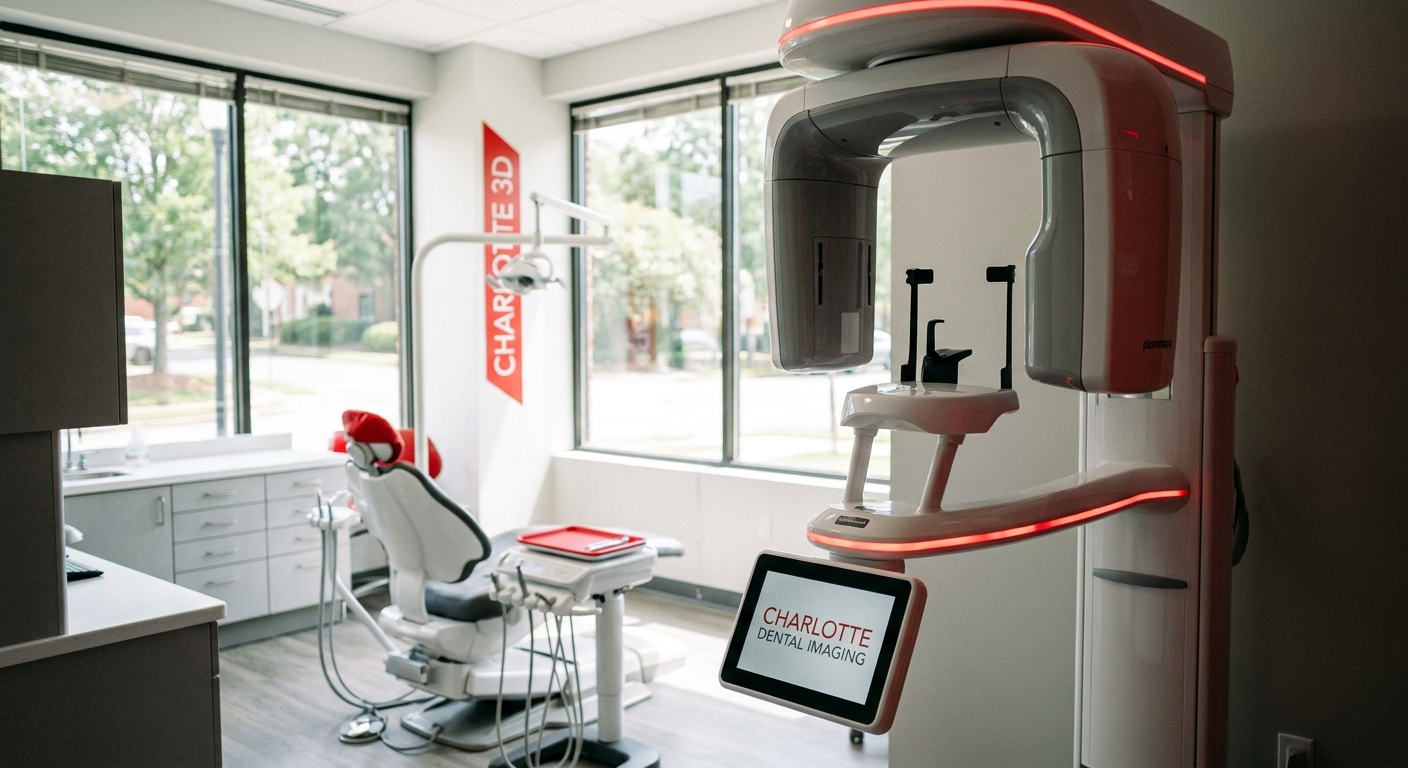
This is where imaging can help clarify the situation. At Charlotte Emergency Dental, your walk-in visit includes a cone-beam CT scan (a 3D X-ray) captured as part of the $99 emergency exam and imaging fee. Before that scan is taken, the front desk triages what is happening: the nature of the problem, how long the pain has lasted and how it feels, whether there is swelling, and any signs of infection. A standard flat X-ray shows two dimensions, while the cone-beam scan shows the tooth, the root, and the surrounding bone in three, which may help reveal infections at the root ends, large cavities, and whether there is enough bone for an implant if the tooth cannot be saved. After the scan, a dental assistant evaluates you and then the doctor performs an intraoral exam, tests the tooth’s vitality with cold and percussion (gentle tapping), screens for infection, and reviews the images with you on screen.
That sequence matters for your wallet. When the fracture depth and root health are assessed the same day, you receive a recommendation from Charlotte Emergency Dental for the treatment the tooth appears to need, not a best guess that gets revised (and repriced) at a second visit. You walk out knowing the diagnosis, the plan, and the number before any procedure begins.
What You May Receive the Same Day
In many cases, you can have a broken tooth addressed the same day in Charlotte. At Charlotte Emergency Dental, root canals, crowns, extractions, implants, bridges, and dentures may be performed same-day when it is clinically appropriate, so you are not sent home with a temporary patch and told to come back next week. Individual results vary, and your dentist will discuss what is possible in your particular case.
Same-day treatment is not just convenient, it may help reduce costs in ways that do not show up on the sticker price. A traditional two-visit crown means a temporary crown, a second numbing appointment, and a second half-day away from work or family. Handling the permanent restoration in one visit removes the cost and hassle of that temporary and the return trip. When you are already in pain and stressed, closing the whole problem in a single sitting may offer significant value.
Here is what that actually looks like on the clock. One patient arrived at Charlotte Emergency Dental at 10:15 a.m. with excruciating lower-left pain. By 10:30 a.m., a cone-beam scan had confirmed an unrestorable vertical root fracture of tooth #30, a lower molar. The patient was numb and out of pain by 10:35 a.m. The extraction and a bone graft (which preserves the socket for a possible future implant) were finished by 11:20 a.m., and the patient left the parking lot by 11:30 a.m. Total time from walk-in to driving away: 75 minutes. Individual experiences vary.
A typical weekday walk-in wait from arrival to treatment at Charlotte Emergency Dental runs around 30 minutes, stretching up to about an hour on busy weekends. Being open seven days a week with 9 a.m. to 7 p.m. weekday hours makes the office roughly 75% more available than a typical Monday-through-Thursday practice, and the team sees around 50 emergency patients a week. Because the diagnosis, the cost conversation, and the treatment may happen in one window, you are never guessing about the next step. You see the 3D image, hear your options, get the price, and decide.
Insurance, Financing, and Getting Money Back When a Practice Is Out of Network
Most PPO dental plans cover 50% to 80% of restorative work such as fillings, root canals, and crowns after you meet your deductible, though the exact share depends on your plan’s annual maximum and category rules. The important part for an emergency is this: you may still be able to use those benefits even when a practice is out of network.
Charlotte Emergency Dental is out of network and paid at the time of service, and that phrase “out of network” scares a lot of people into waiting. It should not. The practice gives you a completed insurance claim form after your visit, and you submit that to your carrier for reimbursement. In plain terms, you pay the office and your insurer sends money back to you based on your plan’s restorative benefit. You are not walking away from your coverage, you are just collecting it a different way.
If you do not have insurance, or if the balance after reimbursement is still more than you can hand over today, financing fills the gap. The practice at Charlotte Emergency Dental works with a variety of third-party financing companies that break treatment into multiple monthly payments, often with 0% interest. That turns a $2,000 crown into a manageable monthly number instead of a wall you hit at the front desk.
What makes this workable is timing. The cost breakdown and the financing options are laid out by Charlotte Emergency Dental during the same visit as your diagnosis, right after you review the scan. You are never asked to commit to treatment before you know the price and how you will pay for it. For a broken tooth repair cost question that started as a late-night search, that is the whole point: full transparency first, then your decision.
What Waiting May Cost You
Waiting is often the most expensive choice, even though it feels like the free one. A crack that starts in the enamel does not stay put. Bacteria work into the fracture line, and over days or weeks the damage may move toward the nerve.
The American Association of Endodontists explains that untreated cracked teeth are at higher risk for irreversible pulpitis (inflammation of the pulp that no longer heals on its own) and periapical infection at the root tip. Both may make treatment more complicated and more costly. A tooth that started as a $300 bonding or filling case can slide into needing a root canal and crown. If infection or the fracture reaches too far, that same tooth may end up needing extraction and implant replacement, which puts you at $3,000 to $5,000 for the tooth you could have saved for a fraction of that. Individual experiences vary.
There is also a pain and time cost that no invoice captures. Early treatment may mean a straightforward approach, while delayed treatment may lead to an abscess, swelling, and an urgent visit anyway, just under more difficult conditions. The math often favors addressing a broken tooth while the damage is still limited.
Why the Cheapest Option Is Not Always the Best Value
Upfront price is only half the story. The real number to weigh is cost per year of service, because a restoration you replace every few years can end up costing more than one that lasts over a decade. Individual results vary.
Composite bonding is the budget-friendly choice at $150 to $400, and it may be appropriate for small chips, but it wears down over time. A systematic review in the Journal of Prosthetic Dentistry reported a median survival of about 7.8 years for posterior composite restorations, compared with 12.8 years for ceramic crowns, with composites failing faster under the heavy chewing forces on molars. A porcelain crown costs more at first ($1,200 to $2,500), yet it commonly lasts 10 to 15 years or longer with good care. For a large fracture on a back tooth, the crown may offer better value over time even though it costs more on day one. Individual results vary based on many factors.
The takeaway is not “always buy the expensive option.” It is that the appropriate choice depends on which tooth broke, how it broke, and how hard it works when you chew. That is exactly the conversation you should be having with a dentist while looking at your own 3D scan, not something to decide from a price chart alone. Results vary from person to person, and the right material for you comes out of your specific diagnosis, which is why comparing your true broken tooth repair cost across options is best done with the images in front of you.
Frequently Asked Questions
How much does it cost to address a chipped front tooth in Charlotte?
Cosmetic bonding for a minor front-tooth chip typically costs $150 to $400 per tooth. If the damage is larger, a porcelain veneer runs about $900 to $2,000. The appropriate choice depends on how much tooth structure is missing and whether the root is healthy. Individual results vary.
Will my dental insurance cover broken tooth repair?
Most PPO plans cover 50% to 80% of restorative work after your deductible, up to your annual maximum. Charlotte Emergency Dental is out of network but provides a completed claim form so you can submit for reimbursement from your carrier.
Can I have a broken tooth addressed the same day in Charlotte?
In many cases, yes. Charlotte Emergency Dental may perform same-day crowns, root canals, extractions, implants, bridges, and dentures when it is clinically appropriate, with walk-in availability seven days a week. A typical weekday wait from arrival to treatment is around 30 minutes. Individual experiences vary.
What is included in the $99 emergency exam fee?
The $99 emergency examination and X-ray fee at Charlotte Emergency Dental covers your clinical exam, cone-beam CT imaging to check fracture depth and root health, vitality testing, infection screening, diagnosis, and same-day treatment planning. You review the images with the dentist and receive a cost breakdown before any work begins.
How do I pay for a broken tooth repair if I do not have insurance?
The practice at Charlotte Emergency Dental partners with a variety of third-party financing companies that split treatment into multiple monthly payments, often with 0% interest. Payment options are discussed during the same visit as your diagnosis.
What may happen if I wait to address a cracked tooth?
Cracks may deepen as bacteria enter the fracture line, raising the risk of infection and pulp damage. A tooth that could have been addressed with a filling or crown may eventually need extraction and implant replacement, pushing the cost to $3,000 to $5,000. Individual results vary.
Get a Real Number Today, Not Another “It Depends”
Stop refreshing cost pages and get an actual answer for your tooth. Call Charlotte Emergency Dental now or walk in seven days a week, 9 a.m. to 7 p.m. on weekdays with weekend hours available, for a $99 emergency exam that includes 3D cone-beam imaging, same-day treatment options, and a clear cost breakdown before any work begins. One tip for your visit: take an over-the-counter anti-inflammatory before you arrive and avoid chewing on the cracked side, because keeping pressure off the fracture may help prevent it from spreading before you are seen.
Get a Clear Answer on Your Repair Cost Today
A broken tooth creates enough worry without wondering what treatment will cost. Charlotte Emergency Dental provides transparent pricing information before any work begins, so you can make decisions with confidence rather than uncertainty. Our team is standing by to discuss your specific situation and walk you through your options.
Call Charlotte Emergency Dental