Broken Tooth Repair in Charlotte NC: Same-Day Options and What to Expect
You bite into something at dinner, feel a sharp crack, and suddenly a piece of your tooth is loose against your tongue. The panic that follows is usually less about the tooth itself and more about the questions piling up: How bad is this? How much will it cost? And how long until someone can actually look at it? At Charlotte Emergency Dental, that last question has a short answer. The dentist holds up your scan on the monitor, traces the fracture running through the tooth, and walks you through your repair options (a crown, a root canal and crown, or an extraction with a bone graft), then asks which timeline and budget work best for you. That entire conversation happens within about thirty minutes of walking through the door, not three days and two referrals later.
That gap between when a tooth breaks and when someone actually looks at it is where most of the trouble hides. A small chip can develop into an exposed nerve, and a cracked filling can develop into an abscess. This article walks you through what broken tooth repair really involves, how a dentist decides which approach will fix your tooth, and how same-day dental care in Charlotte, NC works from the moment you walk in.
What Broken Tooth Repair Actually Means
Broken tooth repair is not one procedure. It is a range of treatments, and the approach depends almost entirely on two things: how much healthy tooth is left above your gumline, and whether the crack has reached the soft tissue inside the tooth called the pulp.
Think of a tooth like a hard shell wrapped around a living core. The outer enamel and dentin protect the pulp chamber, where the nerve and blood supply live. When you chip a corner of enamel, the core is still safe, so a simple repair may work. When the break runs deeper and opens a path to the pulp, the nerve gets exposed to bacteria and temperature, which is why a cracked tooth can go from annoying to unbearable overnight. And when the crack travels below the gumline or splits the root, there may not be enough solid structure left to anchor any repair at all.
That is the real question behind every broken tooth: can this tooth still hold a restoration, or has the damage gone too far to save it? A chip on a front tooth and a vertical fracture through a back molar can look similar to a worried patient in a mirror, but they call for different approaches, and telling them apart is important. The point of a proper exam is to find out which situation you are actually in before anyone picks up a drill. When you search for broken tooth repair in Charlotte, you are really searching for that answer, delivered fast.
How Dentists Diagnose Which Repair You Need
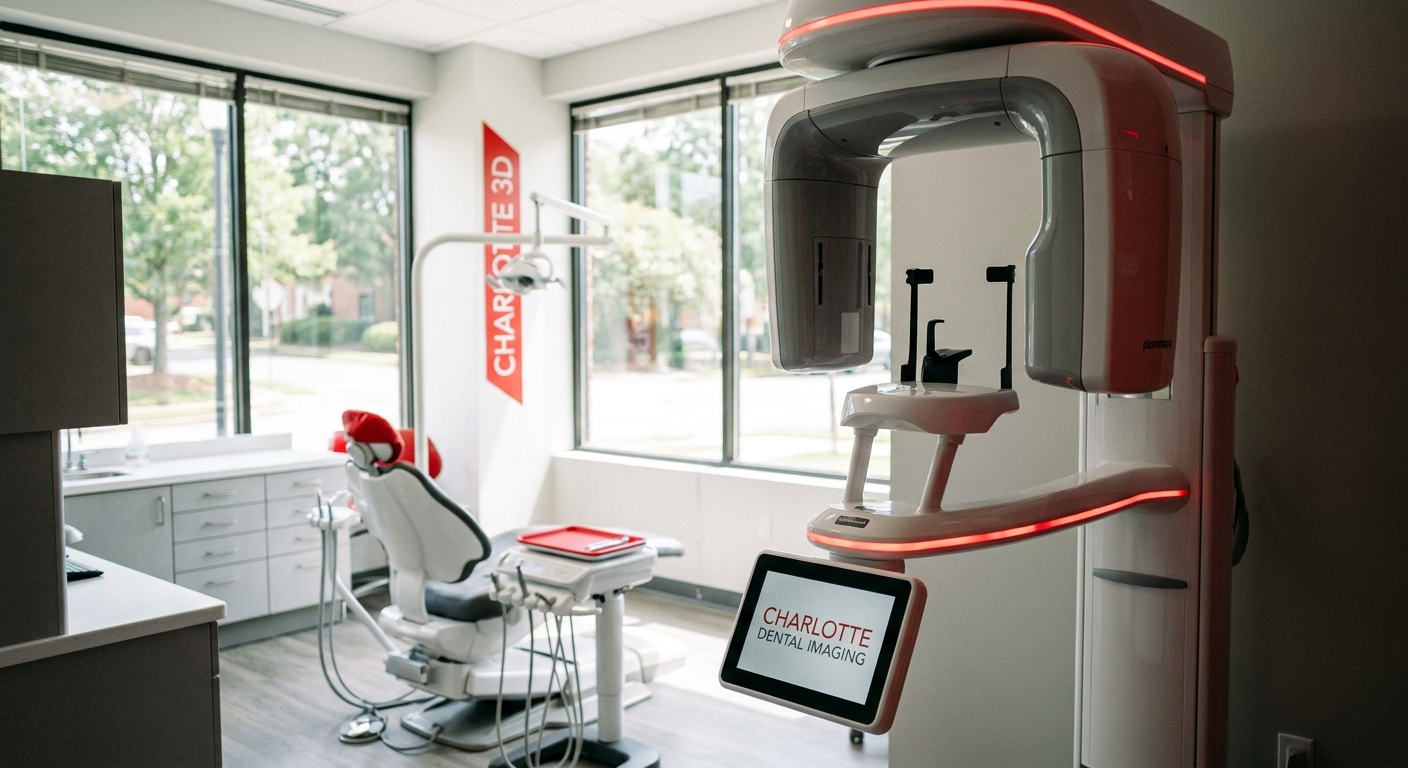
The repair decision starts with imaging, because cracked teeth are unpredictable and the most dangerous cracks are the ones you cannot see. At Charlotte Emergency Dental, a walk-in with a broken tooth is moved to a cone-beam CT scan, a 3D x-ray that shows the fracture in detail. This scan reveals crack depth, root involvement, and whether a vertical fracture has split the tooth, which is exactly the information that informs the decision between saving and removing it.
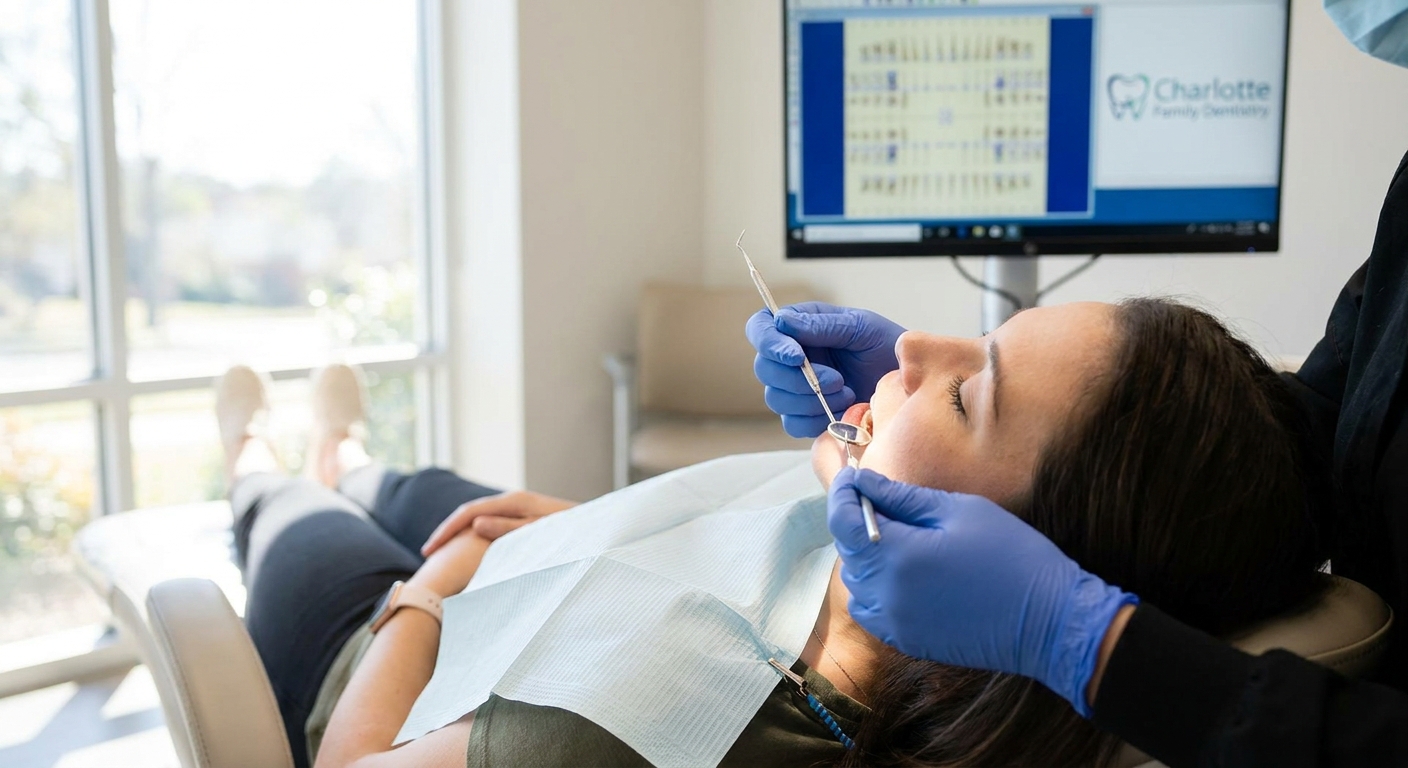
From there, the team runs vitality testing. A percussion test, meaning a gentle tap on the tooth, checks for inflammation around the root. A cold test checks whether the nerve is still alive and how it responds. Combined with an intraoral exam, these tests map how deep the damage goes and whether the pulp is involved. Only then does the dentist review the scan with you on the screen and lay out your options and the cost of each.
Here is how fast that can move. One Tuesday, a patient walked in at 10:15 a.m. with severe lower-left pain. By 10:30 a.m. the scan was captured and showed a vertical root fracture in a lower molar. By 10:35 a.m. the patient was numbed. The extraction and bone graft were finished by 11:20 a.m., and the patient left before 11:30. That is diagnosis and treatment in a single morning, with no referral and no second trip across town. Most emergency offices cannot compress that timeline, because the imaging, the diagnosis, and the treatment all happen in different buildings.
Four Common Repair Options and When Each One Applies
Once the fracture is mapped, most broken teeth fall into one of four repair paths, and understanding them helps you make sense of the treatment plan you are handed. Individual results and longevity vary based on many factors including oral hygiene, diet, and the extent of damage.
Bonding, often called dental bonding, is used for small chips, usually on front teeth. The dentist shapes tooth-colored composite resin over the damaged area and hardens it with a curing light in a single visit. It is the least expensive option upfront and the fastest to place. Research in the Journal of the American Dental Association on direct composite restorations reports service life ranging from a few years to several before repair or replacement may be needed, though individual outcomes vary.
Crowns are often used when the break is too large for bonding, or when a molar has been weakened by an old filling and a fresh crack. A porcelain crown caps the entire tooth like a helmet, restoring the chewing surface and holding the remaining structure together. Crowns sit in the mid-range on cost and are designed to handle biting force on back teeth.
Root canal therapy becomes necessary when the fracture reaches the pulp and the nerve is exposed or infected. The dentist removes the damaged pulp, cleans and seals the canal, and almost always follows with a crown to protect what remains. This approach may help preserve a tooth that would otherwise throb, abscess, or need to come out.
Extraction is reserved for cracks that run below the gumline or split the root vertically, like the molar in the case above. When too little solid tooth remains, removing it and planning for an implant or bridge may help protect your bite and your neighboring teeth from further problems. Charlotte Emergency Dental performs all four of these in-house, along with the implants, dentures, and bridges that can follow an extraction, so the plan does not fracture into three separate offices.
What Happens When a Tooth Is Knocked Out Completely
A tooth that gets knocked clean out of the socket, called an avulsed tooth, is the one true stopwatch dental emergency on this list. The American Association of Endodontists advises that a knocked-out permanent tooth may have a better chance when it is addressed quickly, and many practitioners work within roughly sixty minutes as a general window. Individual outcomes vary significantly.
What you do in those first minutes is important. When someone calls Charlotte Emergency Dental with a tooth in their hand, the front desk coaches them on the phone right away: pick the tooth up by the crown, not the root, and store it in milk to help preserve the delicate root cells on the way in. Milk works better than water for this. Then come straight in.
At the office, the dentist numbs the area, gently rinses debris from the root without scrubbing it, eases the tooth back into its socket, and stabilizes it with a resin and fiber splint bonded to the neighboring teeth. That splint holds everything still while healing occurs, and a short course of antibiotics is typically added to help guard against infection during healing. None of this requires a referral, which matters when you are working within a limited timeframe. A Saturday knocked-out tooth does not have to wait until Monday to be addressed.
Same-Day Broken Tooth Repair Charlotte: How It Works
Same-day repair works because the practice is built to remove the two things that usually slow you down: scheduling and referrals. Walk-ins are triaged the moment they arrive. Front desk staff screen for the nature and duration of your pain, any swelling, and warning signs of spreading infection like trouble breathing or swallowing, so the most urgent cases move first.
From there you go back for the scan and into an operatory, where a dental assistant interviews and evaluates you before the dentist performs the exam, vitality testing, and imaging review. On a typical weekday, the time from walking in to starting treatment is around thirty minutes, stretching toward an hour only on the busiest weekends. The office treats nearly all emergencies the same day and handles roughly ten to fifteen emergency cases daily, so the workflow is a practiced experience, not improvised.
Access is the other half of it. Charlotte Emergency Dental is open seven days a week with extended weekday hours from 9 a.m. to 7 p.m., which means you can come in after work or on a Sunday instead of skipping work, rearranging your schedule, or burning a vacation day. Teeth tend to break during meals, playing sports, and weekend falls, precisely when a limited weekday-only office is closed. If you are typing broken tooth repair charlotte into your phone on a Saturday afternoon, the goal is that you are seen that same afternoon, not booked for Wednesday.
Cost, Financing, and What Your First Visit Looks Like
Cost uncertainty is often scarier than the tooth itself, so here is the straight version. The emergency exam and x-ray fee is $99, and that gets you the scan, the diagnosis, and a clear treatment plan with prices before anyone starts. From there, repair cost depends on which path your tooth needs. Bonding is the most affordable upfront option, crowns and root canals sit in the mid-range, and extractions paired with bone grafts or implants cost more upfront but may help prevent the shifting teeth and bite problems that a missing tooth can cause down the line.
The practice is self-pay and out-of-network, and it provides itemized claim forms you can submit to your insurer for possible reimbursement. To keep cost from standing between you and dental care, it also works with several third-party financing companies that let you split treatment into manageable payments, often at 0% interest. If cost is your worry, say so at the front desk, because the plan gets built around what works for you.
Your visit itself is designed to feel calm even when your mouth is not. Front desk staff screen your pain and symptoms, a dental assistant interviews and evaluates you in the operatory, and then the dentist performs the intraoral exam, runs the percussion and cold vitality tests, reviews your scan with you on the screen, and talks through every option and price before touching the tooth. If you feel anxious about dental work, calming medication can be prescribed ahead of your appointment when you book. You are never rushed into a decision, and you are never left guessing what the visit will cost. That combination of speed, honesty, and in-house treatment is what makes the whole experience of broken tooth repair in Charlotte feel manageable instead of overwhelming.
Frequently Asked Questions
Can a broken tooth be repaired the same day?
Many broken tooth repairs, including bonding, crowns, root canals, and extractions, may be completed the same day at Charlotte Emergency Dental, because all imaging and treatment happen in-house. The practice treats nearly all emergencies on the day you walk in.
How do I know if my broken tooth needs a crown or just bonding?
A cone-beam CT scan and vitality testing reveal how deep the fracture goes and whether the pulp is involved. Small chips on front teeth may qualify for dental bonding, while larger breaks, weakened molars, or exposed nerves may call for a crown or a root canal followed by a crown. Your dentist will review your specific situation with you.
What should I do if my tooth gets knocked out?
Pick it up by the crown, store it in milk, call Charlotte Emergency Dental right away, and aim to arrive within about sixty minutes. That timeframe may help with reimplantation and splinting, though individual outcomes vary.
Does Charlotte Emergency Dental take walk-ins for broken teeth?
Yes. Walk-ins are welcome seven days a week with extended hours, so you do not have to wait for the next available booking. Patients are triaged by pain severity and infection signs, and treatment typically begins within about thirty minutes on weekdays.
How much does broken tooth repair cost in Charlotte?
The emergency exam and x-ray fee is $99. Repair costs range from a few hundred dollars for bonding up to several thousand for root canals, crowns, or extractions with bone grafts and implants. Third-party financing is available, often at 0% interest.
Will I need a referral to a specialist for a broken tooth?
In most cases, no. Charlotte Emergency Dental performs root canals, crowns, extractions, implants, and imaging in-house. Only a few situations, like unusually complex root canal anatomy or major facial trauma, are referred out.
Please call Charlotte Emergency Dental or walk in seven days a week for same-day broken tooth evaluation and care, with no referrals, no waiting, and all imaging and treatment completed in one place. If your tooth is knocked out, put it in milk and head in promptly.
Get Your Broken Tooth Repaired Today
A broken tooth can happen when you least expect it, and waiting only increases the risk of infection or further damage. Charlotte Emergency Dental understands that you need relief and solutions now, not next week. If you’re dealing with cracked teeth, a chipped tooth, or a fully broken one, our team is ready to see you today and restore both your comfort and your smile.
Call Charlotte Emergency Dental