Dental Pain Management in Charlotte: Getting Out of Pain Fast
You are in pain right now, which means you are not looking for pain management tips or coping strategies, you are looking for someone who will stop the pain by fixing what is causing it. Most dental offices will offer you ibuprofen and an appointment later in the week, but that approach assumes you can function through days of throbbing while the infection spreads or the crack deepens. Charlotte Emergency Dental built its entire model around a different premise: that real pain management means treating the source today, not prescribing something to dull it until next Tuesday.
Charlotte Emergency Dental is a walk-in emergency practice in Charlotte, NC that treats most emergencies the same day they walk through the door. Below is exactly how that works, from the moment you check in, so you know what to expect before you ever call.
What Dental Pain Management Actually Means When You Are in an Emergency
Real dental pain management often means finding and treating the cause of your pain the same day, not covering the symptom with medication and sending you home to wait. Masking pain and eliminating pain are two very different outcomes.
A painkiller can dull the ache from an abscess for a few hours, but it does nothing to stop the infection spreading through the bone underneath the tooth. When the medication wears off, the pain often comes back, sometimes worse, because the problem has had more time to grow. That is why a script for an opioid or a round of antibiotics, handed out without treating the tooth, can turn into a second emergency a few days later. The tooth still may need to be drained, filled, root-canaled, or removed, so the pill may only delay the real fix.
Federal guidance now steers dentists away from opioids for most acute dental pain in the first place. The CDC’s clinical guidance on dental pain care points to treating the source of the pain and using non-opioid options like ibuprofen and acetaminophen for the discomfort that follows, rather than reaching for stronger drugs. That lines up with how Charlotte Emergency Dental works, because the goal at every visit is to diagnose the toothache, the abscess, the crack, or the exposed nerve, then remove or repair whatever is causing it while you are still in the chair.
Here is what that means for you. When you come in with a screaming molar, the question is never “what can we prescribe to get you through the weekend.” The question is “what is actually wrong, and can we fix it today.” Most of the time, the answer is yes. That is the whole point of a practice built around same-day care instead of a calendar packed with cleanings booked weeks out.
How Fast Can You Go From the Front Door to Numb?
Most weekday walk-ins go from arrival to treatment in about 30 minutes, and once the local anesthetic is in, most patients experience full numbing within five to ten minutes, though individual response can vary. The Tuesday patient above experienced pain relief twenty minutes after walking in.
The speed comes from a set order of steps, and each one has a purpose. It starts at the front desk, where staff triage you the moment you arrive. They ask how long the pain has lasted, what it feels like, whether there is swelling, and whether you have any infection warning signs like difficulty breathing or swallowing. Those last questions matter, because facial swelling that affects your airway is one of the rare situations that belongs in a hospital, not a dental chair, and the team needs to know that within seconds of meeting you.
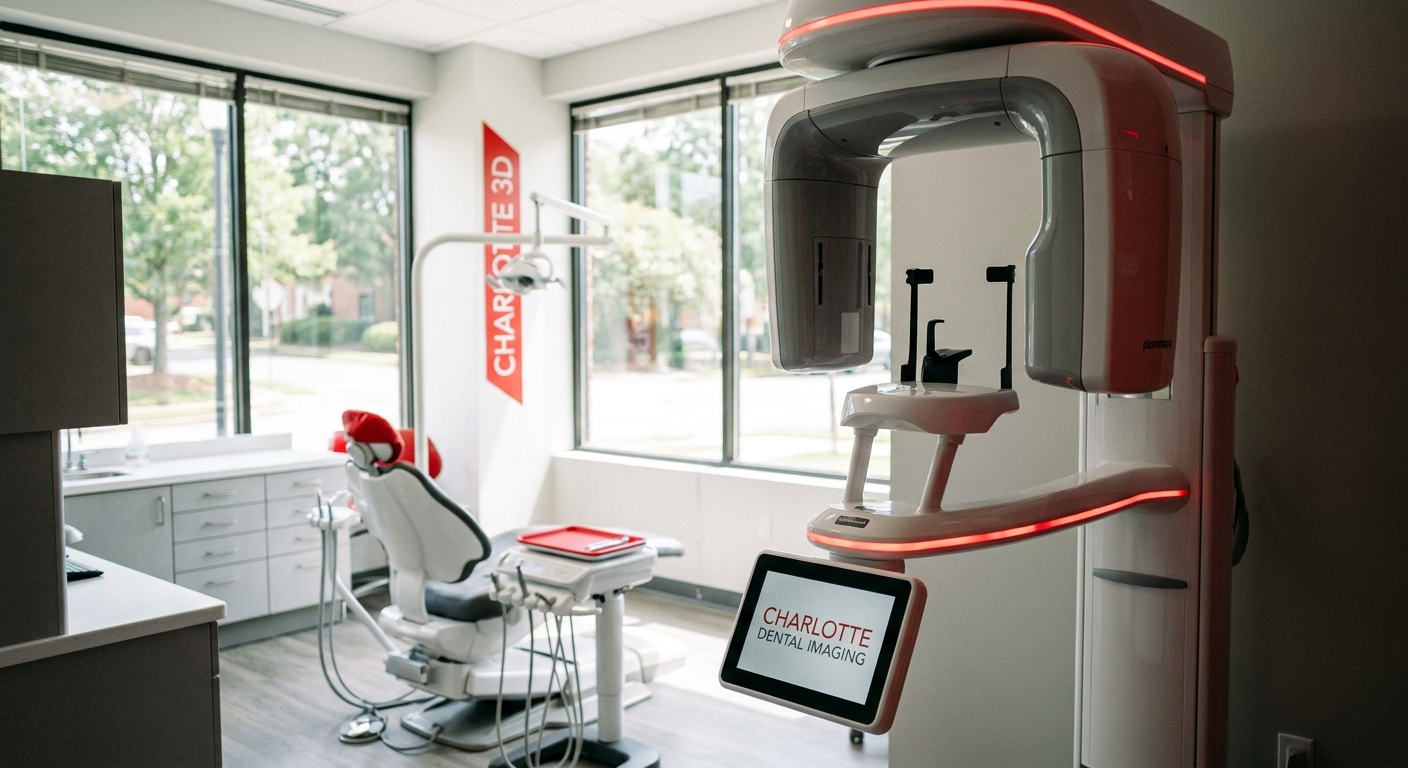
As soon as possible, you are brought back for a cone-beam CT scan, a 3D X-ray that shows infections, cavities, and the bone around the roots in far more detail than a flat film. This is where a lot of guesswork disappears. On the Tuesday case, the scan revealed an unrestorable vertical root fracture running down tooth #30, which told the doctor immediately that the tooth could not be saved and needed to come out. That answer arrived at 10:30, fifteen minutes after check-in.
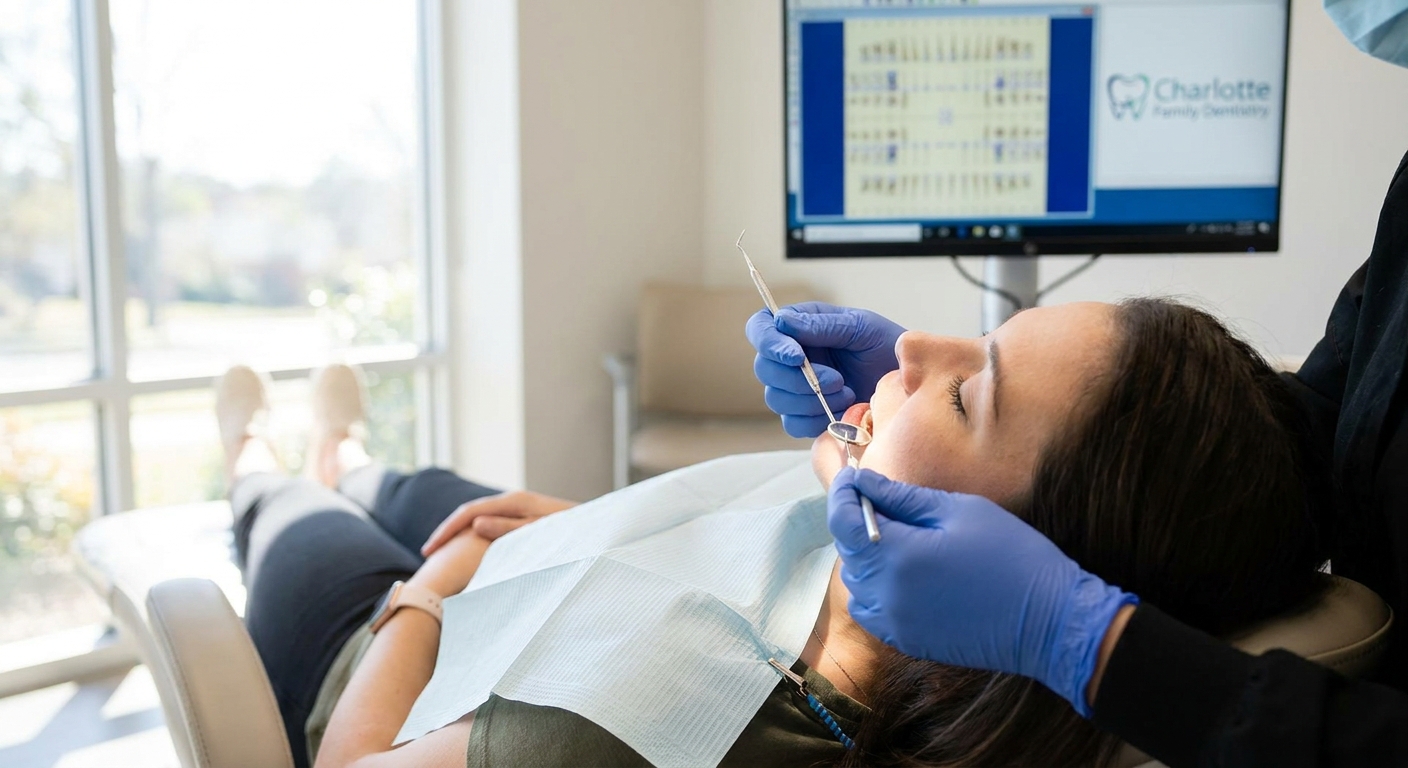
From there you move to an operatory. A dental assistant interviews and evaluates you first, then the doctor performs an intraoral exam and tests the tooth’s vitality with percussion (a gentle tap) and cold. Those simple tests tell the doctor whether the nerve is alive, dying, or dead, which helps decide whether you may need a root canal, an extraction, or something smaller. The doctor reviews the 3D scan with you, lays out your options and the cost, and only then places the local anesthetic. Numbness often follows within minutes, and pain relief typically begins right there, though individual experiences vary.
Which Emergencies Can Be Fixed the Same Day You Walk In?
Charlotte Emergency Dental treats most emergencies the same day, roughly 10 to 15 patients a day and around 50 a week. That includes severe toothaches, infections, abscesses, cracked and broken teeth, knocked-out teeth, lost and loose crowns, sharp sensitivity, dry sockets, post-extraction pain, and root canals.
The specific procedures can happen in one visit when the situation allows. An abscess may be drained and the infection addressed. A tooth with a dying nerve can receive a same-day root canal. A tooth that cannot be saved may come out, and when you are ready to plan a replacement, that conversation can happen too. A lost crown can be re-cemented or rebuilt. The point is that you may leave with the problem handled, not with a referral and a wait, though outcomes depend on individual circumstances.
A knocked-out permanent tooth is the clearest example of why speed matters. If you call with a tooth in your hand, the team will tell you to submerge it in milk right away and come immediately, because the living cells on the root surface start to die once the tooth is out of the socket. In the office, they numb the area, gently clean debris from the root, reimplant the tooth, and stabilize it with a bonded resin and fiber splint, then may start you on a 10-day antibiotic course, usually amoxicillin. Every minute counts here, which is exactly why a same-day practice can offer advantages over a system that would tell you to wait until Monday.
Very few cases go elsewhere, and it is always for a good reason. Certain root canals with unusually curved or complex canal anatomy are referred to a specialist, and major facial trauma, a fractured jaw, or life-threatening swelling belongs in a hospital emergency room. Most other cases are designed to be finished in-house, in one sitting. Treating the cause the same day is not just faster, either. Reserving strong pain drugs and building care around the actual source of pain is also what current evidence-based guidance for managing acute dental pain recommends.
What If You Are Terrified of the Injection?
If the needle is the part that scares you most, the practice can prescribe an anxiolytic medication for you to take before your appointment so you may arrive calm. That matters for more than comfort, because fear physically changes how much pain you feel.
When you are tense and braced, your body floods with stress hormones, your muscles tighten, and your nervous system dials up every sensation. The same injection that feels like a pinch to a relaxed person can feel sharp and alarming to someone whose whole body is on high alert. Anesthesia also tends to settle in more smoothly when the tissue is not clenched. So calming the stress response before you sit down is not a luxury, it can be part of helping you experience numbing faster and with less discomfort.
Picture the difference. You have a molar that has kept you up for two nights, and you have been dreading the needle more than the toothache itself. Instead of white-knuckling it in the waiting room, you take a prescribed anxiolytic ahead of time, arrive with your shoulders down, and may barely register the injection that finally shuts the pain off. For many people who have avoided the dentist for years because of needle fear, that single change can help them get into the chair and out of pain.
If you are anxious, say so when you call. The team hears it every day, and naming it early is what lets them plan around it instead of discovering it when you are already tense in the chair. There is no version of this where you are expected to just tough it out.
Why Cost and Hours Should Not Keep You in Pain
Two things keep people in pain longer than they need to be: not being able to get seen, and not knowing what it will cost. Charlotte Emergency Dental removes both. The office is open seven days a week, 10 a.m. to 7 p.m. on weekdays with weekend availability, and the emergency exam and X-ray fee is a flat $99.
Being open seven days is roughly 75 percent more availability than a typical Monday-through-Thursday office. That is the difference between a Saturday-morning abscess getting handled on Saturday and a Saturday-morning abscess festering until the following week. It is also why so many people end up here after a hospital ER visit that only produced a prescription and a note to “see a dentist,” which sends you right back to the problem you started with.
On cost, the honesty starts before treatment. You know the $99 exam fee up front, and after your 3D scan the doctor reviews your options and the price with you before anything is done. The practice is out-of-network for insurance, but it hands you an itemized claim form so you can file with your insurer for reimbursement on your own plan’s terms. For larger work, it partners with several third-party financing companies that let you split treatment into monthly payments, many at 0 percent interest on approved credit. A root canal you could not write a single check for may become a manageable monthly number that fits a paycheck.
That transparency is not a sales tactic, it is pain prevention. When people do not know what a visit will cost, they may wait, and while they wait a small infection can become a big one, a fixable tooth can become an extraction, and a $99 exam can become a much larger bill. Knowing the number up front is what may let you say yes today, which is often the cheaper and less painful path.
Frequently Asked Questions
How quickly can I get out of pain after I arrive?
Most patients experience full numbing within five to ten minutes of the local anesthetic injection, though individual response can vary. Because triage, the 3D scan, and the exam usually take about 30 minutes on a weekday, many people experience pain relief within roughly half an hour of walking in.
Will I need a prescription for painkillers, or can you treat the problem today?
The problem is typically treated the same day in most cases, which is what usually ends the pain, though outcomes vary by individual and condition. Fixing the cause, rather than defaulting to opioids, also matches current federal recommendations for acute dental pain. That may mean fewer prescriptions and fewer return trips for many patients.
What if I am terrified of dental injections?
Let the office know when you call. For anxious patients, the practice can prescribe an anxiolytic to take before your appointment, which may help calm the stress response that can make injections feel sharper and can help the anesthetic work more smoothly.
Can you see me on a weekend if the pain starts Saturday morning?
Yes. Charlotte Emergency Dental is open seven days a week with extended hours and treats around 50 emergency patients a week, weekends included. You do not have to suffer through the weekend or settle for an ER that cannot treat the tooth.
How much does an emergency visit cost, and do you take insurance?
The emergency exam and X-ray fee is $99. The practice is out-of-network but provides claim forms so you can seek reimbursement from your insurer, and it offers third-party financing with 0 percent interest options on approved credit for larger treatment.
What should I do if my tooth gets knocked out before I can get to your office?
Put the tooth in a cup of milk right away and come in immediately. Reimplantation works best within about 60 minutes, and the team will clean the root, reimplant the tooth, stabilize it with a bonded splint, and may start you on antibiotics to help give it a chance to survive, though outcomes vary by individual case.
If you are in dental pain right now, call Charlotte Emergency Dental to schedule a same-day appointment. Walk-ins are welcome seven days a week, and the sooner you come in, the smaller and less expensive the fix may be.
Fast Relief Starts With One Call
Dental pain has a way of making everything else feel impossible to focus on. If you’re dealing with tooth pain that won’t let up, Charlotte Emergency Dental is ready to see you quickly and help you find relief. We know you’re looking for answers today, not next week.
Call Charlotte Emergency Dental
Individual results and experiences vary based on specific conditions, overall health, and response to treatment. Same-day treatment is available for most but not all dental emergencies.