Emergency Dentist in Charlotte NC | Same-Day Care Without the Wait
When patients arrive at Charlotte Emergency Dental with severe dental pain, the practice is designed to provide diagnostic evaluation and treatment in a single visit when clinically appropriate. The facility focuses on walk-in emergency care rather than traditional appointment-based scheduling.
If you are experiencing a dental emergency, understanding what to expect and what treatment may cost can help you make informed decisions about seeking care.
What Counts as a Dental Emergency, and When to Stop Waiting
A dental emergency is any oral problem that causes severe pain, bleeding, swelling, or the risk of losing a tooth if you wait. The American Dental Association treats sudden, severe toothaches, knocked-out teeth, and signs of infection as urgent conditions that need prompt care, not a “call back next week” appointment.
At Charlotte Emergency Dental, common reasons patients seek emergency care include severe toothaches, knocked-out teeth, broken or cracked teeth, abscesses and swelling, active infections, lost or loose crowns, sharp sensitivity, dry sockets, and lingering pain after an extraction elsewhere.
Some situations belong in a hospital, not a dental chair. Major facial trauma, a fractured jaw, or swelling so severe that it threatens your ability to breathe or swallow needs an emergency room. Those cases require medical stabilization. Many other dental emergencies can be addressed in the dental office setting.
Why does timing matter? Pain that seems tolerable can worsen over time, and an infection left alone may spread from a tooth into the surrounding bone and soft tissue. A knocked-out tooth has a time-sensitive window for successful reimplantation. Delaying treatment may result in more complex and costly procedures.
What Actually Happens From the Moment You Walk In
When you call or walk in, the front desk conducts an initial assessment. They ask about the nature of the problem: how long the pain has lasted, what it feels like, what makes it better or worse, whether there is swelling, and whether you have any warning signs of a serious infection like trouble breathing or swallowing. This initial evaluation helps determine clinical priorities.
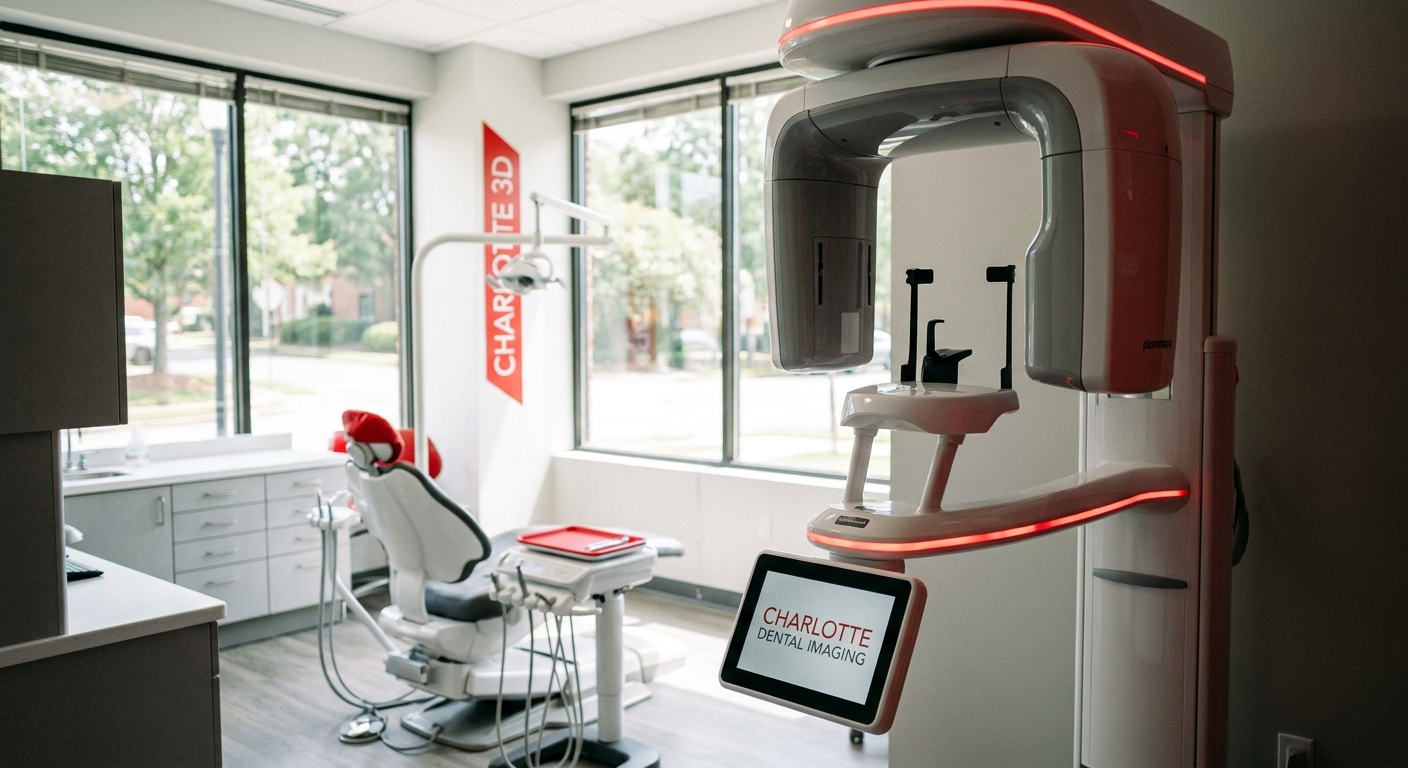
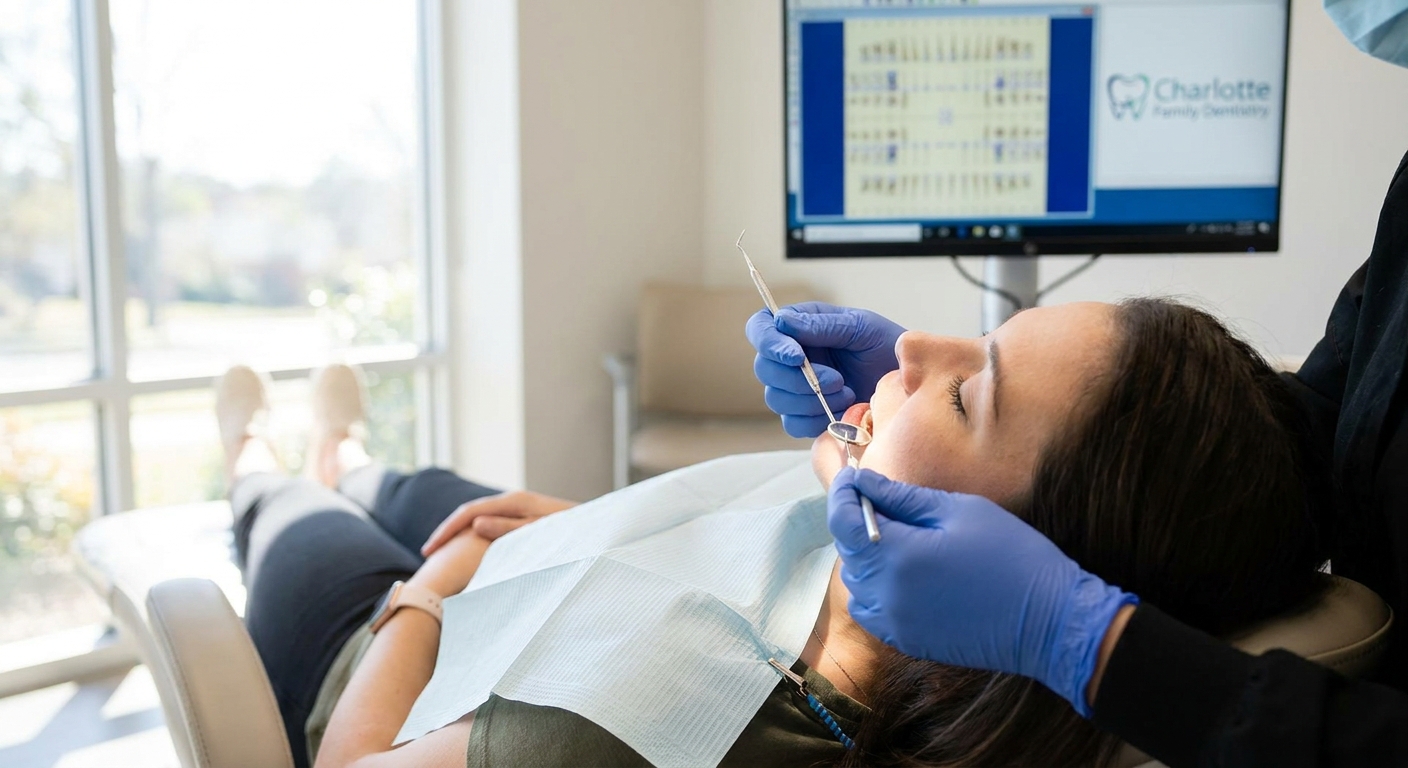
Patients typically receive a cone-beam CT scan. A CBCT is a 3D X-ray that reveals more detail than traditional two-dimensional imaging. It can show infection at the tips of tooth roots, the true extent of decay, cracks, and bone quality, which matters if a tooth needs to be replaced with an implant. A dental assistant interviews and evaluates you, then the doctor performs a full mouth exam. That includes tooth vitality testing, using gentle percussion and a cold stimulus to assess the health of the nerve and the tissue around the root, an approach consistent with diagnostic protocols published in the Journal of Endodontics. The doctor reviews your scan with you, identifies the likely cause of your symptoms, and discusses your treatment options and associated costs before proceeding.
The practice works to minimize wait times for emergency patients. Wait times vary based on patient volume and case complexity, with weekends typically busier than weekdays.
If you are anxious about dental work, inform the staff. Anxiolytic medication can be prescribed when clinically appropriate. The doctors are experienced in treating patients with dental anxiety.
Knocked-Out Tooth: Time-Sensitive Care
If a tooth gets knocked completely out, prompt action is critical. A knocked-out (avulsed) permanent tooth has the best chance of surviving when it is reimplanted within about 60 minutes, according to guidance from the American Association of Endodontists and the American Dental Association. After that window, the likelihood of successful reimplantation decreases.
Here is what to do: Call immediately. Over the phone, you will be instructed to place the tooth in a container and submerge it in milk, because milk keeps the living cells on the root surface alive far better than water or open air. Do not scrub the tooth, and do not rinse it aggressively. Aggressive rinsing can strip away the delicate cells on the root that the periodontal ligament needs to reattach.
When you arrive with a knocked-out tooth, it is treated as a priority. The doctor numbs the area, carefully cleans the root surface while preserving the critical cells, and repositions the tooth in its socket as close to its original position as possible. The tooth is then stabilized to the adjacent teeth using a resin-fiber splint. That splint typically remains in place for about four weeks while the bone and ligament heal.
Aftercare may include antibiotics, typically amoxicillin, or clindamycin for patients with penicillin allergies. If the tooth contacted soil or an outdoor surface, a tetanus booster may be recommended. Follow-up visits are scheduled to monitor healing and remove the splint. Outcomes vary depending on multiple factors, but timely treatment provides the best opportunity for tooth survival.
Same-Day Root Canals, Extractions, and Implants Under One Roof
Many emergency treatments can be completed same-day when clinically appropriate. Root canals, crowns, extractions, bone grafts, bridges, dentures, and dental implants may be performed in-house, using cone-beam CT imaging to plan each procedure.
In-house capability means fewer referrals to specialists. Most cases can be completed in the same facility. Complex cases such as severely impacted wisdom teeth and root canals with highly calcified or unusually challenging canal anatomy may require referral to specialists.
The 3D imaging enhances diagnostic accuracy and treatment planning. A flat X-ray can miss infection or misjudge bone quality. The CBCT provides detailed information about the cause of pain, the extent of damage, and whether the bone can support an implant immediately or after grafting.
Regarding implants: In some cases, an implant can be placed the same day a tooth is extracted. Often it cannot, because bone healing takes time. A graft typically needs three to four months to mature before an implant is placed, and the implant needs another three to four months of healing before the final restoration. Your specific timeline will be discussed during your consultation.
Open Seven Days a Week
Traditional dental offices often operate Monday through Thursday, which creates challenges when dental emergencies occur on weekends. Charlotte Emergency Dental is open seven days a week, with extended weekday hours from 9 AM to 7 PM. This provides more opportunities for patients to receive care.
The extended hours are designed for working patients who cannot easily leave during traditional business hours. You do not need an appointment, as walk-ins are accepted every day the practice is open.
Dental emergencies often occur outside traditional business hours. A seven-day schedule reduces delays in treatment. Wait times vary based on patient volume, with weekend afternoons typically experiencing higher demand.
What It Costs, and How to Pay
The emergency exam and X-ray cost $99. This includes triage, cone-beam CT scanning, and examination by a doctor who will explain your diagnosis and treatment options with associated costs before proceeding.
The practice is out-of-network with insurance providers. This allows the office to provide care based on clinical needs rather than insurance plan limitations. If you have coverage, you receive itemized insurance claim forms to submit for reimbursement directly from your insurer.
For treatment beyond the exam, financing is available through third-party partners, often including 0% interest plans with monthly payment options. Payment options are presented during your visit, before treatment begins, so you can make informed financial decisions.
Frequently Asked Questions
Can I be seen the same day for a dental emergency in Charlotte NC?
Charlotte Emergency Dental accepts walk-in emergencies and works to provide same-day treatment when clinically appropriate. Wait times vary based on patient volume and case complexity.
How much does an emergency dental visit cost without insurance?
The emergency exam and X-ray cost $99. The practice is out-of-network but provides insurance claim forms for reimbursement submission, and offers financing options through third-party partners.
What should I do if my tooth gets knocked out before I reach the dentist?
Place the tooth in a container of milk immediately to protect the living cells on the root, and call the office. Do not scrub or rinse it aggressively. Reimplantation within 60 minutes provides the best opportunity for tooth survival, and knocked-out teeth receive priority treatment.
Can you do a root canal or extraction the same day as my emergency visit?
Root canals, extractions, crowns, bone grafts, and implants may be completed same-day when clinically appropriate, using in-office cone-beam CT imaging for diagnosis and treatment planning.
Are you open on weekends for dental emergencies in Charlotte?
Yes. The practice is open seven days a week with extended weekday hours from 9 AM to 7 PM. Weekend wait times vary based on patient volume.
What dental emergencies do you treat in Charlotte NC?
Common emergency conditions treated include severe toothaches, knocked-out teeth, broken and chipped teeth, abscesses and infections, lost or loose crowns and fillings, dry sockets, and post-extraction pain. Life-threatening swelling, major facial trauma, and select complex cases require emergency room care or specialist referral.
Get Care Today
If you are experiencing a dental emergency in Charlotte NC, Charlotte Emergency Dental accepts walk-ins seven days a week. The emergency exam costs $99, and treatment costs are explained before procedures begin. If a tooth has been knocked out, place it in milk and seek care immediately, as timely treatment provides the best opportunity for successful reimplantation.
When a Dental Emergency Strikes, You Need Care That Can’t Wait
If you’re dealing with a cracked tooth, sudden pain, or a knocked-out tooth in Charlotte, every moment matters. Charlotte Emergency Dental is ready to see you the same day, without the uncertainty of long waits or appointments weeks away. Your comfort and oral health deserve immediate attention from a team that understands dental emergencies require urgent care.
Call Charlotte Emergency Dental