For many healthy adults, taking ibuprofen and Tylenol together for tooth pain can be safe, but whether 3 ibuprofen and 2 Tylenol is safe for you comes down to the milligram strength printed on each bottle and any health conditions you have, such as kidney, liver, or stomach problems. This guide shows you how to check both, what else may help at home in the meantime, and how to tell when pain this stubborn needs a diagnosis, which Charlotte Emergency Dental provides with walk-ins welcome seven days a week.
Before You Start: What You Need on Hand and Who Should Skip This
Before you take anything, gather three things: both bottles in front of you, a way to write down what you take, and an honest check of your own health. Together, these may help turn a late-night guess into a more informed decision.
Start with the bottles. Every over-the-counter pain reliever has a Drug Facts box on the package. Near the top, the “Active ingredient” line shows the milligrams in each tablet. That number matters more than the brand name, the color of the pill, or how many tablets you’re holding.
Also check whether your ibuprofen came off a store shelf or from a pharmacy with your name on the label. A prescription bottle comes with its own directions from the person who wrote it, so follow those instead of the store-brand label.
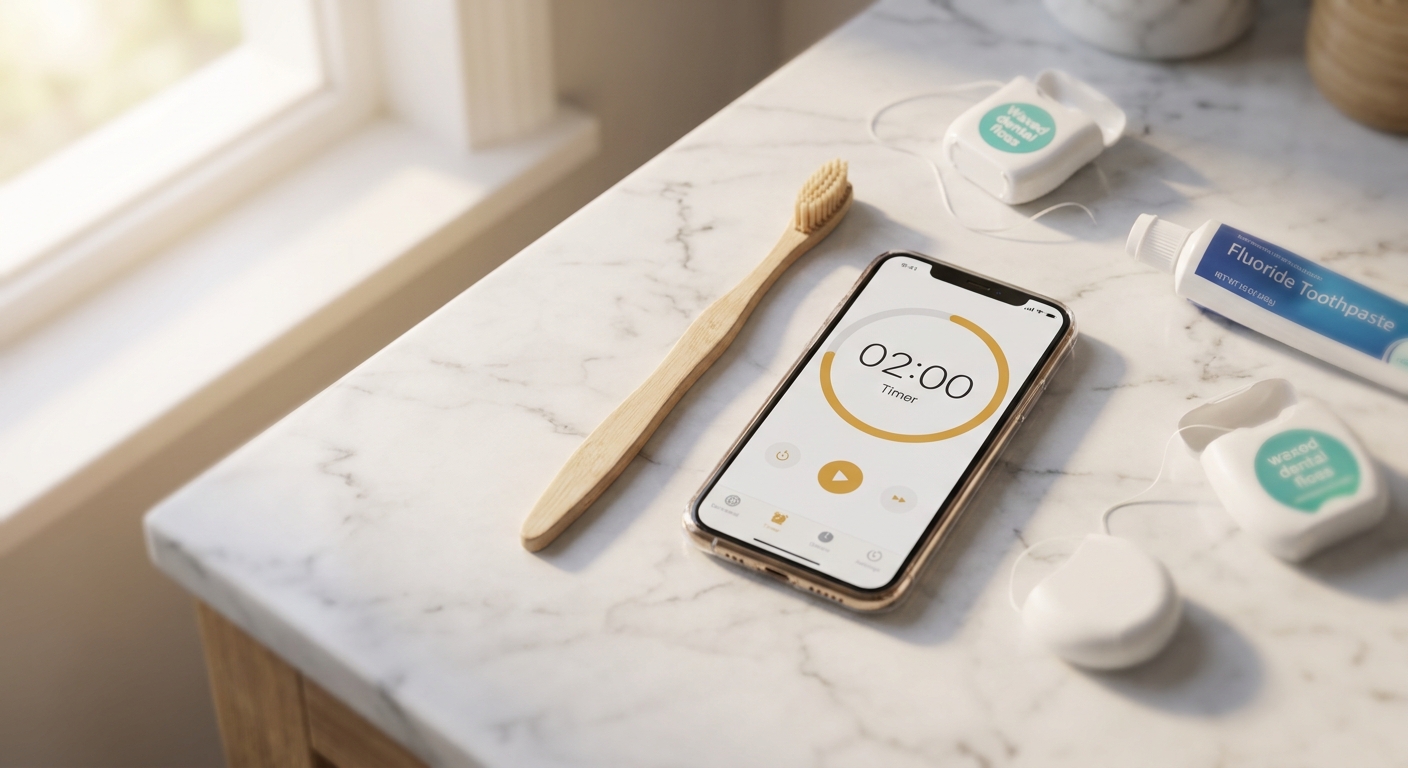
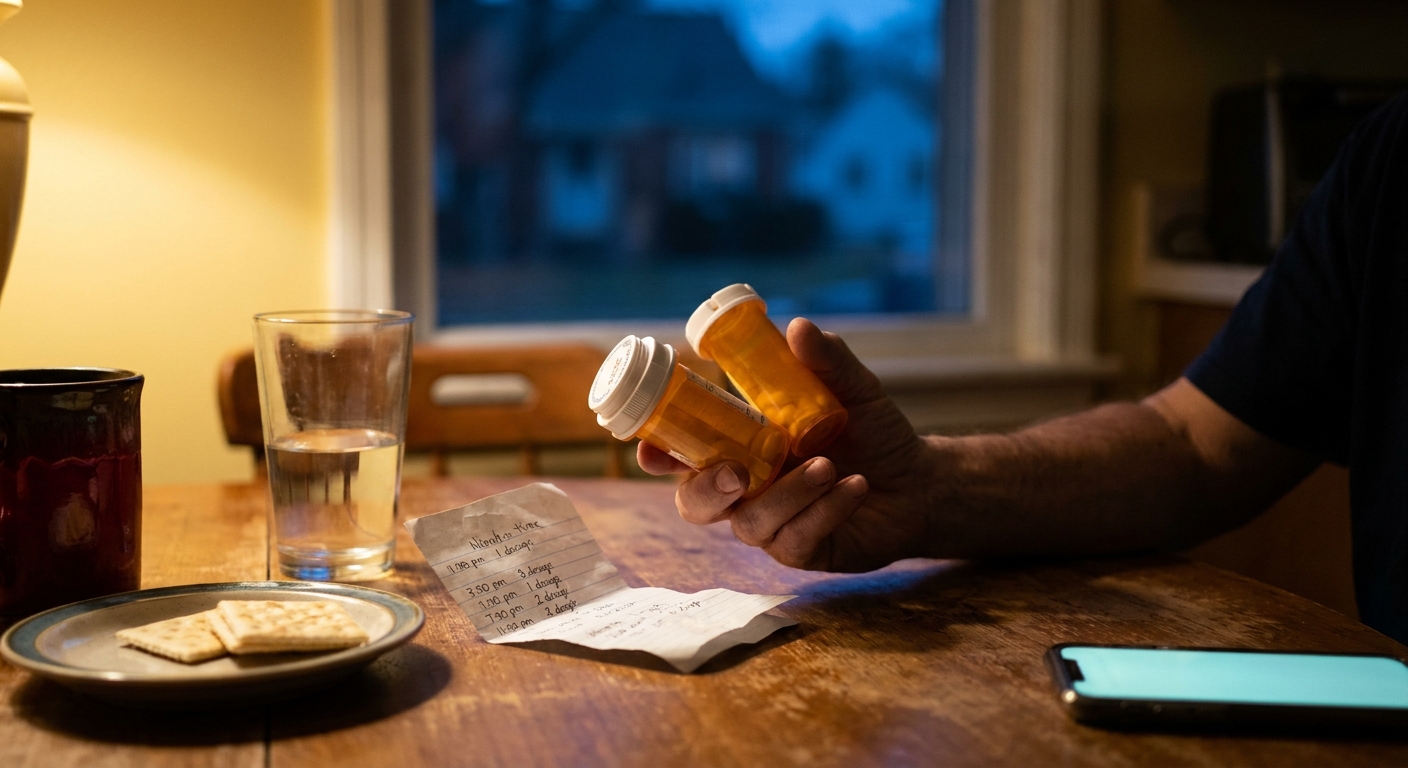
Next, have something to write on. A note on your phone works fine. When you’re hurting and tired, it’s easy to forget whether your last dose was at 9:00 or 11:00, and guessing is how people end up taking more than the label allows.
Then check your health before you combine these two medicines. Call a pharmacist or doctor first if any of these apply to you:
- You have kidney disease, liver disease, heart disease, or high blood pressure.
- You have had stomach ulcers or stomach bleeding.
- You take a blood thinner.
- You are pregnant.
- You drink alcohol regularly.
- You have asthma that flares with aspirin or similar drugs.
A pharmacist can usually answer this at the counter or over the phone in a few minutes.
This guide won’t give you a dose number that isn’t on your label. What it can do is help you think through how to use these two medicines for short-term relief, describe comfort steps people use, explain which symptoms mean you should go somewhere now, and tell you how to seek same-day care in Charlotte.
Step 1: Is It Safe to Take 3 Ibuprofen and 2 Tylenol Together for Tooth Pain?
For many healthy adults, taking ibuprofen and Tylenol (acetaminophen) together is a recognized way to manage dental pain. The catch is that “3 and 2” is a pill count, not a dose, and three ibuprofen tablets may be more than your label allows.
Why the two drugs are often used together. The American Dental Association describes NSAIDs such as ibuprofen or naproxen as a first choice for acute dental pain, with acetaminophen used alone or combined with them.
These two drugs work in different ways:
- Ibuprofen is an anti-inflammatory that targets the inflammation that can build up around an irritated nerve or infected tooth.
- Acetaminophen works on pain through a different pathway.
That difference is why taking both is not the same as doubling up on one drug. A review in the Journal of the American Dental Association looked at studies of wisdom tooth removal and reported that combining ibuprofen and acetaminophen was associated with better pain relief than either drug alone in those studies. A randomized trial of adults after oral surgery also studied the two drugs given together for post-surgical pain.
Why “3 and 2” is not a dose. Here is how the math changes with tablet strength:
- If your ibuprofen tablets are 200 mg each, three tablets add up to 600 mg.
- If it says Regular Strength (325 mg per tablet), two Tylenol tablets add up to 650 mg.
- If it says Extra Strength (500 mg per tablet), two tablets add up to 1,000 mg.
The pill count stays the same, but the amount you swallow changes a lot.
On most standard 200 mg over-the-counter ibuprofen bottles, the directions stop at two tablets per dose unless a doctor directs otherwise. Two Tylenol tablets is a single dose on both Regular Strength and Extra Strength labels, but the two strengths have different daily limits. So when you ask whether it is safe to take 3 ibuprofen and 2 Tylenol together for tooth pain, the honest answer is that the Tylenol part may fit your label while the ibuprofen part may not. If a dentist or doctor has given you specific instructions for combining these medicines, follow those. If no one has, your labels set the limit.
Step 2: How Do You Read the Labels and Track What You Take?
Read the Drug Facts box on each bottle for three numbers: milligrams per tablet, how often you may repeat a dose, and the most you can take in 24 hours. Then write down every dose with the time, because that record can help you stay inside the limits when pain wakes you up at 3 a.m.
Find the directions. In the Drug Facts box, the “Directions” section tells you how many tablets to take and how many hours to wait between doses.
Check for hidden acetaminophen. Acetaminophen shows up in many products that don’t say Tylenol on the front, such as:
- Cold and flu medicines
- Nighttime “PM” sleep aids
- Some prescription pain medicines, where it may appear as “APAP”
If you took a cold medicine earlier in the evening, it counts toward your acetaminophen total. The acetaminophen label also carries a liver warning, including a caution about alcohol, so read it before you combine anything.
Know the ibuprofen warnings. The ibuprofen label includes a stomach bleeding warning and tells you to take it with food or milk if your stomach gets upset. Ibuprofen, naproxen, and aspirin are all NSAIDs, so pick one NSAID rather than stacking two.
Keep a simple dose log. Write each dose as: time, medicine name, number of tablets, and milligrams per tablet. Before the next dose, check your log against the label’s waiting time and daily maximum.
This log has a second use. When you walk into Charlotte Emergency Dental, the front desk asks how long the pain has lasted and what makes it better or worse. A record showing that medicine helped for two hours and then wore off may give the dentist a clue about what is going on inside the tooth.
Step 3: What Can You Do at Home Until You Are Seen?
Once your medicine plan is set, a few simple comfort steps may take the edge off while it works: rinse, cool, and protect the tooth. These may help you get through the wait, but they don’t treat the cause.
- Rinse with warm salt water. Stir half a teaspoon of salt into a glass of warm water, swish gently around the sore area, and spit. This can rinse away trapped food and may soothe irritated gums.
- Use a cold compress on the outside of your cheek. Hold it there for 15 to 20 minutes at a time, with a cloth between the ice and your skin. Cold may dull throbbing and help with puffiness.
- Avoid trigger foods. Very hot, very cold, sweet, hard, or sticky foods can spark a jolt of pain from an inflamed or cracked tooth.
- Chew on the other side. Biting down on a damaged tooth can make the pain worse and can widen a crack.
- Keep the area clean. Brush gently, and floss carefully around the tooth to remove any food wedged against the gum.
- Never put aspirin directly on your gums. It doesn’t numb the tooth, and it can burn the soft tissue, leaving a painful sore on top of the toothache.
The aspirin warning matters because it’s an old trick that still circulates. The idea is that pressing a crushed tablet against the sore spot sends the medicine right where it hurts. In reality, aspirin is acidic, and holding it against gum tissue can cause a chemical burn. Pain relievers are meant to be swallowed and absorbed, so take them by mouth as the label directs.
Be wary of any home method that promises to “cure” a toothache. Rinses and cold packs may make the next few hours more comfortable, but they can’t fill a cavity, drain an abscess, or repair a crack. If you find yourself relying on these steps night after night, consider that a sign to get the tooth looked at.
Step 4: Why Do Dentists Often Favor Over-the-Counter Combinations Over Opioids?
For many cases of dental pain, an NSAID with or without acetaminophen is used as a first-line option and carries fewer serious risks than opioids. That is why ADA guidance puts the nonopioid combination first and reserves prescription opioids for cases where over-the-counter options aren’t enough or can’t be used.
Much of dental pain is driven by inflammation: an infected nerve, a swollen socket after an extraction, or irritated tissue around a cracked tooth. Ibuprofen targets that inflammation directly. Opioids mostly change how your brain perceives pain, and they bring side effects such as:
- Drowsiness
- Nausea
- Constipation
- A risk of dependence
For a problem rooted in inflammation, the stronger-sounding pill is not always the better fit. Reporting from ADA News on nonopioid pain relief after dental procedures describes this shift toward nonopioid options in dentistry.
This is a general principle from national guidance, not a promise about what any one office will or won’t prescribe. Each treating dentist decides about prescriptions based on your health history, your medications, and the procedure. For example, someone who can’t take NSAIDs because of kidney disease or a stomach ulcer may need a different plan, which is a conversation to have with the dentist or doctor treating you.
There is also a practical point here. Even a strong pill only masks pain from a tooth that still has a problem. At the visit, local anesthetic numbs the area at its source, and addressing the cause is what addresses the pain. Medication is simply a bridge to that chair.
Step 5: When Is Tooth Pain an Emergency That Needs a Dentist or the ER?
Go to a hospital ER for swelling that threatens your breathing or swallowing, major facial trauma, or a possible broken jaw. Many other dental emergencies, including severe pain, an abscess, a broken tooth, or a dry socket, call for a dentist’s care today.
When you call or walk in to Charlotte Emergency Dental, the front desk asks about the nature of the problem, how long it has hurt, and what it feels like. They also ask about swelling and about signs of a major infection, such as difficulty breathing or swallowing. Those answers help decide where you should be, and here is how that decision breaks down:
- Go to a hospital ER now:
- Swelling large enough to be life-threatening
- Any swelling that makes it hard to breathe or swallow
- Major facial trauma
- A jaw that may be fractured
- Come in to the dentist today:
- Severe toothache
- An abscess or infection
- A broken or cracked tooth
- A lost or loose crown
- A dry socket or pain after an extraction
- Knocked-out tooth:
- Put the tooth in a container, submerged in milk.
- Come in immediately, because time matters when trying to save it.
- General warning signs not to ignore:
- Fever
- Swelling that spreads into your face, under your eye, or down your neck
- Feeling generally unwell
Get checked promptly, and go to the ER if breathing or swallowing becomes difficult.
The middle group is where many people land, and Charlotte Emergency Dental sees patients with those emergencies the same day they come in. If you’re unsure which group you fit, describing your symptoms to the front desk is a quick way to find out. If you ever struggle to breathe or swallow, don’t wait to call anyone; go to the ER.
Step 6: Why Might the Pain Keep Coming Back Even When Pills Help?
Pain relievers can turn down the pain signal for a few hours, but the decay, infection, or crack causing it is still there, which is why the pain may return when the medicine wears off. A true toothache doesn’t typically heal on its own. It needs a diagnosis and treatment of the cause.
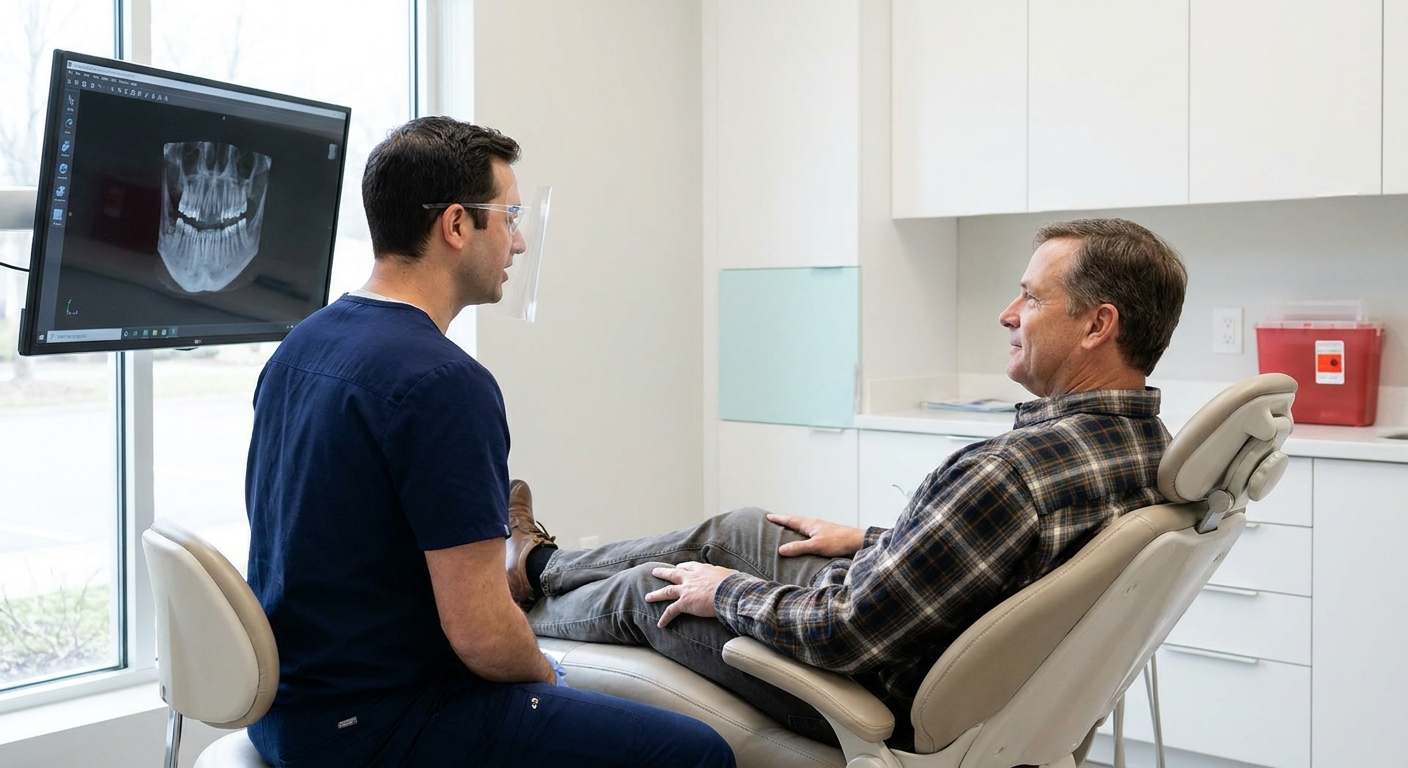
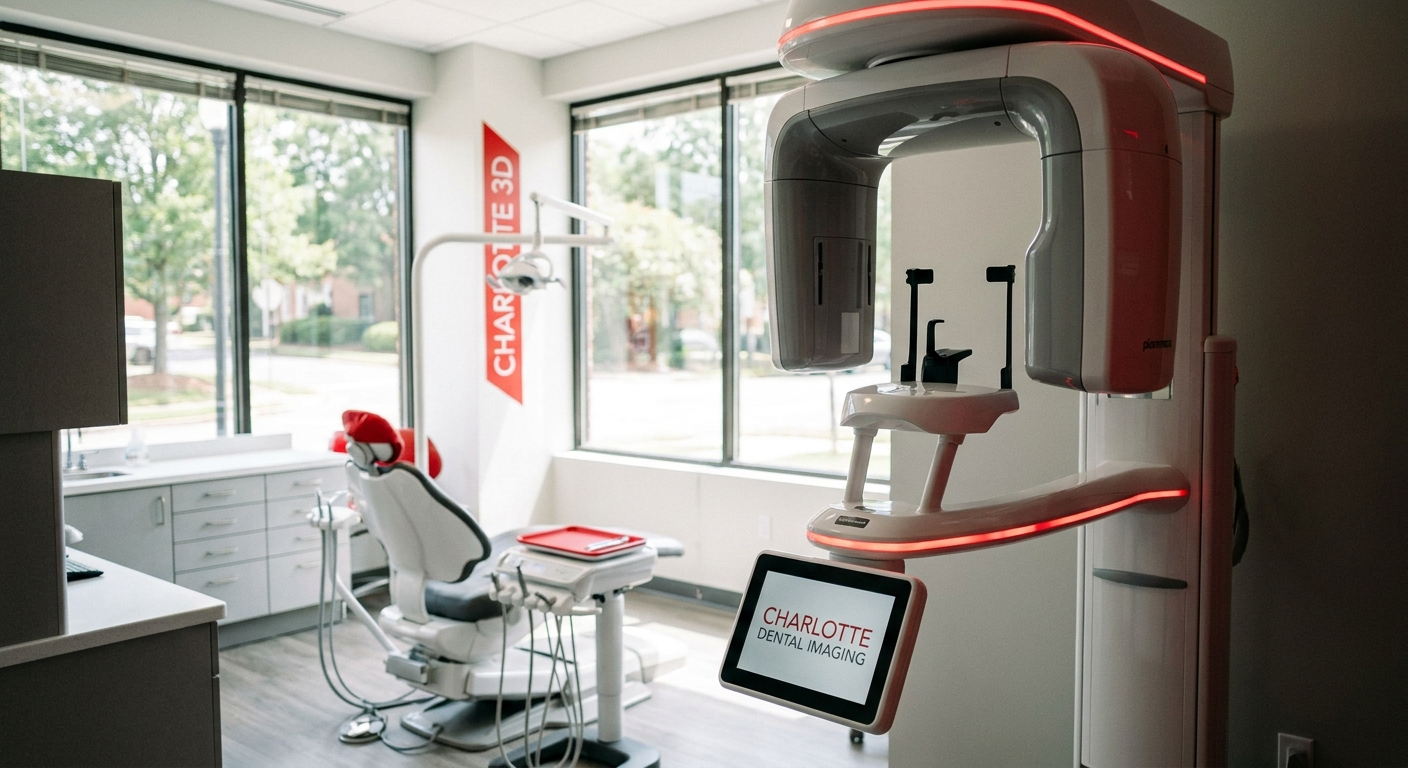
Finding that cause isn’t always obvious. At Charlotte Emergency Dental, the first record taken for every patient is a cone beam CT (CBCT), a 3D X-ray that shows the roots and the bone around each tooth. Standard 2D dental X-rays can miss infections at the tips of roots and cracks that run along a root.
After the scan, the dentist does a full exam inside your mouth and tests the tooth’s vitality, using percussion (gentle tapping) and cold to check the health of the nerve and the tissue around the root. The dentist then walks through the scan with you and points out the likely sources of your pain.
Here is one individual’s experience that shows why this can matter. One patient came to the practice after seeing several dentists about pain when biting hard foods and getting three different opinions about what was wrong. In that patient’s case, the CBCT showed a vertical root fracture on the lower right first molar, with tunneling bone loss along one side of the root. A vertical root fracture can’t be repaired, so the tooth had to be removed. This is one person’s experience, not a typical result.
The table below shows common causes and how each one is commonly treated.
| Cause | What you may notice | What the dentist may do |
|---|---|---|
| Tooth decay (cavity) | Twinges with sweets, cold, or heat; a dull ache | Removes the decay and places a filling, or a crown if much of the tooth is gone |
| Deep decay reaching the nerve | Lingering, throbbing pain that may wake you up | Root canal to remove the damaged nerve, or extraction if the tooth can’t be saved |
| Infection or abscess | Throbbing pain, swollen gum, bad taste | Root canal to clean out the infection, or extraction if the tooth can’t be saved; ER if swelling is life-threatening |
| Cracked or broken tooth | Sharp pain when biting, sensitivity | Filling, crown, or root canal, depending on how deep the crack goes |
| Vertical root fracture | Pain biting hard foods that is hard to pin down | Extraction, then options such as an implant or bridge to replace the tooth |
| Lost or loose crown | Sensitivity, an exposed or rough tooth | Recements the crown or makes a new one |
| Dry socket | Pain that builds after an extraction instead of easing | Cleans and treats the socket to calm the exposed area |
Charlotte Emergency Dental performs fillings, root canals, crowns, extractions, implants, and bridges, sometimes in the same visit when possible. A small number of root canals with very narrow or unusually shaped canals show up on the scan before treatment starts, and those cases are referred to a trusted specialist.
Step 7: How Do You Manage Pain After an Extraction or Root Canal?
After an extraction or root canal, follow your dentist’s written instructions, take your pain reliever the way they direct, use cold and soft foods, and protect the area while it heals. If the pain gets worse instead of better, don’t wait it out; come back.
The Rhode Island Department of Health’s guide to managing pain after dental procedures without opioids reflects the same nonopioid approach described in Step 4. Here is the general sequence many people follow:
- Read your aftercare instructions before you leave the office. Ask about anything that’s unclear while you’re still in the chair.
- Start your pain reliever the way your dentist tells you to. If they suggest taking the first dose before the numbness wears off, follow that advice, since pain can be easier to stay ahead of than to catch up with.
- Keep using your dose log. Write down each dose and time so you stay within the label or your dentist’s directions.
- Apply a cold compress to the outside of your face for 15 to 20 minutes at a time.
- Protect the blood clot after an extraction. Avoid straws, smoking, and forceful spitting, and follow any rinsing instructions you were given.
- Eat soft foods and chew on the other side until your dentist says it’s fine to go back to normal.
- Watch the direction your pain is moving. Pain that steadily gets worse, swelling that grows, or a bad taste that keeps coming back is your cue to call or walk in.
For a fuller walkthrough of the days after a tooth comes out, see our guide to managing pain after a tooth extraction.
Charlotte Emergency Dental sees patients with dry sockets and post-extraction pain the same day. The office also uses automated text follow-ups after appointments to find out whether you’re still having discomfort. Charts for weekend patients are flagged for extra follow-up, and those texts often prompt a doctor or the front desk to reach out to you directly. If you get one of those messages and something doesn’t feel right, answer it honestly, because that is exactly what it’s there for.
Step 8: How Do You Get Seen Today in Charlotte?
You can simply walk in: Charlotte Emergency Dental in Charlotte, NC 28209 welcomes walk-ins seven days a week, with weekday hours of 9am to 7pm and a dedicated weekend team on Saturdays and Sundays. On weekdays, the typical time from arrival to treatment is about 30 minutes, and while weekends can get busier, waits are usually under an hour.
What happens when you arrive:
- The front desk asks about your pain, swelling, and any signs of a major infection.
- You’re brought back for a CBCT scan as soon as possible.
- A dental assistant asks you a few questions and checks you over.
- The dentist examines the tooth, runs vitality testing, and reviews the scan with you.
- The dentist explains your treatment options and financing.
- Once you decide, you’re numbed and treated, sometimes in the same visit.
If you’re worried the treatment will hurt more than the toothache, that’s a common fear, and it’s worth saying out loud. You’re numbed before treatment begins, and for anxious patients the dentist can prescribe an anxiety medication to take before the appointment, although some people find they don’t need it.
Two recent visits, each one individual’s experience:
- One patient arrived at 1:56 p.m., was triaged, and had a CBCT taken, and the doctor was in the room diagnosing by 2:09 p.m. That patient’s extraction was finished by 2:35 p.m.
- Another patient arrived at 10:15 a.m. in significant pain. He was diagnosed from his scan by 10:30 a.m. and was numbed by 10:35 a.m. His extraction and bone graft were finished by 11:20 a.m., and he was driving out of the parking lot by 11:30 a.m.
Timing and experiences vary from patient to patient.
What it costs and how you can pay:
You may be wondering what this will actually cost with your insurance, so here are the plain facts:
- The emergency exam and X-ray is $99.
- Charlotte Emergency Dental is an out-of-network provider. If you have dental insurance, the office gives you claim forms so you can seek reimbursement from your insurance company.
- Self-pay is welcome, and third-party financing lets you split treatment into multiple payments, often with 0% interest.
- The practice does not accept Medicaid.
If your pain starts after closing time, use the steps above to stay as comfortable as you can until the doors open, and go to a hospital ER for any of the red-flag symptoms in Step 5.
What Else Do People Ask About Tooth Pain and Pain Relievers?
What is a commonly used over-the-counter pain reliever for a toothache?
For many adults, an NSAID such as ibuprofen or naproxen is a first choice, and acetaminophen can be used alone or combined with it, consistent with ADA guidance. Stay within your label limits, and check with a pharmacist if you have health conditions that make NSAIDs risky.
Can I combine ibuprofen and Tylenol for dental pain, and how often?
Many adults can, as long as each medicine stays within its own label limits; how often you repeat each one is set by the waiting time printed in its Drug Facts box. Because the two drugs work differently, their schedules run separately, so track each one in your dose log and never go past either 24-hour maximum. Check with a pharmacist or doctor first if you have kidney, liver, or stomach problems, or if you take a blood thinner.
Is it safe to take 3 ibuprofen and 2 Tylenol together for tooth pain?
It depends on tablet strength and your health. Two Tylenol tablets is a standard single dose, but three 200 mg ibuprofen tablets is more than most over-the-counter labels allow per dose without a doctor’s direction.
Can I put aspirin on my gums to stop tooth pain?
No. Aspirin placed directly on the gums can irritate and burn the tissue, so swallow pain relievers as the label directs.
Will a toothache go away on its own?
A true toothache usually won’t resolve until the cause is treated, and relief from pills is temporary. Sometimes the pain fades because the nerve has died, even though an infection may still be there.
Do I need an appointment for tooth pain at Charlotte Emergency Dental?
No. Walk-ins are welcome seven days a week, and the typical weekday time from arrival to treatment is about 30 minutes.
How much does an emergency tooth pain visit cost?
The emergency exam and X-ray is $99. The practice is out of network and provides claim forms for reimbursement, offers third-party financing (often at 0% interest), and does not accept Medicaid.
What Might You Expect?
Using ibuprofen and acetaminophen as labeled may lower pain for some people enough to sleep, eat, and get to a dentist. But medication only buys time, and longer-term relief depends on finding and treating what is causing the pain.
That’s why the first visit at Charlotte Emergency Dental has a narrow focus: identify the source of your pain and address it. The scan taken that day may show other problems that aren’t hurting yet, so the practice encourages you to come back for a follow-up visit once you’re out of pain.
That follow-up visit includes:
- A closer look at your oral health
- Additional X-rays, which are free for six months after your first visit
- A comprehensive exam and an oral cancer screening
From there, the team breaks your treatment plan into pieces that fit your schedule and your budget. The aim is to help you get ahead of the next dental problem before it becomes an emergency.
If pain is still there after you’ve followed the label, you can walk in to Charlotte Emergency Dental any day of the week for a same-day exam and 3D scan, or go to a hospital ER instead if you have life-threatening swelling or major facial trauma. Before you leave the house, grab both medicine bottles and your dose log. Showing the dentist what you took, when you took it, and how long the relief lasted may help narrow down what is happening inside your tooth.
Pain Relief Is Not the Same as a Fix
If you are counting pills and wondering whether you are doing this right, it may be a sign the tooth needs more than a medicine cabinet can offer. Painkillers can quiet the ache for a while, but they do not treat whatever is causing it. Charlotte Emergency Dental can look at the source of your tooth pain in Charlotte, NC, so you are not left guessing. Call the office and tell them what you have been taking and how long the pain has lasted.
Call Charlotte Emergency Dental
This article is general information, not medical advice, and individual experiences vary.