Immediate dentures are a complete or partial set of replacement teeth that is made before your remaining teeth are removed and placed in your mouth on the same day as the extractions, so you never spend a day without teeth. In Charlotte, NC, Charlotte Emergency Dental offers tooth extractions, dentures, and implants, which means the steps of an immediate denture plan can be handled by one practice. The tradeoff is fit: your gums and jawbone change shape as they heal, so an immediate denture needs adjustments and relines along the way, and many people later move to a final denture or an implant-supported option.
This guide explains what immediate dentures are, how they compare with conventional dentures, how the process usually runs, what the first weeks of healing are like, and how to care for the appliance so it lasts through the transition.
Understanding immediate dentures
Immediate dentures are sometimes called same-day dentures or transitional dentures. The National Library of Medicine’s medical subject headings define an immediate complete denture as a complete denture constructed for insertion right after the natural teeth are removed. That timing is the whole point. A conventional denture is made after the extraction sites have healed, which can leave a person without teeth for weeks or months. An immediate denture is built from records taken while your teeth are still in place, so it is ready the moment the last tooth comes out.
The idea is not new. The American Dental Association has published patient information on immediate dentures for decades, and the approach remains a standard part of how dentists help people move from failing teeth to a full set of replacements. Researchers continue to study it as well. A recent systematic review of immediate complete dentures gathered the published evidence on this treatment, and academic work such as the immediate complete dentures publication record at UT Health San Antonio reflects ongoing clinical interest in how these appliances are planned and delivered.
Immediate versus conventional dentures
| Feature | Immediate dentures | Conventional dentures |
|---|---|---|
| Fabrication timeline | Made before extractions | Made after healing |
| Time without teeth | None | Weeks to months |
| Adjustment frequency | More frequent | Fewer |
| Fit during healing | Loosens as gums shrink | Made on healed tissue |
| Typical role | Transitional, sometimes long term with relines | Long-term |
Because the denture is made before the extractions, your dentist cannot see exactly how the gums will look once healed. The appliance is shaped to fit the mouth as it will be on extraction day, and it is then adjusted as the tissue settles. That is why follow-up visits are a built-in part of immediate denture care rather than a sign that something went wrong.
Why people choose immediate dentures
Immediate dentures are usually chosen when several teeth are failing and need to come out, whether from decay, infection, gum disease, or a broken tooth that cannot be saved. The main benefits are practical.
You keep a full smile through healing
The most obvious reason is appearance. You leave the extraction appointment with teeth in place, so you can go to work, see family, and handle daily life without a visible gap.
Facial support is maintained
Teeth and the bone around them support your lips and cheeks. When they are removed and nothing takes their place, the face can look sunken. An immediate denture fills that space right away and helps keep your usual facial shape while you heal.
Extraction sites are covered
The denture sits over the healing gums, which helps protect the sockets and raw tissue in the first days. Your dentist will give you specific instructions on how long to keep it in after surgery, and following those instructions matters for controlling bleeding and swelling.
Speech and eating return sooner
There is a learning curve with any denture, but having teeth from the first day gives your tongue, lips, and cheeks a head start on adapting. Most people begin with soft foods and work up to a wider diet as soreness fades and the fit improves.
It buys time for a long-term decision
Some patients are not ready on extraction day to decide between a final conventional denture and an implant-supported option. An immediate denture gives you a working set of teeth while the mouth heals and while you think through the next step.
Who is a good candidate
Immediate dentures can suit people who need most or all of their remaining teeth removed in one arch, or who need several teeth replaced with a partial. Your dentist looks at a few things before recommending them:
- The health of the teeth that remain. If some teeth can be saved with a filling, crown, or root canal, a partial denture or a bridge may make more sense than removing everything.
- Gum and bone condition. Advanced gum disease or bone loss affects how a denture will seat and how much the ridge will change during healing.
- Infection. Active infection may need to be addressed before or during the extraction visit.
- Medical history. Certain conditions and medications affect healing and how extractions are planned.
- Expectations. An immediate denture will loosen as the gums shrink. People who understand that up front tend to have an easier transition.
If you arrive at Charlotte Emergency Dental with a painful or broken tooth and learn that several teeth are failing, the first priority is relief. A conversation about extractions and dentures can follow once the urgent problem is under control.
How the immediate denture process works
The exact sequence depends on your mouth, but most immediate denture cases follow the same general path.
Exam and imaging
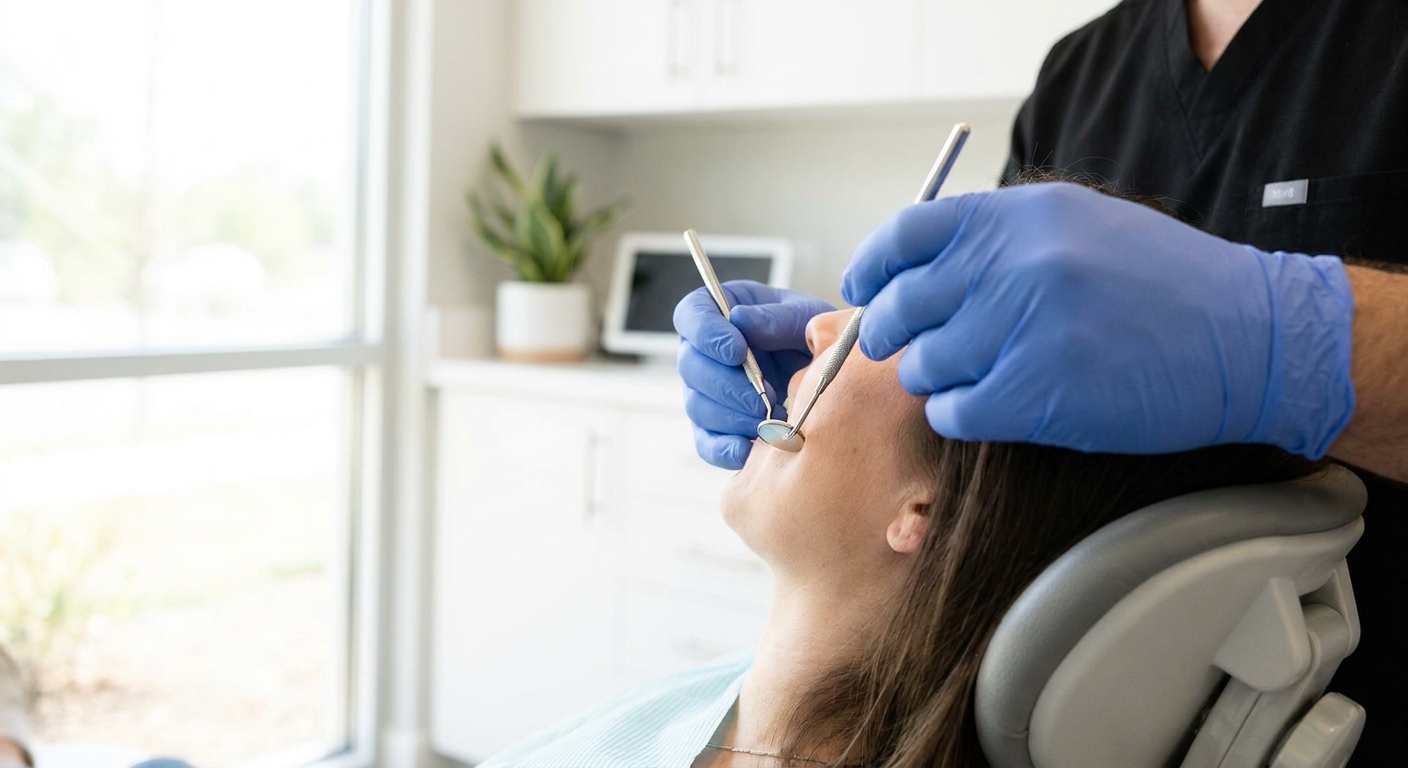
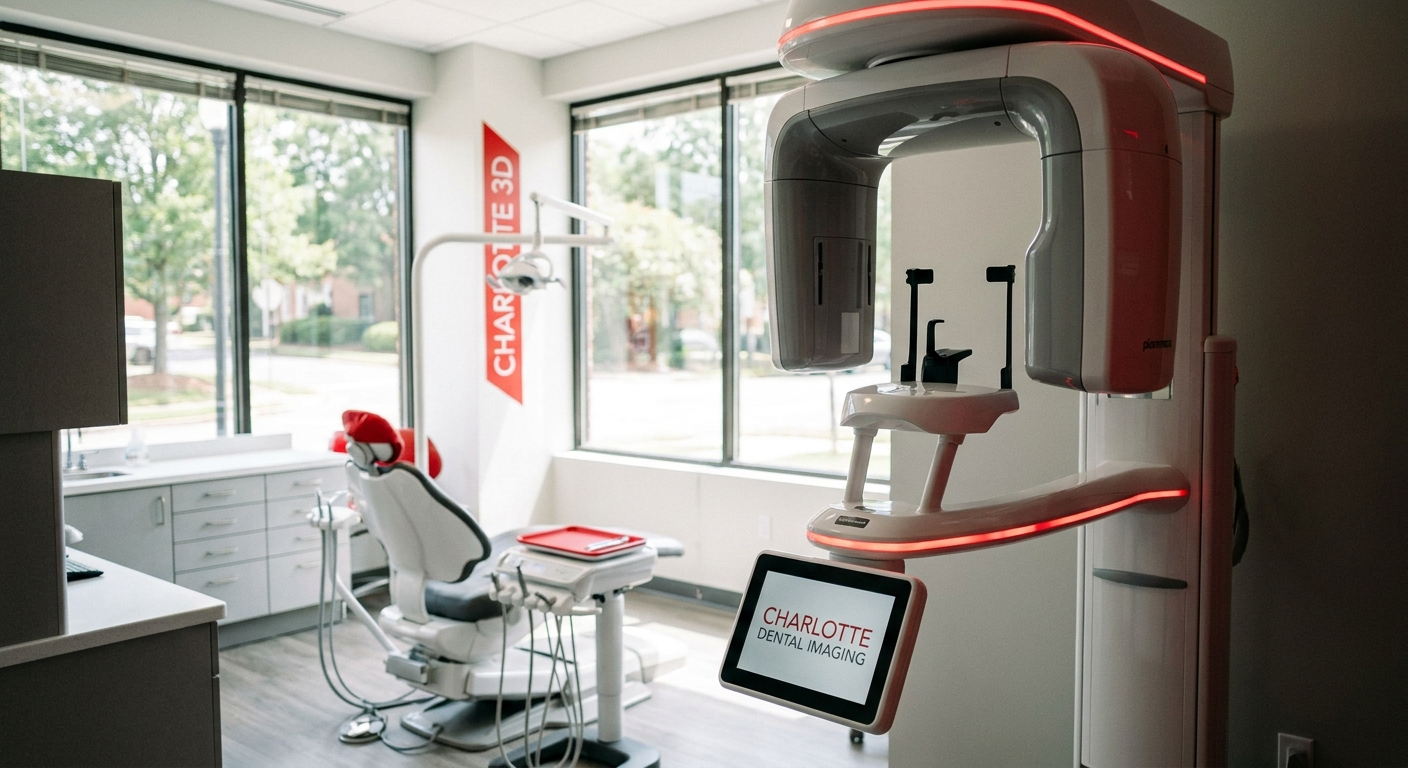
The process starts with an exam and X-rays to see which teeth can be kept, which need to come out, and what the supporting bone looks like. This is where your dentist confirms whether an immediate denture is the right fit and whether a full or partial appliance makes more sense.
Impressions and bite records
Before any teeth are removed, your dentist records the shape of your mouth and how your teeth meet. These records let a lab build a denture that matches your bite and the size and shape of teeth that suit your face. You may have a say in tooth shade and shape at this stage.
Fabrication
The denture is made from those records while your natural teeth are still in place. Because it is completed in advance, it is ready on extraction day. In some cases the back teeth are removed first and allowed to heal, and the front teeth are taken out on the day the denture is placed. Your dentist will explain which approach fits your situation.
Extraction and placement
On the day of the procedure, the remaining teeth are removed under local anesthetic, and the immediate denture is placed right away. Your dentist checks how it seats and how your bite feels and makes initial adjustments before you leave. You will receive instructions for the first day or two, including how long to leave the denture in.
What the first weeks feel like
Healing after multiple extractions takes time, and the denture is part of that healing rather than separate from it.
The first 24 to 48 hours
Your dentist will usually ask you to keep the denture in for the first day or so after extractions. Removing it too early can let swelling build up, which makes it harder to put back in. Expect some soreness, oozing, and swelling. Stick to cool, soft foods and follow the specific instructions you are given about rinsing and medication.
The first follow-up
The first check is often scheduled shortly after placement. Your dentist removes the denture, looks at how the extraction sites are healing, and relieves any spots that are pressing too hard on the gums. Many patients find this visit makes a noticeable difference in comfort.
Weeks one through eight
As swelling goes down and the sockets fill in, the gums and bone shrink. The denture that fit snugly on day one starts to feel loose. Sore spots can appear where it rubs. Follow-ups during this period are often frequent in the beginning and spaced further apart as things settle. When the fit loosens, your dentist may add a soft or temporary lining material inside the denture to restore contact with the gums.
Speaking and eating
Words with “s,” “f,” and “th” sounds can feel strange at first. Reading aloud helps your tongue and lips adapt. For eating, cut food into small pieces, chew on both sides at once to keep the denture stable, and add firmer foods gradually. Very sticky or hard foods are best saved for later.
When to call instead of waiting
Some looseness and soreness is expected. But if you have a sore spot that is getting worse, a denture that rocks badly or will not stay in, signs of infection such as fever or swelling that keeps increasing, or bleeding that does not slow down, contact your dentist rather than waiting for the next scheduled visit. Avoid filing or bending the denture yourself, and do not rely on over-the-counter reline kits, which can change the fit in ways that are hard to correct.
Caring for your immediate dentures
Good daily care keeps your mouth healthy during healing and helps the denture last through the transition. The ADA’s guidance on denture care and maintenance covers the basics, and your dentist may add instructions specific to your case.
Daily cleaning
- Rinse the denture after meals to remove loose food.
- Brush it every day with a soft brush and a cleanser made for dentures. Regular toothpaste can be abrasive and scratch the surface.
- Clean over a folded towel or a sink filled with water, so the denture does not crack if dropped.
- Avoid hot water, which can warp the material.
Overnight care
Once your dentist says the initial healing period is over, most people take the denture out at night. This gives the gums a rest. Store it in water or a denture soaking solution so it does not dry out and lose its shape.
Care for your mouth
Gently clean your gums, tongue, and the roof of your mouth each day, even without natural teeth. If you still have some natural teeth with a partial denture, brushing and cleaning between those teeth remains important. For general oral health information, the ADA’s consumer site MouthHealthy is a reliable starting point.
How long immediate dentures last and what comes after
Immediate dentures are often thought of as transitional. They carry you through healing, which commonly takes several months before the gums and bone become stable. After that, there are a few common paths.
Reline and keep wearing it
Once the mouth has stabilized, some people have the immediate denture relined with a more permanent lining material and continue to wear it. This can work well when the denture teeth and base are in good shape and the bite is comfortable.
A new conventional denture
Others move to a new conventional denture made on the healed ridge. Because it is built after healing, it can be shaped for the final contour of the gums, which often improves fit and stability.
Implant-supported options
Charlotte Emergency Dental offers implants as well as dentures. For people who want more stability than a traditional denture provides, implants can be used to support or anchor replacement teeth. Whether that is a good option depends on bone volume, health history, and personal goals, and it is usually discussed once healing is underway or complete.
Bridges and partial alternatives
If only some teeth need replacing, a bridge or partial denture may fit better than a full appliance. Bridges are among the services the Charlotte Emergency Dental practice provides, and your dentist can explain how they compare with a removable partial for your situation.
Immediate dentures and urgent dental problems
Many people do not start out planning for dentures. They come in because a tooth broke, an infection flared, or pain became impossible to ignore. Charlotte Emergency Dental is a walk-in practice that focuses on relieving dental pain and handling urgent problems, and it offers general care alongside emergency treatment.
That matters for immediate denture patients in two ways. First, the urgent problem can be addressed quickly, whether that means pain relief, an extraction, or a root canal to save a tooth that is worth keeping. Second, because extractions, root canals, crowns, bridges, dentures, and implants are all part of the Charlotte Emergency Dental practice’s services, the conversation about what to save and what to replace can happen in one place rather than across several offices.
Not every painful tooth means dentures. A tooth that can be restored often should be. The goal of the exam is to sort out which teeth are worth saving and which are not, and to build a plan from there.
Common questions about immediate dentures
Do immediate dentures hurt?
The extractions are done under local anesthetic, so the procedure itself should not be painful. Afterward, soreness is expected for several days as the sockets heal. Sore spots from the denture rubbing are common in the early weeks and are usually fixed with a quick adjustment.
How many follow-up visits will I need?
It varies. Expect several visits during the first couple of months, more often at the start, as your dentist relieves pressure spots and relines the denture to keep up with gum changes.
Will my immediate denture look natural?
Tooth shade, size, and shape are chosen during planning, and the denture is built to suit your face. The fit and appearance may change slightly as the gums heal, which is part of why relines are needed.
Can I eat normally right away?
Not at first. Start with soft, cool foods for the first days and gradually add firmer foods as soreness eases and you get used to chewing with the denture.
Can I sleep in my immediate dentures?
Your dentist will usually ask you to keep them in for the first day or so after extractions. After that, most people remove them at night to rest the gums, following their dentist’s instructions.
What if my denture breaks or stops fitting?
Contact your dentist. Repairs and relines should be handled by a professional so the bite and fit stay correct. Home repair kits and adhesives can mask a fit problem without fixing it.
The bottom line
Immediate dentures let you go from failing teeth to a full set of replacements without a stretch of time with no teeth at all. They are placed the day your teeth are removed, they protect and support the mouth while it heals, and they need regular adjustment because your gums change shape in the months that follow. In Charlotte, NC, Charlotte Emergency Dental provides extractions, dentures, implants, and related restorative care, so an exam can help you sort out which teeth to keep, whether an immediate denture fits your needs, and what the longer-term plan might look like once healing is complete.