Most people assume a toothache is a pain problem, so a pain reliever should solve it, and when ibuprofen fails they suspect the dose or the brand. What’s usually true is that ibuprofen only quiets inflammation, while the cause of the ache, such as an infection at the root tip or a crack in the tooth, keeps going underneath it. The seven reasons below explain why the pain breaks through and what a dentist at Charlotte Emergency Dental can do about the source.
If you’re like many people, you reached for the medicine cabinet first. That’s a sensible first step. When pain keeps breaking through, though, it may be telling you something. The seven reasons below explain what that can mean, what people commonly do for comfort tonight, which symptoms mean you should stop waiting, and how the source is typically found and addressed.
1. Why Isn’t Ibuprofen Helping My Toothache? It Calms Inflammation but Does Not Address the Cause
Ibuprofen may not be helping because it acts on inflammation. Whatever is driving your pain, whether that’s an inflamed or dying nerve, an infection at the root tip, or a crack, may still be present. A true toothache does not typically resolve on its own, so the pain may keep returning until a dentist evaluates the source.
Ibuprofen is a nonsteroidal anti-inflammatory drug, or NSAID. It lowers the chemical signals your body makes when tissue is irritated, which may ease swelling and pain. The ADA’s 2024 chairside guide for adult toothache from pulpitis lists NSAIDs, alone or paired with acetaminophen, as a first choice for pain relief when a tooth’s nerve is inflamed. The same guidance puts dental treatment first. Medicine is meant to support you through a short stretch until a dentist can evaluate the problem, not to replace that evaluation.
So why might the pain break through? The nerve and blood vessels of a tooth sit in a small chamber with hard walls on every side. When deep decay or a crack irritates that tissue, it swells, but the swelling has nowhere to go, so pressure builds on the nerve. Ibuprofen may take some of the edge off, but it does not relieve that pressure, clear out bacteria, or seal a crack.
Once bacteria reach the nerve, the tissue can begin to die, and infection can spread out through the root tip into the bone. At that point pressure and infection may be present together, and a medicine aimed at inflammation may not be enough. A clinical review on managing acute dental pain in adults describes pain medicine the same way: it supports a person while the cause is treated.
Some people notice a familiar pattern. The first dose helps for a few hours, the next helps for less time, and by the third night it barely registers. That pattern can mean the problem inside the tooth is progressing.
2. Why Might a Hidden Crack Make Pain Medicine Feel Ineffective?
A crack can make pain medicine feel ineffective because the problem is mechanical. Every time you bite, the pieces of the tooth can flex and irritate the nerve or the tissue around the root, and no pill stops a tooth from flexing.
Cracked teeth often behave unpredictably. A person might feel a sharp jolt when biting something hard, then relief when letting go. Cold might set it off, and it may be hard to tell which tooth is the problem. Because many cracks can’t be seen from the surface, people sometimes take pain relievers for a long time while hearing different explanations from different offices.
Charlotte Emergency Dental saw this with one patient who had already visited multiple dentists about pain when biting hard foods. That patient had collected three different opinions and came in hoping for a clear answer. After the team captured a 3D scan, the cause was identified as a vertical root fracture on the lower right first molar. The scan showed a tunneling pattern of bone loss along one side of the root (the mesial surface), running about a third of the way down.
A vertical root fracture is a crack that runs down the length of the root. It can’t be repaired with a filling or a crown, and for this Charlotte Emergency Dental patient, removing the tooth was the recommended treatment. Ibuprofen was not going to address a fracture like this. What this patient valued most was a definite diagnosis after a string of conflicting ones.
Not every crack leads to an extraction. A crack that stays in the crown of the tooth can sometimes be held together with a crown. If your pain flares mainly when you bite, especially on one spot, and medicine seems to do little, tell the dentist exactly that. It may point toward a crack, and it can change how the tooth is examined.
3. How Can a 3D Scan Help Find What Ibuprofen Might Be Masking?
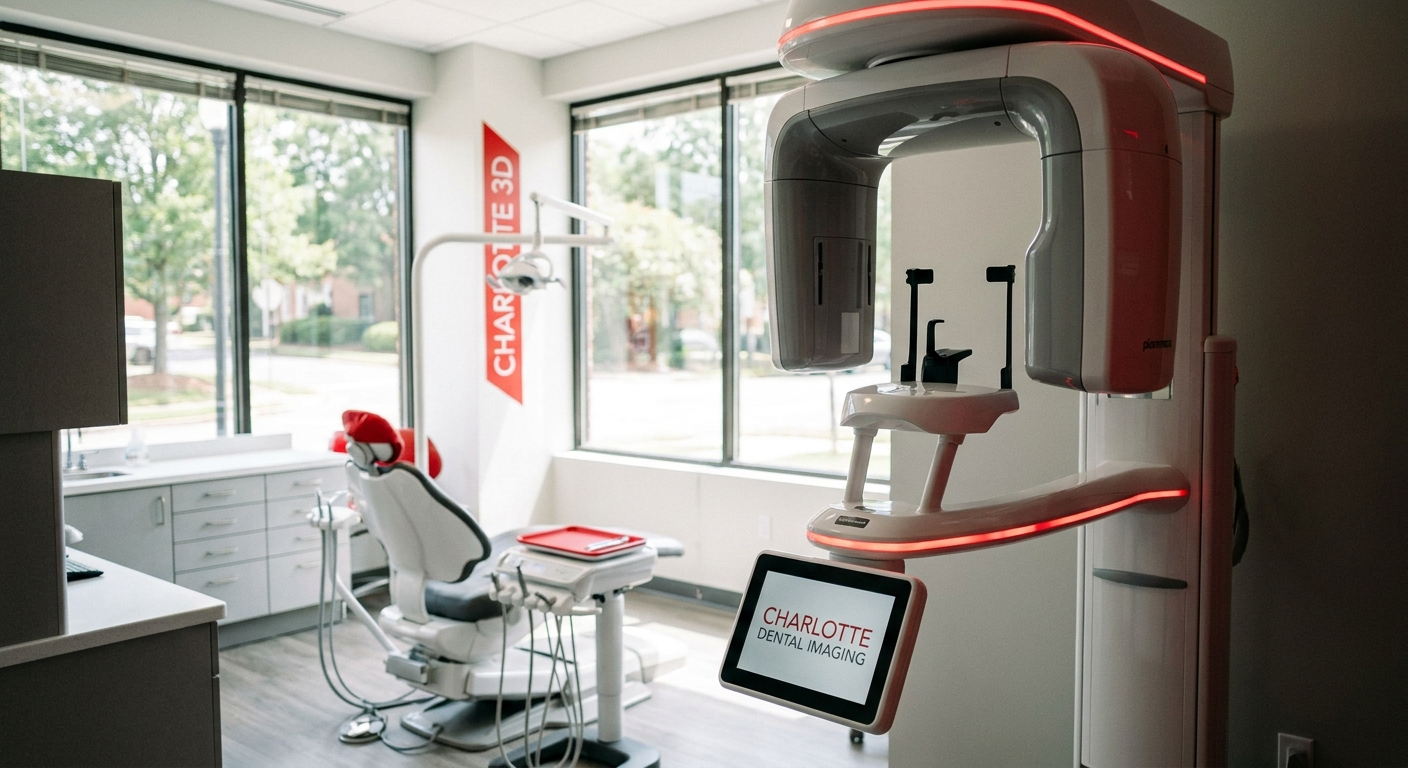
A 3D scan, called a cone beam CT or CBCT, shows each tooth’s roots and the bone around them from every angle. It can show infections at the root tips, large cavities, and cracks that a standard flat X-ray may not reveal. At Charlotte Emergency Dental, a CBCT is the first record taken for every patient.
This matters because ibuprofen can dull pain enough that you lose track of which tooth hurts. Tooth pain can also spread into your jaw, ear, or temple. Either way, you may not be able to point to the problem, which makes guessing unreliable. The scan replaces that guess with a clear picture.
Here’s how a visit at Charlotte Emergency Dental runs when you’re in pain. First, the front desk asks:
- What is going on and how long the pain has lasted
- What the pain feels like and what makes it better or worse
- Whether you have swelling or any trouble breathing or swallowing
As soon as possible, you’re brought back for the CBCT at Charlotte Emergency Dental. A dental assistant then goes over your symptoms with you before the doctor comes in.
Next, the Charlotte Emergency Dental doctor examines the inside of your mouth and tests the health of the nerve in two ways:
- Percussion: a gentle tap on the tooth that helps show whether the tissue around the root is inflamed.
- Cold testing: shows how the nerve reacts, which helps the doctor judge whether it’s irritated, badly inflamed, or no longer alive.
The doctor also checks for signs of a serious infection.
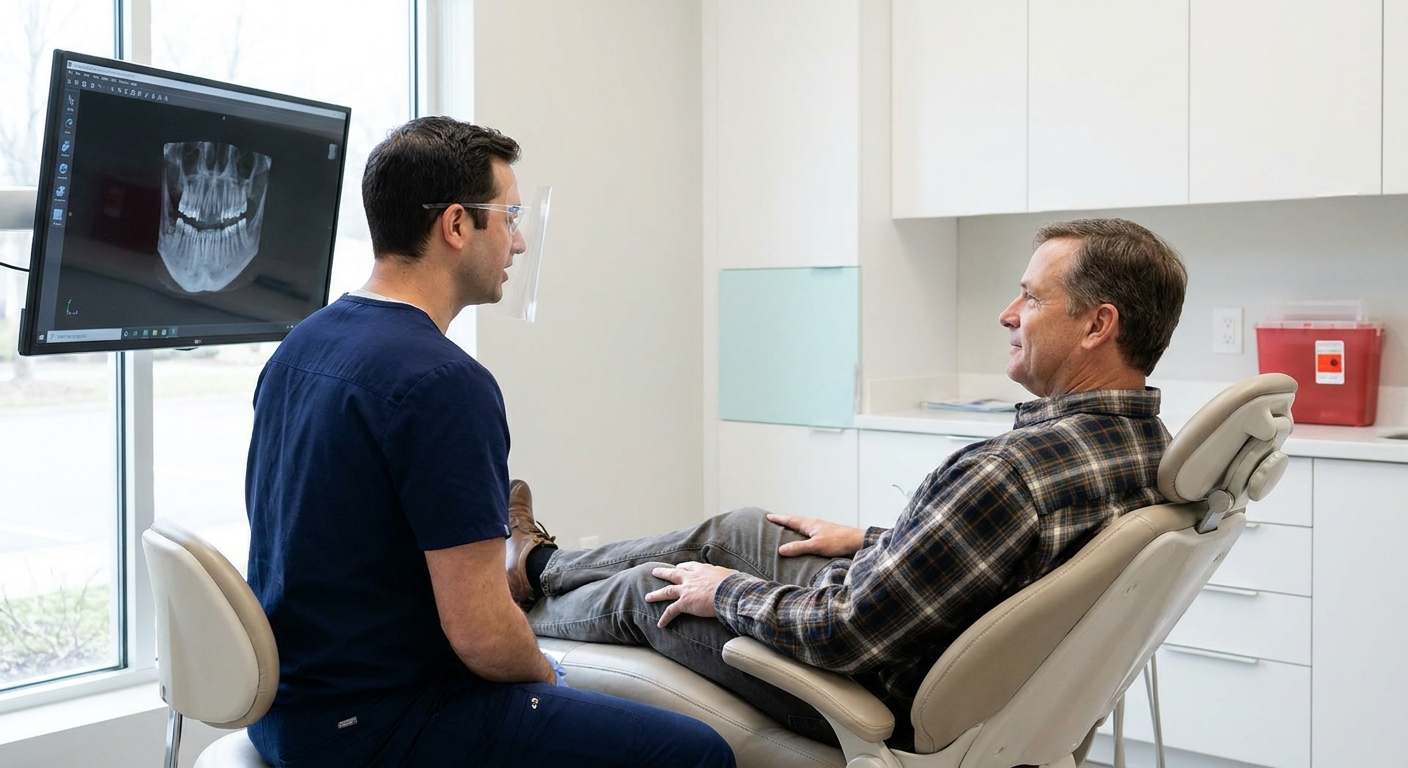
Then the Charlotte Emergency Dental doctor sits down with you and goes through the scan in detail, pointing out the likely cause of your pain. If you’ve been taking medicine for days without knowing why it isn’t working, it can help to see the dark area at a root tip or the line of bone loss for yourself. From there, the doctor explains your treatment options and payment choices so you can decide with the full picture.
4. Are You Taking Ibuprofen the Way the Label Says?
Many people take ibuprofen late, take it unevenly, or stop and restart, which can leave gaps where the pain returns. Others take more than the label allows, hoping a bigger dose will work. Follow the Drug Facts label exactly, never go past its limits, and treat “it stopped working” as a sign to get seen, not a reason to take more.
What is the best over-the-counter pain relief for a toothache?
For most adults, an NSAID such as ibuprofen, alone or paired with acetaminophen, is a commonly recommended over-the-counter choice for toothache pain. That’s a first choice in the ADA guidance linked above, which also favors these medicines over opioids for most short-term dental pain. If your health rules out NSAIDs, acetaminophen alone is the usual option, and a pharmacist can help you decide.
The Drug Facts box on the package tells you:
- How much to take and how far apart
- The most you can take in 24 hours
- When to stop and ask a doctor, such as when pain gets worse or lasts longer than the label allows
The label also warns that taking more than directed, or for longer than directed, raises the risk of stomach bleeding. It tells you not to combine ibuprofen with other NSAIDs, so don’t add naproxen or aspirin on top of ibuprofen. People sometimes do this without realizing they’re the same type of drug. If you have stomach ulcers, kidney disease, or heart disease, are pregnant, or take a blood thinner, ask a pharmacist before you take ibuprofen at all.
Can you combine ibuprofen and acetaminophen, and how often?
For most adults, ibuprofen and acetaminophen can be used together for dental pain, taking each one at the interval printed on its own label and never going past either label’s 24-hour limit. The two drugs work in different ways, which is why ADA guidance supports pairing them for toothache pain.
Because each drug follows its own schedule, it helps to write down the time of every dose. Check your cold and flu products too, since many already contain acetaminophen and doubling up is a real risk. A pharmacist can confirm the timing for you in a couple of minutes.
One thing never to do: don’t place an aspirin tablet directly on your gum next to the sore tooth. It doesn’t treat the tooth, and it can burn the gum tissue, leaving a second painful spot.
What you can do at home until you see a dentist
These steps may help you stay more comfortable tonight while you arrange to be seen:
- Rinse gently with warm salt water: half a teaspoon of salt in a glass of warm water, swished and spit out.
- Hold a cold compress against the outside of your cheek for 15 to 20 minutes at a time.
- Chew on the other side of your mouth and stick to soft foods.
- Avoid foods and drinks that set the tooth off, such as very hot, very cold, sugary, or hard items.
- Brush and floss gently around the tooth to clear trapped food.
None of these treat the cause. They are comfort measures until a dentist can evaluate the tooth.
5. When Is a Toothache an Emergency That Calls for More Than a Pill?
Stop waiting and get care now if your tooth pain comes with facial or neck swelling, fever, or trouble swallowing or breathing. Severe pain or mild to moderate swelling should be seen by a dentist today. Large swelling, trouble breathing, major facial trauma, or a possibly broken jaw calls for a hospital emergency room.
Watch for these warning signs:
- Swelling in your face, jaw, or neck, especially if it’s growing
- Fever along with tooth pain
- Trouble swallowing
- Trouble breathing
- Pus or a foul taste draining near the tooth
These signs matter because a tooth infection doesn’t always stay inside the tooth. It can spread into the tissue of your face and neck, and swelling near your throat can affect your ability to swallow or breathe. Ibuprofen can also make swelling feel a little less tender, so a spreading infection may seem calmer than it is. That’s one more reason not to rely on the medicine when these signs appear.
For exactly this reason, Charlotte Emergency Dental’s front desk asks every caller about swelling and about difficulty breathing or swallowing. Those answers help decide where you should go.
Go to a hospital emergency room if you have:
- Swelling large enough to be life-threatening
- Major facial trauma
- A jaw that may be fractured
If you’re struggling to breathe, call 911.
Come in to the dentist the same day for most other concerns, including:
- Severe toothaches
- Infections and abscesses with mild to moderate swelling
- Broken teeth
- Lost or loose crowns
- Dry sockets and pain after an extraction
If a tooth gets knocked out, put it in a container of milk and come in right away.
6. What Addresses the Pain? Treating the Source
Treatment for a toothache focuses on its source: removing decay, cleaning an infected nerve out with a root canal, protecting or removing a cracked tooth, or caring for a dry socket. At Charlotte Emergency Dental, the doctor numbs you first, and treatment often happens in that same visit, depending on the diagnosis.
If you’re worried the treatment will hurt more than the toothache, that’s one of the most common fears people bring in, and it’s a fair one when you’re already hurting. Numbing comes before any treatment begins, and for patients who feel very anxious, the Charlotte Emergency Dental doctor can prescribe an anti-anxiety medication to take before the appointment.
Here’s how common causes of breakthrough tooth pain match up with the treatment typically used to address them:
| Cause of pain | What you may notice | Typical treatment |
|---|---|---|
| Cavity that hasn’t reached the nerve | Twinges with sweets or cold | Filling, or a crown if much of the tooth is lost |
| Deep decay with an inflamed nerve | Throbbing that lingers, often worse at night | Root canal to remove the inflamed nerve, or extraction if the tooth can’t be saved |
| Infection or abscess at the root tip | Constant throb, pain on biting, swelling, bad taste | Root canal to clean the infection out from inside the tooth, or extraction to remove the source |
| Crack in the crown of the tooth | Sharp pain on biting and releasing | Crown to hold the tooth together, plus a root canal if the nerve is involved |
| Vertical root fracture | Biting pain that’s hard to pinpoint | Extraction, with tooth replacement such as an implant or bridge planned for later |
| Dry socket after an extraction | Pain that gets worse instead of better days after the tooth comes out | Same-day care of the socket after an exam |
| Lost or loose crown | Sensitivity, a sharp edge | Recementing or replacing the crown |
The first visit has a clear goal: identify the source of your pain and address it. You don’t have to fix everything in your mouth that day.
Here’s what that looked like for one patient. One Tuesday, he walked in at 10:15am with significant pain on the lower left side. By 10:30am the Charlotte Emergency Dental team had captured his CBCT and diagnosed a tooth that couldn’t be saved. By 10:35am he was fully numbed. His extraction and bone graft were finished by 11:20am, and he was driving out of the parking lot by 11:30am. Before he left, he learned the next steps: the graft needs 3 to 4 months to mature before an implant can be placed, because bone is slow to heal.
That was one patient’s visit, and timing varies with each person’s diagnosis. Charlotte Emergency Dental treats many emergencies on the day they come in. On weekdays, the typical time from walking in to being treated is around 30 minutes. Weekends can be busier, but waits are usually under an hour. Ibuprofen may buy you some hours, while numbing and treating the source is how a dentist addresses the cause of the pain.
Managing pain after an extraction or root canal
Once the source is treated, pain commonly eases over time. These steps can help you stay comfortable at home:
- Follow the written instructions your dentist gives you first, since they’re specific to your procedure.
- Take your pain reliever as directed, ideally before the numbness wears off, and stay within each label’s limits.
- Use a cold compress on your cheek for 15 to 20 minutes at a time during the first day.
- Eat soft foods and chew on the other side of your mouth.
- After an extraction, skip straws, spitting, and smoking for the first few days so the blood clot can protect the socket.
- After a root canal, avoid biting hard on that tooth until it has its final filling or crown.
- Call the office if pain gets worse instead of better after a few days, or if swelling or fever appears, since that can signal a dry socket or infection.
For more detail, this guide to managing pain after a tooth extraction covers what to expect at home in the days that follow.
7. What Does Same-Day Care in Charlotte Cost, and How Do You Get Seen Today?
The emergency exam and X-ray fee at Charlotte Emergency Dental is $99. Walk-ins are welcome seven days a week, with weekday hours from 9am to 7pm and a dedicated weekend team, so you don’t need an appointment.
Cost is often a reason people keep taking pills at home instead of getting seen, so here’s the straight answer.
Insurance. Charlotte Emergency Dental is an out-of-network practice. If you have dental insurance, the team gives you claim forms you can send to your insurer for possible reimbursement under your plan’s out-of-network benefits, and many patients with insurance come in this way. The practice does not accept Medicaid. Self-pay is welcome.
Financing. If you need treatment beyond the exam, the Charlotte Emergency Dental practice works with third-party financing companies that let you split the cost into monthly payments, often at 0% interest. Your treatment plan can also be broken into stages that fit your schedule and budget.
Your follow-up visit. After the emergency visit, you’re encouraged to come back when you’re not in pain for a full look at your oral health. That Charlotte Emergency Dental visit includes a thorough exam and an oral cancer screening, and any additional X-rays taken in the six months after your first visit are free.
You also aren’t on your own after you leave. The Charlotte Emergency Dental office sends automated follow-up texts after appointments to check whether you’re still having discomfort, and when needed, a doctor or front desk team member reaches out directly. Detailed chart notes let the weekday and weekend teams pick up where the other left off.
If you keep asking yourself, “Why isn’t ibuprofen helping my toothache?”, that question may be your sign to get the tooth looked at. Walk in to Charlotte Emergency Dental in Charlotte, NC any day of the week, or call 704-525-3939. Your visit starts with a $99 emergency exam and X-ray. Head to an ER instead if you have severe facial swelling or trouble breathing or swallowing.
Before you leave the house, jot down when you took each dose and whether the pain is worst when you bite, when you drink something cold, or when you’re doing nothing at all. That short record can help the doctor narrow down the cause.
When Ibuprofen Stops Working, It’s Time to Find Out Why
If you’ve been taking ibuprofen and the toothache keeps breaking through, it doesn’t mean you’re being dramatic or doing something wrong. It usually means the source of the pain needs to be looked at, not just dulled. Charlotte Emergency Dental can see what’s happening and talk through your options for relief in Charlotte, NC. Call the office and let us help you take the next step.
Call Charlotte Emergency Dental
Individual experiences and results vary; this article is general education, not a diagnosis, so follow your medication labels and talk with a dentist, doctor, or pharmacist about your own situation.