Emergency Dentist Near Me in Charlotte: Same-Day Care 7 Days a Week
You are searching “emergency dentist near me” because your regular dentist cannot see you until next week, and the pain or damage you are dealing with right now will not wait that long. Charlotte Emergency Dental operates seven days a week specifically for patients who need care today, not when the schedule opens up. When a dental emergency happens, same-day access determines whether you spend the next several days in pain or get relief within hours.
That is the whole reason this practice exists. When you search “emergency dentist near me” at 8 in the morning or 6 at night, you are not looking for a waiting list. You are looking for someone who will see you today, tell you honestly what is wrong, and provide treatment. This article walks you through exactly how that happens here in Charlotte, NC: who gets seen, how fast, what it costs, and which rare cases need a hospital instead.
Why a Walk-In Emergency Office May Help When You Need Immediate Care
A traditional dental office is built around scheduling. You call, you leave a message, and the first opening might be next Tuesday. That works fine for a routine cleaning, but it may not work when a molar is throbbing, or a crown pops off during dinner, or your child takes a hit to the mouth at a Saturday soccer game.
Charlotte Emergency Dental runs on a different model. The doors are open from 9 a.m. to 7 p.m., seven days a week, including weekends and holidays. That is roughly 75% more days open than the Monday-through-Thursday schedule many offices keep, and the extended evening hours mean you can come in after work instead of taking a full day off. Walk-ins are welcome. You do not need to be an existing patient, and you do not need an appointment to be seen.
The volume tells you this is not a side service tacked onto a general practice. The team treats about 10 to 15 same-day emergencies every day, which adds up to around 50 emergency patients a week. Because emergencies are the main event here, the workflow is tuned for speed. On weekdays, the typical time from walking in to being treated is about 30 minutes. On busy weekends it can stretch longer, but it rarely tops an hour. Here is the part that matters most: roughly 90% of the cases that come through the door receive treatment in-house the same day, with no referral to another office and no second trip across town. Individual circumstances may require referrals or follow-up visits. If you have been typing “emergency dentist near me” and bracing for a runaround, this practice aims to streamline the process.
Triage to Treatment: How Your Visit Actually Works
The process is designed to be both fast and thorough. It starts the moment you arrive or call ahead. The front desk triages you first, asking about the nature of the problem, how long the pain has lasted, what makes it better or worse, whether there is swelling, and whether you have any trouble breathing or swallowing. Those last two questions screen for serious infection, which changes how quickly you are moved back.
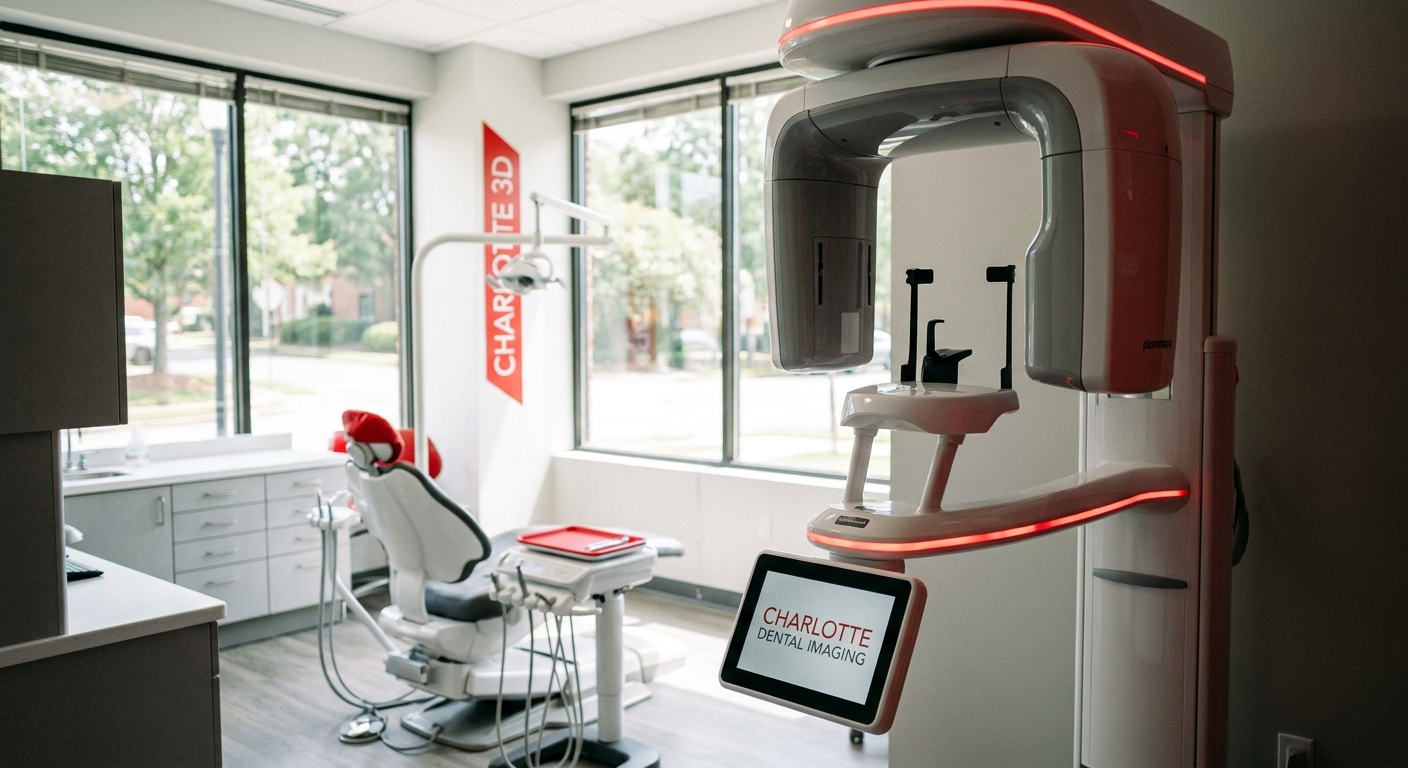
Next comes imaging. As soon as possible, you are brought back for a CBCT scan. Cone-beam computed tomography is a 3D X-ray, and it shows far more than a flat picture can. It reveals infections at the tips of tooth roots, the true size of a cavity, cracks, and the condition of the surrounding bone, which also matters if a tooth needs to be replaced with an implant. From there you move into a treatment room, where a dental assistant interviews and evaluates you before the doctor steps in.
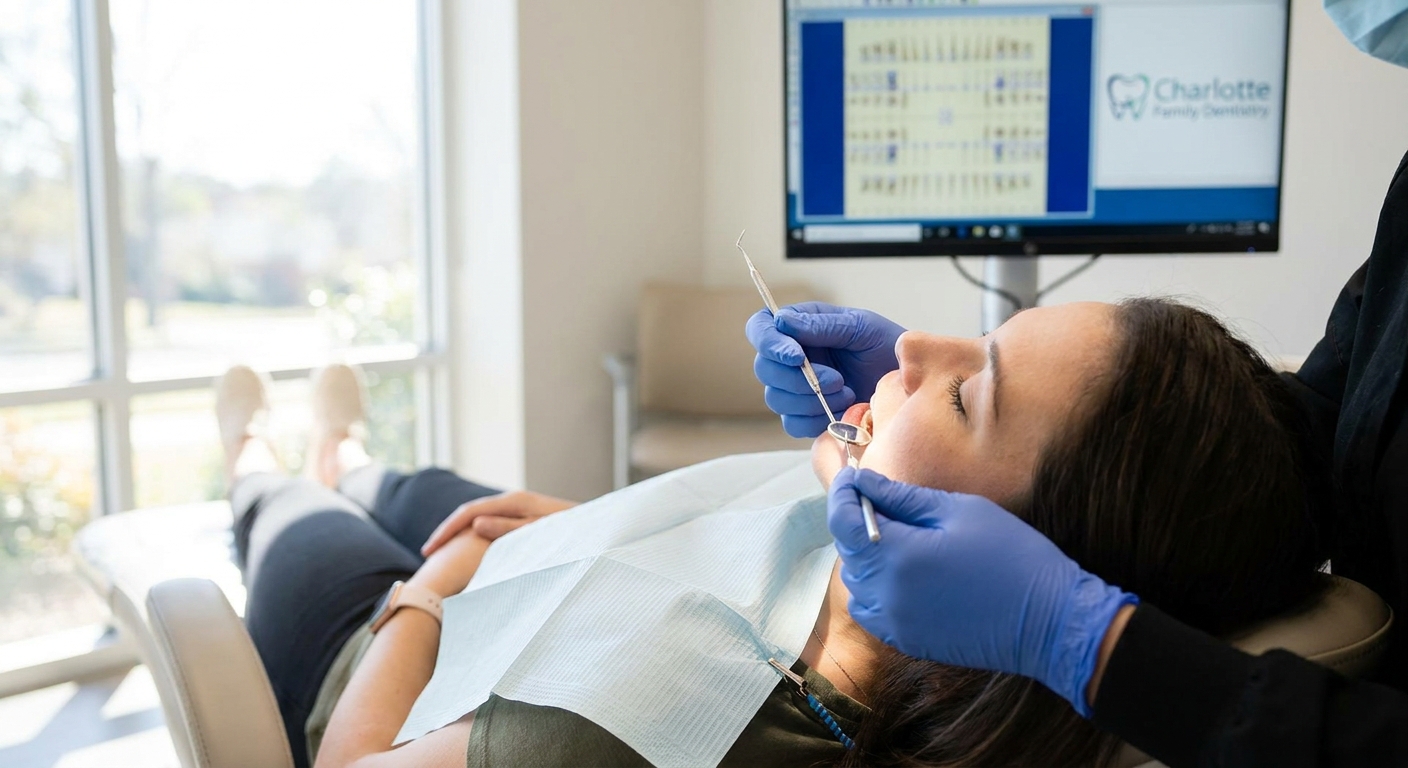
The doctor then performs a full intraoral exam and runs tooth vitality testing, using percussion (a gentle tap) and cold to check whether the nerve and the tissue around the root are healthy or compromised. After screening for infection, the doctor reviews your CBCT with you on the screen, points to the likely cause of the problem, and lays out your options along with financing if you want to spread the cost. Many procedures can be done that same visit when appropriate, including root canals, crowns, extractions, implants, bridges, and dentures. The Monday case above shows how tight that timeline can be: triaged, scanned, and diagnosed within about 13 minutes, and the patient reported pain relief within 39 minutes of arrival. Individual treatment times and outcomes vary. If you feel anxious, the team can prescribe an anxiolytic medication before your visit, though the doctors are experienced at guiding even very nervous patients through treatment without it.
Which Dental Emergencies Are Treated the Same Day in Charlotte
The short version: many of them. If you are wondering whether your problem warrants a walk-in visit, the answer is often yes. The practice handles severe toothaches, knocked-out teeth, broken and cracked teeth, infections, abscesses, lost or loose crowns, sharp sensitivity, dry sockets, and post-extraction pain. Same-day root canals are routine here, as are extractions, fillings for cavities large and small, bridges, veneers, and dentures of every type, including partials and implant-supported dentures.
Here is a real example of same-day treatment range. On a recent morning, a patient came in with significant pain on the lower left. Within about 15 minutes the CBCT had revealed an unrestorable vertical root fracture of a lower molar, which meant the tooth had to come out to address the pain. The extraction plus a bone graft using corticocancellous allograft material and a membrane was finished a little over an hour after arrival. Before leaving, the patient understood the next steps: the graft needs three to four months to mature before an implant is placed, and the implant then heals another three to four months before a tooth goes on top. Bone heals slowly, the way a broken bone takes time. Sometimes an implant can go in the same day, depending on the tooth and whether infection is present. Healing times and outcomes vary by individual.
Only a short list of cases gets stabilized and referred out. Severely impacted wisdom teeth and root canals with highly calcified or unusually complex canal anatomy may go to a specialist. Major facial trauma and fractured jaws generally need a hospital. Any patient with swelling large enough to threaten breathing or swallowing is stabilized and sent to an emergency room, because that is a medical emergency first. Most other issues can be addressed in-house.
Knocked-Out Tooth? The Clock Starts the Moment It Happens
A knocked-out permanent tooth, called an avulsed tooth, is the one emergency where minutes matter significantly. The practice’s clinical goal is to have that tooth back in its socket within about 60 minutes of it being knocked out, because the living cells on the root surface begin to deteriorate once the tooth is out of the mouth. That window is why an avulsed-tooth patient is prioritized. The team targets under 10 minutes from the moment you walk in to the moment you are in the chair, seated in the first available room while work begins immediately.
What you do in the first few minutes matters just as much. If your tooth gets knocked out, pick it up by the crown, not the root. Rinse it gently, and do not scrub it. Aggressive rinsing, especially with sterile water, can strip away critical cells on the root surface. Keep the tooth moist. Milk is ideal, and your own saliva works if milk is not handy. When you call, the team will tell you to submerge the tooth in a container of milk and come in right away.
Once you arrive, the tooth is handled with care that protects that fragile root surface. The doctor gently clears debris without disturbing the root, places the tooth back into the socket, and repositions it as close to its original spot as possible. The tooth is then etched, bonded, and held in place with a resin and fiber splint that is light-cured against the healthy teeth on either side. That splint stabilizes the tooth for about four weeks while it heals. Most patients go home on a 10-day course of antibiotics, usually amoxicillin, or clindamycin for those with a penicillin allergy. If the tooth touched soil or an outdoor surface, a tetanus booster may be recommended. You return in three to four weeks so the team can assess healing and remove the splint. Outcomes vary from person to person and depend on many factors, but acting quickly may improve the chances of successful reimplantation.
What Emergency Dental Care Costs and How to Pay for It
Cost anxiety is real, and it is often the reason people wait too long. So here is the number up front: the emergency examination and X-ray fee is $99. That covers getting you diagnosed with the CBCT and a doctor’s exam, so you know exactly what is found and what treatment options exist before any treatment decision is made.
Charlotte Emergency Dental is a self-pay, out-of-network practice, and there is a reason for that. Staying out of network means the care you receive is driven by clinical assessment, not by what an insurance company is willing to reimburse. If you carry dental insurance, you can still use it. The practice provides itemized insurance claim forms so you can submit for reimbursement directly from your plan after your visit, and many patients do exactly that.
For treatment beyond the exam, you are not required to pay everything at once. The practice works with several third-party financing companies that break treatment into manageable monthly payments, frequently at 0% interest. That means a root canal, a crown, or an extraction with a bone graft can be handled today and paid over time, so cost does not have to be the reason you delay care. When the doctor reviews your options after the CBCT, financing is part of that conversation, laid out clearly before you commit to anything.
When to Choose a Dental Office Over the Emergency Room
A hospital ER is the right call for a narrow set of situations: a swelling that is making it hard to breathe or swallow, bleeding that will not stop, or major facial trauma like a fractured jaw. Those are medical emergencies, and an ER is built to stabilize them. What most hospital ERs cannot do, though, is provide definitive dental treatment. They can give you antibiotics and pain medication and send you home, but they typically do not perform root canals, extractions, or reimplant a knocked-out tooth. You often end up paying a large ER bill and still needing a dentist the next day. National dental guidance from the American Dental Association reflects this same divide between medical stabilization and definitive dental treatment.
For everyday dental emergencies, a walk-in dental office may be faster, more cost-effective, and may resolve the problem. A throbbing toothache, an abscess, a cracked or knocked-out tooth, a lost crown, or a dry socket can be diagnosed and treated in one place, in one visit, with the imaging and tools made for teeth. Instead of sitting in a crowded ER waiting room behind higher-priority medical cases, you are triaged for your specific problem and moved toward treatment in about half an hour on a weekday. That is why many people who search “emergency dentist near me” choose this practice rather than an ER lobby.
A simple rule of thumb: if the emergency is about your airway, uncontrolled bleeding, or a broken jaw, go to the hospital. If it is about a tooth, consider a dental emergency office. And if you are ever unsure, call. The front desk will ask the screening questions that can help you determine whether you should head straight in or go to an ER first.
Frequently Asked Questions
Do I need an appointment, or can I just walk in?
No appointment is needed. Charlotte Emergency Dental accepts walk-ins seven days a week and triages every patient right when they arrive. Calling ahead helps the team prepare for you, but you will not be turned away for showing up without an appointment.
How long will I wait before I am seen?
On weekdays, the typical time from walking in to being treated is about 30 minutes. Weekend waits rarely exceed an hour even when it is busy. Knocked-out teeth are the exception and are prioritized immediately, with a goal of under 10 minutes from door to chair. Wait times may vary based on patient volume and individual circumstances.
What does the emergency visit cost?
The emergency exam and X-ray fee is $99. For any treatment beyond that, the practice offers third-party financing with 0% interest options so you can split the cost into monthly payments.
Will I be referred somewhere else, or can you treat me today?
About 90% of cases receive treatment the same day, in-house. Only a few situations are referred out: severely impacted wisdom teeth, root canals with highly calcified or complex canal anatomy, fractured jaws, and life-threatening swelling that affects breathing or swallowing.
What should I do if my tooth is knocked out?
Pick it up by the crown, rinse it gently without scrubbing, and keep it moist in milk or your own saliva. Come in immediately. Reimplantation within about 60 minutes may improve the likelihood of successful reattachment. Outcomes vary from person to person.
Are you open on weekends and evenings?
Yes. The practice is open 9 a.m. to 7 p.m. seven days a week, including weekends and holidays, with evening hours that let you come in after work.
If you are dealing with a dental emergency in Charlotte, NC and searching for an emergency dentist near me, walk into Charlotte Emergency Dental any day of the week between 9 a.m. and 7 p.m., or call ahead so the team can be ready the moment you arrive. Put your milk container by the door if a tooth is out, grab your insurance card if you have one, and come in. The sooner you receive care, the sooner you can begin working toward relief. Individual experiences and outcomes vary.
When a Dental Emergency Strikes, You Need Help Today
Dental pain and broken teeth don’t follow a schedule, and neither should your access to care. If you’re dealing with a sudden toothache, knocked-out tooth, or any urgent dental issue in Charlotte, our team is standing by to see you the same day you reach out. You don’t have to wait until Monday or push through the pain,relief is available now.
Call Charlotte Emergency Dental