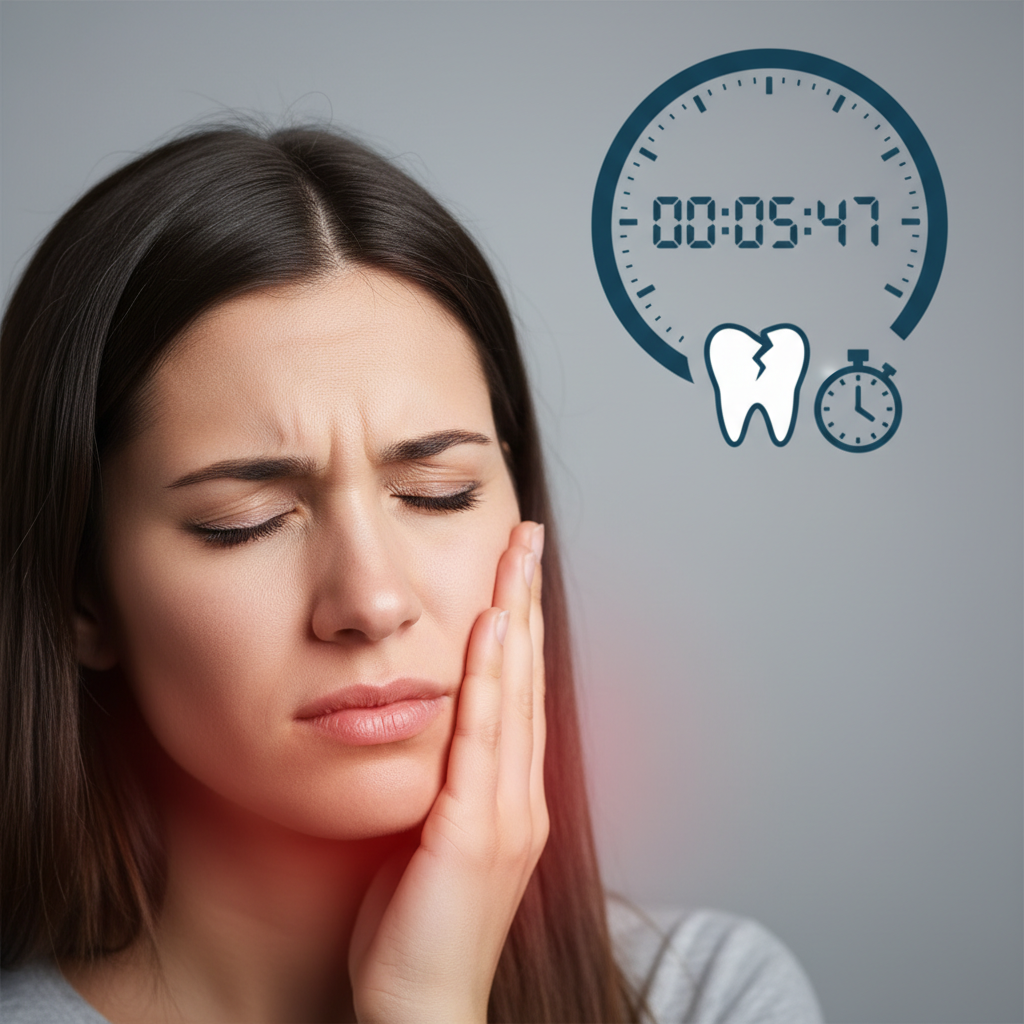
Dental pain can sneak up on you. One day your tooth feels a little “off,” and the next night you are awake, holding your jaw, and wondering if you should call an emergency dentist or wait it out in hopes it improves.
Understanding when dental pain becomes urgent helps you act quickly when it matters and avoid unnecessary panic when it does not. This guide walks you through clear warning signs, what can usually wait, and what to do in the moment so you are not left guessing.
Why some dental pain is an emergency
Not all toothaches mean a crisis, but some are urgent because they signal infection, deep damage, or uncontrolled bleeding. Left alone, these problems can cost you teeth, affect your jawbone, and in rare cases threaten your overall health.
A dental emergency is any problem that needs immediate attention to stop bleeding, relieve severe pain, treat infection, or save a tooth [1]. Severe infections, knocked out teeth, and intense throbbing pain are all red flags that require prompt care to prevent serious complications [2].
If you want a broader overview, you can also read about urgent vs non urgent dental issues and what is considered a dental emergency.
Clear signs your dental pain is urgent
Certain symptoms mean you should stop watching and waiting and contact an emergency dentist or doctor right away. These are the key signs that dental pain has crossed the line into an emergency.
1. Pain that is severe, throbbing, or relentless
Mild, occasional twinges usually are not emergencies. In contrast, pain that is:
- Sharp or throbbing
- Keeps you from sleeping or working
- Does not improve with over the counter pain relievers
often points to a serious issue like an abscess, deep decay, or a cracked tooth that has reached the nerve [3].
A severe toothache that does not ease even after you take medication is a strong indicator that you need urgent care, not just home remedies [1].
If you are unsure whether your level of discomfort is serious, this guide on how serious is tooth pain can give you more context.
2. Swelling in your face, jaw, or gums
Swelling is your body’s way of waving a flag that something is wrong. You should seek immediate care if you notice:
- Swelling in your cheek, jaw, or under your chin
- A visible lump or pimple like bump on your gums
- Swelling combined with difficulty swallowing, breathing, or opening your mouth
Facial or jaw swelling with breathing or swallowing trouble can indicate a serious infection that needs fast antibiotics and possibly a root canal or extraction [4]. Dental abscesses, which are pockets of pus around the tooth root, are urgent because infection can spread to vital areas like the brain or heart if untreated [5].
If swelling seems limited to your gums, it still can be serious. Learn more in when gum swelling is an emergency.
3. A tooth that is knocked out, loose, or badly broken
Any major trauma to a tooth is time sensitive. You should consider it urgent if:
- An adult tooth is completely knocked out
- A tooth suddenly feels loose or has changed position
- A tooth is cracked or broken deep enough to expose the inner layers
A knocked out permanent tooth has a critical window of about 30 to 60 minutes to be repositioned for the best chance of saving it [6]. Cracks that reach the root or fractures that expose the inner tooth invite bacteria in and increase the risk of infection, so they also need quick evaluation [4].
If you are not sure whether your injury is major or minor, these related guides can help:
- Tooth damage emergency vs minor
- Is a cracked tooth a dental emergency
- Is a chipped tooth an emergency
- How to identify dental trauma severity
- How to assess dental injury
4. Bleeding that does not slow down
A little bleeding after flossing hard or brushing aggressively is not unusual. Bleeding becomes urgent if:
- It starts after injury and does not stop after 10 minutes of firm pressure
- It is heavy, continues to drip, or suddenly worsens
- You feel dizzy, weak, or unwell along with the bleeding
Uncontrolled oral bleeding can indicate damage to gums, tooth roots, or other serious issues and requires immediate care [3]. If bleeding continues and you begin to feel faint, go to urgent care or an emergency room.
Bleeding that seems related to gum disease or occurs often during brushing might point to gingivitis or periodontal disease. This is not always an emergency, but it should not be ignored. Learn what to watch for in when bleeding gums are serious.
5. Signs of infection or feeling ill
Infection is one of the main reasons dental pain becomes urgent. You should seek immediate care if dental pain is paired with:
- Fever or chills
- A bad taste in your mouth or drainage from the tooth or gums
- Swollen, tender lymph nodes in your neck
- Feeling generally unwell or fatigued
Dental abscesses can damage tissues and potentially let bacteria into the bloodstream, so they are considered urgent problems that need antibiotics and dental treatment as soon as possible [7]. Signs of infection in your mouth in general are a strong reason not to wait [8].
6. Sudden changes in your bite or jaw
If your teeth suddenly feel like they no longer fit together or you notice a tooth or several teeth shifting, you may be dealing with advanced gum disease, trauma, or jaw issues. These problems can progress quickly and affect neighboring teeth if you delay care [8].
Jaw pain can have several causes, from temporomandibular disorder (TMD) to clenching and grinding. However, in some cases, sudden neck and lower jaw pain can signal heart related problems like angina or a heart attack, and anyone with known heart issues should call 911 if they experience this kind of symptom [5].
When dental pain can usually wait a short time
Not every toothache needs same day or after hours care. Some situations can often wait a day or two for a regular dental appointment, as long as symptoms stay mild and stable:
- A dull, mild ache that comes and goes
- Sensitivity to hot or cold that fades quickly
- A chipped tooth that does not hurt and has no sharp edges
- Minor gum irritation or slight bleeding after flossing
Mild toothache pain can typically wait a few days, but if it suddenly gets worse, it may turn into an emergency that needs prompt treatment [9].
Even when pain feels mild, do not ignore it for long. Toothaches often signal problems like cavities, early infection, or gum disease that can worsen over time [10]. If symptoms last more than 48 hours or continue to intensify, it is time to get evaluated [11]. You can get more guidance in how long can you wait with tooth pain.
Tooth pain timeline: how long is too long?
A helpful way to decide when dental pain becomes urgent is to look at how the pain behaves over time.
If pain worsens, spreads, or is joined by new symptoms like swelling or fever, your situation is moving toward an emergency and should not wait.
Here is a simple way to think about timing:
-
First 24 hours
If discomfort is mild and you can eat and sleep, you can monitor at home. Use gentle home care and call your dentist during office hours to schedule a visit. -
24 to 48 hours
If pain remains mild and stable, you still can wait for a regular appointment. If it worsens or becomes more constant, call your dentist and explain your symptoms. -
After 48 hours
Tooth pain that persists for two days or longer is a sign of a worsening issue and you should schedule a same day or next day appointment [9]. Persistent or sharp pain beyond mild sensitivity can indicate a problem that needs urgent evaluation [2]. -
Anytime
If pain suddenly becomes severe, prevents sleep, or comes with swelling, fever, or trouble swallowing or breathing, it is an emergency and you should seek immediate care [12].
Remember, pain that suddenly stops without treatment is not always good news. It can mean the nerve has died while infection continues silently, which may lead to more serious symptoms later [12].
If you want a structured way to think through this, this guide on how to decide if you need urgent dental care can help.
At home steps while you seek care
Home care cannot replace professional treatment, especially when pain is severe or infection is present. It can, however, make you more comfortable while you arrange care.
For many toothaches, you can:
- Rinse your mouth with warm salt water to reduce bacteria and inflammation
- Gently floss around the sore tooth to remove any trapped food
- Apply a cold compress to your cheek for 10 to 15 minutes at a time to reduce swelling
- Use over the counter pain relievers as directed, unless your doctor has advised against them
These steps can help manage symptoms temporarily, but they do not fix the underlying problem [11]. Over the counter pain medicine alone is not enough if the cause is a cavity, crack, or infection, and relying on it could let the condition quietly worsen [11].
If you are in severe pain outside normal office hours and cannot reach a dentist, an emergency room can provide pain relief and antibiotics, but they generally cannot perform definitive dental treatments like fillings or root canals [13]. Follow up quickly with a dentist afterward.
Tooth injuries: what to do in the moment
If you experience trauma from a fall, sports, or an accident, fast action can save your tooth or reduce the damage. Knowing what to do before you need to do it makes a big difference.
If a permanent tooth is knocked out
- Handle the tooth by the crown, not the root.
- Gently rinse it with water if dirty, without scrubbing or removing any attached tissue.
- If possible, reinsert the tooth into the socket and hold it in place by biting gently on a clean cloth.
- If you cannot reinsert it, keep the tooth moist in milk or tucked between your cheek and gums.
- Get to an emergency dentist immediately, ideally within 30 to 60 minutes, for the best chance of saving the tooth [6].
If a tooth is cracked or broken
- Rinse your mouth gently with warm water.
- Save any broken pieces if you can.
- Apply a cold compress to reduce swelling.
- Cover any sharp edges with dental wax or sugar free gum to avoid cuts to your tongue or cheek.
- Seek prompt dental care, especially if the crack is deep or painful [4].
When you are in doubt about tooth damage emergency vs minor, it is always safer to call a dentist and describe exactly what happened.
When to call 911 or go to the ER instead of a dentist
Most dental emergencies are best handled by a dentist or emergency dental clinic, not a hospital. There are some exceptions where medical care must come first:
- Difficulty breathing or swallowing
- Rapidly spreading swelling in your face, jaw, or neck
- Signs of a serious allergic reaction such as hives, wheezing, or swelling of the lips or tongue
- Sudden neck and lower jaw pain that may signal a heart problem [5]
- Suspected broken jaw or other major facial bone injuries
In these situations, call 911 or go to the nearest emergency room immediately. Medical teams can stabilize you, provide antibiotics, and address life threatening issues before you follow up with a dentist [14].
For most other dental emergencies involving teeth and gums, an emergency dentist can treat the root cause faster and more directly.
If you are not sure whether to pick a dentist or an ER, this guide on when to go to emergency dentist can help you sort through your options.
Why you should not wait for pain to “get bad enough”
It is common to put off dental visits because of cost, anxiety, or a busy schedule. Many people assume they should only see a dentist when pain becomes unbearable. Unfortunately, this often leads to bigger procedures and higher bills.
Toothaches can point to issues like decay, infection, or gum disease that will almost always worsen if ignored [10]. Delaying care gives cavities time to grow, infections time to spread, and cracks time to deepen. Over time, this can mean root canals, extractions, or even tooth loss instead of a simpler filling or early treatment [12].
Some dental infections are linked to broader health problems, including cardiovascular disease, diabetes complications, and respiratory infections, especially if bacteria spread beyond the mouth [10]. Catching problems early is usually less expensive and far easier on your health than waiting until they become emergencies.
If cost is a concern, keep in mind that preventive visits and early treatments are typically far more affordable than emergency care and tooth replacement later on [10].
You can learn more about specific red flags in dental emergency warning signs and dental problems that cannot wait.
Putting it all together: a quick decision guide
When you are in pain, it can be hard to think clearly. Use these simple questions to help decide your next step:
- How bad is the pain?
- Mild and occasional: call your dentist soon.
- Severe, throbbing, or keeps you awake: urgent or emergency care.
- Are there other symptoms?
- Swelling, fever, bad taste, or drainage: likely infection, seek urgent care.
- Trouble breathing or swallowing: call 911 or go to the ER.
- Is there visible damage?
- Knocked out, loose, or badly broken tooth: emergency dentist right away.
- Small chip without pain: schedule a visit soon, but it is usually not urgent.
- How long has it lasted?
- Less than 24 hours and mild: monitor and call for an appointment.
- More than 48 hours or worsening: schedule a same day evaluation.
If you still feel uncertain, resources like how to know if tooth pain is emergency, signs you need emergency dental care, and what dental issues need immediate care can walk you through more examples.
Take the next right step
You do not need to diagnose yourself perfectly. Your main job is to notice when something feels wrong and reach out for help quickly instead of waiting for pain to “prove” it is serious.
If you are currently in pain, start by asking:
- Is it severe, constant, or keeping you from sleeping?
- Do you see swelling, a knocked out or loose tooth, or ongoing bleeding?
- Do you feel sick or notice fever or drainage?
If the answer to any of these is yes, your best move is to contact an emergency dentist now or, for breathing or swallowing trouble, call 911.
If your symptoms are mild but persistent, schedule a dental visit soon. Acting early protects your teeth, your comfort, and, in some cases, your overall health.
References
- (Cleveland Clinic)
- (Lincoln Dental Associates)
- (Machesney Dental Studio, Lawrence B. Blackmon, DDS)
- (Machesney Dental Studio)
- (Harvard Health Publishing)
- (Machesney Dental Studio, Cleveland Clinic)
- (Cleveland Clinic, Harvard Health Publishing)
- (Lawrence B. Blackmon, DDS)
- (TLN Family Dental)
- (Penn Dental Medicine)
- (Tompkins Dental)
- (Carrollton Dental Group)
- (Cleveland Clinic, Penny Creek Smiles)
- (Carrollton Dental Group, Penny Creek Smiles)