A sudden hit to your mouth can be scary. In the moment, you might wonder if you really have an emergency or if it can wait until your regular dentist is available. Learning how to assess dental injury in those first few minutes helps you protect your teeth, stay calmer, and make smart decisions about when to seek urgent care.
This guide walks you step by step through what to look for, how to handle common types of dental trauma, and when you should treat something as an emergency vs a minor issue that can wait.
Start with a quick safety check
Before you focus on your teeth, take a moment to rule out life threatening problems. If you have any of the following after a blow to the face, you should go to the emergency room or call emergency services immediately:
- Trouble breathing or swallowing
- Severe bleeding that will not stop after 10 minutes of firm pressure
- Loss of consciousness, confusion, or vomiting
- A suspected broken jaw or facial bones
- Head or neck injuries
Once you feel confident that there are no life threatening issues, you can turn your attention to your mouth and teeth.
Understand what counts as dental trauma
Dental trauma simply means an injury to your teeth, gums, lips, tongue, or the bone that supports your teeth. It can be as small as a chipped tooth or as serious as a tooth that has been completely knocked out of the socket.
Common causes include falls, sports injuries, car accidents, biting something very hard, or being hit in the face. According to the American Association of Endodontists, even if only one tooth looks damaged, neighboring teeth and the surrounding bone can be injured in ways that only a dentist can see with a full exam and X rays [1].
So even if your mouth does not look too bad on the surface, it is important not to ignore a significant impact.
Use a simple step by step assessment
When you are trying to figure out how to assess dental injury at home, it helps to move through the same basic checklist every time. This will give you a clearer picture of how serious the situation might be.
1. Check for bleeding
Gently rinse your mouth with cool water so you can see what is going on. Then look for:
- Where the blood is coming from, gums, lips, tongue, or around a tooth
- How much you are bleeding
- Whether the bleeding slows or stops with 10 to 15 minutes of firm pressure using clean gauze or a soft cloth
Heavy bleeding that does not slow with pressure is a reason to seek urgent help. The Cleveland Clinic notes that uncontrollable bleeding or bleeding combined with suspected broken facial bones should be evaluated in an emergency room if a dentist is not available right away [2].
If bleeding is light and stops with pressure, you are more likely dealing with a non life threatening situation, although you may still need urgent dental care for the injury itself.
2. Look at your teeth
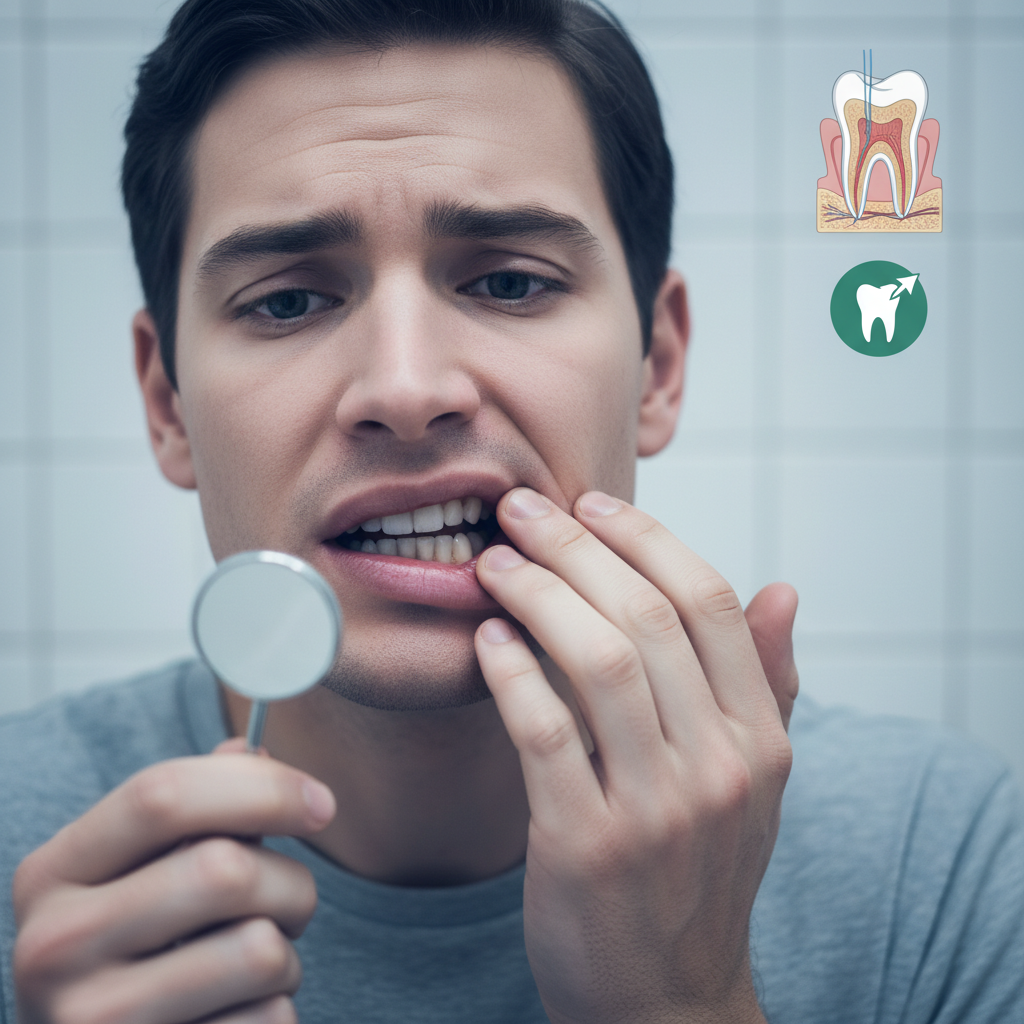
In a good light and with a mirror if you have one, check each tooth:
- Do you see any cracks or chips?
- Is part of a tooth missing?
- Is any tooth loose, pushed out of place, or longer or shorter than the others?
- Is a tooth completely missing from the socket?
Pay special attention to teeth that feel different when you tap them gently with your fingernail or bite down lightly. A tooth can be damaged even if it looks normal.
Dentists and endodontists classify injuries based on whether the tooth is chipped, fractured, dislodged, or knocked out, and whether the surrounding bone and gums are affected [3]. This is why a visual check is only the first step.
3. Test your bite and tooth mobility
Very gently close your teeth together.
- Does your bite suddenly feel “off,” like your teeth no longer fit together the way they used to?
- Does any tooth feel like it moves when you press on it with your tongue or finger?
- Do you feel pain or a sharp twinge when biting down lightly?
A tooth that is out of alignment or mobile can mean the supporting bone or ligaments are injured. For example, when a tooth is knocked slightly out of position but not loose, dentists often reposition it and apply a flexible splint for several weeks, then monitor healing with regular visits [3].
This kind of injury usually needs prompt professional attention.
4. Note your pain level
Pain alone does not always equal an emergency, but it is an important part of the picture. Ask yourself:
- Is the pain sharp and sudden, dull and throbbing, or mostly when you chew?
- Is it constant or only when you touch or use the tooth?
- Does over the counter pain medicine help at all?
Very strong pain that wakes you from sleep, pain with visible swelling, or pain that gets worse quickly usually means you should treat the situation as urgent. If you are not sure, reading more about how serious is tooth pain and how to know if tooth pain is emergency can help you decide.
5. Check for swelling, numbness, or color changes
Finally, look at the soft tissues and the color of your teeth and gums.
Notice if you have:
- Swelling in your lips, cheeks, or gums
- Numbness or tingling in your lips, jaw, or tongue
- Teeth that look darker, gray, or pink compared with the others
- Cuts or tears in the gums or lips that might need stitches
Swelling with pain, especially if it is spreading or you have a fever, is a warning sign of infection and can turn into a true emergency. Our guide on when gum swelling is an emergency explains this in more detail.
Tell apart urgent vs non urgent injuries
Once you have done a basic assessment, the next step is deciding how quickly to act. Many people hesitate because they do not want to overreact, but waiting too long can mean losing a tooth that could have been saved.
Use the sections below to help you sort problems into true emergencies vs issues that can usually wait for a scheduled dental visit.
When a knocked out tooth is an emergency
A permanent tooth that is completely knocked out of its socket is one of the clearest dental emergencies. The Mayo Clinic notes that permanent teeth can sometimes be successfully replanted if this is done immediately or as soon as possible, ideally within 30 minutes [4].
Baby teeth are different. They should not be replanted if they are knocked out, since this can damage the adult tooth that is developing underneath [4].
What to do right away
If a permanent tooth is knocked out:
- Find the tooth and pick it up by the crown, the white chewing surface, not the root.
- If it is dirty, gently rinse it with water. Do not scrub, dry, or remove any tissue fragments.
- If you can, place the tooth back into the socket, hold it in place, and gently bite down on a clean cloth to keep it stable.
- If you cannot reinsert it, keep it moist by placing it in a container of milk, a special tooth preservation solution if you have one, or in your cheek inside your mouth.
- Seek emergency dental care immediately.
The success of replanting a knocked out tooth depends heavily on how quickly it is replanted and how the tooth is stored during that time [4]. This is one of those dental problems that cannot wait.
If a tooth is missing but you see a sharp or shiny surface inside the socket, part of the root may still be in place. Replantation might still be possible, though the success rate can be lower [4]. You still need immediate care.
How to assess a cracked or chipped tooth
Cracks and chips are among the most common dental injuries, but they range from minor cosmetic issues to serious emergencies. Knowing where your situation falls can save you stress and protect your teeth.
The American Association of Endodontists explains that when a tooth is chipped or fractured, your dentist will check whether the inner pulp is exposed or damaged and whether the broken piece can be reattached, filled, or needs a crown [1].
Likely non urgent chips
You may be able to wait for a regular appointment if:
- Only a tiny piece of enamel has chipped off
- There is no pain or only mild sensitivity to temperature
- The tooth is not sharp enough to cut your tongue or cheek
- There is no bleeding from the tooth itself
You still need to see your dentist, since even small chips can worsen, but you may not need same day care. Our guide on is a chipped tooth an emergency can help you decide the right timing.
Possible urgent cracks
You should treat a cracked or chipped tooth as more urgent if:
- A large piece of the tooth has broken off
- You see a visible line running down the tooth
- The tooth hurts when you bite, chew, or release pressure
- There is bleeding from the tooth or deep inside it
In these cases, bacteria can reach the pulp more easily, and delaying care increases the chance you will need a root canal or even lose the tooth. You can learn more in our overview of tooth damage emergency vs minor and is a cracked tooth a dental emergency.
Recognize dislodged or loose teeth
Sometimes a tooth is not knocked out, but it is pushed out of its normal position, twisted, or made loose. These are called luxation injuries and they always deserve quick professional evaluation.
Signs you may have a dislodged tooth include:
- A tooth that looks longer or shorter than before
- A tooth that feels pushed forward, backward, or sideways
- Pain when you tap or touch the tooth
- A tooth that feels “spongy” or moves when you press it
For these injuries, dentists typically reposition and stabilize the tooth, often with a flexible splint. They then monitor the tooth in follow up visits to decide whether root canal treatment is needed, especially in adults whose teeth are fully developed [1].
Children under about 12 sometimes heal without root canal therapy because their teeth are still developing, but they still need prompt, careful evaluation [1].
If you suspect a tooth has been dislodged, avoid chewing on it, keep the area clean, and contact a dentist right away. You can read more about how to identify dental trauma severity if you are unsure how bad it might be.
Watch for soft tissue injuries and swelling
Injuries to your lips, cheeks, tongue, and gums can bleed a lot and look dramatic, even when they are not dangerous. However, they sometimes hide deeper problems.
You likely need urgent care if:
- A cut is deep, longer than half an inch, or gaping open
- Tissue is torn or hanging
- You cannot fully clean debris from the wound
- Bleeding does not slow after 10 to 15 minutes of pressure
Soft tissue injuries around chipped or loose teeth can also be a clue that the supporting bone or ligaments are injured, which is why dentists often examine these areas carefully across several appointments to monitor healing [3].
Swelling is another key factor. Mild swelling that improves with a cold compress may not require emergency care. But swelling with severe pain, difficulty swallowing, or fever is one of the classic dental emergency warning signs.
Understand why follow up care matters
Even if you feel better a day or two after a dental injury, problems can show up later. The American Association of Endodontists notes that long term assessment after dental trauma often includes several years of follow up visits to check for complications such as root resorption, where your body starts to break down the root of the tooth [1].
Dentists and endodontists may use:
- Visual exams of your teeth and gums
- Tests of tooth sensitivity and response to temperature
- X rays or sometimes CT scans to look at roots and bone [2]
These visits help catch issues early so treatment is simpler and more successful.
Even if your tooth looks fine after a blow, it can still be injured inside the root or surrounding bone. A professional exam is the only way to know for sure.
If you have had a more serious injury, your dentist will likely schedule a series of follow ups to make sure healing is staying on track.
Know when to call a dentist vs the ER
It is not always obvious whether to contact your dentist, an emergency dentist, or go straight to the emergency room. A helpful way to think about it is to ask what you are most worried about in that moment: saving a tooth, controlling pain, or dealing with a possible threat to your overall health.
You should go to an emergency room or call emergency services if:
- You have uncontrollable bleeding
- You suspect a broken jaw or facial bones
- You have serious facial swelling that affects breathing, swallowing, or vision
- You have a high fever with facial swelling or severe pain
You should call a dentist immediately for instructions if:
- A permanent tooth is knocked out
- A tooth is suddenly loose or out of position
- You have a large fracture, visible crack, or intense tooth pain
- You see pus, swelling, or a pimple like bump on the gums after an injury
The Cleveland Clinic emphasizes that you should call a dentist as soon as a dental injury occurs, because some issues can wait while others, like knocked out teeth or broken jaws, need urgent care right away [2].
If you are not sure which situation you are in, our guides on what is considered a dental emergency and what dental issues need immediate care can help you sort through the details before you pick up the phone.
Use quick questions to guide your decision
When you are in pain and feeling anxious, it helps to have a simple mental checklist. Ask yourself:
- Am I having trouble breathing, swallowing, or stopping bleeding?
- Is a permanent tooth knocked out, very loose, or badly out of position?
- Is the pain severe, rapidly getting worse, or waking me up at night?
- Is there significant swelling, fever, or signs of infection?
- Did I have a strong blow to the face or jaw that might have injured bone?
If you answer “yes” to any of these, you are likely dealing with an urgent issue. Our resources on when to go to emergency dentist, how to decide if you need urgent dental care, and what counts as dental emergency symptoms walk through common scenarios so you can feel more confident in your choice.
If your answers are mostly “no” and your pain is manageable, your situation might be non urgent, but you should still schedule a dental visit soon to prevent future problems.
Take calm, confident next steps
Learning how to assess dental injury does not turn you into your own dentist, but it does give you a clear path when something scary happens. You know what to look for, which warning signs point to an emergency, and when it is reasonable to wait for a regular appointment.
If you ever feel unsure, it is always better to call your dentist and ask. They can walk you through what to watch for, how long you can safely wait, and whether your situation matches other urgent vs non urgent dental issues.
In the meantime, you can:
- Keep the injured area clean with gentle rinsing
- Use a cold compress to control swelling
- Take over the counter pain relievers as directed if you can use them safely
- Avoid chewing on the injured side until you are evaluated
Dental injuries can be unsettling, but with the right information and quick action, you give yourself and your teeth the best chance at a good outcome.