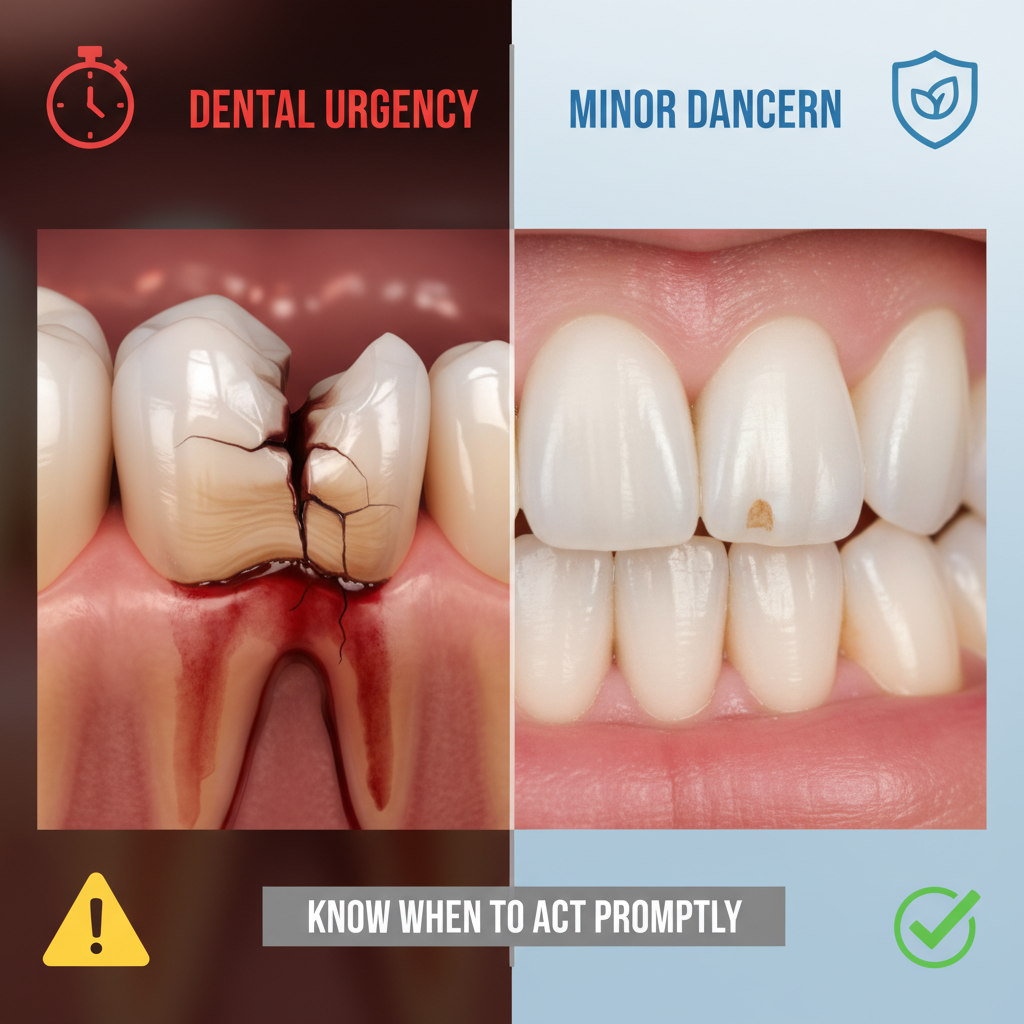
A sudden chip, crack, or ache in a tooth can leave you wondering if you need emergency help right now or if it can wait for a regular appointment. Understanding tooth damage emergency vs minor issues helps you make the right call, avoid complications, and save money and stress.
This guide walks you through how to quickly assess tooth damage, what counts as a true emergency, and what you can safely monitor for a few days. You will also find simple at‑home steps to stay comfortable until you see a dentist.
Understanding tooth damage: emergency vs minor
To sort out tooth damage emergency vs minor problems, start with two questions:
- How intense is the pain or bleeding
- Is there a risk of the problem getting worse fast
Medical sources define a dental emergency as any problem that needs immediate attention to control severe pain, stop uncontrolled bleeding, treat a serious infection, or prevent tooth loss or damage to the jaw and face [1].
In simple terms, you are in emergency territory if:
- You are in severe pain that does not improve with over‑the‑counter medicine
- Bleeding does not stop after 10 minutes of firm pressure
- A tooth is knocked out or badly broken
- Your face or gums are swollen, especially with fever
Minor issues are usually:
- Small chips or cracks with little or no pain
- Lost fillings or crowns without sharp pain
- Mild, short‑lived sensitivity
If you are unsure, use this article as a quick guide, then call a dentist to confirm. You can also explore more detail on urgent vs non urgent dental issues if you like to read ahead of time.
Quick checklist: is it an emergency
Use this fast mental checklist when something happens:
You likely need emergency care if:
- Pain is severe, throbbing, or wakes you from sleep
- Pain lasts more than 24 hours or keeps getting worse, which often signals infection or nerve damage [2]
- You see swelling in your face, jaw, or gums, especially with fever or feeling unwell
- A permanent tooth is completely knocked out
- A tooth is cracked or broken and you see a pink or red center, or it hurts to bite
- Bleeding does not stop after 10 minutes of pressure [3]
- Your bite suddenly feels very off after an injury
You can usually wait for a scheduled visit if:
- A tooth is slightly chipped with no pain or bleeding
- A filling or crown falls out but you are not in strong pain
- You have mild, brief sensitivity to cold or hot
- A small crack is visible but the tooth does not hurt
When in doubt, a phone call to the dentist is always appropriate. It is better to be told you can wait than to ignore a true emergency. For more guidance, see how to decide if you need urgent dental care.
Severe tooth pain: urgent vs can wait
Tooth pain is one of the most common reasons people wonder about tooth damage emergency vs minor issues. Not all toothaches are emergencies, but some definitely are.
According to multiple dental practices, severe and persistent tooth pain that lasts more than 24 hours, worsens, or interrupts sleep can indicate infection or nerve damage and needs emergency evaluation [4].
When tooth pain is an emergency
Seek same‑day or after‑hours care if:
- Pain is sharp, throbbing, or constant
- Over‑the‑counter medicine barely helps or does not help at all [1]
- Pain is paired with facial swelling, fever, or pus, which may signal an abscess [5]
- You cannot eat, sleep, or function because of the pain
These situations count as dental emergencies because infection can spread and lead to serious health issues if not treated promptly [3].
You can read more detail in how to know if tooth pain is emergency and when dental pain becomes urgent.
When tooth pain is probably minor
Pain might not be an emergency if:
- It is mild and comes and goes
- It is mostly sensitivity to cold or sweet that fades quickly
- It starts only when you bite on something hard, with no lingering ache
Mild pain or sensitivity still needs attention, since it can be an early sign of cavities or gum issues [5]. Insurance provider guidance suggests calling a dentist any time you have toothache, even if it feels minor, so you can be told whether you need urgent care or a regular visit [6].
If your question is how serious is tooth pain, the safest rule is simple. The more constant, intense, and disruptive it is, the more urgently you should be seen.
Chipped teeth: cosmetic fix or emergency
A chipped tooth is very common, and you might not feel any pain at all. That is often reassuring, but you still want to know if it is safe to wait.
Minor chips that can wait
A small chip with no pain or bleeding is usually considered minor. Many dentists note that a small chip can often be smoothed or repaired with simple bonding that matches your natural tooth color [7].
You should still schedule a visit within a few days, because untreated chips can grow or create rough edges that irritate your tongue. Guidance from emergency practices suggests that chipped teeth without pain or bleeding can usually wait for a non‑emergency appointment [2].
If you are deciding is a chipped tooth an emergency, look for these red flags.
Chipped teeth that need urgent care
Treat a chipped tooth as an emergency and call right away if:
- The chip is large or you see a pink or red area
- It hurts to bite or drink cold liquids
- There is significant bleeding that does not stop easily
- The chip happened during a strong impact, like a fall or accident
Larger chips can expose the inner pulp of the tooth. This can lead to infection and may require a root canal and crown if not treated quickly [5]. Leaving a broken tooth untreated for too long, even if it started as mostly cosmetic, can allow the damage to worsen [7].
Cracked or broken teeth: when to act fast
Cracks can be trickier than chips because they are sometimes hard to see. You might only notice sharp pain when you chew or release your bite.
Cracks that require emergency care
You should treat a cracked or broken tooth as a dental emergency if:
- The tooth is visibly broken or split
- You feel severe pain or sudden sensitivity to heat or cold
- You can see the inner layer of the tooth
- The tooth is loose after a blow, fall, or sports injury
A damaged tooth is considered an emergency if it causes severe pain, swelling, or has a high risk of getting worse or becoming infected [8]. Deep cracks that extend below the gum line may need extraction, while less severe cracks often require a root canal and crown [5].
For more detail, see is a cracked tooth a dental emergency and how to identify dental trauma severity.
Cracks that can usually wait
Minor, shallow cracks that are only in the outer enamel and do not cause pain can be monitored and treated at a scheduled visit. These are often restored with bonding or a small filling to prevent the crack from spreading [9].
Even if the crack feels minor, you should not delay for weeks. A quick exam lets your dentist decide if it is stable or if you need treatment soon.
Knocked‑out or loose teeth: always an emergency
When you are comparing tooth damage emergency vs minor, knocked‑out teeth are among the clearest emergencies.
If an adult tooth has been completely knocked out, you need immediate care. Dental and medical organizations consistently advise seeing a dentist within 30 to 60 minutes for the best chance to save the tooth [10].
What to do right away
If a permanent tooth is knocked out:
- Pick it up by the crown, which is the white chewing surface, not the root.
- Rinse it gently with water if it is dirty, but do not scrub or remove tissue.
- Try to place it back in the socket gently and hold it there.
- If you cannot reinsert it, keep it moist in milk or a mild saltwater solution while you go to the dentist or emergency room [11].
A tooth that is loose, pushed out of position, or feels different when you bite after trauma is also urgent. Dentists can often stabilize these teeth using splints if treated quickly [9].
Swelling, infection, and abscess: never ignore
Facial swelling, gum swelling, or a pimple‑like bump on the gums can be a sign that infection is spreading. This can affect not just your teeth, but your overall health.
Signs of a dental infection emergency
You should seek emergency care right away if:
- You have swelling in the face, jaw, or gums
- There is severe pain plus fever or feeling very unwell
- You see pus or a bump near a painful tooth
These are classic signs of an abscess, which is a pocket of infection that needs prompt treatment [5]. Dental providers warn that a spreading infection can become serious or even life threatening if ignored, so this counts as a true emergency [4].
For more context, see when gum swelling is an emergency and what counts as dental emergency symptoms.
Mild swelling that might wait
Very mild gum puffiness without pain can sometimes be related to irritation or early gum disease. This is not usually an emergency, but it should be checked soon at a regular dental visit so it does not worsen.
If you are unsure, especially if swelling appears suddenly, treat it as more serious and call your dentist.
Lost fillings, crowns, and other restorations
A filling or crown that pops off is alarming, but it is often a tooth damage situation that falls into the minor category, as long as you are not in severe pain.
According to hospital guidelines, lost or broken fillings and crowns are usually not considered emergencies. You can use temporary dental cement or sugarless gum to cover the area, then schedule a prompt visit during regular office hours [1].
It becomes more urgent if:
- The underlying tooth is very sensitive or painful
- There are sharp edges cutting your tongue or cheek
- The tooth was already badly decayed and is now exposed
Call your dentist for advice the same day, even if they end up seeing you within a few days.
Bleeding, trauma, and injuries to the mouth
Injuries to the teeth, gums, or jaw range from minor to severe. The key question is whether you can safely control bleeding and whether there may be broken bones or deep damage.
You should seek emergency help immediately if:
- Bleeding continues after 10 minutes of firm pressure on clean gauze or cloth [3]
- You suspect a broken jaw or facial bone
- Multiple teeth are damaged or knocked out
- There is major swelling and pain after a strong blow
Minor injuries, like a small cut inside the cheek or a slightly chipped tooth, usually heal with basic care and a scheduled dental visit [9].
If you want a broader overview, you can explore what dental issues need immediate care and dental problems that cannot wait.
Simple home care while you wait
If you are waiting for a scheduled appointment or heading to an emergency visit, a few simple steps can help you stay more comfortable.
For pain and minor injuries:
- Rinse gently with warm salt water to keep the area clean
- Use over‑the‑counter pain relievers as directed, unless your doctor has told you to avoid them
- Apply a cold compress to the outside of your cheek to reduce swelling and ease throbbing [1]
- Avoid very hot or cold foods on the affected side
- Stick to soft foods and chew on the opposite side when possible
For lost fillings or crowns:
- Use temporary dental cement or sugarless gum to cover the exposed area until your appointment [1]
- Keep the crown if it came off in one piece, since your dentist might reuse it
These steps are only temporary. They do not replace professional treatment, but they can make things more manageable until you are seen.
How long you can safely wait
One of the most confusing parts of tooth damage emergency vs minor issues is timing. How long is it actually safe to wait with that pain or chip
In general:
- Severe pain, swelling, fever, or knocked‑out teeth need same‑day care
- Moderate pain that interferes with daily life should be seen within 24 hours
- Mild pain or sensitivity usually should be evaluated within a few days
- Cosmetic chips without pain or bleeding can often wait up to a week, but sooner is better
If you are wondering how long can you wait with tooth pain, remember that pain is your body’s warning system. Waiting longer rarely makes dental problems easier or cheaper to fix.
Putting it all together: quick decision table
Here is a simple way to compare different situations:
| Situation | Likely Category | What to Do |
|---|---|---|
| Severe, throbbing toothache, hard to sleep | Emergency | Call dentist or emergency line now. Use pain relief and cold compress while you wait [1]. |
| Small chip, no pain | Minor | Call for the next available appointment. Avoid chewing hard foods on that tooth [7]. |
| Large break with pain or visible inner tooth | Emergency | Seek urgent care. Avoid biting on the tooth to prevent further damage [5]. |
| Knocked‑out adult tooth | Emergency | Rinse, keep moist in milk or reinsert, and see a dentist within 30 to 60 minutes [6]. |
| Lost filling, mild sensitivity | Minor‑urgent | Use temporary covering and schedule a prompt visit [1]. |
| Swelling with fever or pus | Emergency | Call dentist or go to urgent care or ER. Infection needs fast treatment [5]. |
If you want more signs in one place, visit dental emergency warning signs and signs you need emergency dental care.
Next steps if you are still unsure
If you are still wavering between tooth damage emergency vs minor:
- Check your main symptoms against the lists in this article.
- When in doubt, treat anything with severe pain, swelling, fever, heavy bleeding, or knocked‑out teeth as an emergency.
- Call your dentist, an emergency dentist, or a nurse line and describe exactly what happened and how you feel.
You can also review what is considered a dental emergency, when to go to emergency dentist, and how to assess dental injury for more clarity.
You do not have to diagnose yourself perfectly. Your job is simply to notice what is happening and reach out. A quick call can confirm whether you need to be seen right now or if it is safe to book the next convenient appointment.
References
- (Cleveland Clinic)
- (Roots & Gums of the Tri Valley)
- (Juanita Family Dentistry)
- (Roots & Gums of the Tri Valley, Juanita Family Dentistry)
- (WebMD)
- (Cigna)
- (Smile Like the Stars)
- (Cowtown Dental)
- (Cleveland Clinic)
- (Cleveland Clinic, Roots & Gums of the Tri Valley, Cigna)
- (Cleveland Clinic, Smile Like the Stars)