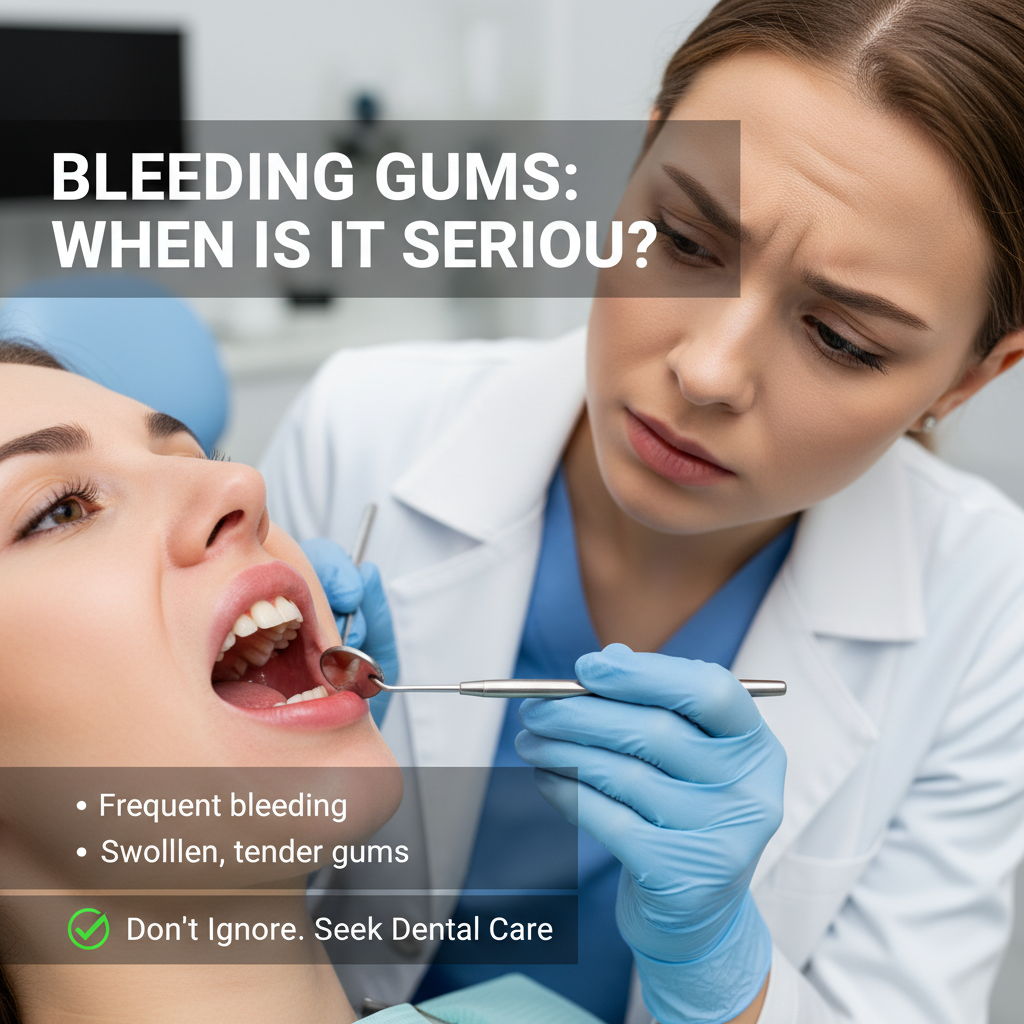
A little pink on your toothbrush now and then might not feel like a big deal. But knowing when bleeding gums are serious versus when they are a minor irritation can save you from bigger dental and even medical problems later on.
This guide walks you through clear, simple signs that tell you when to watch and wait, when to book a routine visit, and when you might need urgent or even emergency care. By the end, you will feel more confident deciding what to do next.
Why bleeding gums matter
Bleeding gums are very common, especially if you have skipped flossing for a while or started brushing more aggressively. Sometimes the cause is as simple as plaque irritation that improves with better home care.
However, bleeding gums can also be your body’s early warning sign of gum disease or a more serious medical condition. They are the number one symptom of gingivitis and other forms of gum disease, but they can also signal hormone changes, vitamin deficiencies, blood clotting disorders, and even stress-related inflammation [1].
When you know how to read these signs, it becomes easier to decide if your situation fits into typical urgent vs non urgent dental issues or if you should act quickly.
Common, less serious causes of bleeding gums
Not every spot of blood means an emergency. Some causes are mild and improve with simple changes at home.
Plaque buildup and early gingivitis
The most common reason gums bleed is plaque at the gumline. Plaque is a sticky film of bacteria that builds up on your teeth. If you do not brush and floss effectively, it irritates the gums and leads to gingivitis, which is the earliest stage of gum disease [2].
With gingivitis you may notice:
- Red or puffy gums
- Bleeding when you brush or floss
- Slight tenderness along the gumline
At this stage the condition is usually reversible with good home care and regular cleanings. If you improve your brushing and flossing and the bleeding gets better within about two weeks, it is usually not considered an emergency, but you still want to keep up with routine dental visits [1].
Brushing or flossing too aggressively
If you recently switched to a harder toothbrush or started scrubbing vigorously, you might simply be irritating otherwise healthy gums. The same can happen when you begin flossing after a long break.
In these cases the bleeding is typically mild, stops quickly, and improves once you switch to a soft-bristle brush and use gentler technique [2]. If things improve quickly and you are not in pain, this usually falls into the non urgent side of what dental issues need immediate care.
Temporary hormonal changes
Hormone shifts during pregnancy, puberty, menstruation, or menopause can make gums more sensitive and prone to bleeding. Pregnancy gingivitis is especially common, due to increased blood flow and hormonal changes that affect your gum tissues [3].
Good brushing and flossing often control the symptoms. However, if you are pregnant and the bleeding worsens or your gums become very swollen or painful, you should contact your dentist so they can prevent complications.
Nutritional gaps
Bleeding gums can sometimes be linked to a lack of certain vitamins, especially vitamin C and vitamin K. Deficiencies in these nutrients can interfere with healing and normal blood clotting, which makes the gums more likely to bleed [1].
If you suspect your diet is low in fresh fruits, vegetables, or leafy greens, improving your nutrition and speaking with your healthcare provider can help.
Key signs that bleeding gums are serious
So how do you know when bleeding gums are serious enough to need urgent or emergency care rather than just better brushing and flossing? Paying attention to the pattern, severity, and other symptoms that show up with the bleeding will guide your decision.
1. Bleeding that lasts more than two weeks
If your gums keep bleeding for more than two weeks despite using a soft toothbrush and flossing gently every day, you should schedule a dental appointment. Persistent bleeding is a red flag that you may have gum disease or another underlying health issue that home care alone cannot fix [1].
At that point your situation is no longer minor. It belongs in the “needs professional evaluation soon” category of how to decide if you need urgent dental care, even if you are not in significant pain yet.
2. Bleeding with red, swollen, or tender gums
Bleeding plus noticeable changes in how your gums look and feel is an important sign. According to the U.S. National Institute of Dental and Craniofacial Research, early gum disease often appears as gums that are red, swollen, and bleed easily, especially during brushing or flossing [4].
If you notice that your gums:
- Look puffy, red, or purplish
- Are sore or tender when you touch them
- Bleed frequently or with light pressure
you may already have gingivitis or early periodontal disease. You should not wait for pain or loose teeth to develop. Book an exam so your dentist can stop progression before it affects the bone.
3. Gums pulling away from your teeth
When gum disease advances, the gums can start to pull away from the teeth and form deeper pockets. Your teeth may look longer than they used to or you may catch food between the teeth and gums more often. These are signs that gum disease has moved beyond the earliest reversible stage [4].
At this point, your condition is more serious and can lead to bone loss, loose teeth, and infections if treatment is delayed. If you notice receding gums plus bleeding, you should treat this as a priority dental visit, not something to ignore.
4. Loose teeth, pain while chewing, or bad breath
Bleeding gums combined with the following symptoms can indicate more advanced periodontal disease:
- Teeth that feel loose or shift when you bite
- Pain or discomfort when chewing
- Persistent bad breath that does not improve with brushing
- Pus or an unpleasant taste around certain teeth
These signs point to infection that is damaging the tissues and bone that hold your teeth in place [5]. While you may not need to rush to the emergency room, you do need prompt dental treatment to prevent tooth loss and other complications.
This level of gum disease falls under dental problems that cannot wait, even if your pain comes and goes.
5. Sudden, heavy, or continuous gum bleeding
Occasional light bleeding that stops quickly is usually not an emergency. However, bleeding that is heavy, difficult to control, or starts suddenly without any clear reason is more concerning.
If you experience:
- A sudden gush of blood from your gums
- Bleeding that continues for more than 10 to 15 minutes despite gentle pressure
- Large clots or blood soaking through tissues repeatedly
you should contact an emergency dentist or medical provider right away. Experts note that significant or continuous gum bleeding that does not respond to basic care should be evaluated promptly, since delaying treatment can worsen the condition [6].
This situation clearly falls on the emergency side of what counts as dental emergency symptoms.
6. Bleeding with gum swelling or facial swelling
Gum bleeding combined with noticeable swelling in your gums, face, or jaw, especially on one side, can signal an active infection or abscess. You might also feel throbbing pain or warmth in the area.
Untreated gum infections can spread to surrounding bone and even to other parts of your body, which is why symptoms like swelling, tenderness, and discoloration are taken seriously [5].
If you are not sure whether your swelling counts as urgent, review when gum swelling is an emergency so you know when to call for immediate help.
7. Bleeding with fever or feeling very unwell
When bleeding gums come with general symptoms like fever, fatigue, night sweats, or unexplained bruising, it may point to a condition beyond your mouth. Serious medical issues such as certain types of anemia, leukemia, or clotting disorders can all cause gum bleeding and need medical evaluation, not just dental care [3].
MedlinePlus also notes that bleeding gums may be a sign of systemic medical conditions, so persistent or unusual bleeding should be checked by a healthcare provider [2].
If you feel generally sick along with gum bleeding, especially if it starts suddenly or is getting worse, contact your doctor or urgent care, or go to the emergency room.
8. Bleeding that starts after injury or dental trauma
If your gums begin bleeding after a fall, collision, or blow to the mouth, you may have dental trauma as well as gum injury. Even if you only see blood at the gumline, there could be hidden tooth damage or bone injury.
In this case it helps to think in terms of how to assess dental injury. Visible tooth cracks, chips, or loose teeth combined with bleeding move your situation into the emergency category, similar to issues described in tooth damage emergency vs minor.
You should seek urgent dental care the same day, especially if you also notice:
- Teeth that have shifted out of position
- A tooth that feels “longer” or loose
- Cuts inside your mouth that will not stop bleeding
Medical conditions that can cause serious gum bleeding
While gum disease is a leading cause of bleeding gums, it is not the only one. In some cases, your gums might be alerting you to a bigger health picture.
According to News-Medical, serious conditions that can include bleeding gums among their symptoms range from HIV infection and herpes simplex virus to stress-induced gingival inflammation, leukemia, gum cancer, anemia, and clotting factor deficiencies like Factor V deficiency [3].
The Cleveland Clinic also points out that diabetes, vitamin deficiencies, and blood-clotting disorders can all contribute to gum bleeding and may require blood tests or other diagnostic workups to pinpoint the cause [1].
If your dentist suspects a systemic cause, they may coordinate with your primary care doctor or a specialist so you receive appropriate medical treatment alongside dental care.
If bleeding gums do not improve within two weeks, especially if there is no obvious cause like brushing too hard, it is time to see a dentist or healthcare provider for a full evaluation [1].
When bleeding gums become a dental emergency
You might be wondering exactly where the line is between “call soon” and “call now.” In general, bleeding gums become an emergency when:
- The bleeding is heavy, sudden, or nonstop
- There is significant swelling in your gums, jaw, or face
- You have strong pain that makes it hard to eat, sleep, or focus
- You notice pus, fever, or feel very unwell
- You see loose teeth, large gum changes, or signs of advanced infection
Situations that combine bleeding with severe pain are similar in urgency to scenarios described in how serious is tooth pain and when dental pain becomes urgent.
If you are checking off more than one of these warning signs, do not wait. Review when to go to emergency dentist or contact an emergency dentist directly. If you cannot reach a dentist and you have heavy bleeding, fever, or trouble swallowing or breathing, go to the nearest emergency room.
What you can do at home while you wait
If your bleeding gums seem mild and you have already scheduled a dental visit, there are a few steps you can take to manage symptoms and prevent things from getting worse:
- Brush gently twice a day with a soft-bristle toothbrush
- Floss carefully at least once a day, even if your gums bleed a little at first
- Rinse with a mild saltwater solution to soothe irritated tissues
- Avoid smoking, since it is the most significant risk factor for gum disease and also reduces treatment success [4]
- Limit sugary snacks and drinks that encourage plaque buildup
Remember that home care is helpful, but it does not replace professional treatment if you already have gum disease or another medical condition causing the bleeding.
If you are ever unsure whether home care is enough, it may help to review dental emergency warning signs to see where your symptoms fit.
How your dentist will evaluate bleeding gums
When you see a dentist for bleeding gums, they will start with a thorough exam, which may include:
- A review of your oral hygiene routine, diet, and medications
- A gentle check of your gums for swelling, tenderness, and bleeding points
- Measuring the depth of pockets around your teeth to see if gum disease is present
- X rays if they suspect bone loss or deeper infection
Clinical guidelines from MedlinePlus explain that dental evaluation for bleeding gums often looks for infections, oral hygiene problems, and signs of bleeding disorders or systemic conditions [2].
Depending on what they find, your dentist may recommend:
- A professional cleaning or deep cleaning
- Improved home care and follow up visits
- Referral to a periodontist, a gum disease specialist, for advanced treatment [4]
- Coordination with your physician for blood tests or other medical evaluations
If they discover tooth issues contributing to your symptoms, such as decay or fractures, you may also need care similar to what is described in what is considered a dental emergency or what dental issues need immediate care.
Quick checklist: When to act on bleeding gums
Use this short checklist to help you decide your next step when your gums bleed:
-
Bleeding sometimes when brushing or flossing, improves within two weeks with gentle care, and no other symptoms
-
Likely non urgent, but schedule a routine dental visit if you are overdue
-
Bleeding often, plus red, puffy, or receding gums, or persistent bad breath
-
Make a dental appointment soon, gum disease may be starting or progressing
-
Bleeding with loose teeth, pain while chewing, or gum pockets
-
Seek prompt dental care, this is likely more advanced periodontal disease
-
Sudden, heavy, or nonstop bleeding, swelling in your face or jaw, fever, or feeling very unwell
-
Treat as an emergency, contact an emergency dentist or medical provider right away
If you are still unsure, it is safer to err on the side of getting checked. A quick call or visit can give you peace of mind and prevent small gum problems from becoming major dental emergencies.
Knowing when bleeding gums are serious helps you take control of your oral health. With good daily habits, timely professional care, and attention to your body’s warning signs, you can protect both your smile and your overall health.