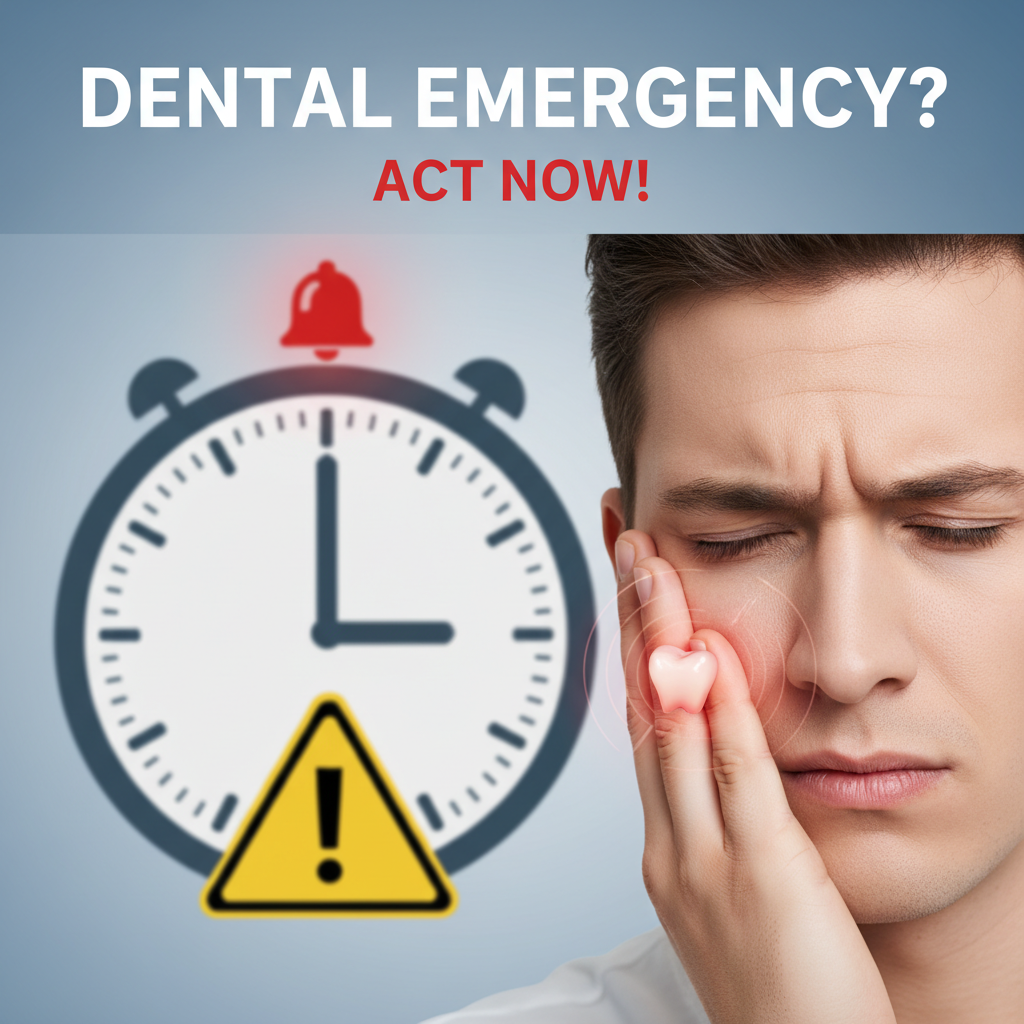
To figure out how to know if tooth pain is emergency level or can wait, it helps to look at three things: how strong the pain is, what other symptoms you have, and whether there was an injury. Once you know what to watch for, it becomes much easier to decide if you need fast help or a regular dental visit.
This guide walks you through clear signs that your toothache is an emergency, when it is urgent but not life threatening, and when you can usually monitor it and schedule care soon.
Start with this quick emergency check
Before you sort through details, ask yourself these questions. If you answer “yes” to any, treat it as an emergency and seek immediate help:
- Is the pain so severe you cannot sleep, eat, or focus, even with over the counter medication? [1]
- Do you have swelling in your face, jaw, or gums, especially if it feels warm, red, or tender to the touch? [2]
- Do you have trouble breathing, swallowing, or opening your mouth normally? [1]
- Do you have a fever along with tooth or gum pain? [2]
- Did the pain start after a facial injury, fall, or sports impact?
If any of these apply, your situation fits what most dentists and physicians consider what is considered a dental emergency, and you should not wait.
Understand what dentists call a dental emergency
To understand how to know if tooth pain is emergency level, it helps to know how professionals define it. A dental emergency is any problem that needs immediate attention to stop severe pain, control bleeding, protect a tooth, or prevent serious infection.
According to the Cleveland Clinic, emergencies include issues such as bleeding that will not stop, pain that does not improve with medication, or injuries like a knocked out tooth or badly fractured tooth that need care right away to save the tooth or protect your health [3].
In other words, if waiting is likely to make things much worse, it is an emergency. If waiting a day or two is uncomfortable, but safe, that is usually an urgent or routine issue rather than a true emergency. You can learn more about this distinction in urgent vs non urgent dental issues.
Recognize clear warning signs of emergency tooth pain
Certain symptoms are strong warning signs that your toothache has crossed into emergency territory. These usually mean you need fast help to prevent the problem from spreading or becoming much more serious.
Severe, throbbing, or constant pain
If your pain is mild and comes and goes, you often have a bit more time. When it is intense, throbbing, or nonstop, that is different.
- Intense, throbbing tooth pain that will not go away and gets worse over time is a major red flag for a deeper issue that needs immediate care [2].
- Pain that is so strong you cannot sleep, eat, or think clearly, despite using over the counter medication, suggests a possible abscess or exposed nerve and calls for emergency treatment [1].
If you are wondering how serious is tooth pain, this level of pain usually means it is serious.
Swelling in your face, jaw, or gums
Swelling is one of the clearest ways to know if tooth pain is an emergency. It often means infection.
Swelling that is warm, red, or tender, especially around a painful tooth, may indicate a dental abscess or spreading infection that needs urgent treatment to avoid complications [2]. Swelling in the jaw or gums that spreads toward the neck or face can even become life threatening if you do not get care quickly [1].
If swelling is significant, or you see it spreading, it fits the serious signs listed in dental emergency warning signs.
Fever or feeling unwell with tooth pain
Tooth pain on its own can be non urgent. Once you add general symptoms like fever, chills, or feeling sick, infection is more likely.
Research from both Mountain Top Periodontics & Implants and Dentistry of Old Town Scottsdale notes that a toothache with fever is a key sign that infection is affecting your overall health and needs immediate emergency attention, not just home remedies [4].
Trouble breathing, swallowing, or opening your mouth
If tooth or jaw pain comes with difficulty breathing or swallowing, do not wait. This may mean swelling or infection is reaching the airway.
Dentistry of Old Town Scottsdale explains that trouble breathing or swallowing together with tooth pain can signal an abscess or infection affecting the airway and should be treated as a critical emergency [1]. In this situation, seek emergency room care immediately.
Signs of a dental abscess
A dental abscess is a pocket of infection, usually at the root of a tooth or in the gums. It can become very dangerous if bacteria spread.
Harvard Health describes abscess symptoms that should not be ignored, such as:
- Severe, throbbing pain
- Swollen, pimple like bump on the gum
- Bad or acidic taste in your mouth
- Pressure in a tooth or sinus pressure without nasal congestion
An abscess needs prompt dental treatment to stop bacteria from entering your bloodstream and causing serious complications [5]. If you cannot see a dentist immediately, Harvard Health advises going to an emergency department to get antibiotics until you can be treated by a dentist.
You can read more about these patterns in when dental pain becomes urgent and dental problems that cannot wait.
Know when trauma and damage are emergencies
Sometimes you know exactly when your tooth started hurting because you were hit in the mouth, fell, or bit something hard. In these cases, how to know if tooth pain is emergency related comes down to how damaged the tooth and nearby tissues are.
Knocked out or very loose tooth
If an adult tooth has been knocked out completely, it is always an emergency. Quick action gives you the best chance of saving it.
The Cleveland Clinic notes that dental injuries like a knocked out tooth require immediate care and that getting treatment within one hour is critical for possible reimplantation [3]. Try to keep the tooth moist in milk or saliva, avoid touching the root, and head straight to an emergency dentist or emergency room.
A tooth that is suddenly very loose after an injury is also an emergency, since the supporting bone or ligaments may be damaged. Resources like how to assess dental injury and how to identify dental trauma severity can help you understand what you are seeing before you call.
Cracked vs chipped tooth
Not every crack or chip is an emergency, but some definitely are. Peppermint Dental & Orthodontics explains that significant fractures that expose the nerve and cause sharp pain count as emergencies that require fast treatment [6].
In general:
- A small chip with no pain is usually not an emergency. You should still schedule a visit to prevent further damage. See more at is a chipped tooth an emergency.
- A cracked tooth with strong pain, sensitivity, or visible deep fracture lines is more serious and can allow bacteria into the inner layers. That is closer to what is covered under is a cracked tooth a dental emergency.
The guide tooth damage emergency vs minor can help you compare your situation to typical examples.
Soft tissue injuries and bleeding
Injuries to your gums, cheeks, or tongue can be emergencies when bleeding is heavy or does not slow down with pressure.
Peppermint Dental & Orthodontics notes that deep cuts or lacerations in oral soft tissues that cause substantial bleeding should be treated as emergencies [6]. The Cleveland Clinic also includes bleeding that will not stop as a reason to seek emergency care [3].
If you have heavy bleeding after a tooth extraction that continues despite biting on gauze, that also fits the definition of an emergency.
Watch for serious gum and jaw symptoms
Tooth pain is sometimes really gum or jaw pain. These can still be emergencies, especially when infection is involved.
Gum swelling, bumps, or pus
Gum pain alone is not always urgent, but some signs point to emergency level concerns. Harvard Health notes that gum pain with red bumps, a burning sensation, or a pimple of pus can indicate gingivitis or a periodontal disease abscess that needs prompt care to prevent tooth loss and further infection [5].
If you see pus, smell a strong foul odor, or have a bad taste in your mouth with swelling, you may be facing a gum abscess. That should be evaluated quickly, as explained in when gum swelling is an emergency and when bleeding gums are serious.
Jaw pain, neck pain, and heart warning signs
Jaw pain is often dental, but not always. Harvard Health points out that sudden neck and lower jaw pain can sometimes signal a medical emergency like angina or a heart attack, particularly if it comes with chest pain, sweating, or shortness of breath. In that case, you should call 911 right away instead of assuming it is dental [5].
When in doubt, treat possible heart symptoms as the higher priority emergency and let the medical team sort out the cause.
Understand when an ER, urgent care, or dentist is the right choice
Once you decide your tooth pain is serious, the next step is choosing where to go. Your options usually include an emergency dentist, urgent care, or the emergency room.
When to go to an emergency dentist
If you have severe tooth pain without breathing problems or major medical symptoms, an emergency dentist is often the best first stop. They can perform treatments that ER doctors cannot, like root canals, extractions, or draining abscesses. You can explore common scenarios in when to go to emergency dentist and what dental issues need immediate care.
Common reasons to call an emergency dentist include:
- Intense toothache with swelling but no breathing issues
- Cracked or broken tooth with strong pain
- Knocked out or very loose tooth
- Suspected abscess without airway problems
When urgent care or the ER makes more sense
According to Dr. Troy Madsen, an emergency physician at the University of Utah, if toothache pain can be controlled at home it usually does not require an ER visit, since ER doctors are not equipped for dental procedures like extractions [7].
However, he also notes that if pain is so severe that you cannot manage it with home care, or if you have significant facial swelling or swelling that extends into the neck or causes trouble breathing, you should go to the ER right away. In these situations, the ER can provide antibiotics, pain control, and monitoring for serious complications [7].
Urgent care centers can sometimes be a good middle ground if a dentist is closed. They can offer similar support treatments like pain medication and antibiotics when you suspect an infection or cracked tooth but do not have severe symptoms yet [7].
It is important to remember that neither urgent care nor the ER replaces a dentist. Both Harvard Health and University of Utah emphasize that you still need definitive dental care afterward to fix the underlying cause [8].
For more help deciding, see how to decide if you need urgent dental care and when to go to emergency dentist.
Learn which toothaches can usually wait a short time
Not every toothache is an emergency. Knowing this can reduce anxiety and help you make a calm plan instead of rushing to the ER.
Typically, you may have a bit more time if:
- Pain is mild to moderate and improves with over the counter medication
- You do not have swelling, fever, or trouble swallowing
- The pain is occasional and triggered mainly by biting or temperature changes
- There is a small chip with little or no pain
Tooth pain from small cavities, early cracks, or loose fillings often shows up as sharp sensitivity when you eat something hot, cold, or sweet [5]. These situations still need prompt dental care, since delaying treatment can lead to infection, but they are usually not life threatening in the next day or two.
If you are asking yourself how long can you wait with tooth pain, the safest answer is that you should call for an appointment as soon as you notice persistent symptoms. Dentists can also help you decide by phone whether you need to be seen the same day or within a few days.
Resources like what counts as dental emergency symptoms and signs you need emergency dental care can help you compare your situation to typical examples.
Compare your symptoms with a simple guide
To pull everything together, here is a quick comparison you can use as a reference.
| Your symptom or situation | Most likely category | Typical next step |
|---|---|---|
| Mild aching, no swelling, improves with pain relievers | Non urgent but needs care | Schedule a dental visit soon |
| Sharp pain with hot or cold, no swelling, no fever | Urgent, but not usually life threatening | Call dentist for next available appointment |
| Intense, throbbing pain that ruins sleep or appetite | Likely emergency | Call emergency dentist or seek same day care |
| Facial or jaw swelling, warm or red to touch | Emergency, possible infection | Emergency dentist or ER if severe [2] |
| Tooth pain plus fever or feeling very sick | Emergency infection risk | Same day emergency dental or ER care |
| Trouble breathing or swallowing with tooth or gum pain | Critical emergency | Call 911 or go to ER immediately [1] |
| Knocked out or very loose tooth after injury | Emergency trauma | See emergency dentist or ER within 1 hour [3] |
| Small chip, little or no pain | Usually non emergency | Book routine dental visit |
| Gum bump with pus, bad taste, and pain | Emergency abscess | Emergency dentist or ER if dentist unavailable [5] |
You can pair this with more detailed guides like what dental issues need immediate care and dental emergency warning signs if you want extra reassurance.
What to do at home until you get help
While you are arranging care, a few simple steps can often reduce discomfort and lower the risk of making things worse:
- Rinse gently with warm salt water to help clean the area.
- Use over the counter pain relievers as directed, unless your doctor has told you not to.
- Apply a cold compress to the cheek if you have mild swelling.
- Keep your head slightly elevated when resting to reduce pressure and throbbing.
Avoid placing aspirin directly on the tooth or gum, which can burn tissues. Also avoid using heat on a swollen area, since that can sometimes encourage infection to spread.
Remember, home care is meant to bridge the gap until you see a professional, not to replace treatment. The ER, urgent care, and your dentist all emphasize that definitive dental work is needed to solve the underlying problem [7].
Trust your instincts, then confirm with a professional
If you are still unsure how to know if tooth pain is emergency level, it is always reasonable to call a dentist and describe your symptoms in detail. Use phrases like:
- “The pain wakes me up at night.”
- “My face is swollen and feels hot.”
- “I see a bump with pus on my gum.”
- “I am having trouble swallowing.”
Clear descriptions help the office decide how quickly you should be seen. You can also review how to decide if you need urgent dental care and when dental pain becomes urgent before you call.
You know your body best. If the pain feels extreme, is getting worse quickly, or comes with swelling, fever, or breathing issues, do not wait it out. Acting quickly can protect both your smile and your overall health.