A chipped tooth can be alarming. You might feel a sharp edge with your tongue, see a missing piece in the mirror, and immediately wonder, “Is a chipped tooth an emergency, or can this wait?”
Knowing when to act quickly and when it is safe to schedule a routine visit can protect your tooth, save you from pain, and help you avoid more complex treatment later.
In this guide, you will learn how to tell if a chipped tooth is a true dental emergency, what symptoms to watch for, and what to do next.
What counts as a chipped tooth?
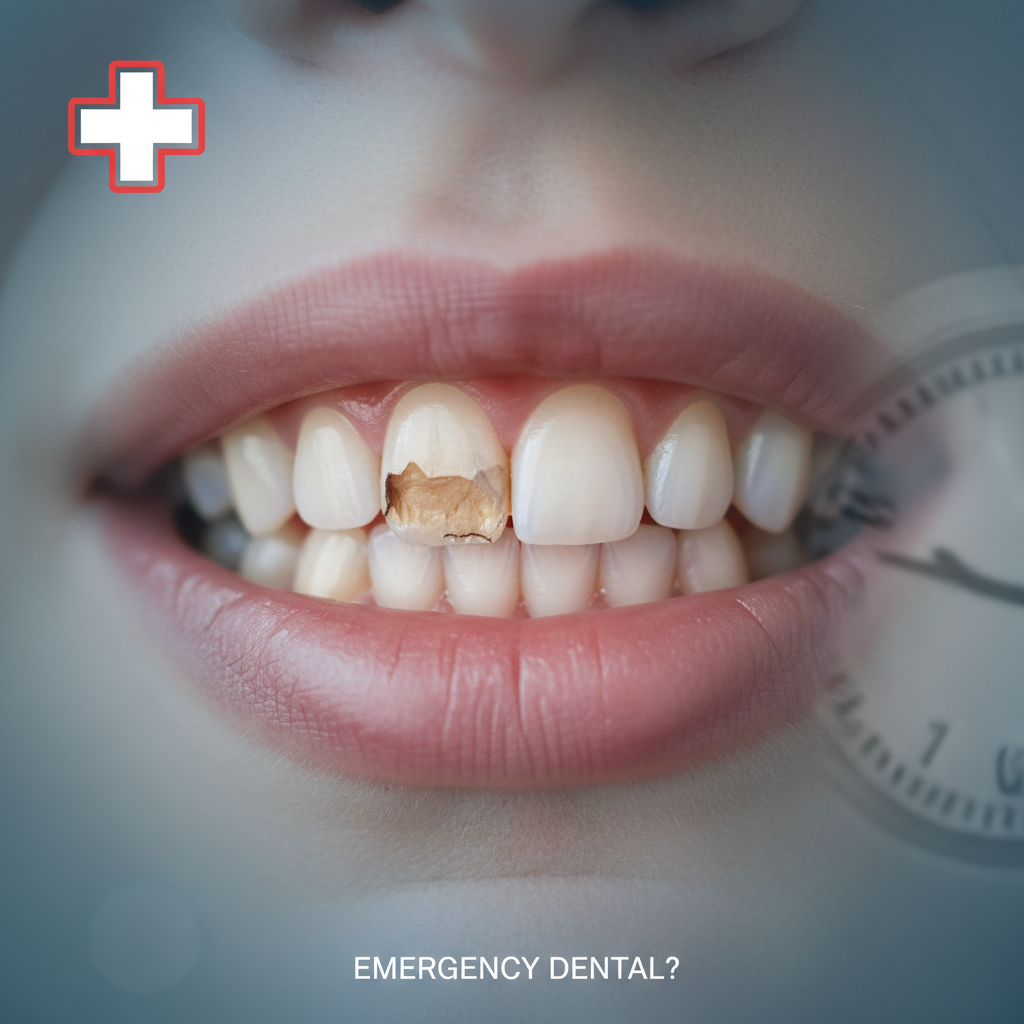
A chipped tooth happens when part of the outer protective layer of your tooth, called enamel, breaks off. This can happen if you bite something hard, fall, get hit in the mouth, or grind your teeth. The size and depth of the chip usually determine how serious it is and how quickly you need care.
According to Cleveland Clinic, slightly chipped teeth that only affect the enamel usually do not cause major issues or pain, while larger chips that expose the sensitive tissue under the enamel can lead to urgent problems and even infection if they are not treated promptly [1].
You might notice:
- A rough or jagged edge on the tooth
- A visible piece missing
- Sensitivity to hot, cold, or sweet foods
- Pain when chewing
The key question is not “Did my tooth chip?” but “How deep is the damage and what symptoms do I have?” That is what tells you if a chipped tooth is an emergency.
When a chipped tooth is a true emergency
Sometimes the answer to “is a chipped tooth an emergency” is yes, you need help right away. In other cases, you can safely wait a few days. Recognizing the difference protects your health and your smile.
The research is consistent on this point. A chipped tooth becomes an emergency when the inner layers of the tooth are involved, when you are in significant pain, or when there are signs of infection or heavy trauma [2].
You can also explore how this fits into the bigger picture in guides like urgent vs non urgent dental issues and what is considered a dental emergency.
Emergency red flags to watch for
You should treat your chipped tooth as a dental emergency and seek same day or immediate care if you notice any of the following:
- Severe or throbbing pain that does not improve with over the counter pain relievers
- Bleeding from inside the tooth or around the broken area
- Red, pink, yellow, or brown tissue visible in the center of the chip, which may be dentin or pulp
- A loose tooth or a tooth that moves when you touch it
- Swollen gums, face, or jaw near the chipped tooth
- Sensitivity so strong to hot, cold, or sweet that eating or drinking is difficult
- Pain after an injury such as a fall, sports hit, or car accident, especially with swelling or bleeding
Dentists note that a chipped tooth where it looks like a third or more of the tooth is gone, or where the inner layers look yellow or brown, usually qualifies as an emergency and needs immediate attention [3].
If the damage reaches the pulp, which is the soft center of the tooth that contains blood vessels and nerves, you may experience intense pain, bleeding from inside the tooth, and tenderness. This level of damage can lead to serious toothaches and infection and is considered an urgent dental emergency [4].
You can compare your symptoms with other warning signs in resources like dental emergency warning signs and what counts as dental emergency symptoms.
Why deep chips are so serious
When a chip goes beyond the enamel into the dentin or pulp, it creates a direct pathway for bacteria to invade the tooth. Multiple dental sources warn that this can lead to:
- Tooth infection or abscess
- Increasing pain and sensitivity
- Damage to surrounding teeth and gums
- In severe cases, spread of infection beyond the mouth
About Dental Care explains that once bacteria reach the deeper layers of the tooth through a chip, an oral infection can develop, which can loosen the tooth and damage nearby tissues [5]. Gwinnett Family Dental Care adds that this type of infection can sometimes lead to fever, swollen lymph nodes, and even life threatening complications if it spreads untreated [6].
If you are unsure how serious your trauma is, guides such as how to assess dental injury and how to identify dental trauma severity can help you frame what you are seeing and feeling before you call.
When a chipped tooth is usually not an emergency
Not every chip is a dental emergency. In many cases, you will still need dental care soon, but not necessarily the same day.
A chipped tooth is usually not considered an emergency if:
- The chip is small and only affects the outer enamel
- You have little or no pain
- There is no bleeding from the tooth itself
- The tooth is not loose
- You can chew and bite without sharp pain
Dentists note that a minor chip that just takes off a small bit of enamel and does not expose deeper layers can often be treated during normal office hours, not necessarily in an emergency slot [3]. Smile Lake Anna also points out that a small chip limited to enamel, with no pain and no bleeding, usually needs a visit within a few days rather than immediate emergency care [7].
Even if your situation feels minor, it still fits into the broader category of tooth damage emergency vs minor, so it is worth having a dentist evaluate it.
Why you should not ignore a “small” chip
It can be tempting to ignore a tiny chip, especially if it does not hurt. However, leaving any chipped tooth untreated can create long term issues.
Several dental sources warn that:
- A chipped tooth leaves a weak spot in the enamel, which can crack or break more in the future
- Bacteria can enter through small cracks and chips, increasing the risk of tooth decay and infection
- Decay can then spread to the dentin and pulp, leading to pain, sensitivity, and the need for root canal treatment [8]
Over time, an untreated chipped and loose tooth can become so damaged that it needs to be removed and replaced with implants or other prosthetics [4].
So even if your chipped tooth does not feel like an emergency, scheduling an exam soon is still important to protect your long term dental health.
How to tell if you need urgent or routine care
When you are in the moment, it can be hard to decide what to do next. You may worry about overreacting or, on the other hand, about waiting too long.
Here is a simple way to think about it, in line with guidance from multiple dental organizations and similar to frameworks covered in resources like how to decide if you need urgent dental care and when to go to emergency dentist.
If your chipped tooth involves severe pain, bleeding, visible inner tooth tissue, looseness, or signs of infection, treat it as an emergency. If the chip is small, painless, and limited to the enamel, schedule a non urgent visit within a few days.
If you are unsure, you can also use related symptom based guides such as how to know if tooth pain is emergency, how serious is tooth pain, or when dental pain becomes urgent.
What to do immediately after chipping a tooth
Whether your chipped tooth is an emergency or not, there are a few steps you can take right away to protect your mouth and make things more comfortable while you arrange your appointment.
Dental practices recommend the following steps while you wait for care [9]:
-
Rinse gently with warm water
This cleans the area and removes any small fragments. Avoid extremely hot or cold water if the tooth is sensitive. -
Save any broken pieces
If you can find the fragment, store it in milk or saline solution. In some cases, a dentist may be able to bond it back in place. -
Control bleeding, if present
If there is bleeding from the tooth or gums, gently bite on a clean piece of gauze or cloth until it slows or stops. -
Use a cold compress for swelling or pain
Hold a cold pack or a bag of ice wrapped in a cloth against your cheek for 10 to 15 minutes at a time to reduce swelling. -
Protect sharp edges
If the tooth edge is jagged and scraping your cheek or tongue, you can place a piece of sugar free gum, dental wax, or a small piece of gauze over it as a temporary cover. Neighbor Dental compares this to protecting a jagged broken fingernail while you wait to have it fixed [10]. -
Take over the counter pain relievers as directed
Medicines like ibuprofen can help with discomfort, but do not place medication directly on the tooth, as this can irritate the gums [11].
These steps do not replace seeing a dentist. They simply keep you more comfortable and protect the damaged area until you can get professional help.
Why timely dental care matters
One of the most important factors in whether a chipped tooth turns into a big problem is how long you wait to get it checked.
Cleveland Clinic advises that you should schedule an appointment with a dental care provider as soon as possible after chipping a tooth, since only a dentist can accurately assess how serious the chip is and what treatment you need [1].
Other dental practices emphasize that:
- The longer a chipped tooth is left untreated, the more likely it is to worsen, cause pain, or develop an infection
- Early treatment is usually simpler, less invasive, and less expensive
- Timely care can prevent the need for root canal therapy, crowns, or even extraction in the future [12]
If you are weighing how long you can safely wait, resources like dental problems that cannot wait, what dental issues need immediate care, and how long can you wait with tooth pain can help you make a more confident decision.
Common treatments for chipped teeth
Once you see a dentist, your treatment will depend on how severe the chip is and whether deeper layers of the tooth are affected. According to multiple dental sources, common options include [13]:
- Polishing or smoothing for tiny chips, to remove rough edges and improve appearance
- Dental bonding, where tooth colored resin is applied and shaped to restore the lost piece
- Dental crowns, which cover and protect teeth that have lost a larger portion or have exposed dentin
- Root canal therapy, when the pulp is infected or exposed, followed by a crown to strengthen the tooth
- Tooth extraction and replacement in severe fractures that cannot be saved, often followed by options like implants or bridges
If your chip is part of a larger crack, you may also find it helpful to read more in resources such as is a cracked tooth a dental emergency.
Your dentist will typically take X rays to see how far the damage goes, evaluate your bite, and discuss which option will best protect your tooth and relieve your symptoms.
How chipped teeth can lead to infection
One of the main reasons dentists take chipped teeth seriously is the risk of infection if the damage is not treated.
When enamel is broken, bacteria have a much easier path into the inner layers of the tooth. Over time, this can cause:
- Tooth decay developing inside the chipped area
- Inflammation and infection of the pulp, called pulpitis
- Abscess formation, which can be very painful and may cause swelling and a foul taste in your mouth
About Dental Care explains that infections from chipped teeth occur when bacteria reach the deeper tooth layers through the damaged spot. If this is not treated, the tooth can loosen and the infection can spread to the gums and nearby teeth [5]. Gwinnett Family Dental Care adds that, in serious cases, infection from a chipped or cracked tooth can spread beyond the mouth, leading to fever, swollen lymph nodes, and potentially dangerous complications like sepsis [6].
If an infection does develop, treatment may involve root canal therapy, placement of a crown, and sometimes antibiotics to fully resolve it [5].
You can learn more about infection related warning signs in focused guides like when gum swelling is an emergency and when bleeding gums are serious.
Preventing chipped teeth and future emergencies
While accidents cannot always be avoided, there are steps you can take to reduce your chances of chipping a tooth and to protect your oral health if a minor chip does occur.
Helpful habits include:
- Wearing a mouthguard during contact sports or high risk activities
- Avoiding chewing on ice, pens, or very hard candies
- Not using your teeth to open packages or bottles
- Addressing teeth grinding with a nightguard if your dentist recommends it
- Keeping up with regular dental checkups so small cracks and chips are caught early
- Maintaining good daily oral hygiene to keep enamel as strong and healthy as possible
Maintaining these habits, along with getting chips, cracks, or breaks evaluated promptly, is one of the best ways to prevent future emergencies, as emphasized by dental professionals in 2024 [5].
Bringing it all together: when to act
When you are trying to decide if your chipped tooth is an emergency, it can help to think in terms of symptoms, not just the size of the chip.
Ask yourself:
- Am I in significant or throbbing pain?
- Is there bleeding, or does the tooth look pink, red, yellow, or brown inside?
- Is the tooth loose or does it feel cracked through?
- Do I have swelling, fever, or a foul taste?
- Did this happen after a serious injury, like a fall or sports hit?
If the answer to any of these is yes, treat your chipped tooth as a dental emergency. Use the immediate steps above, and contact an emergency dentist right away. You can also refer to signs you need emergency dental care or what dental issues need immediate care if you want more reassurance.
If your chip is minor, painless, and not bleeding, you can usually schedule a prompt but non urgent visit. Even then, do not wait too long. Early attention can prevent a small problem from turning into a painful and expensive one.
Listening to your symptoms, understanding the warning signs, and seeking timely care when needed will help you protect your teeth now and in the future.
References
- (Cleveland Clinic)
- (Pinnacle Dentistry, Smile Lake Anna, Foothill Family Dentistry)
- (Pinnacle Dentistry)
- (Foothill Family Dentistry)
- (About Dental Care)
- (Gwinnett Family Dental Care)
- (Smile Lake Anna)
- (Gwinnett Family Dental Care, About Dental Care)
- (Pinnacle Dentistry, Okun Dentistry)
- (Neighbor Dental)
- (Okun Dentistry)
- (Neighbor Dental, About Dental Care)
- (Pinnacle Dentistry, Foothill Family Dentistry, About Dental Care)