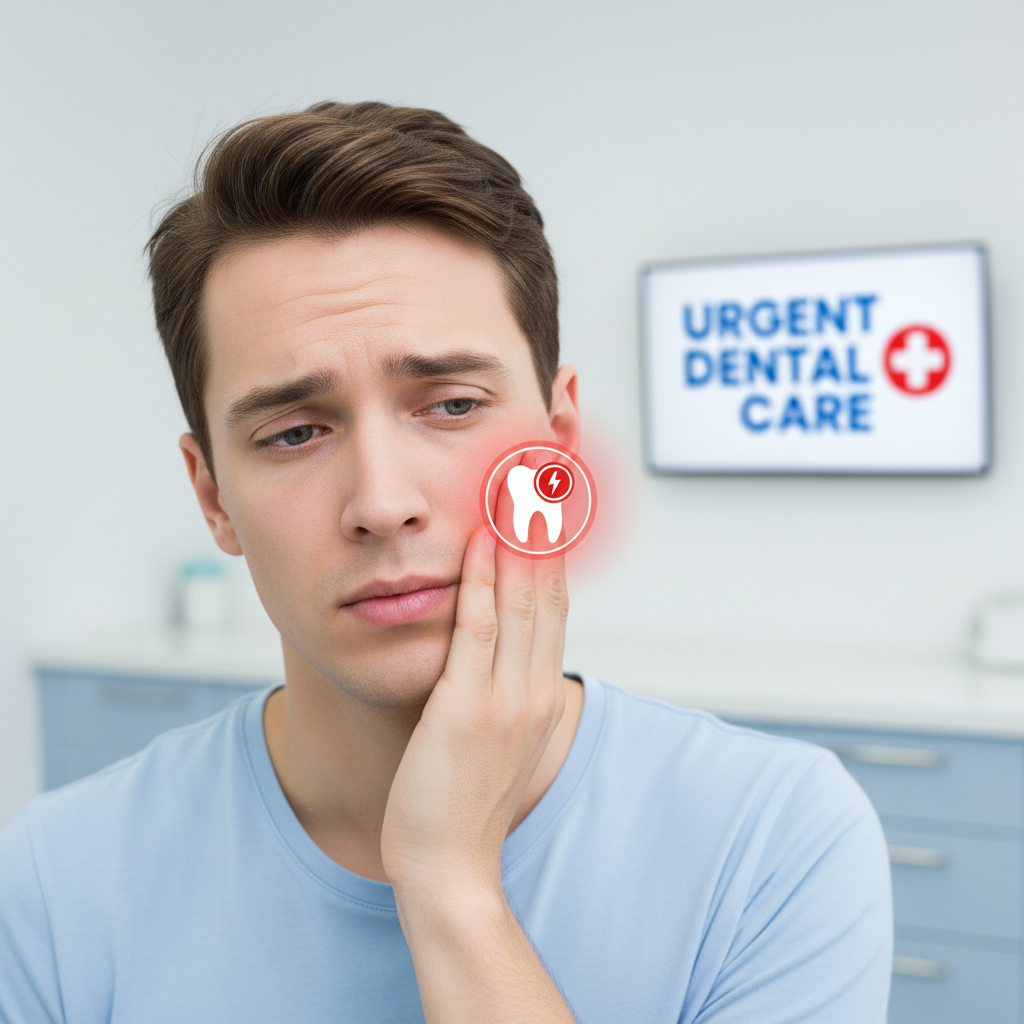
A sudden toothache or chipped tooth can leave you wondering: do you need help right now, or can it wait a few days? Understanding what dental issues need immediate care helps you avoid serious complications while steering clear of unnecessary panic.
In this guide, you will learn how to spot true dental emergencies, which problems can wait for a scheduled visit, and what to do in the moment while you are arranging care.
Understanding what counts as a dental emergency
Not every sore tooth or broken filling is an emergency, but some issues absolutely are. In general, a dental emergency is any situation where you have:
- Severe pain that you cannot manage with over the counter medication
- Uncontrolled bleeding in your mouth
- Signs of infection such as swelling, pus, or fever
- Trauma to your teeth, jaw, or face
According to the Cleveland Clinic, dental emergencies include severe toothache, badly cracked or knocked out teeth, extruded (partially dislodged) teeth, dental abscesses, lost or broken restorations, and serious soft tissue injuries that need fast treatment to control pain, bleeding, and infection risk [1]. Understanding what is considered a dental emergency is the first step in deciding what to do next.
When dental pain becomes urgent
Tooth pain is one of the most common reasons you might wonder what dental issues need immediate care. Some aches are early warning signs. Others are urgent problems that should not wait.
Mild, short term tooth pain
If you feel a dull ache that:
- Comes and goes
- Responds to over the counter pain relievers
- Does not keep you up at night
you likely have time to book a regular appointment. Mild, intermittent tooth pain can signal developing cavities, small cracks, or early nerve irritation, and should still be checked soon to keep treatment simple [2]. Learning how serious tooth pain is helps you avoid waiting too long.
Severe toothache that will not improve
Severe toothaches are different. You should seek immediate care if you have:
- Intense, throbbing pain
- Pain that does not improve with over the counter medication
- Pain that makes it hard to eat, sleep, or focus
Severe toothaches that do not respond to medication often indicate serious problems such as deep decay, abscess, or infection that require urgent treatment [3]. They are among the clearest dental emergency warning signs.
If you are unsure how to know if tooth pain is emergency, ask yourself:
- Is the pain a 7 or higher out of 10?
- Is the pain constant and throbbing instead of occasional and mild?
- Have you already tried ibuprofen or acetaminophen without much relief?
If you answer yes to these questions, you are likely dealing with dental problems that cannot wait.
Tooth pain plus swelling or fever
Tooth pain combined with facial swelling, a swollen jaw, or fever is especially serious. Dental abscesses are infections around a tooth root or gums that can spread to the face, jaw, or even other parts of the body if untreated [1]. They often cause:
- Severe pain
- Swelling in your cheek or jaw
- Fever or feeling generally ill
- A foul taste in your mouth or visible pus
Penn Dental Medicine notes that untreated infections and gum disease can also increase your risk of health problems such as cardiovascular disease, diabetes complications, and respiratory infections [4]. If you have these symptoms, you need same day or emergency care.
You may be wondering how long you can wait with tooth pain. If swelling, fever, or a spreading infection is involved, you should not wait at all.
Damage to teeth: emergency vs minor
A chipped or cracked tooth can look dramatic, but not every break is an emergency. The key is to pay attention to pain, the size of the break, and whether the tooth is loose.
Chipped teeth that can usually wait
If you chip a small piece off your tooth and you:
- Have little or no pain
- Can still bite normally
- Do not see any pink or red tissue in the break
you can usually schedule a non urgent appointment. Your dentist may smooth the area or repair it with bonding or a small filling. Still, it is helpful to read about tooth damage emergency vs minor so you know when to call immediately.
For more detail on these situations, you can check resources such as is a chipped tooth an emergency.
Cracks and breaks that need fast care
Cracks or breaks become urgent when you notice:
- Sharp, intense pain when you bite down
- Deep cracks that reach the gumline
- A large piece of tooth missing
- Sensitivity to hot, cold, or sweet foods
The Cleveland Clinic includes badly cracked teeth on the list of dental emergencies that require immediate attention [1]. A significant crack can expose the nerve and allow bacteria to enter, which increases your risk of infection or tooth loss.
If you are wondering is a cracked tooth a dental emergency, consider it an emergency if:
- The crack is visibly large
- The tooth hurts when you chew or touch it
- The tooth feels loose or unstable
Knocked out or very loose teeth
A knocked out tooth is one of the most time sensitive dental emergencies. The Cleveland Clinic notes that a knocked out tooth has the best chance of being saved if it is reinserted into its socket within one hour, or stored properly in milk, salt water, or a cell growth medium until treatment [1].
You should seek immediate care if:
- An entire tooth has come out
- A tooth has been pushed out of position
- A permanent tooth in an adult feels very loose
Adult patients with loose or missing teeth should be evaluated right away, since this can indicate trauma, advanced decay, or gum disease that needs urgent treatment [5].
If you have had an accident, it also helps to understand how to identify dental trauma severity and how to assess dental injury so you can describe the situation clearly when you call.
Bleeding, swelling, and signs of infection
Bleeding and swelling are your body’s way of asking for attention. Sometimes, they are early warning signs. Other times, they are clear emergencies.
When bleeding gums are serious
Occasional light bleeding when you floss or brush may point to early gum inflammation. Legend Dental & Orthodontics notes that bleeding gums along with redness, swelling, or tenderness signal early gum disease and should be evaluated promptly to prevent more serious periodontal problems [2].
Bleeding becomes an emergency if:
- It follows an injury or trauma
- It is heavy or persistent
- It does not stop after you press on it with clean gauze for 10 minutes
Persistent bleeding after trauma can indicate damage to the gums or tooth roots and needs urgent professional treatment [6]. If you are worried, it can be useful to review when bleeding gums are serious.
Swollen gums or jaw
Swelling in your gums can range from mild irritation to an emergency. You should contact a dentist quickly if you notice:
- Gum swelling near a painful tooth
- Swelling that is getting worse over hours
- Swelling accompanied by fever or general illness
Severe gum swelling can point to advanced gum disease or infection, which may cause irreversible damage without prompt care [7]. Learn more about when gum swelling is an emergency so you can act early.
A swollen jaw is even more concerning. A swollen jaw with pain when opening your mouth or chewing can indicate a serious bacterial infection such as a salivary gland infection, and it calls for urgent dental or medical care [7].
Signs of a dental abscess
Several sources, including the Cleveland Clinic and multiple dental practices, warn that dental abscesses are serious infections that always require urgent treatment [8]. If you notice:
- Severe, throbbing tooth pain
- Swelling around the tooth, cheek, or jaw
- Fever, swollen glands, or feeling unwell
- A foul taste in your mouth or pus
you should call immediately for emergency care.
If the swelling is extensive, extends into your neck, or causes trouble breathing, you need emergency room care right away. University of Utah Health notes that an abscessed tooth with significant facial or neck swelling or breathing difficulty is a true medical emergency and should be treated promptly in an ER setting [9].
When lost fillings, crowns, or restorations need fast help
Losing a filling or crown is not always dramatic, but it can quickly become painful.
You may be able to wait a short time if:
- You have no pain
- The tooth is not sharp or cutting your cheek or tongue
- You can avoid chewing on that side
However, a lost filling or crown exposes sensitive tooth layers and sometimes the nerve, which increases the risk of infection. Golden State Dentistry notes that lost restorations raise infection risk and should be replaced promptly to protect the tooth [10]. Penn Dental Medicine also lists lost fillings and crowns among situations that clearly require immediate attention [4].
If you are in pain after a filling or crown falls out, or if the tooth feels extremely sensitive or fragile, treat it as an urgent issue and arrange same day or next day care.
Early warning signs you should not ignore
Some symptoms do not feel like emergencies, but they are early signals that something is wrong. Handling them promptly can prevent an emergency later.
According to Legend Dental & Orthodontics, you should not ignore:
- Tooth sensitivity that lingers or gets worse
- Bleeding gums with redness or swelling
- Mild, recurring tooth pain
- Persistent bad breath despite brushing and flossing
- Loose teeth or visible cracks or discoloration [2]
These are all reasons to book a timely appointment. They may not need immediate emergency care, but they should not be pushed off indefinitely. They are common examples of urgent vs non urgent dental issues that are best addressed sooner rather than later.
As Penn Dental Medicine points out, delaying treatment to save money often leads to more expensive and complex procedures later, while preventive and early care is usually more affordable and more comfortable [4].
If you are asking yourself whether to wait, it usually means it is time to at least schedule an exam, even if you do not need emergency same day care.
ER, urgent care, or dentist: where should you go?
Knowing where to go is just as important as knowing when to go. A true dental emergency can sometimes be handled by a dentist, an urgent care clinic, or an ER, depending on the situation.
When to go straight to the ER
You should go to the emergency room or call emergency services if you have:
- Severe facial or neck swelling
- Difficulty breathing or swallowing
- Uncontrolled bleeding
- Suspected broken facial bones
The Cleveland Clinic notes that injuries with uncontrolled bleeding, severe pain not relieved by medication, or broken facial bones require immediate attention to prevent serious complications [1]. University of Utah Health also emphasizes that abscesses with major swelling or breathing problems are ER level emergencies [9].
When an urgent care or dentist is enough
For severe tooth pain without dangerous swelling or breathing issues, an ER usually cannot provide full treatment. University of Utah Health explains that most ERs do not have dentists on staff and cannot perform extractions or other definitive dental procedures. They can offer pain control and antibiotics, but you will still need to see a dentist afterward [9].
For many situations, you can:
- Call your dentist’s emergency number if the office is closed
- Visit an urgent care center if you cannot reach a dentist and need temporary relief
- Schedule a same day or next day dental visit for issues that are urgent but not life threatening
The Cleveland Clinic recommends calling your dentist’s emergency number or visiting urgent care when emergencies occur outside normal hours, so you can get pain relief and infection control until definitive treatment is available [1].
If you are not sure when to go to emergency dentist versus urgent care or the ER, think in terms of danger signals. Anything that affects breathing, swallowing, or causes rapid swelling or heavy bleeding belongs in the ER. Severe pain without those signs is typically managed through an emergency dental visit instead.
How to decide if you need urgent dental care
When you are in pain, it can be hard to think clearly about the level of urgency. Using a simple checklist can help. Ask yourself:
- Is the pain severe and not improving with over the counter medication?
- Do you see significant swelling in your face, jaw, or gums?
- Do you have a fever or feel generally unwell?
- Is there uncontrolled bleeding in your mouth?
- Has a tooth been knocked out, pushed out of position, or become suddenly very loose?
- Do you see signs of pus or a foul taste coming from one area?
If you answer yes to one or more of these, you are very likely dealing with signs you need emergency dental care.
If your answers are mostly no, but you still have pain or concerning symptoms, you probably still need prompt care, just not necessarily same hour treatment. Reading more about how to decide if you need urgent dental care and what counts as dental emergency symptoms can help you feel more confident about your next step.
Practical steps to take while you seek help
Once you recognize that you might be facing a dental emergency, a few simple actions can help keep you more comfortable and protect your teeth until you see a professional.
For many situations, you can:
- Rinse gently with warm salt water to keep the area clean
- Use a cold compress on your cheek for swelling or bruising
- Take over the counter pain relievers as directed, unless your doctor has told you not to
- Avoid placing aspirin directly on gums or the tooth, since this can irritate tissues
- Avoid hot, cold, or very sweet foods on the affected side
If a tooth has been knocked out, handle it only by the crown, gently rinse it if dirty, and either try to place it back into the socket or store it in milk or saline while you head straight to a dentist. This advice is supported by the Cleveland Clinic and other emergency dental guidelines [1].
These simple steps fit hand in hand with understanding when dental pain becomes urgent and how to protect your mouth until you reach care.
Bringing it all together
Knowing what dental issues need immediate care helps you stay calm and act quickly when something feels wrong. As a quick recap:
- Severe, unrelenting tooth pain, especially with swelling or fever, needs urgent attention
- Knocked out, extruded, or very loose adult teeth are time sensitive emergencies
- Heavy bleeding, especially after trauma, that does not stop within 10 minutes is an emergency
- Swelling in your jaw or face, especially with pain or fever, should be seen right away
- Lost fillings or crowns, lingering sensitivity, bleeding gums, and mild tooth pain are not usually emergencies, but they should still be evaluated soon
If you are ever in doubt, it is safer to call your dentist and explain your symptoms than to wait and hope things improve. With a clearer sense of the difference between urgent and non urgent issues, and with resources like how to decide if you need urgent dental care at hand, you can make confident decisions that protect both your comfort and your long term oral health.
References
- (Cleveland Clinic)
- (Legend Dental & Orthodontics)
- (Smile Savers Dentistry; Penn Dental Medicine)
- (Penn Dental Medicine)
- (Smile Savers Dentistry; Lakewood Family Dental Care)
- (Juanita Family Dentistry)
- (Smile Savers Dentistry)
- (Cleveland Clinic; Smile Savers Dentistry; Golden State Dentistry)
- (University of Utah Health)
- (Golden State Dentistry)