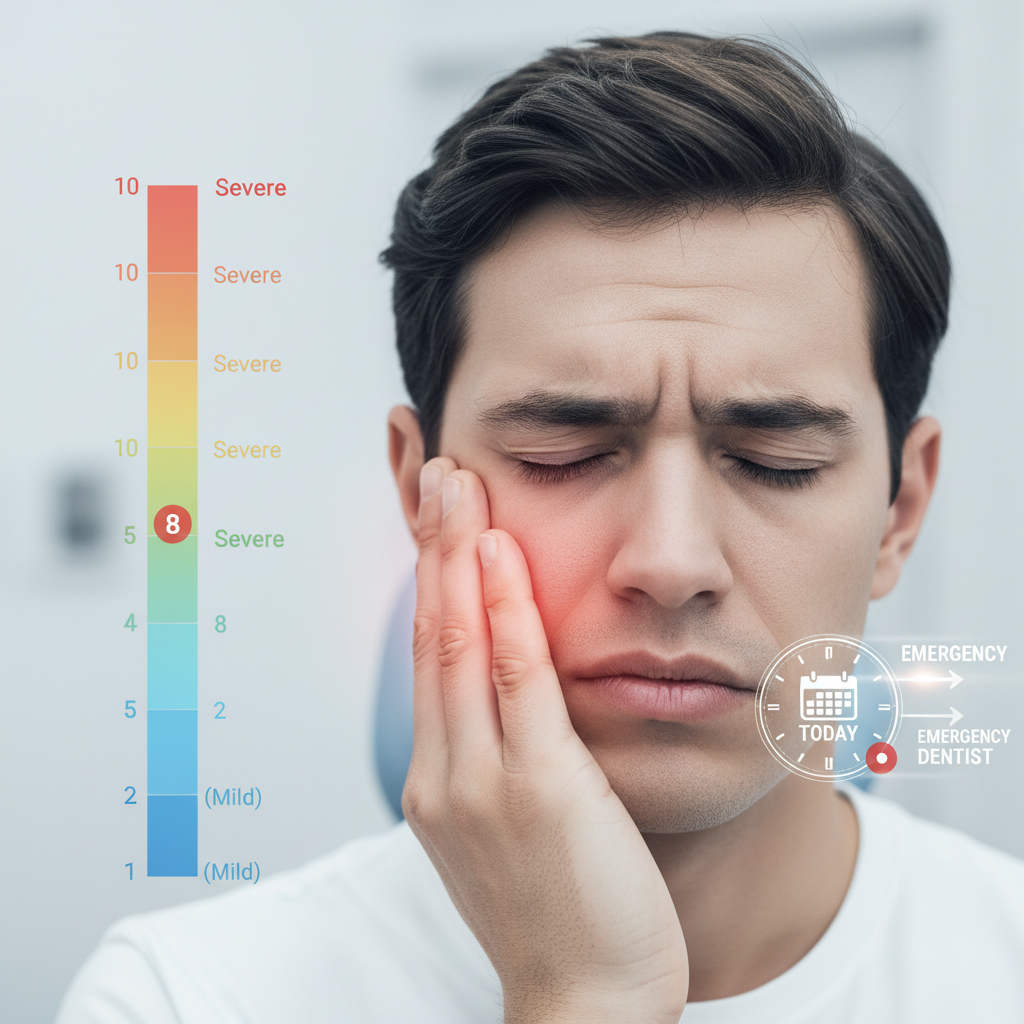
Tooth pain is your body’s way of saying something is wrong. When you are wondering how serious tooth pain is and whether to act fast, the tricky part is knowing if it is a true dental emergency or something that can safely wait a day or two.
This guide walks you through what different types of tooth pain usually mean, how to spot red flags, and when you should stop watching and waiting and call for urgent care.
Why you should never ignore tooth pain
Tooth pain almost always signals an underlying problem with your teeth, gums, or jaw. Even if it seems mild, it is rarely “nothing.”
According to the Cleveland Clinic, severe toothaches caused by cavities, infections, or other dental conditions do not improve on their own and need professional treatment to keep symptoms from getting worse [1]. Penn Dental Medicine notes that tooth pain often points to issues such as decay, abscess, infection, or gum disease and should never be ignored because these problems can progress and become harder to treat over time [2].
If you delay care, you are not only risking more pain. Untreated infections in your mouth can spread and have been linked to serious health problems, including cardiovascular disease, diabetes complications, respiratory infections, and pregnancy complications [2].
So even when tooth pain feels “tolerable,” your mindset should be:
Tooth pain is a warning light, not background noise. You may not always need same day care, but you should never simply ignore it.
Common causes of tooth pain and what they mean
Understanding what might be causing your tooth pain helps you judge how serious it is and how quickly to act.
Tooth decay and cavities
Tooth decay is the most common cause of toothaches in both children and adults. Bacteria in your mouth produce acids that eat away at the enamel and create cavities. This often leads to pain when you eat something sweet, very cold, or very hot [3].
As decay progresses and reaches deeper layers of the tooth, including the nerve, pain usually becomes more intense, more frequent, and harder to ignore. The University of Utah School of Dentistry explains that once enamel is broken down and inner nerves are exposed, you can develop severe sensitivity and pain. If you still do not treat it, infection and abscess can follow [4].
Cavities are rarely a “wait and see” situation. They may not always be emergencies, but they always need a dentist’s attention.
Gum disease and receding gums
Inflamed or infected gums can cause soreness, throbbing, or sharp pain, especially when brushing or chewing. Receding gums expose sensitive root surfaces that react strongly to hot, cold, or sweet foods. If gingivitis is left untreated, it can advance to periodontitis, which can damage the bone that supports your teeth [4].
Gum pain that is mild may not need same day treatment, but it does require a timely dental visit to prevent long-term damage. Gum infection with heavy bleeding, pus, or swelling, however, can cross the line into emergency territory, which ties into topics like when bleeding gums are serious and when gum swelling is an emergency.
Tooth infection and abscess
An abscess is a pocket of pus caused by a bacterial infection. It can form at the tip of the tooth root or in the gums. Symptoms often include severe, throbbing pain, swelling, a bad taste in your mouth, and sometimes fever.
Dental professionals in Edmonton explain that an untreated continuous or severe toothache may indicate a tooth root infection, called a periapical abscess, with pus collecting at the roots and causing pain and swelling in the tooth and supporting bone [5].
An abscessed tooth is serious and requires prompt care, such as draining the abscess or root canal therapy, to prevent potentially life-threatening complications [6]. If left untreated, bacteria can enter your bloodstream and spread to other parts of your body, leading to sepsis or other dangerous infections [5].
Abscess and severe infection clearly fall under dental problems that cannot wait.
Dental trauma or cracked teeth
A crack, chip, or fracture in a tooth can expose inner layers, irritate the nerve, and create sharp pain when you bite down or when the tooth hits temperature changes. Tooth trauma may hurt immediately, or the pain may show up days or even years later [4].
A small chip that does not hurt is often non urgent, which you can read more about in is a chipped tooth an emergency. By contrast, a cracked tooth with pain, movement, or obvious damage can be an emergency, covered in topics like is a cracked tooth a dental emergency and tooth damage emergency vs minor.
Teeth grinding and jaw clenching
Grinding or clenching, especially at night, can cause dull tooth pain, jaw soreness, headaches, and muscle tenderness. These symptoms are often worse when you first wake up. The University of Utah notes that teeth grinding from stress or anxiety is a common cause of dental pain [4].
Grinding-related tooth pain is usually not an emergency, but it does require evaluation before it leads to fractures, gum recession, or significant enamel wear.
Wisdom teeth problems
If you are between about 18 and 25, pain in the back of your mouth may be related to erupting wisdom teeth. Swollen gums, repeated infections, or pain that spreads to your jaw and ear are common. University of Utah Health notes that painful or poorly positioned wisdom teeth can affect surrounding structures and may need removal to prevent ongoing problems [4].
Wisdom tooth pain that is mild can usually wait for a scheduled visit. However, if you notice significant swelling, fever, or difficulty opening your mouth, that may need quicker attention.
When tooth pain is likely not an emergency
Not every toothache means you need to rush to an emergency dentist today. Some types of pain are uncomfortable but usually safe to address within a few days.
You are probably dealing with a non urgent issue if:
- The pain is mild to moderate, not severe or throbbing.
- It comes and goes, and is triggered by something specific, such as cold drinks or sweets.
- You can eat, sleep, and go about your day, even if it is annoying.
- There is no facial swelling, fever, or feeling of being generally unwell.
- You do not see pus, major bleeding, or a large obvious injury.
For example, temporary tooth pain from minor gum irritation usually resolves within a day or two without treatment [1]. Early tooth decay may cause sensitivity or brief zaps of pain but is not always an immediate emergency if you can schedule an appointment soon.
Even when pain is non urgent, you should still arrange a dental exam so the problem does not progress into something more serious. If you are weighing different symptoms and timing, you might find it helpful to read more about urgent vs non urgent dental issues and how long can you wait with tooth pain.
Clear warning signs your tooth pain is serious
So how serious is tooth pain in your specific situation And when should you act fast Several red flag signs point to a true dental emergency.
Severe, worsening, or constant pain
Any intense, throbbing toothache that does not go away, wakes you at night, or keeps getting worse over time is a major warning sign. Mountain Top Periodontics notes that no amount of at home remedies will resolve this kind of pain and that it often reflects deeper problems that require immediate treatment [7].
New York endodontists also caution that tooth pain that persists for more than a day or two, or increases over time, likely signals a serious underlying issue and should not be ignored [8].
Swelling in your face, jaw, or gums
Visible swelling around a tooth, in your gums, or on your face usually means infection or heavy inflammation. If the swollen area feels warm, red, or very tender, it may indicate an abscess that can escalate quickly [7].
Facial swelling combined with tooth pain is one of the clearest dental emergency warning signs.
Fever, chills, or feeling very unwell
Tooth pain plus fever is a sign that infection is affecting your whole body, not just one tooth. Both the Cleveland Clinic and Mountain Top Periodontics say that unbearable tooth pain with fever and chills should be treated as a dental emergency because infections that start in the mouth can spread to your brain or bloodstream and become life threatening [1].
Toothaches with swollen lymph nodes, pus, facial swelling, or a feeling of being very sick may indicate deep infections or even, in rare cases, oral cancer, and require immediate evaluation [8].
Trouble breathing or swallowing
If tooth or jaw pain is accompanied by difficulty breathing or swallowing, seek emergency medical care immediately. Mayo Clinic warns that these are signs of a potentially life threatening infection or swelling that should never be ignored [3].
This is beyond a routine dental visit and may require emergency room care first, then follow up dental treatment.
Pus, bad taste, or foul odor
Pus in your gums, a persistent bad taste in your mouth, or strong bad breath that is new to you can point to abscess or advanced infection. Mountain Top Periodontics highlights that bleeding gums with a foul taste or odor may signal a serious gum infection that becomes harder to treat as time passes [7].
Pain when biting combined with other symptoms
Pain triggered or worsened by biting pressure can suggest a cavity, crack, or infection near the tooth root that is irritating your nerve endings [8]. On its own, this might be urgent but not always emergent.
However, if biting pain is combined with swelling, fever, pus, or loose teeth, you are likely in emergency territory. You can learn more about evaluating injuries like this in how to assess dental injury and how to identify dental trauma severity.
At home relief while you arrange care
Even if your tooth pain is not a life or death emergency, you still deserve relief while you wait for your appointment.
Over the counter pain medications such as ibuprofen or acetaminophen can help reduce discomfort temporarily. Cleveland Clinic and other experts stress, however, that these medications only mask symptoms and do not fix the underlying cause. You still need a dentist to treat the source of the problem [1].
A few additional tips while you arrange care:
- Rinse gently with warm salt water to calm irritated tissues and help clear debris.
- Avoid chewing on the painful side of your mouth.
- Stay away from very hot, cold, or sugary foods and drinks if they trigger your pain.
- Use a cold pack on the cheek for 10 to 15 minutes at a time if there is swelling.
Mayo Clinic cautions against using products that contain benzocaine for toothache relief because benzocaine has been linked to methemoglobinemia, a rare yet serious condition that reduces your blood’s ability to carry oxygen [3].
If you are in significant pain, do not wait for at home strategies to work miracles. They are only bridges to professional treatment, not substitutes.
How long you can safely wait with tooth pain
You might be wondering exactly how much time is “too long” when you have a toothache. While perfect timing is different for every situation, there are useful guidelines.
Dental professionals agree that tooth pain lasting more than 24 hours, especially if it is constant or worsening, should be evaluated promptly [8]. Even bearable toothaches should be checked soon because they typically signal a problem that will not resolve on its own [5].
If you are unsure whether to call today or in a week, resources like how long can you wait with tooth pain and when dental pain becomes urgent can help you weigh your symptoms.
As a simple rule of thumb:
- If the pain is mild and improving, you can usually wait for the next available non urgent appointment.
- If the pain is moderate and stable, try to see a dentist within a few days.
- If the pain is severe, spreading, or accompanied by any red flag symptoms, contact an emergency dentist or medical provider now.
Deciding if you need urgent or emergency care
When you are in the middle of a toothache, deciding where to go and how quickly can be stressful. It helps to break your options into three levels of urgency.
Level 1: True medical emergency
Seek emergency room or urgent medical care immediately if:
- You have trouble breathing or swallowing.
- You have rapidly spreading swelling in your face, neck, or around your eye.
- You feel very ill, confused, or faint, along with dental pain.
These are medical emergencies first. Once stabilized, you will need dental treatment as well.
Level 2: Dental emergency, same day
You should contact an emergency dentist or your regular dentist’s after hours line for same day care if you have:
- Severe, throbbing tooth pain that is constant or worsening.
- Facial, gum, or jaw swelling.
- Fever, chills, or feeling very unwell along with tooth pain.
- Pus, abscess, or a bad taste in your mouth.
- A tooth that is knocked out, very loose, or significantly cracked with pain.
- Heavy, uncontrolled bleeding from your mouth.
These are classic examples of what dental issues need immediate care and match most lists of what is considered a dental emergency and what counts as dental emergency symptoms.
Level 3: Urgent, but not emergency
Book a dental appointment soon, ideally within a few days, if you have:
- Tooth pain that is mild to moderate but has lasted more than a day.
- Sensitivity to hot, cold, or sweet foods that is new or getting worse.
- A chipped tooth without severe pain.
- Dull jaw or tooth pain from grinding or clenching.
- Mild gum pain or minor bleeding when you brush.
Situations like this fit into the “urgent but not emergency” category and are discussed in more depth in how to decide if you need urgent dental care and when to go to emergency dentist.
If you are on the fence, calling a dental office and explaining your symptoms is always a good step. Many practices can advise you over the phone, help you assess severity, and fit you in based on your specific situation.
Why acting fast usually saves teeth, money, and stress
It is tempting to wait and see if tooth pain goes away. The problem is that most serious dental issues move in one direction: they get worse with time.
Dentists in Edmonton emphasize that delaying treatment of tooth pain, abscess, or gum infection can lead to serious oral and overall health consequences. Seeking care promptly protects you from further damage and systemic health issues [5]. Penn Dental Medicine also points out that regular checkups and responding quickly to tooth pain can prevent emergencies and reduce your overall treatment costs, since preventive and early care is usually far less expensive than emergency procedures [2].
On a personal level, acting earlier usually means:
- Less intense pain overall.
- More options to save your tooth rather than extract it.
- Simpler, more predictable treatment.
- Fewer days missed from work or school.
If you want a simple next step, look over your symptoms and compare them with resources like how to know if tooth pain is emergency, signs you need emergency dental care, and dental problems that cannot wait. Then, reach out to a dentist with that information in hand.
You do not need to diagnose yourself perfectly. You just need to listen to what your body, and your tooth, is trying to tell you and let a professional take it from there.