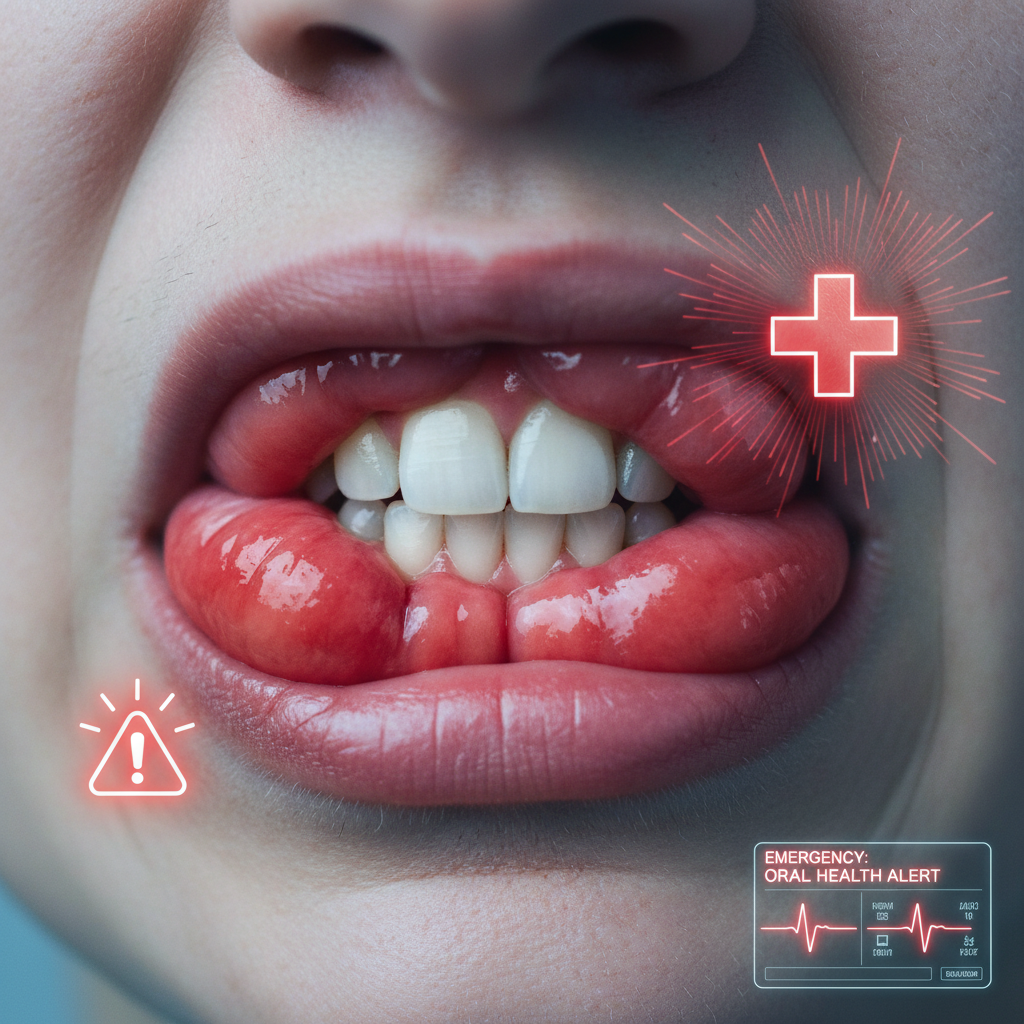
A little gum puffiness after you floss for the first time in a while probably is not a dental emergency. Sudden balloon‑like swelling that makes it hard to swallow or sleep absolutely can be. Knowing exactly when gum swelling is an emergency helps you avoid two stressful extremes, ignoring a serious infection or rushing to urgent care for something that can safely wait.
In this guide, you will learn how to tell the difference, what to watch for at home, and when to pick up the phone for same‑day help. You will also find simple steps you can take right away while you arrange care.
Why gum swelling matters more than you think
Gum swelling is your body’s way of saying something is wrong. Sometimes that “something” is mild, like irritated gums after a few days of skipping floss. Other times it is a sign of an infection that can spread to the bone, jaw, or even into your bloodstream if you delay treatment.
The most common cause of swollen gums is gum disease, also called gingivitis, which makes gums red, puffy, and prone to bleeding when you brush. Healthy gums should be firm, pale pink, and fit tightly around your teeth, so persistent swelling is not something to overlook [1].
Your main job is not to diagnose yourself, it is to recognize warning signs and decide how quickly you need help. That is the heart of sorting out urgent vs non urgent dental issues.
Common non‑emergency causes of swollen gums
Some gum swelling can be monitored for a short time, as long as it is mild and you are not in significant pain. You still need a dentist, just not necessarily the same hour.
Mild gum disease and irritation
Gingivitis is early gum disease. It often causes:
- Slightly puffy or red gums
- Bleeding when you brush or floss
- Mild tenderness but usually not severe pain
If you notice these changes, you should schedule a dental visit soon. Without care, gingivitis can progress to periodontitis, a more serious form of gum disease that can damage bone and lead to tooth loss [1]. It is not usually a middle of the night emergency, but it is not something to ignore either.
Gums can also swell a bit after:
- Using a new toothbrush that is too hard
- Flossing more aggressively than usual
- Eating very crunchy or sharp foods that nick the gumline
If the swelling is mild, you do not have a fever, and your symptoms improve over the next day or two with gentle brushing and saltwater rinses, you are likely in the non‑urgent category.
Dental appliances and minor trauma
Ill‑fitting dental appliances can irritate your gums. For example, braces, retainers, dentures, or night guards that rub your gums or trap food can cause localized swelling and soreness. Lodged debris, like a popcorn hull stuck under the gumline, can also inflame the area if not removed [2].
These issues still deserve attention from your dentist, especially if they do not settle down quickly. However, if you have no severe pain, no spreading swelling, and no other illness symptoms, they generally fall in the “call for an appointment soon” group instead of the “go now” group.
Clear signs your gum swelling is an emergency
Some gum symptoms are red‑flag signals that you should not wait. They suggest infection, abscess, or another serious problem that needs fast treatment.
You should treat gum swelling as an emergency and seek same‑day dental or medical care if you notice any of the following.
1. Swelling spreading to your face, jaw, or neck
If the puffiness does not stay in just one small gum area, but instead you see or feel swelling in your cheek, jawline, or under your chin, you may be dealing with a deep infection. This kind of infection can spread quickly and in rare cases become life‑threatening.
Dentists and medical centers agree that gum swelling is an emergency when it extends into the face or jaw, especially if you also feel ill or have a fever [3].
2. Trouble breathing, swallowing, or opening your mouth
If your swollen gums or face make it hard for you to:
- Breathe comfortably
- Swallow food or liquids
- Open your mouth fully
you need emergency care immediately. These are warning signs that swelling is affecting your airway, which is a medical emergency even if you do not feel a lot of pain yet [4].
In this situation, do not wait for a regular dental appointment. Go to the nearest emergency room or call emergency services.
3. Fever, feeling very unwell, or chills
Fever combined with gum swelling, especially if you also feel weak, nauseated, or chilled, is a major sign of infection. An oral infection can sometimes move beyond the tooth and gums and affect deeper tissues or your overall health.
Multiple sources note that severe or persistent gum swelling accompanied by signs of infection, including fever, can be an emergency that requires prompt dental or medical attention [5].
4. Throbbing pain, pressure, or pus
A constant, throbbing pain or strong pressure in a swollen gum area often points to a dental abscess, which is a pocket of pus caused by severe infection. You might also notice:
- A bad taste in your mouth
- Pus draining from the gum
- A pimple‑like bump on the gum near a tooth
This type of swelling is not something to watch at home. A dental abscess can spread into bone and surrounding tissues. Dentists recommend urgent treatment to drain the infection, relieve pressure, and prevent more serious complications [6].
If you are also wondering how this fits with tooth pain in general, you can read more in how to know if tooth pain is emergency and how serious is tooth pain.
5. Sudden gum swelling that appears out of nowhere
Gums can change slowly over weeks if you have lingering plaque buildup. You might notice them look a bit puffier over time. Sudden gum swelling that appears within hours or overnight is different.
Experts point out that sudden gum swelling can be an emergency even if you do not feel much pain at first, because swelling itself is always a sign of an underlying problem that could worsen without treatment [7]. A fast change deserves fast evaluation.
6. Swollen gums lasting more than a few days
Even if your swelling seems mild, you should not let it go for weeks. Gum swelling that:
- Lasts more than a few days without clear improvement
- Lasts longer than two weeks
- Keeps getting worse instead of better
should prompt you to contact a dentist for an exam and possibly X‑rays [8]. Long‑lasting swelling often points to gum disease or another issue that will not clear on its own.
While this kind of issue may not send you to the ER at 2 a.m., it still qualifies as urgent from a dental health perspective. It is similar to other dental problems that cannot wait.
7. Bleeding gums plus swelling that does not improve
Gums that are swollen, bright or dark red, tender, and bleed easily when you brush or floss are classic gingivitis signs [1]. If you see these changes and they do not improve with regular brushing and flossing over a week or so, you should schedule a visit soon.
In some rare cases, a severe form of gingivitis, sometimes called trench mouth or necrotizing ulcerative gingivitis, can cause painful, infected, bleeding gums and ulcers. This condition is considered an emergency and requires prompt care [1].
For a deeper dive into bleeding issues specifically, see when bleeding gums are serious.
8. Gum swelling with known medical conditions
Certain health conditions can make gum swelling more serious. These include:
- Diabetes
- Immune system problems, such as HIV
- Vitamin B or C deficiencies
- Fungal or viral infections in the mouth
Because these issues can affect healing and increase infection risk, gum swelling in this context may require urgent medical attention, even if it seems minor at first [2].
If you have one of these conditions and notice new gum swelling, it is wise to call your dentist or doctor promptly and ask how quickly you should be seen.
If you are unsure whether your situation is urgent, it is safer to call and ask than to wait in pain or risk complications.
Possible serious causes behind emergency gum swelling
Knowing what might be going on under the surface can help you understand why quick action matters.
Dental abscess
A dental abscess is a collection of pus caused by a bacterial infection. It can develop:
- At the tip of a tooth’s root
- In the gum next to a tooth
- In deeper supporting tissues
Symptoms include throbbing pain, swelling, warmth, and sometimes a visible bump. Abscesses can start off as mild discomfort but rapidly worsen. Prompt treatment, usually involving draining the abscess and sometimes root canal therapy or extraction, is essential to prevent spread to bone or other areas [9].
Advanced gum disease
Untreated gingivitis can become periodontitis. In this stage, the infection has reached deeper tissues and bone. You might notice:
- Receding gums
- Loose teeth
- Persistent bad breath
- Deep pockets between teeth and gums
While advanced gum disease often develops slowly, flare‑ups with intense swelling or pain can occur and may need quick care. Over time, periodontitis is a leading cause of adult tooth loss [1].
Oral infections and systemic disease
Various infections and conditions can involve the gums, such as:
- Viral infections that cause mouth sores and swelling
- Fungal infections like oral thrush
- Nutritional deficiencies that impact tissue health
Since these issues affect more than just your teeth, they can require both dental and medical treatment [2].
In rare cases, oral cancer can present with gum swelling or a persistent lump that does not heal. That is another reason any lasting gum changes should be checked, even if they are not very painful [7].
At‑home steps while you seek care
When you suspect your gum swelling might be an emergency, your top priority is arranging professional help. While you wait for an appointment or head to urgent care, you can take a few simple steps to stay more comfortable and avoid making things worse.
Do
- Rinse gently with warm salt water to help reduce bacteria and soothe irritated tissues.
- Keep brushing softly twice a day with a soft‑bristled toothbrush, unless your dentist tells you otherwise.
- Stick to cool or lukewarm foods and drinks.
- Use a cold compress on the outside of your cheek for short periods to ease swelling.
Avoid
- Poking, squeezing, or cutting the swollen area, which can spread infection or increase irritation [10].
- Applying aspirin directly to your gums, which can burn the tissue.
- Smoking or vaping, which slows healing.
- Ignoring worsening symptoms like fever, increasing pain, or spreading swelling.
Over‑the‑counter pain relievers can be helpful short term, but they are not a solution by themselves. They mask pain without addressing the cause.
How to decide what to do today
When you are in pain, it can be hard to think clearly about next steps. Use this simple flow to guide your decision.
- Ask yourself: “Do I have any emergency red flags?”
These include:
-
Trouble breathing or swallowing
-
Swelling in your face, jaw, or neck
-
Fever or feeling very sick
-
Sudden, severe pain or obvious pus
-
Difficulty opening your mouth
If you answer yes to any of these, seek emergency dental or medical care right away. Learn more in what is considered a dental emergency and dental emergency warning signs.
- If no red flags, ask: “How long has this swelling lasted, and is it getting better or worse?”
- If it is getting worse over hours or days, or has lasted more than a few days without improvement, call your dentist for a same‑day or next‑day visit.
- If it is mild, improving, and you have no other concerning symptoms, you can monitor briefly but still schedule an appointment soon.
- Consider your overall dental and health history.
- If you already have gum disease, diabetes, or immune issues, lean toward being more cautious. Call your dentist sooner rather than later.
- If you are dealing with tooth pain along with swelling, use resources like when dental pain becomes urgent and how long can you wait with tooth pain to help guide your timing.
If you are stuck between calling now or waiting, it is usually better to call. Dental teams are used to helping you decide how to decide if you need urgent dental care and can tell you if your description sounds like an emergency.
How your dentist will evaluate swollen gums
Understanding what happens at the visit can make it easier to take that step.
Your dentist will usually:
- Ask when the swelling started and how it has changed
- Review your overall health conditions and medications
- Examine your gums, teeth, and surrounding tissues
- Gently test teeth for tenderness or looseness
- Possibly take X‑rays to look for abscesses, bone loss, or hidden problems [9]
Depending on what they find, treatment might include:
- Deep cleaning to remove plaque and tartar under the gumline
- Draining an abscess and prescribing antibiotics
- Root canal therapy if the infection is inside the tooth
- Adjusting or replacing dental appliances that irritate your gums
- Referring you to a periodontist, a gum specialist, if needed [1]
This is also a good time to ask about other potential emergencies, such as is a cracked tooth a dental emergency or is a chipped tooth an emergency, so you feel prepared in the future.
Preventing future gum emergencies
You cannot prevent every dental emergency, but you can lower your risk of sudden gum swelling with a few consistent habits.
Focus on:
- Brushing twice a day with a soft toothbrush, replacing it every three to four months
- Flossing gently once a day to remove plaque between teeth
- Seeing your dentist regularly for cleanings and exams
- Letting your dentist know about any medical conditions or medications that may affect your gums
- Watching for early signs like occasional bleeding or mild puffiness so you can act before things escalate
Also, if you ever experience other kinds of dental trauma or pain, being familiar with topics like what dental issues need immediate care, what counts as dental emergency symptoms, and when to go to emergency dentist can help you respond faster and with more confidence.
Key takeaways so you know when to act
When you look at all the details, the rules about when gum swelling is an emergency become much clearer:
- Mild, short‑lived swelling without severe pain or other symptoms usually is not a middle‑of‑the‑night emergency, but it still deserves a dental visit.
- Swelling that spreads, comes with fever, causes trouble breathing or swallowing, or involves throbbing pain or pus is an emergency and needs same‑day care.
- Gum swelling that lingers for more than a few days or worsens over time should never be ignored, even if it is not very painful.
- If you have health conditions that affect healing or immunity, treat any gum changes as more urgent.
When in doubt, reach out. A quick call can reassure you if it is safe to wait a short time or confirm that you should be seen right away. Either way, you will not be guessing alone, and you will be taking a smart step to protect your teeth, your gums, and your overall health.
References
- (Mayo Clinic)
- (Cleveland Clinic)
- (Clear Creek Family Dental, The Reno Dentist)
- (The Reno Dentist)
- (Cleveland Clinic, The Reno Dentist)
- (Clear Creek Family Dental, Compassionate Endodontists New York/NYC)
- (Compassionate Endodontists New York/NYC)
- (Cleveland Clinic, Carolina Dental Arts)
- (Carolina Dental Arts)
- (Clear Creek Family Dental)