Knowing what is considered a dental emergency can save you from severe pain, costly treatments, and even life-threatening infections. When something feels wrong in your mouth, it is not always easy to tell if you should head to an emergency dentist now or schedule a regular appointment later. This guide walks you through simple signs to watch so you can confidently decide when to act.
What is considered a true dental emergency
In general, a dental emergency is any problem in your mouth that needs immediate attention to stop severe pain, control serious bleeding, or prevent infection from spreading.
The Cleveland Clinic defines dental emergencies as issues that require urgent care, such as bleeding that will not stop, pain that does not improve with medication, or broken facial bones that may affect your teeth or jaw [1]. The American Dental Association and other clinical guidelines also emphasize that life-threatening infections and injuries that threaten your teeth or airway fall into this category [2].
If you are unsure how this applies to your situation, you may find it helpful to read more about urgent vs non urgent dental issues and how to decide if you need urgent dental care.
In practical terms, you should treat a problem as a dental emergency if you notice any of the warning signs below.
Red flag symptoms you should never ignore
Certain symptoms are clear signals that you should seek emergency dental or medical care as soon as possible. Even if you feel tempted to wait and see, delaying can allow problems to spread or become harder to treat.
Severe or sudden tooth pain
Teeth should not hurt without a good reason. A toothache that appears out of nowhere, becomes unbearable, or keeps you from sleeping is often a sign of a serious problem.
Dentists and medical sources explain that severe tooth pain can indicate a deep cavity, cracked tooth, gum disease, or an abscess, all of which need prompt attention to avoid worse complications [3]. If pain does not respond to over the counter medication or returns quickly, you should call an emergency dentist.
Before you are seen, the Cleveland Clinic suggests rinsing gently with warm water, flossing to remove trapped food, using a cold compress if there is swelling, and taking pain relievers such as acetaminophen, ibuprofen, or naproxen, while avoiding placing aspirin directly on your gums [1].
If you are trying to figure out how to know if tooth pain is emergency or how serious is tooth pain, remember this simple rule: if it is intense, constant, or keeps you from everyday activities, treat it as urgent.
Bleeding that will not stop
Minor gum bleeding when you floss is common, but bleeding that will not slow down is not normal.
According to emergency guidelines, bleeding in your mouth that continues for more than 10 minutes despite firm pressure should be treated as an emergency because it can signal trauma, severe gum disease, or a clotting problem [4].
Bleeding gums that are sore or swollen over time are also a red flag. Healthy gums do not bleed or hurt persistently, and ongoing symptoms often point to gum disease that needs prompt care [5]. If you are wondering when bleeding gums are serious, use persistence and volume as your guide. Heavy, unexplained, or long lasting bleeding deserves urgent attention.
Swelling in your face, jaw, or gums
Swelling is your body’s way of signaling inflammation or infection. Swelling in your jaw, cheeks, or gums should never be ignored, especially if it develops quickly.
Emergency dental providers warn that facial or jaw swelling, particularly when combined with difficulty swallowing or breathing, is a sign of a serious dental infection that may be spreading and could become life threatening without urgent care [6]. Unexplained swelling in your mouth or jaw can also suggest infection or lymph node involvement and should be checked right away [7].
Dental abscesses, which are pockets of pus caused by infection around the root of a tooth or in the gums, are particularly concerning. These infections can spread beyond your mouth to your jaw or other areas of your body if they are not treated quickly [1]. If you are unsure when gum swelling is an emergency, it is safest to call an emergency dentist whenever swelling appears with pain, fever, or difficulty swallowing.
Signs of infection or abscess
You should suspect a dental abscess or serious infection if you notice:
- Throbbing, constant pain that may radiate to your ear, jaw, or neck
- A pimple like bump on your gums that may leak fluid
- Bad taste or odor in your mouth
- Fever, fatigue, or feeling generally unwell
Multiple dental and medical sources describe an abscessed tooth as a critical emergency, since the infection can spread and become life threatening if not treated right away [8].
While warm salt water rinses can help ease pain and encourage some drainage in the short term, they are not a cure. You still need urgent dental care for proper treatment and antibiotics [1].
If you ever notice severe swelling under your tongue or around your neck, trouble breathing, or difficulty opening your mouth, go to an emergency room immediately. These can be signs of a deep space infection such as Ludwig angina, which can quickly affect your airway [2].
Dental injuries that always need urgent care
Not all broken or damaged teeth are equal. Some can wait for a normal appointment, while others require same day treatment to save the tooth and prevent infection. Understanding the difference helps you make faster decisions when accidents happen.
Knocked out (avulsed) tooth
A permanent tooth that has been completely knocked out is one of the clearest examples of what is considered a dental emergency. You have a very short window to save the tooth.
Emergency guidelines recommend that you:
- Pick up the tooth by the crown, not the root.
- Gently rinse it with water if it is dirty, without scrubbing or removing any attached tissue.
- Try to place it back into the socket, facing the correct way, and hold it in place.
- If you cannot reinsert it, keep it moist in milk or a special cell preserving solution, never in plain water.
- See a dentist within 30 to 60 minutes for the best chance of successful replantation [9].
Because timing is so important, a knocked out tooth is considered an urgent same day emergency, and you should not wait to seek care. If you are trying to understand how to identify dental trauma severity, tooth loss is always at the top of the list.
Severely cracked or broken tooth
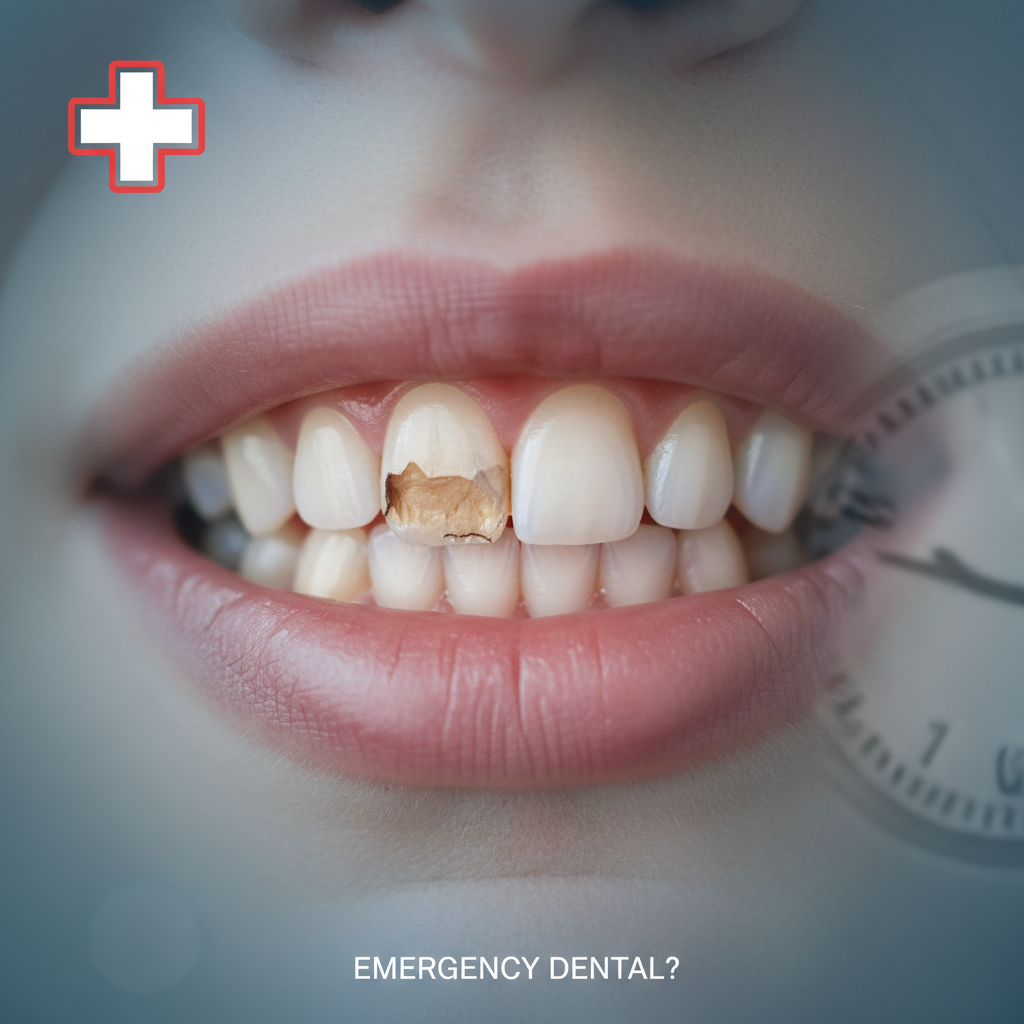
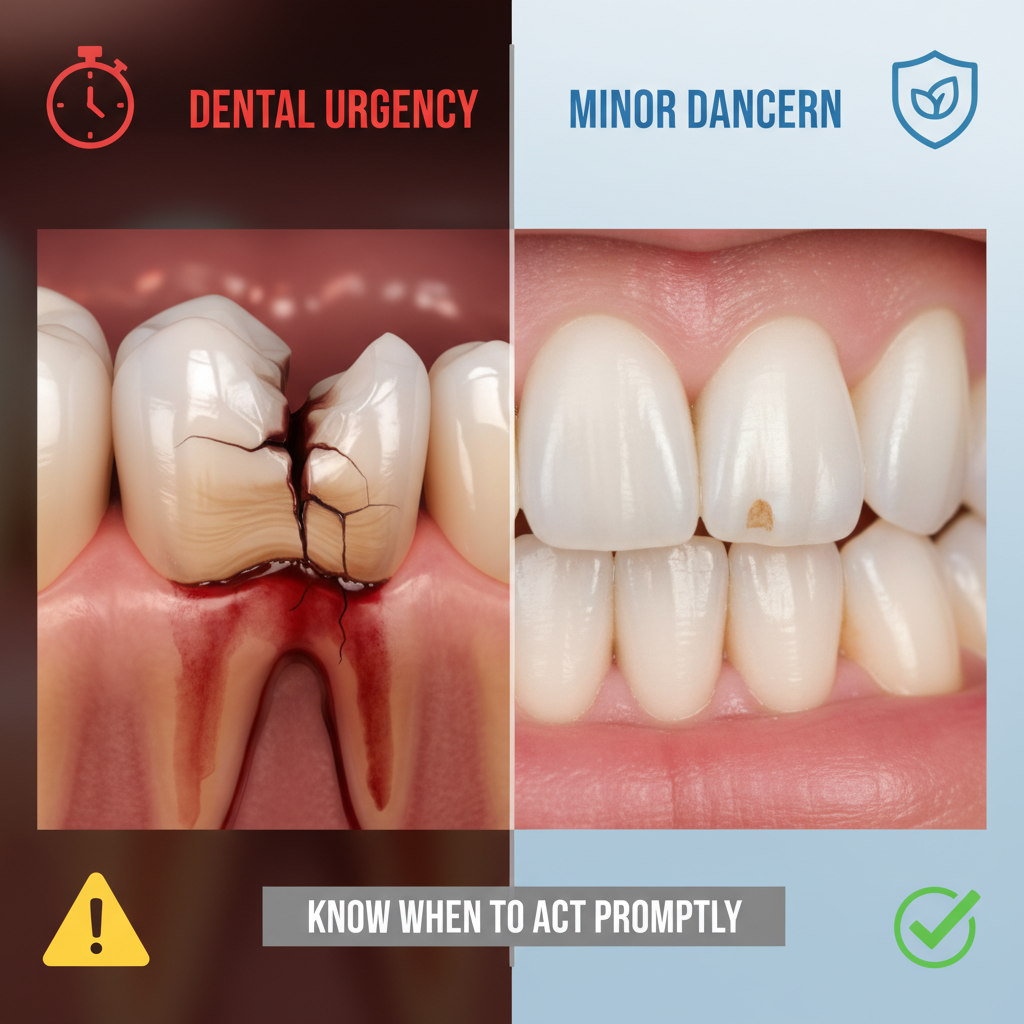
Cracks and breaks in teeth range from tiny chips to deep fractures that expose the inner tissue. The more layers that are affected, the more urgent the situation.
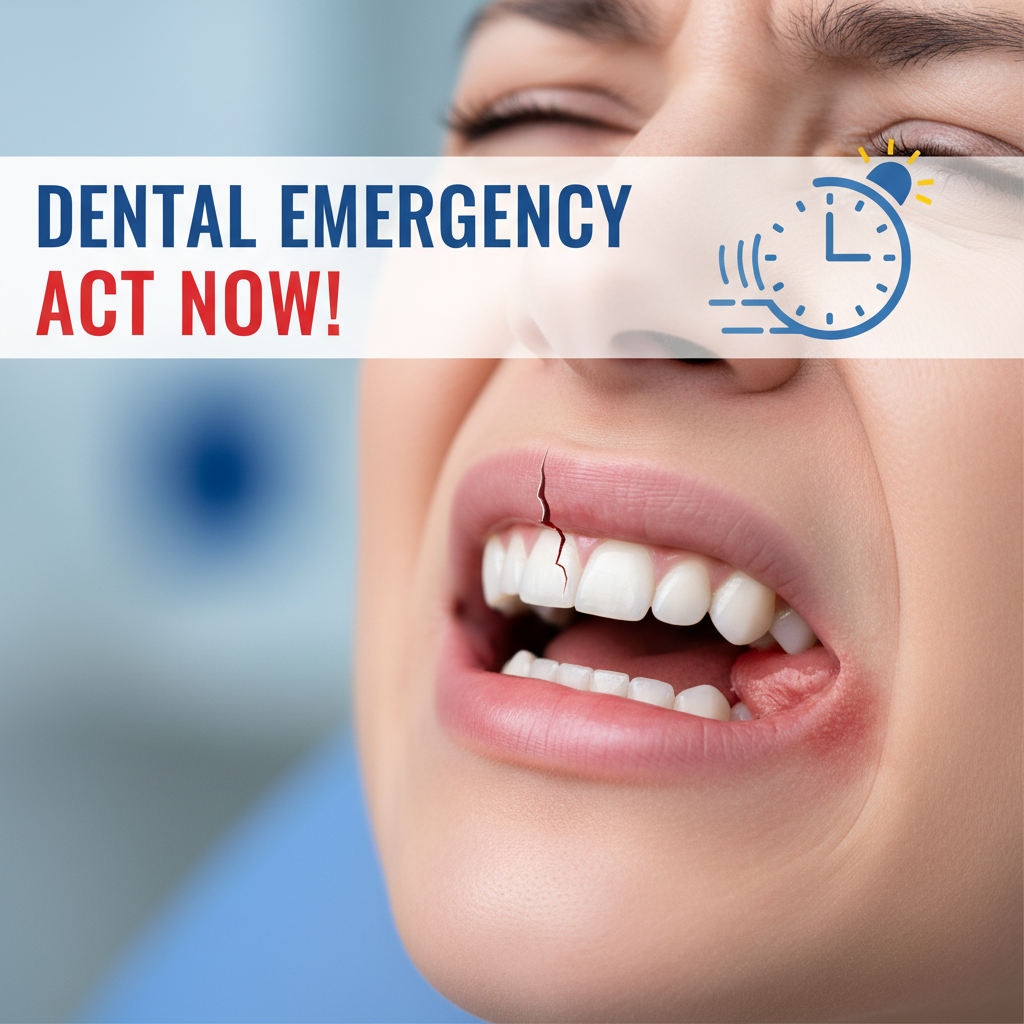
Cracked or broken teeth with exposed inner layers are classified as dental emergencies, because they greatly increase infection risk and can quickly worsen without treatment [10]. Traumatic dental injuries also include root fractures and tooth displacement, which can present with pain, discoloration, or increased mobility and require prompt evaluation [2].
If you are uncertain whether your situation counts as urgent, resources like is a cracked tooth a dental emergency and tooth damage emergency vs minor can help you compare your symptoms.
In general, you should seek emergency dental care for a cracked or broken tooth if:
- You are in significant pain.
- You see a large piece missing.
- The break extends to the gumline or below.
- The tooth feels loose or moves when you touch it.
Smaller chips without pain are less urgent, but they still deserve a call to your dentist. For more guidance, you can review is a chipped tooth an emergency.
Soft tissue injuries in your mouth
Cuts or lacerations on your tongue, cheeks, lips, or gums can also be emergencies, especially if they are deep or bleeding heavily.
Severe dental pain, lacerations to gums, cheeks, or tongue, and loose teeth caused by trauma are among the urgent conditions that need immediate or same day care to prevent more severe damage or complex treatments later on [11].
If bleeding from a cut inside your mouth does not slow after 10 minutes of steady pressure, or if the injury involves a large tear, you should seek emergency dental or medical attention. When in doubt, it is safer to have a professional assess the injury than to assume it will heal on its own.
Post treatment problems that count as emergencies
Some emergencies occur after you have already had dental work, especially extractions or surgery. Knowing what is normal and what is not can keep you safe while you heal.
Clinical guidelines describe two main post procedural emergencies [2]:
- Post extraction bleeding that continues for 8 to 12 hours or longer. This is more likely if you have a bleeding disorder or take blood thinning medications, but it can happen to anyone. Persistent bleeding at this level is an emergency and needs professional care.
- Alveolar osteitis, commonly called dry socket. This happens when the blood clot at the extraction site is lost, leaving the bone exposed. It usually appears 1 to 5 days after a tooth removal and causes intense pain that can radiate to your ear or temple. While not an infection, it is a painful complication that should be treated quickly by your dentist.
If you experience severe pain, heavy or prolonged bleeding, or a foul smell coming from an extraction site, call your dentist immediately or seek emergency care.
Urgent vs non urgent: what can wait
Not every dental problem needs attention in the middle of the night or on a weekend. Some issues can safely wait for a regular appointment within a few days, as long as your symptoms are stable.
Dentists often use the term “urgent dental care” for conditions that need same day or next day treatment to relieve pain or prevent worsening, such as severe toothaches, broken teeth, loose fillings, gum abscesses, and mouth or jaw injuries [12]. Delaying treatment in these situations can increase pain and lead to more complex and expensive procedures later on [13].
Non urgent dental problems still require care, but they typically do not demand after hours or same day emergency visits. Examples include:
- A lost porcelain crown without significant pain
- A filling that falls out, but the tooth is not hurting badly
- Small chips in teeth that do not expose the inner layers
- Mild, occasional sensitivity to hot or cold
These issues should be booked during normal business hours. They become urgent only if you start to experience severe pain, swelling, heavy bleeding, or signs of infection.
If you are still uncertain, you can read more about what dental issues need immediate care or dental problems that cannot wait. When you are on the fence, a quick phone call to your dentist is often the fastest way to get clarity.
Simple rule: if your dental problem involves severe pain, heavy bleeding, major swelling, or a knocked out or badly broken tooth, you should treat it as an emergency and seek care immediately.
Simple at home steps while you seek help
While home care cannot replace professional treatment, it can help you stay more comfortable and avoid making things worse while you arrange emergency care or wait to be seen.
For many urgent problems, you can:
- Rinse gently with warm water to clear debris.
- Use floss to dislodge food caught between teeth that may worsen pain.
- Apply a cold compress to the cheek for swelling or trauma, in 10 to 15 minute intervals.
- Take over the counter pain medications as directed on the label, unless your doctor has told you not to use certain medicines.
For a knocked out tooth, remember to handle it only by the crown, keep the root moist, and seek care within one hour. For an abscess, warm salt water rinses may provide temporary relief, but you still need prompt treatment [1].
Avoid placing aspirin directly on your gums, using sharp tools to pick at teeth, or applying heat to swollen areas, as these can worsen your condition.
If you are dealing with pain and are unsure how long can you wait with tooth pain or when dental pain becomes urgent, err on the side of contacting a dentist sooner rather than later.
How to quickly assess your situation
When something goes wrong with your teeth or gums, it helps to pause and check your symptoms using a simple checklist. This can guide you on whether you need immediate help.
Ask yourself:
- Are you in severe pain that does not improve with over the counter medicine?
- Is there heavy or continuous bleeding in your mouth?
- Do you notice significant swelling in your face, jaw, or neck?
- Is a tooth knocked out, very loose, or badly broken?
- Do you have signs of infection such as fever, pus, or a foul taste?
- Did this start after a recent extraction or major procedure?
If you answer “yes” to any of these, you likely have a dental emergency that should be addressed right away. It may also be helpful to review dental emergency warning signs, what counts as dental emergency symptoms, and how to assess dental injury so you can respond more confidently in the future.
For less intense or slower developing issues such as minor sensitivity, small chips, or mild intermittent discomfort, you still need dental care, but you can usually schedule a routine visit within a few days. Just be sure to monitor your symptoms closely and reach out sooner if they worsen.
When to call, when to go in person
If you are still in doubt about what is considered a dental emergency, use both the severity of your symptoms and the timing as your guide.
- If you have severe pain, swelling that affects breathing or swallowing, heavy bleeding, a knocked out tooth, or signs of a spreading infection, go directly to an emergency dentist or emergency room.
- If your symptoms are moderate but getting worse, call your dentist immediately and ask for an urgent appointment. Many offices keep space for same day emergencies and can advise you on the next step.
- If your symptoms are mild and stable, call during regular office hours to schedule soon and ask what to watch for in the meantime.
Resources like when to go to emergency dentist, signs you need emergency dental care, and when dental pain becomes urgent can offer additional reassurance if you are trying to make a quick decision.
The most important thing is not to ignore your instincts. If something feels seriously wrong, trust that feeling and seek help. Acting promptly often means simpler treatment, less pain, and a much better outcome for your smile and your overall health.
References
- (Cleveland Clinic)
- (NCBI Bookshelf)
- (Lake Norman Dentistry, Absolute Dental)
- (Machesney Dental Studio, Cleveland Clinic)
- (Lake Norman Dentistry)
- (Machesney Dental Studio)
- (Absolute Dental)
- (Absolute Dental, Cleveland Clinic, NCBI Bookshelf)
- (Machesney Dental Studio, Cleveland Clinic, NorthPointe Dental & Implant Center, Absolute Dental)
- (Machesney Dental Studio, Lake Norman Dentistry)
- (NorthPointe Dental & Implant Center)
- (Cummings Dental)
- (Cummings Dental, NorthPointe Dental & Implant Center)