A sudden toothache is stressful, but it is not always easy to tell if it is urgent. Understanding the key signs you need emergency dental care helps you act quickly when it truly matters and avoid unnecessary panic when it does not. By the end of this guide, you will feel more confident deciding when to call an emergency dentist, when to go to the ER, and when it is usually safe to wait for a scheduled appointment.
What is considered a dental emergency?
You experience a dental emergency any time a problem in your mouth needs immediate attention to stop severe pain, control bleeding, treat or prevent infection, or save a tooth. The American Dental Association notes that emergencies include potentially life-threatening issues that require urgent treatment to stop bleeding, relieve serious pain, or manage infection, as well as problems that could quickly lead to biological or functional complications if ignored [1].
Put simply, if waiting could cause permanent damage to your teeth, gums, jaw, or overall health, it is a true emergency. If you are unsure what is considered a dental emergency, you can also review broader guidance in what is considered a dental emergency and related resources on urgent vs non urgent dental issues.
How to quickly assess your situation
When something suddenly goes wrong with your teeth or gums, pause for a moment and run through a quick self-check:
- How bad is the pain, and is it getting worse?
- Are you bleeding, and if so, can you stop it with gentle pressure?
- Is there visible damage like a broken, loose, or missing tooth?
- Do you see swelling in your gums, face, or jaw?
- Do you have fever, trouble breathing, or difficulty swallowing?
If your answers point to severe pain, uncontrolled bleeding, major damage, or signs of infection spreading, you are likely dealing with a true emergency. The sections below walk you through the most important signs you need emergency dental care and what to do next.
Severe tooth pain that will not go away
Tooth pain is one of the most common reasons people wonder if they need urgent care. Some aches can wait a day or two. Others should not.
When tooth pain is an emergency
You should treat tooth pain as an emergency if:
- The pain is intense, throbbing, or sharp, and it does not improve with over-the-counter medication
- It wakes you up at night or makes it hard to eat, drink, or focus
- The pain lingers for more than a few seconds after hot, cold, or sweet foods
- Pain worsens when you lie down or when you bite or chew
Dentists explain that this type of severe, persistent toothache often means infection inside the tooth, in the pulp, or around the root, or an abscess in the surrounding tissues [2]. Strong pain that keeps escalating is a key signal that you should not wait.
If you want a deeper dive focused just on pain, you can also read how to know if tooth pain is emergency, how serious is tooth pain, and how long can you wait with tooth pain.
When tooth pain can usually wait
Pain is often less urgent when it:
- Comes and goes and is mild enough to manage with pain relievers
- Only occurs briefly with something very hot or cold, then completely resolves
- Is linked to a known minor issue like a small cavity you already have scheduled to treat
You still need a dental visit, but you can usually book the next available appointment instead of seeking urgent care. If you are on the fence, use the guidance in when dental pain becomes urgent to help you decide.
Swelling in your face, jaw, or gums
Swelling is your body’s way of signaling inflammation or infection. Around your mouth, it deserves close attention.
Swelling that requires emergency care
You need emergency dental treatment (or even emergency room care) if:
- Your face, jaw, or cheek looks noticeably puffy or enlarged
- The swollen area feels warm, red, and very tender to the touch
- Swelling is spreading toward your eye or down your neck
- You have swelling plus trouble breathing, swallowing, or opening your mouth fully
- Swelling is paired with fever, fatigue, or feeling generally unwell
Dentists warn that facial swelling with tooth pain or a bad taste usually means a dental abscess or infection that can spread to other parts of the body if untreated [3]. If swelling affects breathing or swallowing, you should go straight to the emergency room, because this can become life threatening [4].
For more detailed guidance, see when gum swelling is an emergency.
Mild swelling that can sometimes wait
Minor, localized puffiness around one tooth or along the gum line, without fever or severe pain, might not be immediately dangerous. It can still indicate early infection, so you should call your dentist for a same-week appointment and watch closely for worsening symptoms.
Fever, bad taste, or signs of infection
Some of the most critical signs you need emergency dental care involve infection that has moved beyond just your tooth.
You should seek urgent help if you have:
- Fever over about 100.4°F combined with tooth or gum pain
- A persistent foul taste or bad breath that does not improve with brushing
- Visible pus around a tooth or along the gumline
- General fatigue, body aches, or feeling very run down, along with oral pain
These symptoms strongly suggest a dental infection that is spreading and can lead to serious complications like jaw bone infection, sepsis, or even heart problems if left untreated [5]. Dentists may need to drain an abscess, perform a root canal, or prescribe antibiotics to control the infection quickly.
A knocked-out or very loose tooth
Few dental emergencies are more time sensitive than a knocked-out tooth. Acting within minutes can be the difference between saving and losing it.
What to do if a tooth is knocked out
If a permanent tooth is completely knocked out:
- Pick it up by the crown only, not the root.
- If it is dirty, gently rinse it with water. Do not scrub, dry, or use soap.
- If you can, place the tooth back into the socket and bite down gently on a clean cloth.
- If you cannot reinsert it, keep the tooth moist in milk, saline, or your own saliva.
- See an emergency dentist within 30 to 60 minutes for the best chance of saving the tooth [6].
A tooth that is very loose or pushed out of position after an impact is also an emergency. Dental trauma such as avulsions, luxations, or fractures requires urgent evaluation to prevent infection and long-term damage [1]. You can learn more about assessing these injuries in how to identify dental trauma severity, how to assess dental injury, and tooth damage emergency vs minor.
Baby teeth vs adult teeth
If a baby tooth is knocked out, it typically is not replanted, but you should still call a dentist quickly to check for root fragments or injury to developing adult teeth. For adult teeth, treat a knocked-out tooth as a critical emergency every time.
Broken, cracked, or chipped teeth
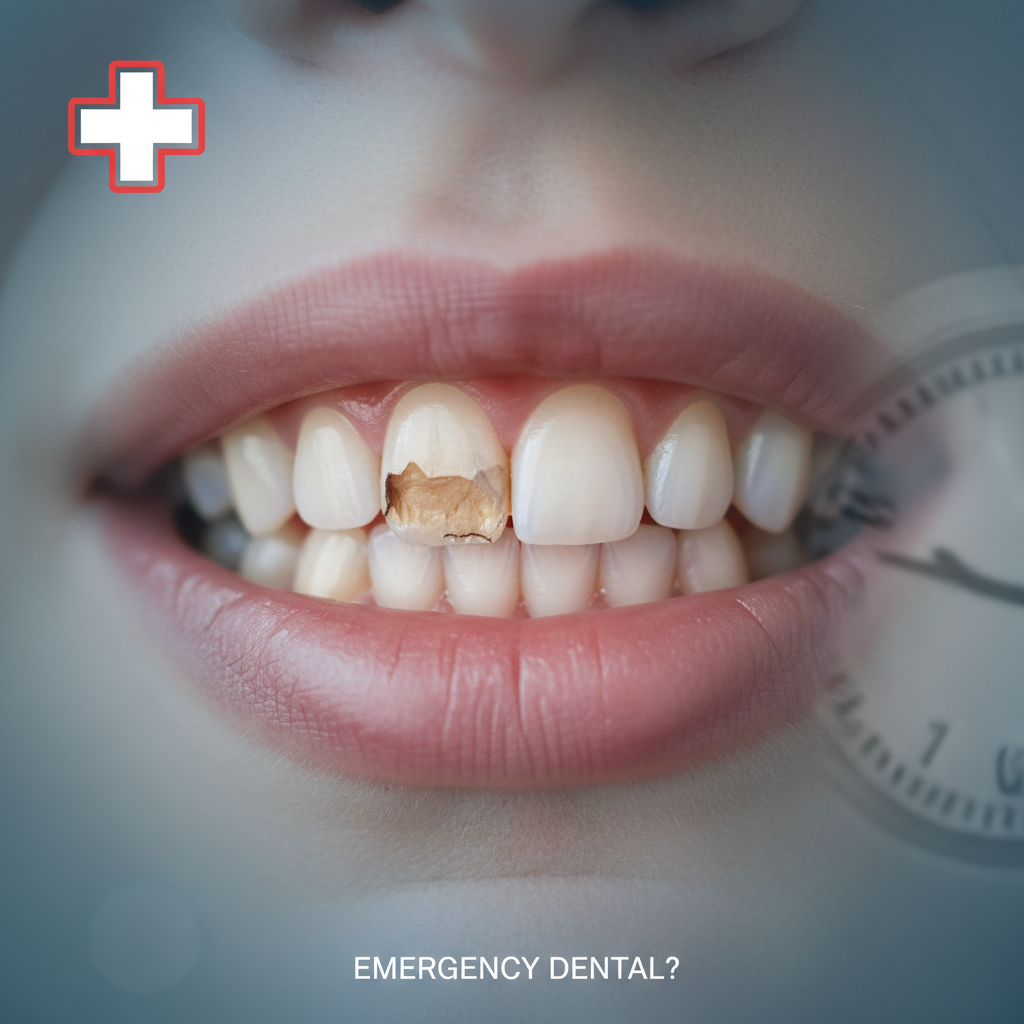
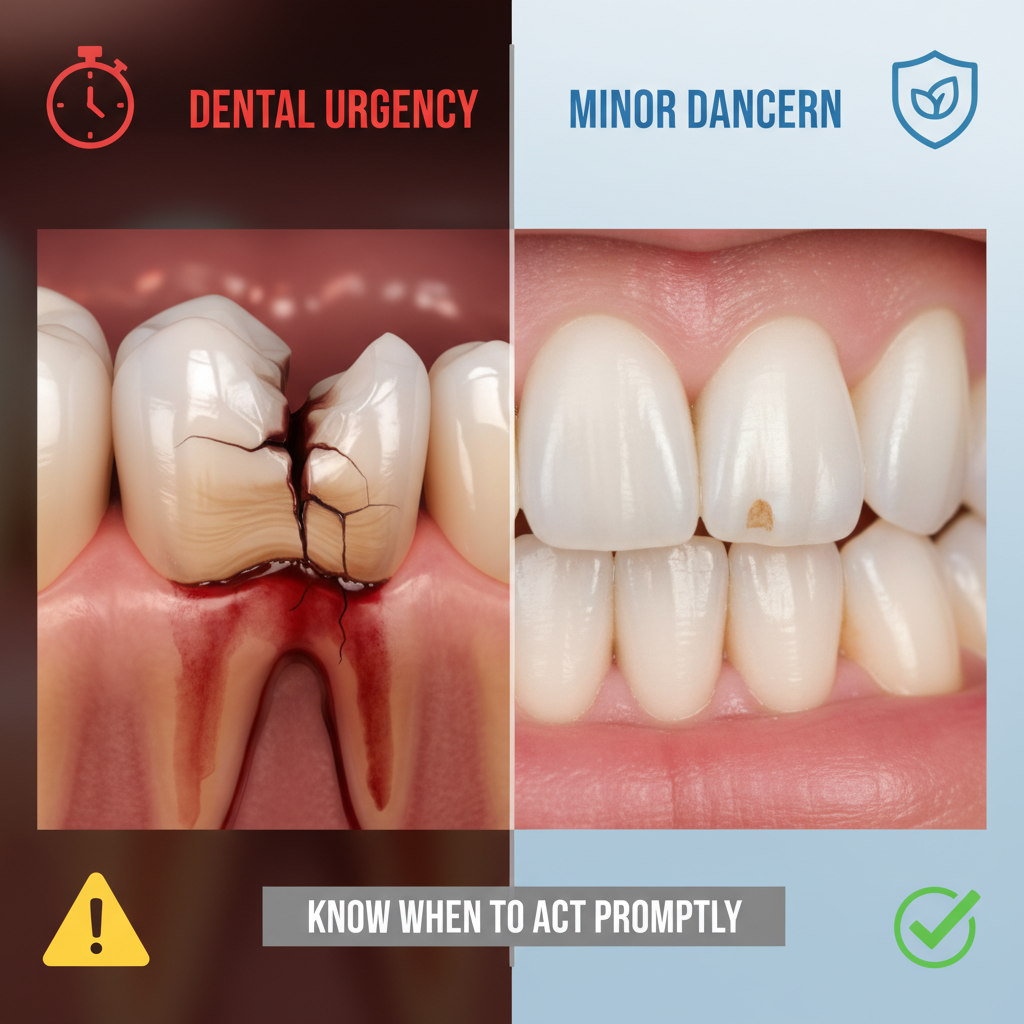
Not every chip or crack is an emergency, but some are. The key is whether the damage affects deeper layers of the tooth or causes significant pain.
When a broken or cracked tooth is urgent
You should seek emergency dental care if:
- A tooth breaks or cracks and you feel sharp pain, especially when biting
- You can see a large piece missing or the tooth feels jagged and very sensitive
- The fracture appears to reach the darker inner layer or pulp of the tooth
- You were hit in the face and now a tooth feels loose, unstable, or painful
Painful fractures that reach the dentin or pulp expose nerves and blood vessels and can quickly lead to infection or tooth loss if untreated [7]. For more detail on specific injuries, see is a cracked tooth a dental emergency and tooth damage emergency vs minor.
Minor chips that usually can wait
Small, painless chips that only affect the outer enamel and do not make the tooth sensitive are usually not emergencies. You should still schedule a visit to smooth sharp edges and restore the appearance of the tooth. For these situations, is a chipped tooth an emergency can help you decide how quickly to act.
Heavy or uncontrolled bleeding
Any bleeding in the mouth that you cannot control needs urgent attention. This can come from dental trauma, surgery sites, or severe gum disease.
You should seek emergency care if:
- Bleeding in your mouth does not slow down after 10 to 15 minutes of gentle pressure
- You have heavy bleeding after a fall, sports injury, or blow to the face
- Bleeding continues 8 to 12 hours after an extraction or other oral surgery, especially if you take blood thinners or have a bleeding disorder [1]
Heavy or continuous bleeding may reflect lacerations, trauma to your gums and mouth tissues, or complications at a surgery site, all of which require urgent treatment to prevent serious blood loss or infection [8].
If you cannot reach a dentist and the bleeding is severe, head to the emergency room.
Jaw pain, limited movement, or numbness
Your jaw and surrounding nerves can also be affected by dental trauma or infection.
Pay attention and seek urgent care if you notice:
- Sharp pain when opening or closing your mouth after an injury
- Difficulty moving your jaw or feeling like it is out of place
- Numbness or tingling around your lips, chin, teeth, or gums after trauma
These symptoms may indicate a fractured or dislocated jaw, or nerve damage that needs rapid evaluation by a dentist or oral surgeon to avoid long-term problems [9]. Sudden numbness without injury can also be a red flag sign of infection affecting nerves.
Dental trauma from accidents or sports
Sports injuries, car accidents, and falls combine many of the warning signs discussed so far. Even if your teeth look mostly intact, internal damage may be present.
Treat trauma as an emergency if:
- You have visible tooth fractures, loose teeth, or missing teeth
- There is significant bleeding or swelling in your mouth
- Your bite feels “off” or your teeth no longer come together normally
- You have deep cuts inside your cheeks, lips, or tongue
A comprehensive exam, often with X-rays, helps your dentist evaluate the true extent of trauma so they can prevent infection, tooth death, or bite problems later [1]. If you are unsure how serious an injury is, use the guidance in how to identify dental trauma severity and how to assess dental injury.
When to go to the ER instead of the dentist
Dentists handle most emergencies involving teeth and gums, but some situations are medical emergencies that require an emergency room.
Go to the ER immediately if you have:
- Difficulty breathing, swallowing, or speaking
- Rapidly increasing facial or neck swelling
- High fever with severe pain and visible infection
- Signs that infection is spreading, such as chills, confusion, or extreme weakness
- Significant facial trauma, broken facial bones, or suspected jaw fracture
Emergency room teams can provide antibiotics, pain relief, and stabilize life-threatening issues, but they usually do not perform full dental procedures [10]. After an ER visit, you still need to see a dentist promptly to address the underlying dental problem.
If you are not sure whether to go to urgent care, the ER, or a dentist, you can also use the step-by-step thinking in how to decide if you need urgent dental care and when to go to emergency dentist.
Quick rule of thumb:
If you cannot breathe, swallow, or stop bleeding, go to the emergency room first.
If you are in severe dental pain or have visible tooth damage without life-threatening symptoms, contact an emergency dentist.
Issues that feel urgent but usually are not
Some dental problems are uncomfortable or inconvenient but rarely rise to the level of a true emergency:
- A lost filling or crown without severe pain
- A dull toothache that responds to over-the-counter pain relievers
- Mild gum bleeding when brushing, without swelling or intense pain
- A small chip in a tooth that is not sensitive
These situations still require prompt attention, but you can usually schedule a normal appointment instead of seeking emergency care. However, if pain increases, bleeding worsens, or new symptoms appear, treat that change seriously. For example, a lost crown that suddenly begins to throb may indicate exposed nerves or infection and could shift into the category of dental problems that cannot wait.
Simple home steps while you seek help
While you arrange emergency care, a few calm steps can help you stay more comfortable and protect your teeth:
- Rinse gently with warm salt water to clean the area and ease irritation
- Apply a cold compress on the outside of your cheek for 10 to 15 minutes at a time to reduce swelling
- Take over-the-counter pain relievers like ibuprofen or acetaminophen, unless your doctor has told you not to
- Keep any broken tooth fragments moist in milk or saliva and bring them with you
- Avoid putting aspirin directly on your gums, which can burn tissues [11]
These steps do not replace professional care, but they can make the wait a little easier and may help prevent further damage.
Putting it all together: your next step
When you are in pain, it is easy to second guess yourself. Remember these core signs you need emergency dental care:
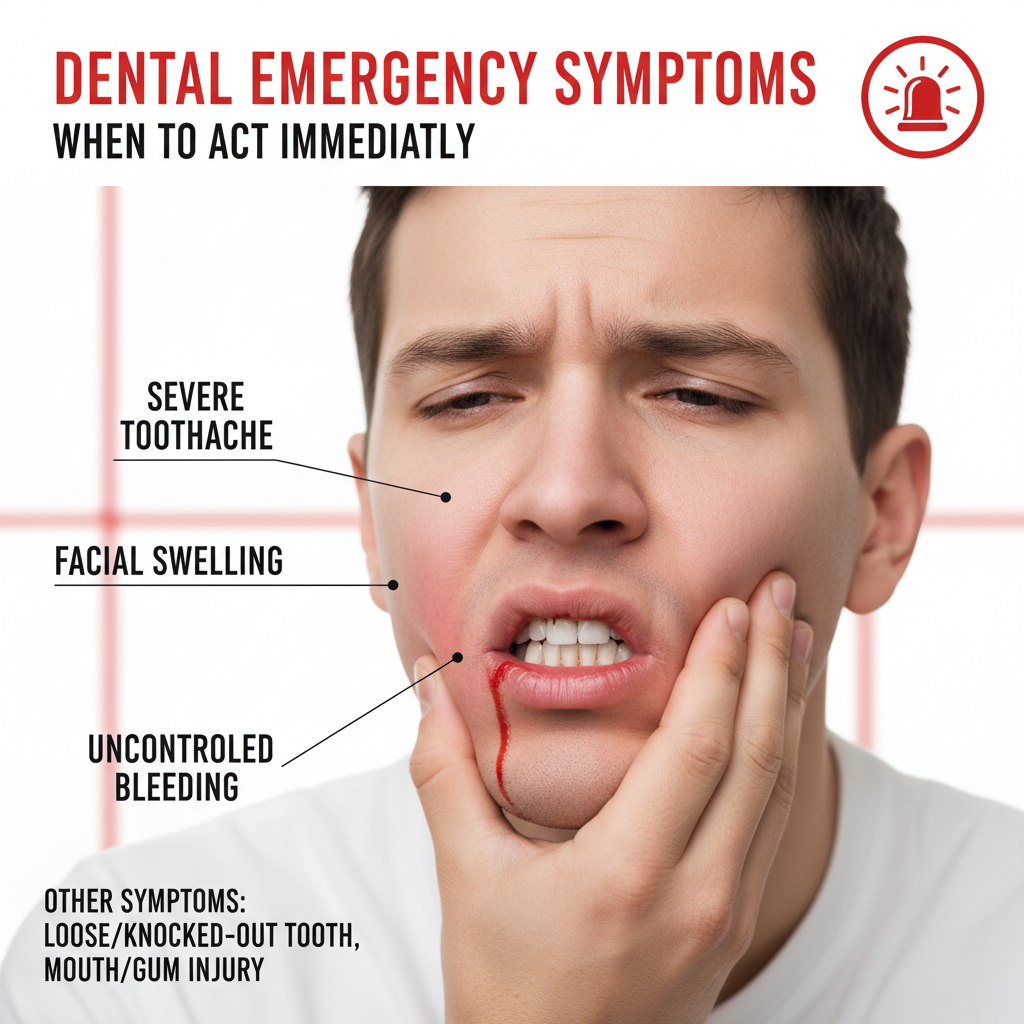
- Intense, throbbing tooth pain that does not improve
- Swelling in your face, jaw, or gums, especially with fever or trouble swallowing
- A knocked-out, severely loose, or badly broken tooth
- Heavy or uncontrolled bleeding in your mouth
- Jaw injury, numbness, or visible facial trauma
- Clear signs of spreading infection like pus, foul taste, fever, or feeling very ill
If any of these match what you are experiencing, do not wait. Use the guidance in what dental issues need immediate care and dental emergency warning signs, then call an emergency dentist or head to the ER if your breathing or swallowing is affected.
If your symptoms are milder but you are still unsure where they fall on the urgent vs non urgent spectrum, walk through the questions in how to decide if you need urgent dental care. When in doubt, it is always safer to make a quick call. A short conversation with a dental team can give you clarity and help you protect both your oral health and your peace of mind.
References
- (NCBI Bookshelf)
- (Valencia Aesthetic Dentistry, Da Vinci Dental Arts)
- (Springs Dental, Sunrise Dental of Auburn)
- (Sunrise Dental of Auburn, Smiles By The Sea Family Dentistry)
- (Smiles By The Sea Family Dentistry, NCBI Bookshelf)
- (Springs Dental, Cleveland Clinic)
- (Springs Dental, Da Vinci Dental Arts)
- (Brookhaven Dental Associates, Cleveland Clinic)
- (Brookhaven Dental Associates)
- (University of Utah Health)
- (Cleveland Clinic)