For emergency tooth repair in Charlotte, the fastest path is a dental office that can diagnose and fix a broken, cracked, knocked-out, or infected tooth in a single visit. Charlotte Emergency Dental is a walk-in practice open seven days a week, with weekday hours of 9am to 7pm, and no appointment is needed. Every patient gets a 3D x-ray first. Procedures such as root canals, crowns, extractions, implants, bridges, and dentures can usually be done the same day. This guide covers how to recognize a true dental emergency, what to do at home before you arrive, which repairs are possible right away, and when a hospital is the better location.
What counts as a dental emergency?
Dental emergencies range from painful to potentially dangerous. The ADA’s guidance on what constitutes a dental emergency separates true emergencies, such as uncontrolled bleeding, swelling that could affect the airway, and facial trauma, from urgent dental problems like severe tooth pain, abscesses, broken teeth, and lost restorations that are causing pain. The StatPearls review of dental emergencies groups them broadly into trauma, infection, and pain, which is a useful way to sort out your own situation.
Identifying your situation early helps you decide whether to walk into a dental office today, manage first aid at home for a short time, or go straight to an emergency department.
What should you do if a tooth gets knocked out?
A knocked-out adult tooth is the most time-sensitive dental injury. The ADA’s MouthHealthy guidance on dental emergencies recommends handling the tooth carefully and getting to a dentist as quickly as possible.
- Pick up the tooth by the crown, not the root.
- Rinse it gently under cool water if it is dirty. Do not scrub it.
- Try to place it back in the socket, or keep it in milk.
- Get to a dentist immediately.
At Charlotte Emergency Dental, the target for a knocked-out tooth is under 10 minutes from walking in the door to being in the chair. The goal is to have the tooth reimplanted within 60 minutes, then splinted to the neighboring teeth for about 4 weeks while the supporting tissue heals.
What should you do for a chipped or broken tooth?
Chips range from minor enamel loss to deep fractures that expose the nerve. You might notice a rough edge, sensitivity to hot or cold, or visible tooth fragments.
- Rinse your mouth with warm water.
- Collect any broken pieces and keep them moist in a sealed container.
- Cover sharp edges with dental wax or sugar-free gum.
- Have the tooth examined, because a break that looks small can extend below the gumline.
When is a toothache an emergency?
Persistent, throbbing pain often points to decay or infection. If pain keeps you up at night, does not respond to over-the-counter medication, or comes with swelling, you need prompt care.
- Rinse thoroughly to clear debris.
- Floss gently to remove trapped food.
- Do not place painkillers directly on the gums or tooth.
- Get the tooth evaluated, ideally the same day.
How should you handle cuts to the lips, cheeks, tongue, or gums?
Soft tissue injuries can bleed heavily and can hide fractured or broken teeth.
- Rinse with warm salt water.
- Apply firm, gentle pressure with clean gauze or cloth.
- If bleeding lasts longer than 10 minutes, seek emergency or hospital care.
- Have the teeth checked afterward to rule out hidden damage.
What are the signs of a jaw fracture?
A fractured or dislocated jaw may cause swelling, difficulty opening your mouth, numbness, or teeth that no longer line up.
- Look for swelling, bruising, or deformity.
- Apply a cold compress to reduce swelling.
- Go to an emergency department right away if breathing or swallowing is affected.
- After you are stabilized, follow up for dental and oral surgery care.
How do you know how urgent your situation is?
Evaluating the severity of your injury helps you choose the right level of care and avoid unnecessary delays.
How should you evaluate pain and swelling?
- Rate your pain on a scale of 1 to 10.
- Note swelling around the face, jaw, or gums.
- Check for spreading redness or fever, which can signal infection.
What should you check for bleeding and broken pieces?
- Watch for bleeding that does not stop after 10 minutes of pressure.
- Gather any tooth fragments or pieces of crowns and fillings.
- Look at nearby teeth for cracks.
Should you go to the ER or a dentist?
- Hospital emergency department: jaw fractures, swelling that affects breathing or swallowing, uncontrolled bleeding, or major facial trauma.
- Same-day urgent dental care: severe pain, a knocked-out or broken tooth, swelling in the gum or face, or signs of infection.
- Next available visit: a minor chip or lost filling with manageable pain. Even then, waiting too long can let a small problem grow.
For children, the AAPD’s policy on emergency oral care stresses timely access to emergency dental care for infants, children, adolescents, and people with special health care needs, so a child’s dental injury should be evaluated promptly.
Why does a 3D x-ray matter in emergency tooth repair in Charlotte?
Many dental emergencies are hard to diagnose from the outside. A tooth can hurt badly on biting while looking completely normal, and a standard dental x-ray is a flat image that can miss certain problems.
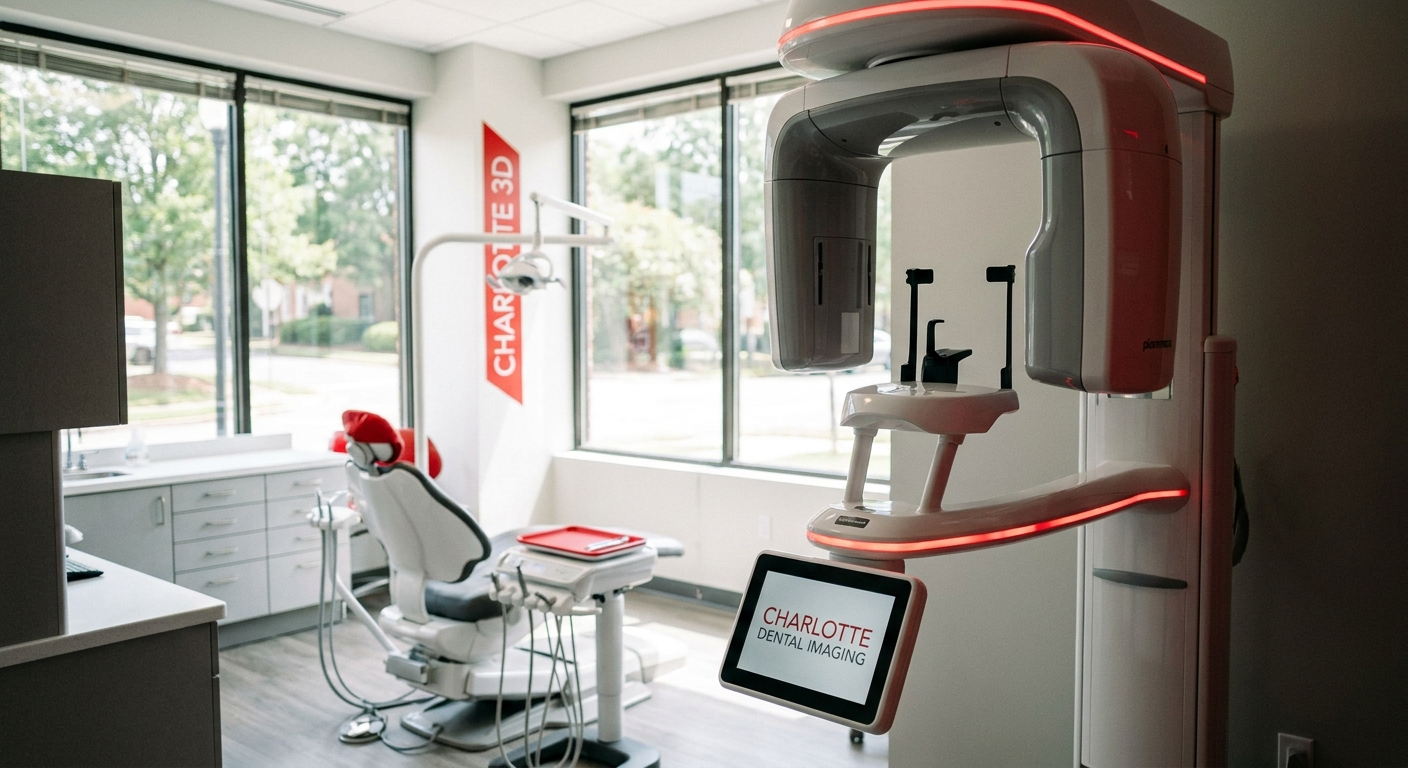
Charlotte Emergency Dental captures a CBCT, or 3D x-ray, first for every patient. According to the practice, this scan reveals infections, cracks, and root fractures that standard dental x-rays cannot diagnose. That matters because the right repair depends on the right diagnosis. A crack that stops in the crown may be saved with a crown. A fracture that runs down the root usually cannot be.
One Charlotte Emergency Dental patient had already received 3 different opinions from other dentists about pain when biting. The CBCT immediately showed a vertical root fracture on the lower right first molar, which explained the pain and pointed straight to the correct treatment.
What does same-day emergency tooth repair look like?
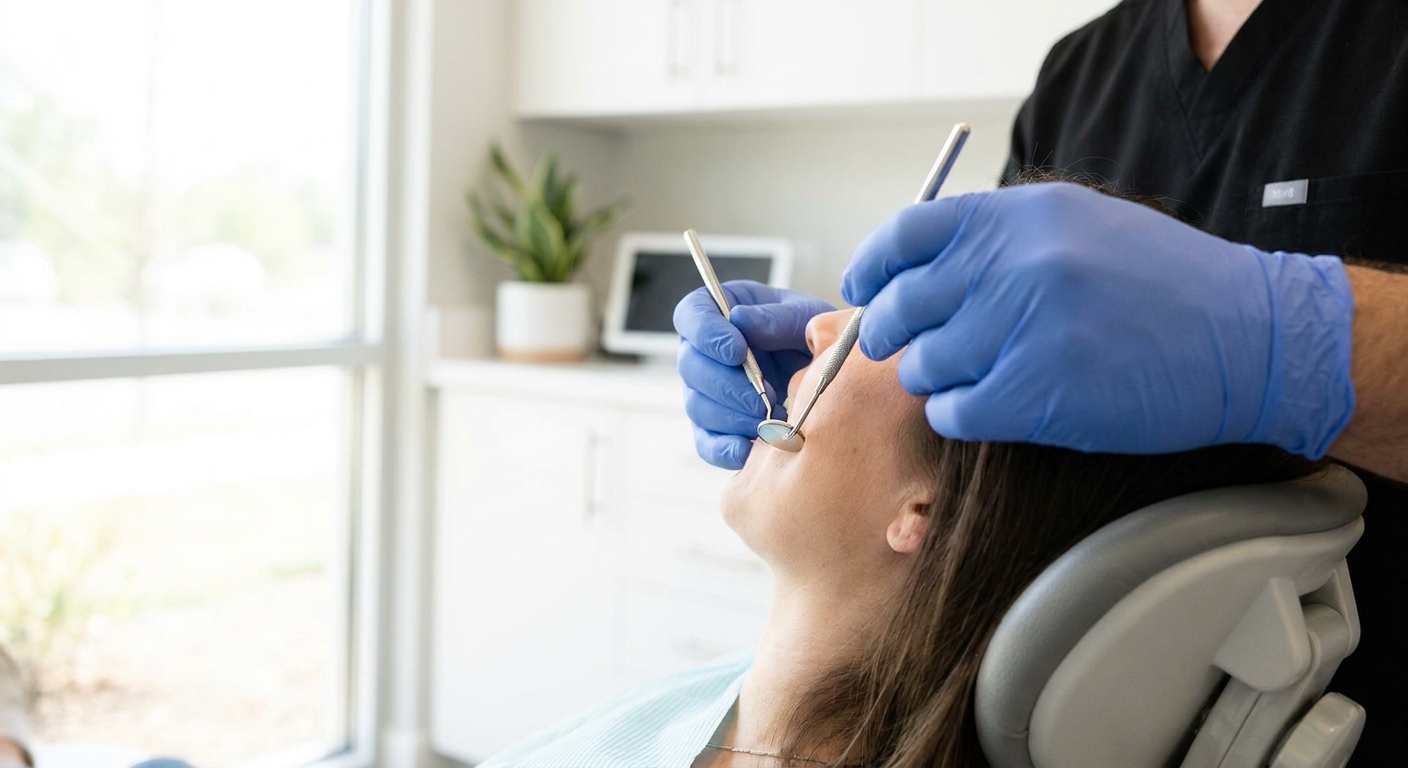
Charlotte Emergency Dental describes its goal simply: remove the source of pain on the first visit, then build a comprehensive plan so that it is the last time the patient experiences dental pain. Weekday walk-ins are treated in about 30 minutes on average.
Two real timelines from the practice show how this plays out:
- A patient arrived at 10:15am with excruciating pain on the lower left. By 10:30am, a CBCT had diagnosed an unrestorable vertical root fracture of tooth #30. By 10:35am the patient was numb and out of pain. The extraction and bone graft were complete by 11:20am, and the patient was leaving the parking lot by 11:30am.
- Another patient arrived at 1:56pm, was triaged and had a CBCT taken, and was diagnosed by 2:09pm. The extraction was complete and the patient was out of pain by 2:35pm.
These are individual cases, and every mouth is different, but they illustrate what a same-day visit can include.
Which repairs can be done the same day?
When quick treatment can save a tooth or stop pain, same-day services make a real difference.
When is an emergency root canal needed?
When the inner pulp of a tooth is infected or inflamed, a root canal relieves pain and preserves the tooth. Signs include:
- Sharp, lingering pain triggered by hot or cold.
- Darkening of the tooth.
- Swelling, swollen lymph nodes, or a persistent bad taste.
Charlotte Emergency Dental performs root canals and endodontic treatment, and in many cases the root canal and crown can be done the same day.
When does a tooth need to be extracted?
With severe decay, trauma, a vertical root fracture, or a failed root canal, extraction may be the fastest way to end pain and infection.
- The damaged tooth is removed under local anesthesia.
- A bone graft may be placed to preserve the site, as in the case above.
- Replacement options, such as implants, bridges, or dentures, can be discussed.
How is a chipped tooth repaired?
Small chips can often be restored with a tooth-colored filling or bonding in one visit. Larger breaks, especially those near the nerve, may need a crown or root canal. Imaging helps decide which repair will actually last.
What happens if a crown breaks or falls off?
A loose or broken crown exposes the tooth underneath and can cause sensitivity.
- Keep the crown if you have it.
- Avoid chewing on that side.
- A dentist can re-cement the crown if it is intact, or make a new one.
Charlotte Emergency Dental provides crowns, bridges, implants, and dentures, so a damaged restoration can usually be addressed at the same location rather than through a referral elsewhere.
Do you need to schedule an appointment for urgent dental care?
At Charlotte Emergency Dental, no. The practice is built for people who need to be seen quickly without advance scheduling. Walk-ins are welcome seven days a week, including weekends, and weekday hours run from 9am to 7pm so you can come in after work.
The practice is not a 24-hour clinic. If you have a dental emergency in the middle of the night with swelling that affects breathing or swallowing, uncontrolled bleeding, or a suspected jaw fracture, go to a hospital emergency department.
What should you bring to an urgent dental visit?
- Any tooth or tooth fragments, kept moist.
- A broken crown or restoration, if you have it.
- A list of current medications and allergies.
- Your insurance card, if you have dental coverage.
How do you manage pain before treatment?
While you are on your way to care, these steps can help you stay more comfortable.
What at-home pain relief helps?
- Rinse with warm salt water.
- Apply a cold compress to the outside of the cheek for about 10 minutes at a time.
- Keep your head elevated to reduce throbbing.
Which over-the-counter medications are safe to use?
- Ibuprofen or acetaminophen can help when taken as directed on the label.
- Never hold aspirin against the gums, because it can burn the tissue.
- Do not exceed the recommended daily dose.
What temporary fixes work until you are seen?
- Cover sharp edges with dental wax or sugar-free gum.
- Press a damp tea bag against a bleeding area to help a clot form.
- Keep any tooth fragment moist in case it can be reattached.
Temporary measures only buy time. If pain lasts beyond a day or keeps getting worse, the underlying cause still needs treatment.
What about insurance and payment?
Coverage for emergency procedures varies widely by plan, so check your own benefits for deductibles, annual maximums, and how your plan treats procedures like root canals, crowns, and extractions. If cost is a concern, ask before treatment begins what the plan for your tooth involves and whether the work can be staged. Asking about payment plans or financing is reasonable, and a clear diagnosis up front makes it easier to understand what you are paying for.
How can you prevent future dental emergencies?
Not every emergency can be prevented, but many can be made less likely.
What daily habits protect your teeth?
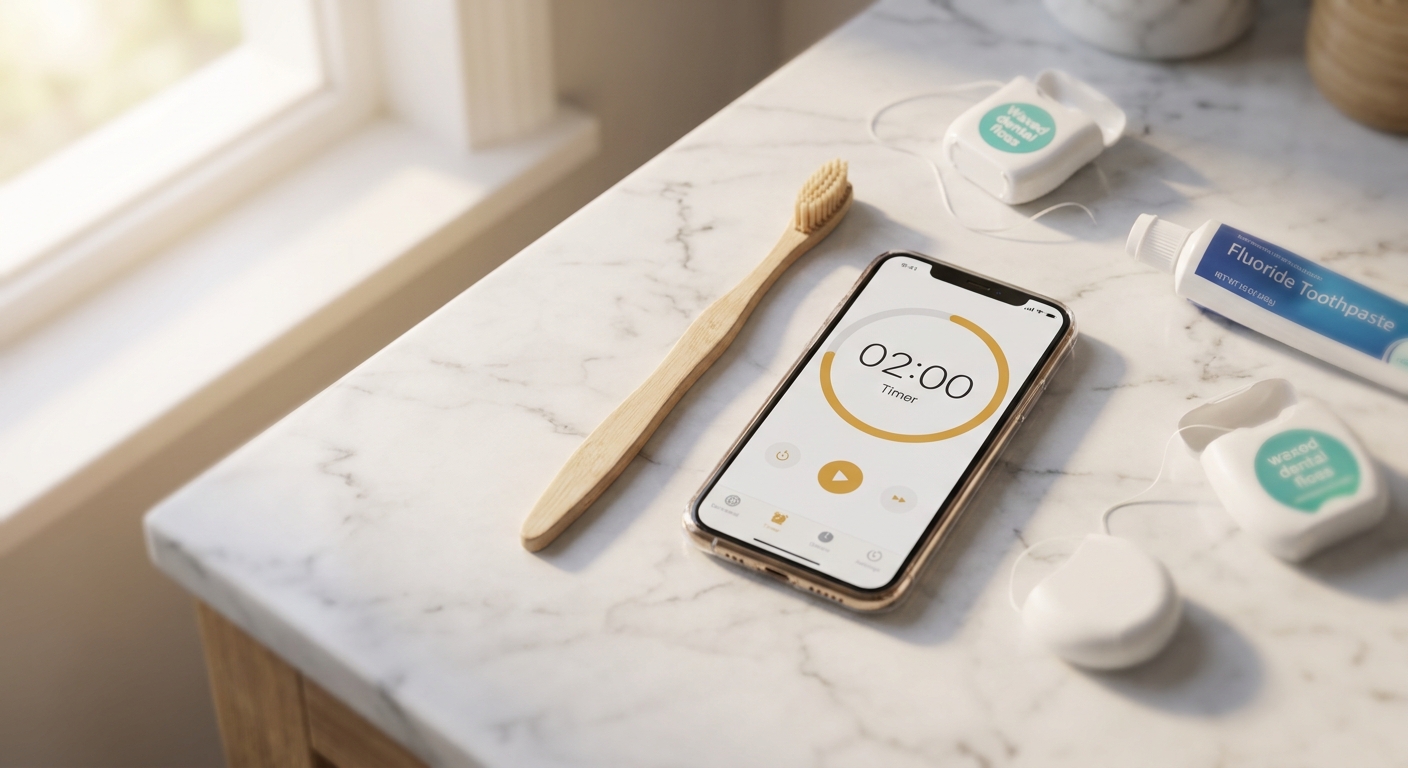
- Brush twice a day with fluoride toothpaste.
- Floss daily.
- Limit frequent sugary snacks and drinks. The National Institute of Dental and Craniofacial Research offers patient information on preventing tooth decay and gum disease.
How do mouthguards help?
- Wear a mouthguard for contact sports.
- Replace worn guards regularly.
- If you grind or clench, ask about a night guard. Charlotte Emergency Dental makes Brux night guards, which can help protect teeth from grinding damage that leads to cracks.
Why do regular checkups matter?
- Small cracks and cavities are easier to fix before they become painful.
- Cleanings remove plaque and tartar that lead to decay and gum disease.
- An existing restoration that is starting to fail can be replaced on your terms instead of during an emergency.
Where should you go for emergency tooth repair in Charlotte today?
If you have severe tooth pain, a broken or knocked-out tooth, or swelling from an infected tooth, a walk-in dental office that can image and treat the problem in one visit is usually the right place. Charlotte Emergency Dental sees walk-ins seven days a week, starts with a 3D x-ray to find the real cause, and aims to get you out of pain on the first visit with a plan for lasting repair.
If you have trouble breathing or swallowing, bleeding that will not stop, or a suspected jaw fracture, call 911 or go to your nearest emergency department first. Dental care can follow once you are stable.