A dental emergency doesn’t wait for a convenient moment, and neither should you. Knowing what to do in a dental emergency before you reach a dentist can mean the difference between saving a tooth and losing it, between a manageable infection and a hospital stay. This guide covers the exact steps to take right now, for every common emergency, so you can stabilize your situation and get to care fast.
What you’ll learn in this guide:
- How to tell whether your situation needs same-day action
- Step-by-step first aid for knocked-out teeth, toothaches, abscesses, bleeding, and more
- When to go to an ER versus an emergency dentist
- What to expect when you walk in for emergency dental care
What Counts as a Dental Emergency
A 2019 study published in the Journal of the American Dental Association found that 34% of patients with dental pain waited more than 24 hours before seeking care, with many waiting several days. Among those who delayed, a significant portion saw their condition escalate from manageable to complicated. The cost of waiting is real: infections spread, teeth that could have been saved are lost, and what would have been a straightforward same-day treatment becomes a multi-appointment ordeal.
The simplest test for whether your situation is an emergency: are you in severe pain, is there swelling, or has there been physical trauma to a tooth? If yes to any of those, same-day care is the right call.
The Emergencies That Cannot Wait
These conditions require you to contact an emergency dentist immediately:
- Severe or throbbing toothache that doesn’t respond to over-the-counter pain relief
- Knocked-out adult tooth (every minute counts here)
- Dental abscess with pulsing pain, visible swelling, or fever
- Broken tooth with sharp pain or visible pink/red tissue at the center
- Uncontrolled bleeding from the mouth
- Facial swelling, especially around the jaw, eye, or neck
Urgent but Not Life-Threatening
A second tier of problems doesn’t come with acute pain but still needs attention within 24 hours. A lost filling or crown exposes the tooth structure underneath, which is sensitive and vulnerable to fracture. A chipped tooth without pain still has a compromised surface. A loose tooth without trauma may signal bone loss. A broken denture affects your ability to eat and speak normally. None of these are “wait until next week” situations, even if the discomfort is mild.
First Aid for a Knocked-Out Tooth
A 2002 study in the International Journal of Paediatric Dentistry established what emergency dentists have relied on ever since: a knocked-out permanent tooth reimplanted within 30 minutes has the highest survival rate. After 60 minutes outside the socket, the prognosis drops sharply. For a detailed walkthrough of each step, see what to do the moment a tooth gets knocked out.
Here is the exact sequence. Pick the tooth up by the crown, which is the white part you can see when smiling. Do not touch the root. If there is visible dirt, rinse gently with clean water for no more than 10 seconds. Do not scrub, dry, or wrap it in tissue. If you can, gently reinsert the tooth into the socket and hold it in place by biting down softly on a piece of gauze or a clean cloth. If reinsertion isn’t possible, place the tooth in a glass of whole milk, or keep it between your cheek and gum. Then get to an emergency dentist immediately. This is the one scenario where the clock is literally running.
First Aid for a Severe Toothache
According to the CDC, dental infections account for approximately 61,000 emergency room visits each year in the United States, most of which begin as untreated pulp infections. A toothache that becomes severe has usually reached the nerve, and that means the bacteria are no longer contained.
Right now, rinse your mouth with warm salt water: half a teaspoon of salt in eight ounces of warm water, swished gently for 30 seconds. Apply a cold compress to the outside of your cheek in 20-minute intervals to reduce swelling and numb the area. Take ibuprofen or acetaminophen at the labeled dose. For a fuller breakdown of options to take the edge off before your appointment, managing tooth pain before you see a dentist covers what works and what doesn’t.
Two things not to do: don’t place aspirin directly on the gum or tooth. It doesn’t work topically and it burns soft tissue. Don’t apply heat to the outside of your face. Heat increases blood flow and will intensify the pain. The action here is simple: call an emergency dentist today, not tomorrow. A toothache at this level is an infected tooth until proven otherwise.
First Aid for a Chipped, Cracked, or Broken Tooth
The American Association of Endodontists reports that dental trauma accounts for roughly 5 million tooth injuries per year in the United States. The range runs from a small chip on the enamel with no pain to a full fracture exposing the pulp, which is the nerve-containing center of the tooth.
For a minor chip without pain, the tooth structure is intact enough to wait until morning if the emergency happened overnight. Apply dental wax or a small piece of sugarless gum over any sharp edge to protect your tongue and cheek. If you find the fragment, keep it in milk or saliva and bring it with you. For a break with visible pink or red tissue at the center, or significant pain, that is same-day territory. The nerve is exposed, and every hour without treatment increases the risk of infection. Use a cold compress on the outside of your cheek and take OTC pain relief on the way to your appointment.
First Aid for a Lost Filling or Crown
Losing a filling or crown feels minor, but it isn’t. The dentin underneath a restoration is porous and sensitive, and an unprotected tooth is vulnerable to fracture under normal chewing pressure. A 2015 study in the Journal of Dentistry found that teeth with lost restorations left unaddressed for more than a few days showed measurably higher rates of secondary fracture.
At a pharmacy, look for temporary dental cement (Dentemp is a common brand). Follow the package instructions to seat the crown back in place, or fill the cavity left by a lost filling. If you have neither the product nor the crown, a small piece of sugarless gum pressed gently into the space can protect the area temporarily. Avoid chewing on that side and stay away from hot, cold, and sticky foods until you’re seen. Call for a same-day appointment.
First Aid for a Dental Abscess
The CDC reported that dental abscesses contributed to nearly 1 million emergency department visits in a single recent year. Of those, a significant portion involved patients who had experienced symptoms for days before seeking care. An abscess is a bacterial infection that has formed a pocket of pus, and it does not resolve on its own. Left untreated, it can spread to the jaw, neck, or airway.
Signs of an abscess: a throbbing, constant pain that may radiate to the ear or jaw; a visible bump on the gum near the affected tooth; fever; a foul taste or smell in the mouth; and facial swelling. For more detail on the specific steps to take before you reach the dentist, safe steps for managing a dental abscess at home covers what you can do in the hours before your visit.
Warm salt water rinses every few hours reduce bacteria in the mouth and offer mild relief. That is the extent of useful home care. No home remedy drains an abscess. This is the one emergency on this list where delaying care carries the clearest systemic risk, so treat it as same-day urgent.
First Aid for Soft Tissue Injuries and Bleeding
Oral tissue is highly vascular, which means even small cuts to the tongue, cheek, or lip bleed significantly relative to their actual severity. A 2020 review in Dental Traumatology noted that soft tissue injuries in the mouth often appear more serious than they are, but still require proper management to avoid infection and prolonged healing.
Rinse gently with clean water to clear the area, then apply firm, direct pressure with a folded piece of gauze or a clean cloth. Hold pressure continuously for 15 minutes without lifting to check. Use a cold compress on the outside of the face to reduce swelling. If bleeding has not slowed after 15 minutes of sustained pressure, go to the emergency room. Uncontrolled oral bleeding is an ER situation.
Should You Go to the ER or an Emergency Dentist?
The American Dental Association has consistently documented the mismatch between what ER physicians can offer for dental emergencies and what patients actually need. An ER can prescribe antibiotics, manage pain, and treat swelling. What an ER cannot do is restore a tooth, drain a dental abscess at the source, or address the structural problem driving the emergency.
The decision rule is straightforward. Go to the ER if you have difficulty breathing or swallowing, swelling spreading toward your eye or down your neck, or bleeding that will not stop after 15 minutes of direct pressure. These are airway and systemic concerns that an ER is equipped to manage. For every other dental emergency, including severe toothache, knocked-out tooth, abscess with localized swelling, and broken tooth, an emergency dentist is the faster and more effective path to actual relief.
What to Expect at an Emergency Dental Visit
The unknown is often what keeps people from calling. Here’s the reality of a walk-in emergency dental visit.
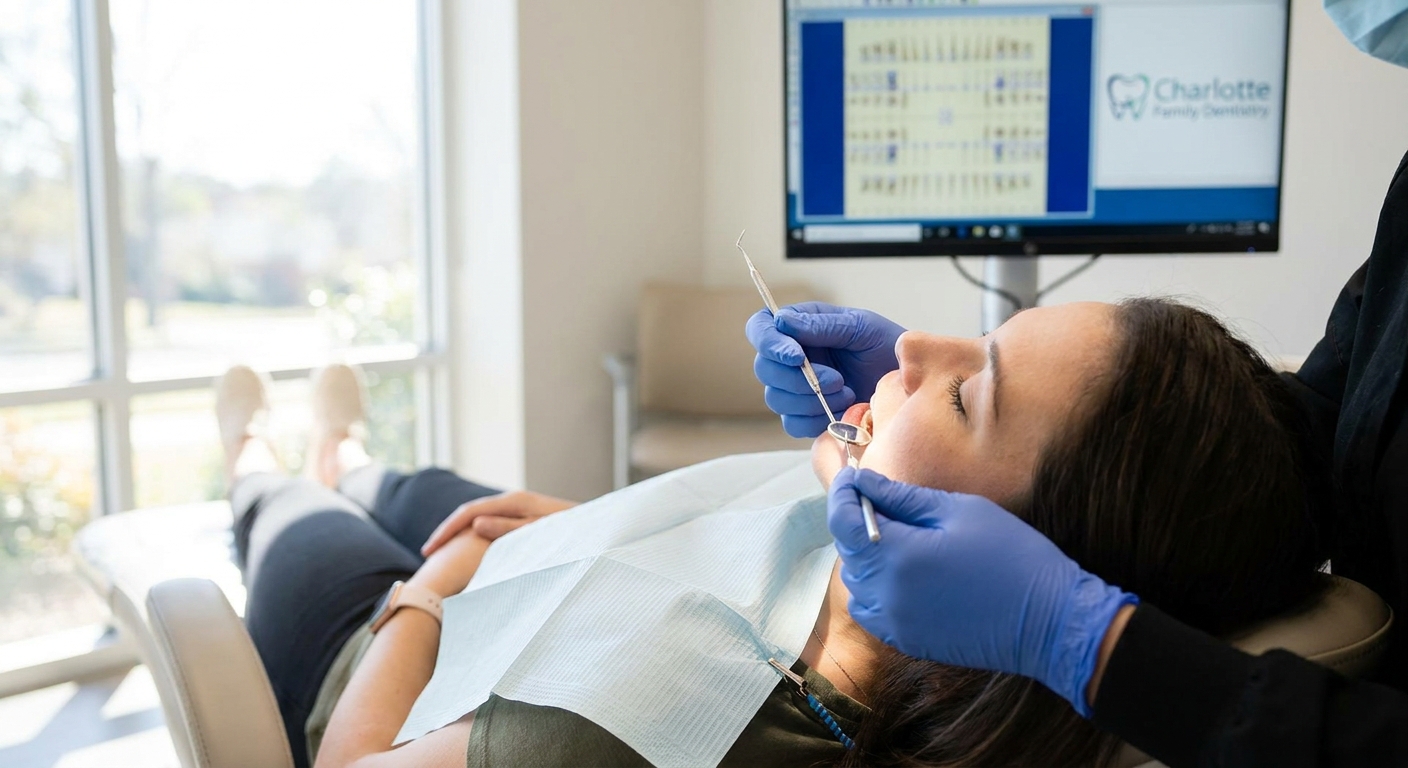
Check-in is brief. You’ll provide your name, describe your symptoms, and fill out a short intake form. From there, an exam and targeted X-ray identify the source of the problem. Immediate relief comes next, whether that’s a local anesthetic to eliminate pain, irrigation of an infected area, or stabilization of a broken tooth. Then the dentist walks through the treatment options and timeline. Before any treatment beyond the immediate emergency is started, you’ll receive a cost estimate. Most insurance plans cover emergency exams. For patients without insurance or with high out-of-pocket costs, CareCredit financing and self-pay arrangements are standard options at most emergency dental practices.
The whole process is designed to get you out of pain the same day. The fear of what happens behind the door is almost always worse than the visit itself.
How to Prevent the Next Dental Emergency
A 2018 analysis in Community Dentistry and Oral Epidemiology estimated that roughly 60% of sports-related dental injuries are preventable with proper protective equipment. That stat applies beyond athletics. Most dental emergencies trace back to a few specific gaps: no mouthguard during contact sports, using teeth to open packaging or bottles, untreated grinding that gradually cracks teeth from the inside, and skipped checkups that miss fractures and cavities before they become acute.
The single most protective habit is wearing a properly fitted mouthguard during any contact activity. That one step eliminates a significant portion of traumatic dental emergencies. If you grind at night, a custom night guard prevents the hairline cracks that eventually break a tooth at the worst possible moment.
What to Do Right Now
If you have a knocked-out tooth or signs of an abscess, stop reading and call now. Every additional minute reduces your options. If you’re dealing with a cracked tooth, lost crown, or chipped tooth without acute pain, apply the temporary measures described above and call first thing in the morning.
Charlotte Emergency Dental is open seven days a week with walk-in availability across the Charlotte metro area. Same-day care is not something to schedule around, it’s available right now. Waiting longer costs more in every sense: more pain, higher risk of tooth loss, and more expensive treatment down the road. The right move is the same one it’s always been in an emergency: get there today.