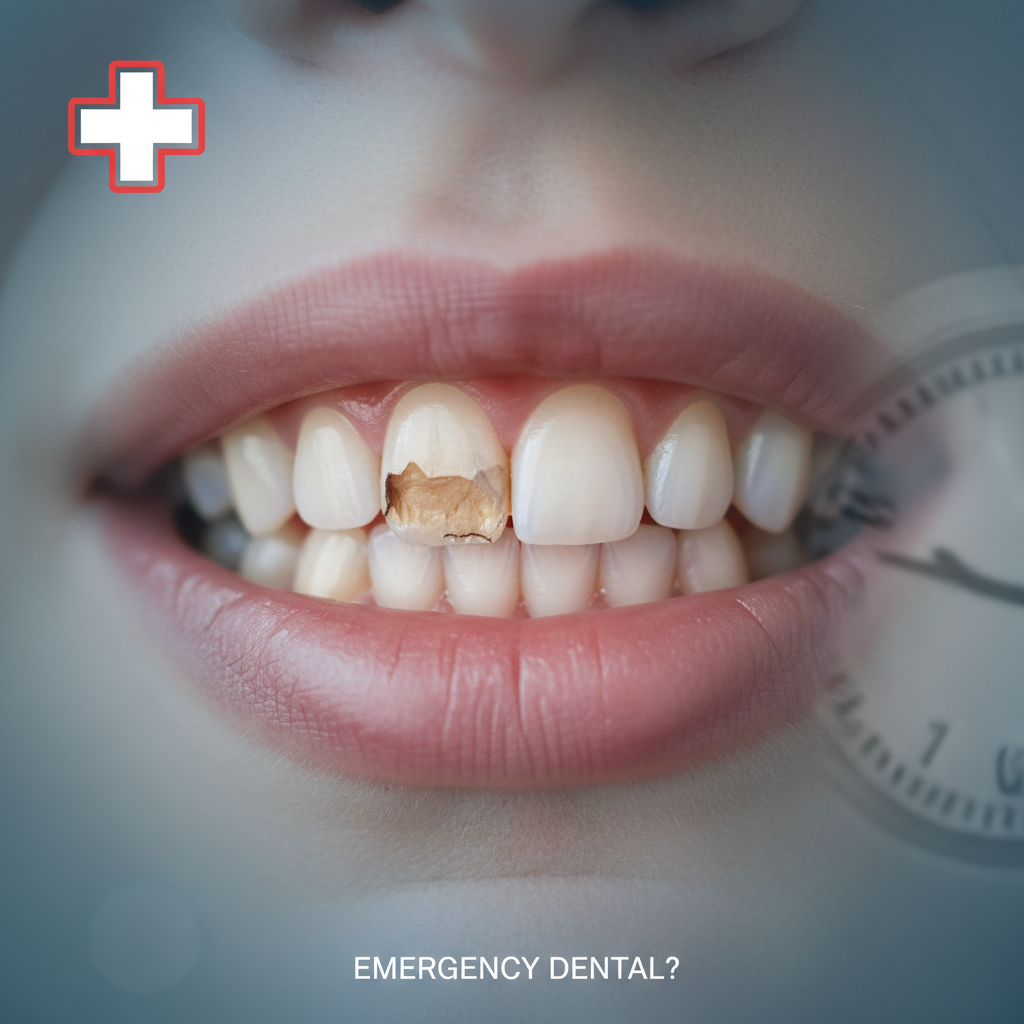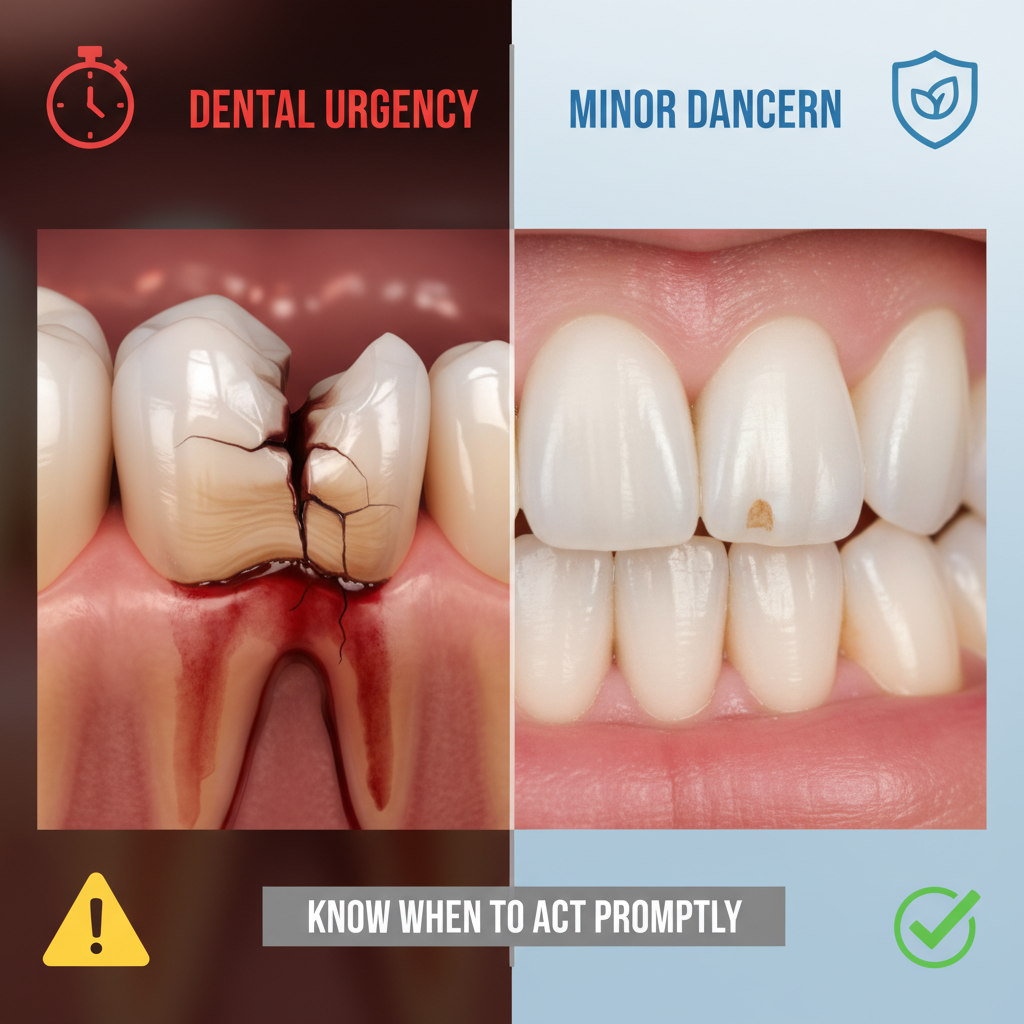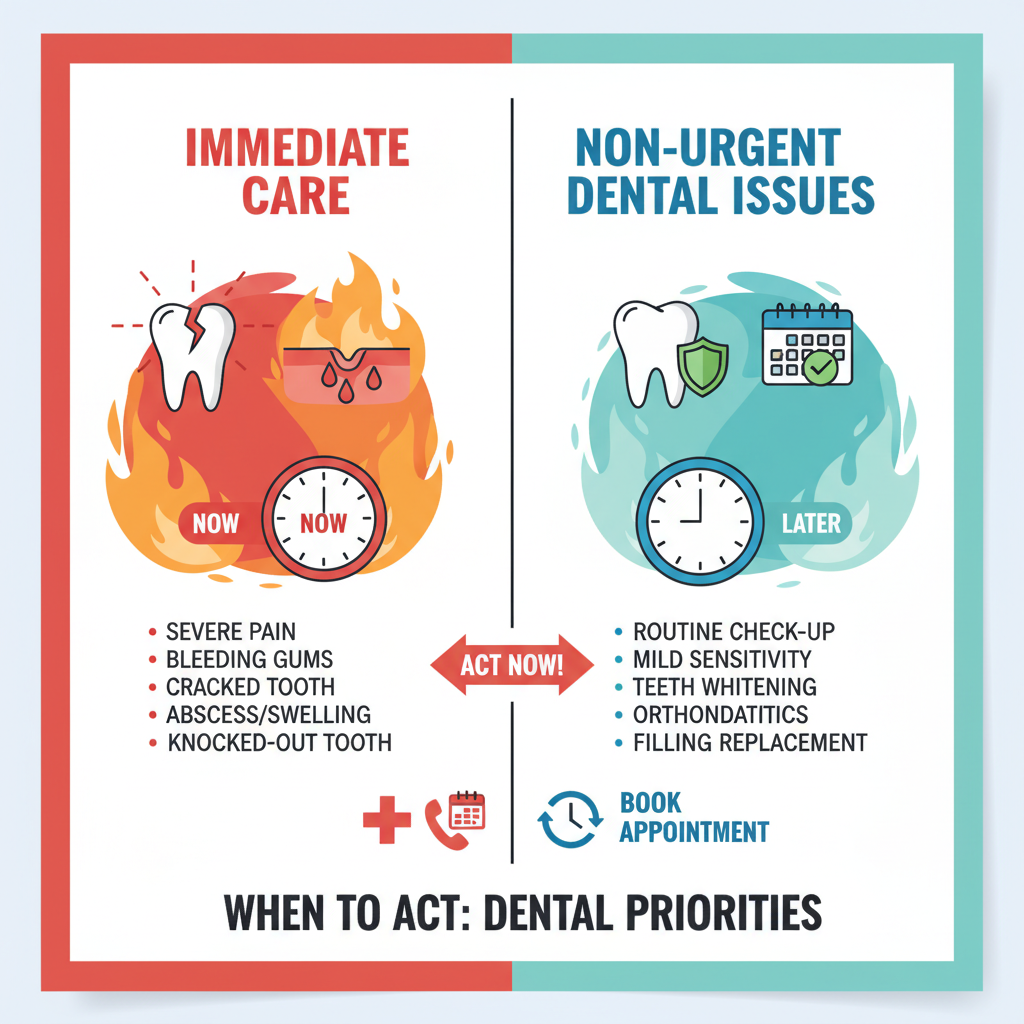
A sudden toothache or chipped tooth can leave you wondering if you should call a dentist right away or wait a few days. Understanding urgent vs non urgent dental issues helps you act quickly when it really matters and avoid unnecessary late night panic trips.
This guide walks you through how to tell the difference, what symptoms never to ignore, and how to manage minor problems at home until you can be seen.
Understand urgent vs non urgent dental issues
When you think about urgent vs non urgent dental issues, it helps to group problems into three levels of concern: true emergencies, urgent issues, and non urgent or routine concerns.
A dental emergency is any problem that poses an immediate threat to your health or causes severe symptoms such as uncontrollable bleeding, facial bone trauma, or breathing difficulties. These situations need immediate care, often from an ER or an emergency dentist [1].
Urgent dental issues are serious and should be treated as soon as possible, but they usually do not threaten your life in the same way. They can often wait a few hours or until the next day, but you should not ignore them for long because they can quickly become emergencies or lead to more complex, costly treatment [2].
Non urgent issues are still important, but they can usually be handled during regular office hours at your next available appointment. These include many routine or cosmetic concerns that are uncomfortable or annoying but not dangerous.
If you want a deeper dive on the most serious conditions, it is worth reading more on what is considered a dental emergency and what dental issues need immediate care.
Signs your issue is a true dental emergency
Some symptoms are your body’s way of saying you cannot wait. If you notice any of the following, treat it as a dental emergency.
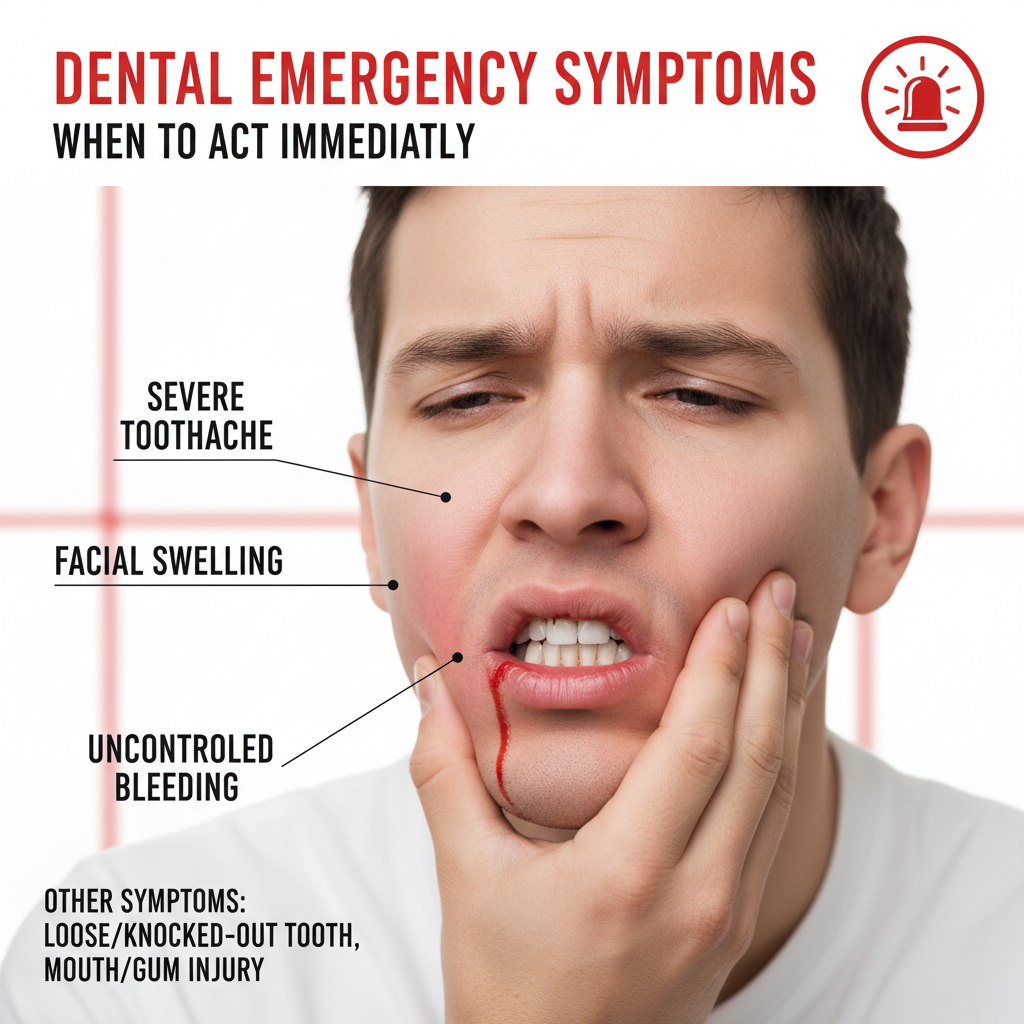
Uncontrollable bleeding
Bleeding from your mouth that will not slow down after 10 to 15 minutes of firm pressure is not normal. Uncontrolled bleeding for more than an hour after an extraction or injury is a red flag that requires immediate help from a dentist or emergency room [3].
This kind of bleeding might follow:
- A recent tooth extraction
- A deep cut to your tongue, lips, or gums
- Trauma to your face or jaw
If at any point the bleeding feels heavy, you feel lightheaded, or you see signs of facial bone injury, go to the ER or call emergency services. These are not situations to watch and wait.
Trouble breathing or swallowing
If swelling in your mouth, tongue, or throat makes it hard to breathe or swallow, you need emergency medical care right away. This can be a sign of a severe infection or allergic reaction that can become life threatening quickly [4].
Do not try to “push through” or lie down and rest in these cases. Call for help and get seen immediately.
Broken facial bones or jaw
Any suspected fracture of your jaw or facial bones is a medical emergency. Signs include:
- Difficulty closing your mouth normally
- Major swelling or bruising after a blow to the face
- Teeth that suddenly do not fit together when you bite
These injuries need evaluation in an emergency room or trauma center as soon as possible [4].
Severe pain that will not improve
Severe, constant pain that does not improve with over the counter medication can also qualify as a dental emergency, especially if it is paired with other symptoms such as swelling or fever. The Cleveland Clinic defines a dental emergency as pain that does not get better with medication and requires immediate attention [4].
If your pain is so intense that you cannot sleep, think clearly, or function, do not wait days to be seen. Reviewing what counts as dental emergency symptoms can help you decide when to head in now.
Common urgent dental issues that should not wait
Not every serious dental problem sends you to the ER, but many need urgent same day or next day care. These are the issues that usually fall into the “urgent” category when you are weighing urgent vs non urgent dental issues.
Severe toothache or sudden pain
Tooth pain covers a wide range, from mild sensitivity to intense, throbbing pain that radiates into your jaw or ear.
You should treat a toothache as an urgent problem if:
- Pain is severe, sharp, or throbbing
- It lasts more than 24 to 48 hours
- It gets worse instead of better
- Chewing or touching the tooth is very painful
- You notice swelling in your gums or face
Severe toothaches are often caused by deep cavities, infection in the tooth pulp, or a foreign object lodged between teeth [5]. Leaving these problems alone can lead to abscesses, tooth death, or the need for more complicated treatment.
While you wait to see your dentist you can gently rinse with warm salt water, use a cold compress, and take over the counter pain relievers, but you should not rely on these long term [6].
If you are unsure where your pain falls on the spectrum, you can learn more with resources like how serious is tooth pain, how long can you wait with tooth pain, and how to know if tooth pain is emergency.
Knocked out (avulsed) tooth
A knocked out adult tooth is one of the most urgent dental emergencies you can have. The sooner you act, the better the chance your dentist has of saving it.
You should:
- Pick up the tooth by the crown, which is the chewing surface, not the root.
- Rinse it gently with water if it is dirty, without scrubbing the root.
- Try to place it back into the socket, facing the right way, and bite down gently on gauze or a clean cloth.
- If you cannot reinsert it, store it in milk or between your cheek and gums, and get to a dentist right away [7].
Ideally, you should be seen within 30 to 60 minutes for the best chance of saving the tooth [8]. This is a clear example of a dental problem that cannot wait and needs same day care.
If you want to understand how different types of tooth damage are handled, check out tooth damage emergency vs minor and how to assess dental injury.
Dental abscess or serious infection
An abscess is a pocket of pus caused by a bacterial infection. Abscesses can occur in the tooth or gums and are always urgent.
Signs include:
- Throbbing pain that may radiate to your jaw, ear, or neck
- Swelling in your face or cheek
- A foul taste or smell in your mouth
- A pimple like bump on your gums
- Fever or feeling generally unwell
Abscessed teeth are serious infections that can spread to your jawbone or beyond if untreated [9]. Gum abscesses also need urgent dental care and should never be popped at home, since they do not resolve on their own [10].
If you notice swelling with pain or fever, treat it as urgent and contact your dentist or an emergency dentist right away. You can read more about when gum swelling is an emergency and dental problems that cannot wait.
Large chips, cracks, or broken teeth
Not every chipped tooth is a crisis, but many are more serious than they look.
You should seek urgent care if:
- A large piece of tooth has broken off
- You see a visible crack that runs vertically
- The tooth is sharp and cutting your tongue or cheeks
- You feel pain when biting or chewing
- The inner nerve of the tooth is exposed, which feels like intense sensitivity
Cracks and fractures can let bacteria into the inner layers of the tooth and can lead to infection or tooth loss if they are ignored. Emergency dentistry focuses specifically on these kinds of injuries to prevent long term damage and tooth loss [3].
For more detail on where your situation might fall, you can explore is a cracked tooth a dental emergency, is a chipped tooth an emergency, and how to identify dental trauma severity.
Injuries to lips, tongue, cheeks, or gums
Soft tissue injuries in your mouth can bleed a lot, which is scary even when they are not life threatening.
You should treat cuts and lacerations as urgent when:
- Bleeding continues after applying gentle pressure with a clean cloth or gauze
- The cut is deep or gaping
- You can see tissue hanging or torn away
Initial care includes rinsing with warm water and applying pressure to control bleeding before you see a dentist [3]. If bleeding is heavy or you think the cut may need stitches, seek immediate care.
Swelling in your face or jaw
Sudden swelling around a tooth, in your gums, or along your jaw usually means infection or injury. Swelling that appears quickly, especially with pain or fever, should always be checked as soon as possible.
Emergency dentistry services in many areas offer same day and next day appointments specifically for swelling, knocked out teeth, and dental injuries, because quick treatment prevents further damage to teeth, gums, and dental work [9].
A helpful exercise is to review dental emergency warning signs and signs you need emergency dental care so you can recognize when swelling crosses into emergency territory.
Issues that are usually non urgent
Some problems feel worrisome in the moment but can usually wait for a scheduled appointment in the next few days. These are often considered non urgent, although they still deserve proper care.
Lost or loose filling, crown, or bridge
A missing filling or crown can make your tooth feel sensitive, but if you are not in severe pain and there is no major fracture, it is usually safe to wait for a normal appointment.
Non urgent situations include:
- A porcelain crown falls out without pain or bleeding
- A small filling is lost and causes only mild sensitivity
Dentists classify these as non urgent dental emergencies that can be treated in regular business hours, not instant crises [10].
In the meantime, you can avoid chewing on that side and keep the area clean. Your dentist may recommend temporary dental cement from a pharmacy until you can come in.
Mild, short lived sensitivity
Tooth sensitivity that only lasts for a few seconds or a couple of hours and then disappears is often not urgent. It can be tied to sinus changes, allergies, or minor enamel wear [11].
However, if sensitivity persists for more than 48 hours, worsens over time, or comes with swelling or pain while chewing, it moves into the urgent category [11]. In that case, review when dental pain becomes urgent and call your dentist for a sooner appointment.
Small chips without pain
A tiny chip that does not expose the inner layers of your tooth and does not hurt when chewing is often cosmetic more than medical. You should still schedule a visit, since even small chips can worsen, but you usually do not need same day treatment.
Your dentist can smooth the edge, add bonding, or recommend another cosmetic fix. If pain or sensitivity appear later, that is your cue to take it more seriously.
Routine checkups and minor cavities
Regular checkups, cleanings, and small cavities that your dentist has already identified fall into non urgent or routine care. While they are not emergencies, skipping them gives small problems time to grow into bigger ones.
Cummings Dental notes that delaying routine care can let minor issues develop into serious dental problems over time, including tooth loss and gum disease [12]. Penn Dental Medicine also highlights that avoiding routine care usually leads to more expensive emergency treatment later on [13].
This is one reason to stay consistent with preventive visits, even when nothing hurts.
How to decide how fast to act
When you are in pain, it can be hard to think clearly about urgent vs non urgent dental issues. A simple way to decide is to weigh three factors: pain, function, and risk.
Ask yourself: How bad is the pain, what can you no longer do, and what could realistically happen if you wait?
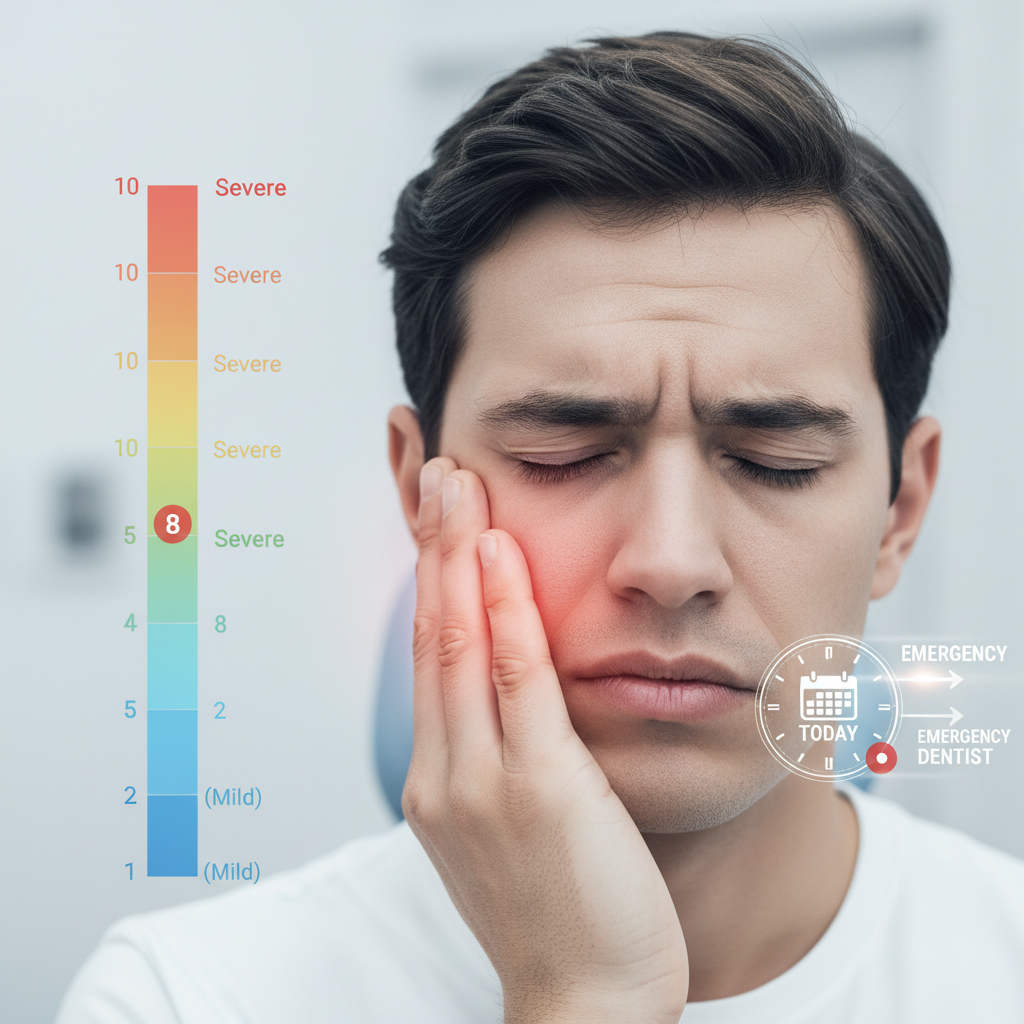
1. Rate your pain and symptoms
Use your own version of a 1 to 10 scale.
- Mild: You notice it, but it does not interrupt your day.
- Moderate: You can work or sleep, but it is distracting and recurring.
- Severe: You cannot focus, sleep, or eat normally.
Combine this with other symptoms like fever, swelling, bleeding, or foul taste. The more severe and layered your symptoms, the more urgent the situation.
If you are in the moderate to severe range, especially with swelling or difficulty chewing, check out how to decide if you need urgent dental care or when to go to emergency dentist and call a provider.
2. Look at how your daily life is affected
Ask yourself:
- Can you chew on at least one side of your mouth comfortably?
- Can you sleep through the night without waking from pain?
- Can you speak and swallow normally?
If the answer to any of these is “no,” your problem is likely urgent, not routine.
3. Consider the risk of waiting
Even if your pain is tolerable, some conditions carry a high risk of getting worse quickly, such as:
- Suspected abscesses or infections
- Deep cracks or fractures
- Knocked out or very loose adult teeth
Delaying care in these situations can lead to infection spread, bone loss, or loss of the tooth [14].
If you are still uncertain, resources like what dental issues need immediate care and dental problems that cannot wait can help you compare your symptoms with common scenarios.
What you can safely do at home while you wait
Home care is meant to keep you comfortable for a short time, not to replace professional treatment. ERs can also provide temporary relief with antibiotics or painkillers, but they do not typically perform restorative dental procedures, so you still need a dentist for full treatment [1].
For non emergency situations, you can:
- Rinse gently with warm salt water to reduce bacteria and soothe tissues
- Apply a cold compress to your cheek to reduce swelling, 10 to 20 minutes at a time
- Take over the counter pain medication as directed on the label
- Use clove oil sparingly on a cotton swab near a sore tooth for mild numbing, if your dentist approves [11]
Avoid putting aspirin directly on your gums, since this can burn the tissues [4].
Most importantly, do not use pain relief as a way to ignore the problem. Relying on medication without treatment allows cavities and infections to get worse, often leading to root canals or extractions that might have been avoidable [11].
If you are unsure whether your current situation can wait, compare your symptoms with what counts as dental emergency symptoms and when dental pain becomes urgent, then call a dentist for guidance.
Why acting early protects your health and your wallet
It can be tempting to delay dental visits until pain becomes unbearable, especially if you are worried about cost. You are not alone if you feel that way. Penn Dental Medicine notes that 92 percent of Americans consider putting off dental care because of finances, yet emergency dental treatments almost always cost more than routine preventive care [13].
Ignoring tooth or gum problems does more than threaten your smile. Untreated oral infections have been linked with higher risks of cardiovascular disease, diabetes complications, respiratory infections, and pregnancy complications [13].
Regular checkups and early treatment:
- Catch small cavities before they reach the nerve
- Prevent gum infections from turning into abscesses
- Reduce your chances of needing urgent or emergency visits
- Usually cost less than waiting until pain forces your hand
The American Dental Association also recommends that any troubling toothache be evaluated promptly, and many dentists hold time each day for emergency patients, which makes same day appointments more realistic than you might think [11].
If you ever wonder whether to call, a good rule is this: if you are asking the question, reach out. Describing your symptoms to a dental team and using tools like how to decide if you need urgent dental care is better than waiting in silence and hoping the problem disappears.
Bringing it all together
When you compare urgent vs non urgent dental issues, the decision often comes down to three things: intensity of symptoms, how quickly they are changing, and what is at stake if you wait.
Act immediately and seek emergency help if you have:
- Uncontrollable bleeding
- Trouble breathing or swallowing
- Suspected broken facial bones
- Severe pain with swelling or fever
Arrange urgent same day or next day care for:
- Severe or persistent toothache
- Knocked out or very loose adult teeth
- Swelling in your face or jaw
- Abscesses or signs of infection
- Large chips, cracks, or deep cuts in your mouth
Use regular appointments for:
- Mild, short lived sensitivity
- Small chips without pain
- Lost fillings or crowns that are not painful
- Routine cleanings and checkups
If you ever feel stuck deciding, review dental emergency warning signs, what dental issues need immediate care, and when to go to emergency dentist, then call a dental office and describe your symptoms. A brief conversation can save you a lot of pain, stress, and long term damage.
References
- (Washington Dental, Cleveland Clinic)
- (Washington Dental, Cummings Dental)
- (Edgerly Dentistry)
- (Cleveland Clinic)
- (Edgerly Dentistry, Tompkins Dental)
- (Cleveland Clinic, Tompkins Dental)
- (Edgerly Dentistry, Cleveland Clinic, NorthPointe Dental & Implant Center)
- (Cleveland Clinic, NorthPointe Dental & Implant Center)
- (Best Dentist Aurora)
- (NorthPointe Dental & Implant Center)
- (Tompkins Dental)
- (Cummings Dental)
- (Penn Dental Medicine)
- (Best Dentist Aurora, Cummings Dental)