Understanding emergency orthodontic repair
When something suddenly goes wrong with braces, aligners, or your child’s teeth, it is easy to feel overwhelmed. Emergency orthodontic repair gives you a path to fast relief, protects teeth from further damage, and keeps long term treatment on track.
According to the American Association of Orthodontists (AAO), an orthodontic emergency is any unexpected problem with braces, aligners, or other appliances that causes significant discomfort, interferes with treatment, or may harm teeth or mouth if not addressed promptly [1]. For you, that might mean a sharp broken wire, a loose bracket, or a child who has fallen and hit their mouth.
If you or your child has additional needs, such as severe dental anxiety, complex medical conditions, or cosmetic concerns after trauma, emergency care can be tailored with sedation options and esthetic repairs. You do not have to navigate this alone.
When it is a true emergency
Not every broken bracket is a medical crisis. Knowing what is urgent helps you act quickly without panicking.
Life threatening or serious medical emergencies
If there is any concern about serious injury, you should seek emergency medical help first. Call 911 or go to the nearest emergency room if you notice:
- Trouble breathing, swallowing, or speaking
- Heavy, uncontrolled bleeding from the mouth or face
- Loss of consciousness, confusion, or head trauma
- Severe facial swelling that affects breathing or vision
The AAO notes that true medical or dental emergencies related to orthodontics, such as injuries to teeth, mouth, or face, require immediate emergency care before any orthodontic repair takes place [1].
After you or your child is medically stable, the orthodontic team can address damaged braces, aligners, or other appliances.
Urgent dental and orthodontic emergencies
Some situations are not life threatening, but they still call for same day or very prompt emergency orthodontic repair. These include:
- A knocked out permanent tooth
- A tooth that is very loose after trauma
- A broken tooth with pain, sharp edges, or visible nerve
- Broken braces with sharp wires cutting the cheek, lips, or tongue
- Appliance parts embedded in gums or soft tissue
- Severe pain, swelling, or possible infection around an orthodontic appliance
- Swallowed or inhaled appliance parts
Knocked out teeth require especially fast action. Emergency dentists recommend being seen within 30 minutes if possible, while you keep the tooth moist in milk and handle it only by the crown, not the root [2].
Problems that are usually not “middle of the night” emergencies
Some issues can often wait until the next available emergency or same week appointment, as long as pain is controlled:
- A loose bracket that is still attached to the wire
- Mild irritation from a poking wire that you can cover with wax
- Lost rubber ligatures
- Minor discomfort from recent adjustments
Even for these, it is still important to call. Many orthodontists encourage you to phone first, rather than walking in, so they can schedule the right amount of time and give you instructions for home care until you are seen [3].
First steps when something breaks
Your first actions can protect teeth and reduce pain while you get to an emergency orthodontic repair visit.
Stay calm and assess safely
If you are helping a child, their reaction often mirrors yours. Take a breath and then:
- Look in the mouth with clean hands and good light.
- Avoid poking or pulling on injured areas to prevent introducing germs or causing more damage. Experts advise carefully assessing the damage without touching the injured area when possible [4].
- Note bleeding, missing teeth, broken pieces, and level of pain.
If you see a knocked out tooth, significant bleeding, or obvious fracture, move quickly to emergency dental care and, for children, consider a pediatric trauma dental clinic or pediatric emergency dentist charlotte if you are local to that area.
Basic first aid for teeth and braces
Depending on what happened, these steps can help until you reach the office:
- Knocked out permanent tooth. Pick it up by the crown, not the root, gently rinse if dirty, and try to reinsert it in the socket. If you cannot, place it in milk and get to an emergency dentist within 30 minutes [5].
- Broken or cracked tooth. Rinse the mouth with warm water and apply a cold compress externally to reduce pain and swelling [2].
- Mouth injury or swelling. Use a cold compress on the cheek or lip, and consider over the counter pain medication if appropriate for you or your child.
- Bleeding. Apply gentle pressure with clean gauze. If bleeding does not slow after several minutes, seek urgent care.
For children, you can also review specific guidance on child tooth trauma emergency and emergency care for children’s teeth so you know exactly what to do in different scenarios.
Managing common braces emergencies
Many orthodontic emergencies involve brackets, wires, or bands. Knowing what you can safely do at home and when to call for emergency orthodontic repair helps you avoid complications.
Loose or broken brackets
Brackets can come loose when your child bites hard foods or if cement weakens over time [4].
If a bracket is loose but still on the wire:
- Leave it in place if it is not causing pain.
- Use orthodontic wax to cover any irritating edges.
- Call your orthodontist so they can decide if you need an urgent visit or can wait until your next check. In many cases, if the next appointment is within about two weeks and there is no pain, it is not considered a same day emergency [6].
If a bracket has completely detached:
- Save it in a small container if possible, and bring it to your appointment.
- Do not attempt to glue it back with home products. Using substances like superglue is unsafe and can damage enamel or introduce toxins [4].
Poking or loose wires
Poking wires are uncomfortable, especially for children. Experts recommend:
- Gently pushing the wire back toward the teeth using a clean cotton swab or the eraser end of a pencil [7].
- Covering the sharp end with orthodontic wax, cotton, or sugar free gum if you cannot move it [8].
- Never cutting wires yourself unless your orthodontist specifically instructs you by phone, because cut ends can be swallowed or cause more injury [9].
If the wire is embedded in the cheek, tongue, or gums, or is causing severe pain or difficulty eating or speaking, you should seek emergency care right away rather than trying to remove it at home [8].
Loose bands, appliances, or ligatures
Bands and other appliances can loosen over time:
- If a rubber band ligature pops off, you may be able to gently reinsert it with clean tweezers, then call for guidance [3].
- If a wire ligature is poking but not loose, you can try to bend it toward the tooth with a cotton swab or pencil eraser, then notify the office [3].
Any appliance that feels loose, moves when you bite, or causes pain should be evaluated promptly. Broken braces or wires that you cannot manage with wax should be treated as urgent, and you should call for emergency orthodontic repair without trying to fix or bend parts yourself [9].
Special focus on pediatric emergencies
Children are active, and accidents happen. Falls, sports injuries, or biting hard objects can all lead to an emergency orthodontic repair need.
Common causes of broken braces in children
Pediatric dentists note that broken braces in kids often result from:
- Eating hard or sticky foods such as nuts, ice, or caramel
- Chewing on pens, toys, or fingernails
- Not wearing a mouthguard during contact sports or active play [4]
These habits can snap wires, break brackets, or weaken the cement that holds appliances in place.
How to respond for your child
When your child has a braces related emergency:
- Stay calm and reassure them.
- Inspect the mouth without pulling at the braces.
- Rinse with warm salt water to soothe irritated tissues and clean the area. Salt water rinses can help protect gums and reduce discomfort around sharp edges [4].
- Apply orthodontic wax to cover any sharp metal.
- Use a cold compress for swelling and age appropriate pain relief if needed.
If you are in a family focused practice area, a child-friendly emergency dentist or pediatric emergency dentist charlotte can provide a calmer environment with staff trained to support anxious children and those with sensory or developmental needs.
Sedation options if you or your child is anxious
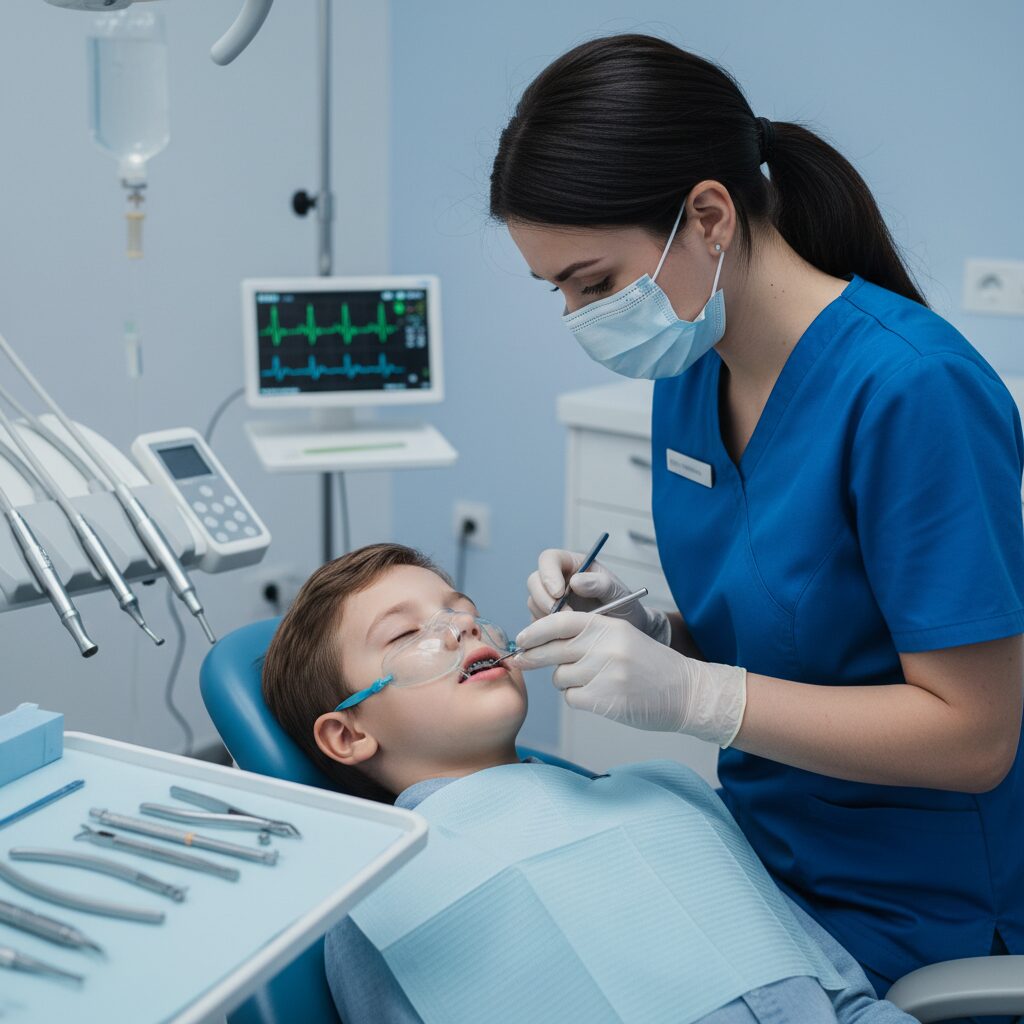
If you are fearful of dental treatment or your child cannot comfortably sit through urgent care, sedation can make emergency orthodontic repair safer and less traumatic.
When sedation is helpful
Sedation can be especially valuable if:
- You have strong dental anxiety or phobia
- Your child is very young or has special needs
- There is significant trauma or multiple procedures needed at once
- You need a sedated tooth extraction emergency combined with orthodontic repair
- You are in a situation where sedation emergency dental care keeps you from avoiding or delaying necessary treatment
Sedation ranges from oral medications to help you relax, to nitrous oxide, to deeper options delivered by trained providers. If you are in the Charlotte area, you can also explore sedated emergency care charlotte for local support.
Understanding your options ahead of time through resources like sedation for anxious emergency patients can also reduce fear if an emergency does happen.
Cosmetic concerns and trauma related repairs
Emergencies are not only about pain. When a front tooth breaks, a veneer chips, or an implant crown loosens, the cosmetic impact can affect your confidence, work, or social life.
Emergency orthodontic repair often overlaps with cosmetic dentistry, especially after trauma.
Fast cosmetic fixes after breaks
Cosmetic focused emergency services may include:
- Smoothing or bonding a chipped front tooth
- Placing an emergency crown for cosmetic need if a tooth is fractured or heavily filled
- Temporary solutions to close gaps or align visible teeth after trauma
- Cosmetic repair after break to restore your smile while you heal
You can also explore comprehensive emergency cosmetic dental repair options if your main concern is how your teeth look after an accident.
For more complex esthetic concerns, such as multiple broken teeth or visible metal after braces damage, providers who offer esthetic emergency dental care and esthetic fix emergency dentistry can prioritize both function and appearance.
Veneers and implants in emergencies
If you already have cosmetic work, you may worry about what happens when something breaks.
- Veneers. If a veneer chips or debonds, do not try to glue it back on. Save the piece and seek emergency veneer repair.
- Implants. If an implant crown or abutment feels loose, it is usually the attached parts, not the implant in the bone. Prompt emergency implant repair services and emergency implant support can often stabilize or replace components without affecting the implant itself.
After significant trauma, some practices offer accelerated repair after trauma to coordinate orthodontic, restorative, and cosmetic steps so that you spend less time in a visibly damaged state.
In many cases, emergency dental office visits are more cost effective and more helpful than going to the hospital for tooth or braces problems. Emergency rooms typically cost several times more and usually cannot provide definitive dental treatment, so you still need to see a dentist afterward [5].
Costs and payment for emergency orthodontic repair
Cost is a common concern, especially if the emergency is unexpected. Expenses vary depending on what you need.
Typical emergency dental cost ranges
Emergency procedures related to orthodontic or dental trauma can range from modest to significant:
- Minor chips and simple bonding may start around 100 dollars [10].
- More complex repairs that require crowns, root canals, or extractions can exceed 1000 dollars depending on severity and treatment [10].
Compared with hospital visits, emergency dental offices are generally far more economical. One review found hospital emergency room care for dental issues can average several hundred dollars and up to three times the typical cost of an office based emergency dental visit, and yet hospitals often cannot complete needed procedures [5].
Some practices, such as Jefferson Dental & Orthodontics, offer free unlimited emergency exams as part of an annual dental savings plan to make urgent care more accessible for uninsured patients [2].
Payment options you can consider
You typically have several ways to manage costs:
- Dental insurance that may partially cover emergency visits and some procedures.
- Medicaid, which in some states helps with necessary emergency oral health care [10].
- Third party financing, such as CareCredit, that lets you pay over time [10].
If you or a family member is older, it can also help to know that there are practices focusing on emergency dental for seniors, where teams understand common medical conditions and medications that affect care.
Do not let fear of cost keep you from calling. Early treatment often prevents more expensive problems later, especially with loose teeth, infections, or damaged orthodontic hardware.
How to prevent future orthodontic emergencies
You cannot stop every accident, but you can lower the chances of needing another emergency orthodontic repair.
You can:
- Follow your orthodontist’s food guidelines and avoid very hard or sticky foods.
- Use a mouthguard for sports, and encourage your child to do the same.
- Remind children not to chew pens, ice, or fingernails.
- Keep a small kit at home with orthodontic wax, cotton swabs, and over the counter pain relief.
- Maintain regular checkups so potential problems are caught early.
If you do not yet have an orthodontist, the AAO recommends using their locator tool to find a specialist near you so that you have a plan for both routine care and emergencies [1].
By understanding what counts as an emergency, using simple first aid, and knowing when sedation, pediatric expertise, or cosmetic repairs are available, you can face orthodontic surprises with more confidence and less panic.